The post KellyBronze, The ‘Rolls-Royce Of Turkey’ Is Coming To America appeared on BitcoinEthereumNews.com. Paul Kelly’s family farm in England has been selling $500 heirloom turkeys for two generations. Now, after a decade breeding them in Virginia, KellyBronze birds are looking to gobble up America’s Thanksgiving market. After two decades of breeding what the Times of London once called the “Rolls-Royce of turkey,” Paul Kelly wanted to learn from experts with generations of knowledge in America, where turkey farming originated. But once the Briton arrived in 2003, and after spending several weeks visiting turkey farms across Virginia, West Virginia, North Carolina, Massachusetts and Pennsylvania, Kelly was “amazed” to find no farmer or butchery maintained the American traditions, including dry-plucking and hanging, that have set the Essex, England-based KellyBronze apart. Then again, when a frozen American Butterball costs about a $1 a pound and you’re asking customers to pay around $15 a pound—or nearly $500 for a 32-lb. turkey—high quality has to come with more than a high price. “I thought, it’s almost impertinent for an Englishman to take turkeys to America,” says Kelly. “But there’s an opportunity there. I started looking, and we took it big.” Kelly, 62, is now the owner of the only USDA-approved turkey plant in the U.S. that dry-plucks and hangs its birds, which many believe creates crispier skin and better flavor. Since purchasing 130 acres in the foothills of the Blue Ridge Mountains in Crozet, Virginia a decade ago, Kelly has opened America’s first newly built turkey hatchery in years. KellyBronze, which sells its turkeys at Eataly and other high-end retailers across America, had 2024 revenue of $28 million. About 4% of that comes from the U.S., but Kelly expects that to be 25% within three years as he increases production in Virginia—and he is aiming for annual revenue will hit $80 million by 2028. Founded in 1971 by… The post KellyBronze, The ‘Rolls-Royce Of Turkey’ Is Coming To America appeared on BitcoinEthereumNews.com. Paul Kelly’s family farm in England has been selling $500 heirloom turkeys for two generations. Now, after a decade breeding them in Virginia, KellyBronze birds are looking to gobble up America’s Thanksgiving market. After two decades of breeding what the Times of London once called the “Rolls-Royce of turkey,” Paul Kelly wanted to learn from experts with generations of knowledge in America, where turkey farming originated. But once the Briton arrived in 2003, and after spending several weeks visiting turkey farms across Virginia, West Virginia, North Carolina, Massachusetts and Pennsylvania, Kelly was “amazed” to find no farmer or butchery maintained the American traditions, including dry-plucking and hanging, that have set the Essex, England-based KellyBronze apart. Then again, when a frozen American Butterball costs about a $1 a pound and you’re asking customers to pay around $15 a pound—or nearly $500 for a 32-lb. turkey—high quality has to come with more than a high price. “I thought, it’s almost impertinent for an Englishman to take turkeys to America,” says Kelly. “But there’s an opportunity there. I started looking, and we took it big.” Kelly, 62, is now the owner of the only USDA-approved turkey plant in the U.S. that dry-plucks and hangs its birds, which many believe creates crispier skin and better flavor. Since purchasing 130 acres in the foothills of the Blue Ridge Mountains in Crozet, Virginia a decade ago, Kelly has opened America’s first newly built turkey hatchery in years. KellyBronze, which sells its turkeys at Eataly and other high-end retailers across America, had 2024 revenue of $28 million. About 4% of that comes from the U.S., but Kelly expects that to be 25% within three years as he increases production in Virginia—and he is aiming for annual revenue will hit $80 million by 2028. Founded in 1971 by…

KellyBronze, The ‘Rolls-Royce Of Turkey’ Is Coming To America

2025/11/16 19:07

Paul Kelly’s family farm in England has been selling $500 heirloom turkeys for two generations. Now, after a decade breeding them in Virginia, KellyBronze birds are looking to gobble up America’s Thanksgiving market.


After two decades of breeding what the Times of London once called the “Rolls-Royce of turkey,” Paul Kelly wanted to learn from experts with generations of knowledge in America, where turkey farming originated. But once the Briton arrived in 2003, and after spending several weeks visiting turkey farms across Virginia, West Virginia, North Carolina, Massachusetts and Pennsylvania, Kelly was “amazed” to find no farmer or butchery maintained the American traditions, including dry-plucking and hanging, that have set the Essex, England-based KellyBronze apart.

Then again, when a frozen American Butterball costs about a $1 a pound and you’re asking customers to pay around $15 a pound—or nearly $500 for a 32-lb. turkey—high quality has to come with more than a high price.

“I thought, it’s almost impertinent for an Englishman to take turkeys to America,” says Kelly. “But there’s an opportunity there. I started looking, and we took it big.”

Kelly, 62, is now the owner of the only USDA-approved turkey plant in the U.S. that dry-plucks and hangs its birds, which many believe creates crispier skin and better flavor. Since purchasing 130 acres in the foothills of the Blue Ridge Mountains in Crozet, Virginia a decade ago, Kelly has opened America’s first newly built turkey hatchery in years.

KellyBronze, which sells its turkeys at Eataly and other high-end retailers across America, had 2024 revenue of $28 million. About 4% of that comes from the U.S., but Kelly expects that to be 25% within three years as he increases production in Virginia—and he is aiming for annual revenue will hit $80 million by 2028.

Founded in 1971 by Kelly’s parents, Derek and Mollie, KellyBronze is 100% family-owned and has never taken any private investment, though there have been many offers over the years. The business has grown steadily for the past six decades with little debt, and it currently has none. “I have slept at night knowing that every decision we made, we could afford to make, rather than hoping it worked,” says Kelly, who admits that the business is challenging as the bulk of revenue comes in November, December and January. “But, in America, bang, we bought the farm, we built the plant, not having sold one turkey. We were taking risks but risks we could afford.”

Kelly acknowledges the high price of his turkeys can be a “problem” but he is quick to point out that his birds are also three times the age of the typical frozen turkey, and lose 3% of their weight during hanging, and it’s all done by hand, which increases labor costs.

“People aren’t buying it to save money, are they?” asks Kelly. “The sales of amazing wines and the best champagnes go through the roof at Thanksgiving in America, the same as here at Christmas. Not everyone can afford it, but for those that can, it’s there.”

In the U.K, KellyBronze supplies high-end butchers and retailers like Harrods and Selfridges. The Royal Family as well as chef and restaurateur Gordon Ramsay have also supported the brand for years.

The Eaten Path: “We are never going to be Butterball,” Kelly says. “We are a small niche player and we just want to be producing the best possible turkey we can for Thanksgiving.”

KellyBronze


In addition to Kelly’s 130 acres in Virginia, the family owns 90 acres across Scotland and England, where it rents another 140 acres. There are also now 13 British farmers raising turkeys for KellyBronze, including British celebrity chef Jamie Oliver, who started raising a flock five years ago, after spending 25 years as a customer. Oliver calls KellyBronze “the turkey equivalent of Wagyu beef or Pata Negra ham—simply the best of its kind.”

“I became a turkey farmer not out of necessity, but to support an extraordinary artisan family and their craft,” Oliver tells Forbes. “The Kelly family are a shining example of what’s right in British farming. They brought back values and methods that were nearly lost to history.”

Now, after more than 50 years in business, KellyBronze is finally ready to feast on America’s high-end turkey market. “We are never going to be a Butterball. We are never going to be big,” says Kelly. “We are a small niche player and we just want to be producing the best possible turkey we can for Thanksgiving.”


Kelly’s parents bought a small farm the year he was born in 1963. His father worked at a big poultry company and after many years he left so the family could start their own turkey business in 1971 when Kelly was 8 years old. Back then, the British turkey industry was producing what was known as “New York Dressed” birds because, as Kelly explains, “the whole tradition of what we do came from America.”

When Kelly returned to the farm after graduating from an agricultural college attached to Scotland’s Glasgow University in 1983, he pushed his family to take their farming to the next level. In 1984, he changed the family’s breed from a white Wrolstad turkey that originated in Oregon to “the old traditional bronze breed.”

Farm To Table: KellyBronze dry-plucks and hangs its turkeys in the American tradition, which many believe creates crispier skin and better flavor.

KellyBronze

He also started bringing the birds outside where they could roam, dust-bathe, and peck in peace. The Kellys also started dry-plucking and then hanging the birds—at first for 7 days and now for 2 to 3 weeks. It was an expensive approach to a type of poultry that is traditionally quite cheap.

“It was a race to the bottom,” he recalls of British turkey farmers at the time. “We were the laughingstock of the industry.”

That first year, the Kellys had an annual revenue around $300,000 (or about $930,000 today). Despite the slow sales, the family doubled down. In 1987, the Kellys bought a former dairy farm for $90,000 at 10% interest over 10 years. The buildings and 5 acres of grasslands (where Kelly later built a house and now lives) helped the family expand its breeding and allowed them to build a small processing facility. “It was a huge step for us but gave us the space to supply the increased demand that came,” Kelly says. “It proved to be the best investment ever.”

By 1990, “the butchers were phoning us,” and by 1994, sales had skyrocketed to $1.2 million. After adding local farmers to their network throughout the 1990s, in 2001, KellyBronze was appointed by then-Prince Charles’ organic food brand Duchy Originals to farm its Christmas turkeys.

In 2003, revenue reached $3.8 million and Kelly was ready to broaden his understanding of traditional techniques and learn from farms in the United States, where it all began. The first turkeys are said to have been imported to England back in 1526, when a trader named William Strickland brought back six birds he obtained from Native Americans during an early voyage across the Atlantic. Eating turkey at Christmastime became fashionable at King Henry VIII’s court, cementing the turkey’s place as a symbol of festivity. The birds then traveled back across the Atlantic, as the colonists at Jamestown in Virginia had shipments of domesticated turkeys arriving on boats from England.

And while no turkey was ever formally recorded at the Pilgrims’ first Thanksgiving with the Wampanoag in Plymouth, Massachusetts in 1621, they were plentiful in the region. Benjamin Franklin once famously called the turkey “a much more respectable bird” than the bald eagle and “a true original Native of America. Eagles have been found in all countries, but the turkey was peculiar to ours.” He even described turkey as “a bird of courage.”

Born To Be Wild: KellyBronze is now producing 4,600 turkeys in the U.S. this year, and Kelly’s hatchery has the capacity to produce 15,000 “poults” every month.

Levon Biss for Forbes

Kelly says the stock he is raising in Virginia is inspired by “the original traditional turkey that was produced in America hundreds of years ago with the Pilgrims.” In 2014, he brought his turkeys back to the continent they originated on, buying his farm for $750,000, and spending another $2.75 million on infrastructure upgrades—with help from a $1 million bank loan that’s already been paid off.

KellyBronze is now producing 4,600 turkeys in the U.S. this year, and Kelly opened his own hatchery in 2018, which has the capacity to produce 15,000 “poults” every month. It’s currently at 5,500 per year and Kelly wants to open another on the East Coast and one on the West Coast.

Doing business in America isn’t easy. For one, sales are super lumpy—95% of Kelly’s U.S. sales occur at Thanksgiving—and KellyBronze might get hit with tariffs from the Trump Administration’s trade war. Kelly shipped turkey eggs from the U.K. to his U.S. hatchery just before the tariff start date. Next season, if the tariffs continue, the eggs could face charges of a few thousand dollars.

“My dream would be for people to order it in January or February of every year. They put their name on one and we’ll grow it to order,” says Kelly, whose son, Toby, 31, and daughter Ella, 28, are now running parts of KellyBronze. “The potential is huge.”

More from Forbes

ForbesMeet The Billionaires Behind A Food Empire Built On Dessert ToppingForbesFor Hooters’ Original Founders, Saving The Chain Is A Higher Calling: “America Needs Us.”ForbesMeet The Florida Sugar Barons Worth $4 Billion And Getting Sweet Deals From Donald TrumpForbesHow Kettle & Fire Turned Bone Broth Into A $100 Million Business

Source: https://www.forbes.com/sites/chloesorvino/2025/11/16/the-rolls-royce-of-turkey-is-coming-to-america/
Market Opportunity
Harvest Finance Logo
Harvest Finance Price(FARM)
$18.22
$18.22$18.22
-2.51%
USD
Harvest Finance (FARM) Live Price Chart
Disclaimer: The articles reposted on this site are sourced from public platforms and are provided for informational purposes only. They do not necessarily reflect the views of MEXC. All rights remain with the original authors. If you believe any content infringes on third-party rights, please contact service@support.mexc.com for removal. MEXC makes no guarantees regarding the accuracy, completeness, or timeliness of the content and is not responsible for any actions taken based on the information provided. The content does not constitute financial, legal, or other professional advice, nor should it be considered a recommendation or endorsement by MEXC.

You May Also Like

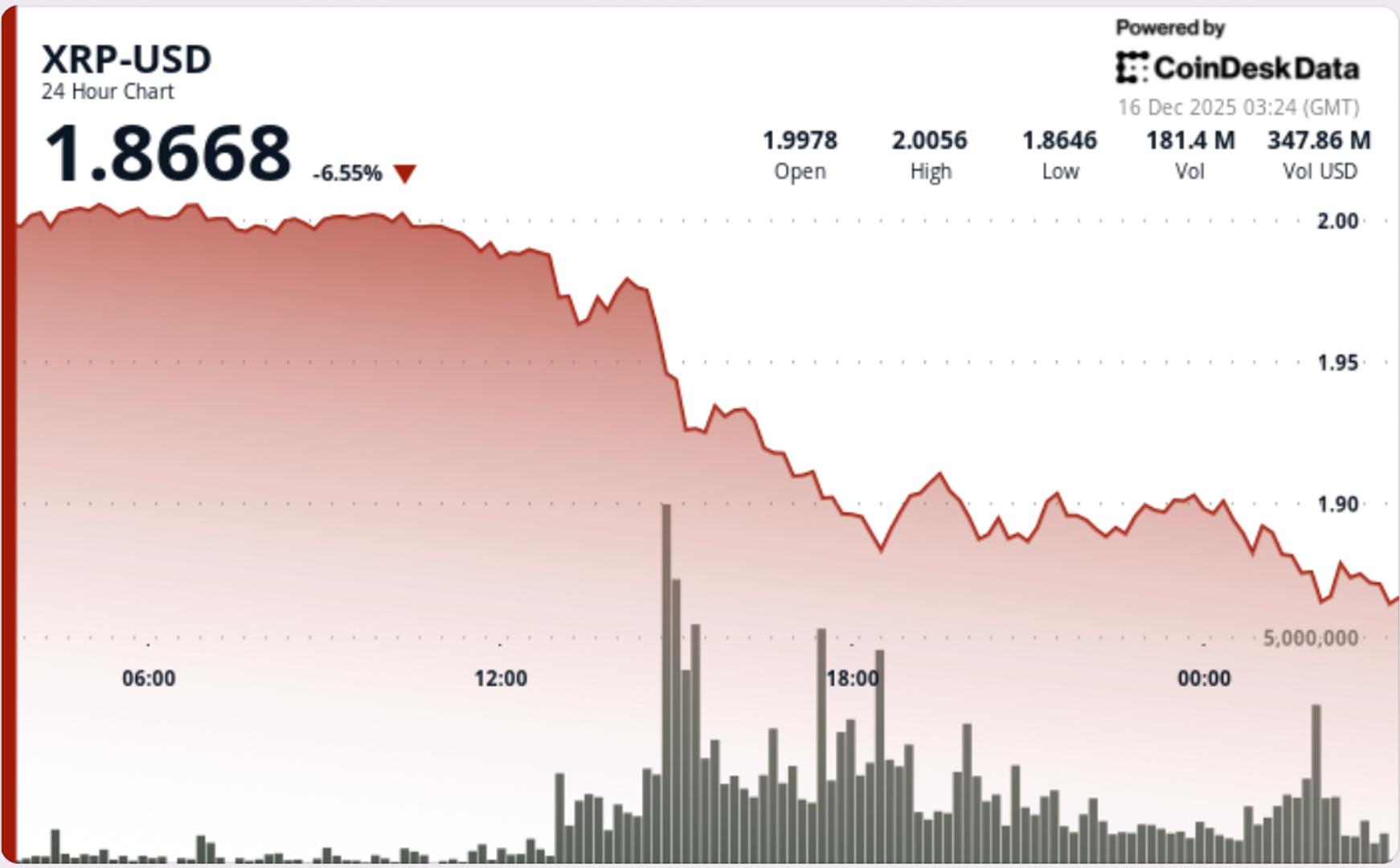
XRP price weakens at critical level, raising risk of deeper pullback

XRP price weakens at critical level, raising risk of deeper pullback

Markets Share Share this article
Copy linkX (Twitter)LinkedInFacebookEmail
XRP price weakens at critical level, raising
Share
Coindesk2025/12/16 11:34
Wormhole Unveils W Token 2.0 with Enhanced Tokenomics

Wormhole Unveils W Token 2.0 with Enhanced Tokenomics

The post Wormhole Unveils W Token 2.0 with Enhanced Tokenomics appeared on BitcoinEthereumNews.com. Joerg Hiller Sep 17, 2025 13:57 Wormhole introduces W Token 2.0, featuring upgraded tokenomics, a strategic Wormhole Reserve, and a 4% base yield, aiming to optimize ecosystem growth and align incentives. Wormhole has announced a significant upgrade to its native token, unveiling the W Token 2.0. This upgrade introduces new tokenomics including the establishment of a Wormhole Reserve, a 4% base yield, and an optimized unlock schedule, marking a pivotal development in the ecosystem, according to Wormhole. The W Token Evolution Launched in October 2020, Wormhole’s W token has been central to the platform’s mission of creating a connected internet economy. The latest upgrade aims to enhance the token’s utility across more than 40 blockchains. With a capped supply of 10 billion, the W token supports governance, staking, and ecosystem growth, aligning incentives for network security and development. Introducing the Wormhole Reserve The Wormhole Reserve will accumulate value from both onchain and offchain activities, supporting the ecosystem’s expansion. As Wormhole adoption grows, the token will capture value through network expansions and ecosystem applications, ensuring that growth is directly reflected in the token’s value. 4% Base Yield and Governance Rewards Wormhole 2.0 introduces a 4% base yield for W holders who actively participate in governance. The yield, derived from existing token supplies and protocol revenues, is designed to incentivize active participation without inflating the token supply. Optimized Unlock Schedule Updating its token release schedule, Wormhole replaces annual cliffs with bi-weekly unlocks, starting October 3, 2025. This change aims to reduce market pressure and provide a more stable environment for investors and contributors. The bi-weekly schedule will span over 4.5 years, affecting categories such as Guardian Nodes and Community & Launch. Wormhole’s Future Vision With these upgrades, Wormhole aims to expand its role as…
Share
BitcoinEthereumNews2025/09/18 15:48
Crucial US Stock Market Update: What Wednesday’s Mixed Close Reveals

Crucial US Stock Market Update: What Wednesday’s Mixed Close Reveals

BitcoinWorld Crucial US Stock Market Update: What Wednesday’s Mixed Close Reveals The financial world often keeps us on our toes, and Wednesday was no exception. Investors watched closely as the US stock market concluded the day with a mixed performance across its major indexes. This snapshot offers a crucial glimpse into current investor sentiment and economic undercurrents, prompting many to ask: what exactly happened? Understanding the Latest US Stock Market Movements On Wednesday, the closing bell brought a varied picture for the US stock market. While some indexes celebrated gains, others registered slight declines, creating a truly mixed bag for investors. The Dow Jones Industrial Average showed resilience, climbing by a notable 0.57%. This positive movement suggests strength in some of the larger, more established companies. Conversely, the S&P 500, a broader benchmark often seen as a barometer for the overall market, experienced a modest dip of 0.1%. The technology-heavy Nasdaq Composite also saw a slight retreat, sliding by 0.33%. This particular index often reflects investor sentiment towards growth stocks and the tech sector. These divergent outcomes highlight the complex dynamics currently at play within the American economy. It’s not simply a matter of “up” or “down” for the entire US stock market; rather, it’s a nuanced landscape where different sectors and company types are responding to unique pressures and opportunities. Why Did the US Stock Market See Mixed Results? When the US stock market delivers a mixed performance, it often points to a tug-of-war between various economic factors. Several elements could have contributed to Wednesday’s varied closings. For instance, positive corporate earnings reports from certain industries might have bolstered the Dow. At the same time, concerns over inflation, interest rate policies by the Federal Reserve, or even global economic uncertainties could have pressured growth stocks, affecting the S&P 500 and Nasdaq. Key considerations often include: Economic Data: Recent reports on employment, manufacturing, or consumer spending can sway market sentiment. Corporate Announcements: Strong or weak earnings forecasts from influential companies can significantly impact their respective sectors. Interest Rate Expectations: The prospect of higher or lower interest rates directly influences borrowing costs for businesses and consumer spending, affecting future profitability. Geopolitical Events: Global tensions or trade policies can introduce uncertainty, causing investors to become more cautious. Understanding these underlying drivers is crucial for anyone trying to make sense of daily market fluctuations in the US stock market. Navigating Volatility in the US Stock Market A mixed close, while not a dramatic downturn, serves as a reminder that market volatility is a constant companion for investors. For those involved in the US stock market, particularly individuals managing their portfolios, these days underscore the importance of a well-thought-out strategy. It’s important not to react impulsively to daily movements. Instead, consider these actionable insights: Diversification: Spreading investments across different sectors and asset classes can help mitigate risk when one area underperforms. Long-Term Perspective: Focusing on long-term financial goals rather than short-term gains can help weather daily market swings. Stay Informed: Keeping abreast of economic news and company fundamentals provides context for market behavior. Consult Experts: Financial advisors can offer personalized guidance based on individual risk tolerance and objectives. Even small movements in major indexes can signal shifts that require attention, guiding future investment decisions within the dynamic US stock market. What’s Next for the US Stock Market? Looking ahead, investors will be keenly watching for further economic indicators and corporate announcements to gauge the direction of the US stock market. Upcoming inflation data, statements from the Federal Reserve, and quarterly earnings reports will likely provide more clarity. The interplay of these factors will continue to shape investor confidence and, consequently, the performance of the Dow, S&P 500, and Nasdaq. Remaining informed and adaptive will be key to understanding the market’s trajectory. Conclusion: Wednesday’s mixed close in the US stock market highlights the intricate balance of forces influencing financial markets. While the Dow showed strength, the S&P 500 and Nasdaq experienced slight declines, reflecting a nuanced economic landscape. This reminds us that understanding the ‘why’ behind these movements is as important as the movements themselves. As always, a thoughtful, informed approach remains the best strategy for navigating the complexities of the market. Frequently Asked Questions (FAQs) Q1: What does a “mixed close” mean for the US stock market? A1: A mixed close indicates that while some major stock indexes advanced, others declined. It suggests that different sectors or types of companies within the US stock market are experiencing varying influences, rather than a uniform market movement. Q2: Which major indexes were affected on Wednesday? A2: On Wednesday, the Dow Jones Industrial Average gained 0.57%, while the S&P 500 edged down 0.1%, and the Nasdaq Composite slid 0.33%, illustrating the mixed performance across the US stock market. Q3: What factors contribute to a mixed stock market performance? A3: Mixed performances in the US stock market can be influenced by various factors, including specific corporate earnings, economic data releases, shifts in interest rate expectations, and broader geopolitical events that affect different market segments uniquely. Q4: How should investors react to mixed market signals? A4: Investors are generally advised to maintain a long-term perspective, diversify their portfolios, stay informed about economic news, and avoid impulsive decisions. Consulting a financial advisor can also provide personalized guidance for navigating the US stock market. Q5: What indicators should investors watch for future US stock market trends? A5: Key indicators to watch include upcoming inflation reports, statements from the Federal Reserve regarding monetary policy, and quarterly corporate earnings reports. These will offer insights into the future direction of the US stock market. Did you find this analysis of the US stock market helpful? Share this article with your network on social media to help others understand the nuances of current financial trends! To learn more about the latest stock market trends, explore our article on key developments shaping the US stock market‘s future performance. This post Crucial US Stock Market Update: What Wednesday’s Mixed Close Reveals first appeared on BitcoinWorld.
Share
Coinstats2025/09/18 05:30
