BitcoinWorld Revolutionary Shift: South Korea Poised to Lift Ban on Domestic ICOs After 7 Years In a stunning reversal of its long-standing policy, South KoreaBitcoinWorld Revolutionary Shift: South Korea Poised to Lift Ban on Domestic ICOs After 7 Years In a stunning reversal of its long-standing policy, South Korea

Revolutionary Shift: South Korea Poised to Lift Ban on Domestic ICOs After 7 Years

A vibrant cartoon illustrating South Korea's revolutionary shift towards allowing domestic ICOs, blending traditional and digital finance.

BitcoinWorld

Revolutionary Shift: South Korea Poised to Lift Ban on Domestic ICOs After 7 Years

In a stunning reversal of its long-standing policy, South Korea is on the verge of a landmark decision that could reshape its cryptocurrency landscape. After a strict seven-year prohibition, the nation’s financial authorities are actively drafting legislation to permit domestic ICOs once again. This potential move represents a seismic shift from blanket restriction to regulated innovation, aiming to bring crypto fundraising activities back onshore and under the watchful eye of local regulators. For blockchain entrepreneurs and investors in Asia’s fourth-largest economy, this news sparks a wave of cautious optimism.

Why is South Korea Reconsidering Domestic ICOs Now?

The 2017 ban on domestic ICOs was a reaction to rampant fraud and investor protection concerns during the initial crypto boom. However, this policy had an unintended consequence. It pushed promising Korean blockchain projects to launch their token sales overseas, often in less regulated jurisdictions, before seeking listings on popular South Korean exchanges. This ‘regulatory arbitrage’ created risks for local investors who ultimately traded these assets without the initial safeguards of a domestic offering. The proposed Digital Asset Basic Act seeks to correct this by creating a controlled, transparent environment for fundraising within the country’s borders.

The core of the new framework, as reported, hinges on mandatory information disclosure. Projects seeking to launch a domestic ICO would need to provide comprehensive details about their team, technology, use of funds, and associated risks. This approach mirrors principles from traditional securities regulation, aiming to protect investors while fostering legitimate innovation.

What Does the Draft Law Say About Stablecoins?

The proposed legislation extends far beyond just ICOs. It introduces stringent new rules for stablecoins, which are cryptocurrencies pegged to stable assets like the US dollar. In a bold protective measure, the draft law proposes to ban the domestic trading of major overseas stablecoins, such as Tether (USDT) and USD Coin (USDC), unless their issuers establish a physical presence and comply with South Korean regulations.

  • Local Presence Required: Foreign stablecoin issuers must set up a local entity.
  • Strict Compliance: They must adhere to South Korean anti-money laundering (AML) and capital reserve rules.
  • Investor Protection: The goal is to ensure accountability and reduce systemic risk for Korean investors.

This move could significantly impact the local crypto market, potentially encouraging the development of Korean-won-pegged stablecoins and giving regulators greater oversight over a critical part of the digital asset ecosystem.

What Are the Potential Benefits and Challenges?

Unlocking domestic ICOs could unleash a wave of benefits for South Korea’s tech sector. It would allow innovative blockchain startups to raise capital from a supportive local investor base without the legal complexity and cost of going abroad first. This could position South Korea as a more competitive hub for Web3 development in Asia.

However, significant challenges remain. Regulators must walk a tightrope between enabling growth and preventing the scams that prompted the original ban. Implementing effective, real-time monitoring of ICO disclosures will be resource-intensive. Furthermore, the stablecoin rules may face pushback from global crypto firms and could temporarily limit liquidity on local exchanges if enforced abruptly.

The Financial Services Commission (FSC) has been careful to note that these proposals are not final. Discussions with other government agencies are ongoing, meaning the specifics could change before the law is presented to the National Assembly. The second phase of the Digital Asset Basic Act is expected to be finalized and potentially take effect sometime in 2025.

Conclusion: A Cautious Step Towards a Structured Future

South Korea’s potential pivot on domestic ICOs is a powerful signal of regulatory maturity. It acknowledges that a total ban is less effective than a well-designed framework. By aiming to bring crypto fundraising in-house with clear rules, the country seeks to protect its citizens, retain its technological talent, and capture the economic benefits of blockchain innovation. While the path forward requires careful navigation, this draft law could mark the beginning of a new, more integrated era for digital assets in one of the world’s most vibrant crypto markets.

Frequently Asked Questions (FAQs)

Q: When could South Korea officially allow domestic ICOs?
A: The change is part of the second phase of the Digital Asset Basic Act, which could take effect as early as 2025, though the timeline is not yet finalized.

Q: Why did South Korea ban ICOs in the first place in 2017?
A: The ban was implemented due to widespread concerns over fraud, scams, and a lack of investor protection during the initial cryptocurrency boom period.

Q: Will USDT and USDC be banned in South Korea?
A: The draft law proposes banning the trading of overseas stablecoins unless their issuers establish a local presence and comply with South Korean financial regulations. It is not an outright ban but a requirement for localization.

Q: What does ‘sufficient information disclosure’ mean for ICOs?
A: It likely means ICO projects will be required to publicly disclose detailed information about their business plan, team, technology, use of proceeds, and risk factors, similar to a prospectus in traditional finance.

Q: How will this affect South Korean crypto exchanges?
A: Exchanges will likely need to adapt their listing procedures to vet and list tokens from newly permitted domestic ICOs. They may also need to adjust their trading pairs based on the new stablecoin rules.

Q: Is this law guaranteed to pass?
A: No. The FSC has stated the draft is not final and is still under discussion. The proposals must go through further review and legislative processes before becoming law.

Found this analysis of South Korea’s groundbreaking crypto policy shift insightful? Help others stay informed by sharing this article on your social media channels. The conversation about balanced digital asset regulation is just beginning!

To learn more about the latest cryptocurrency regulatory trends, explore our article on key developments shaping global crypto policy and institutional adoption.

This post Revolutionary Shift: South Korea Poised to Lift Ban on Domestic ICOs After 7 Years first appeared on BitcoinWorld.

Disclaimer: The articles reposted on this site are sourced from public platforms and are provided for informational purposes only. They do not necessarily reflect the views of MEXC. All rights remain with the original authors. If you believe any content infringes on third-party rights, please contact service@support.mexc.com for removal. MEXC makes no guarantees regarding the accuracy, completeness, or timeliness of the content and is not responsible for any actions taken based on the information provided. The content does not constitute financial, legal, or other professional advice, nor should it be considered a recommendation or endorsement by MEXC.

You May Also Like

Building a DEXScreener Clone: A Step-by-Step Guide

Building a DEXScreener Clone: A Step-by-Step Guide

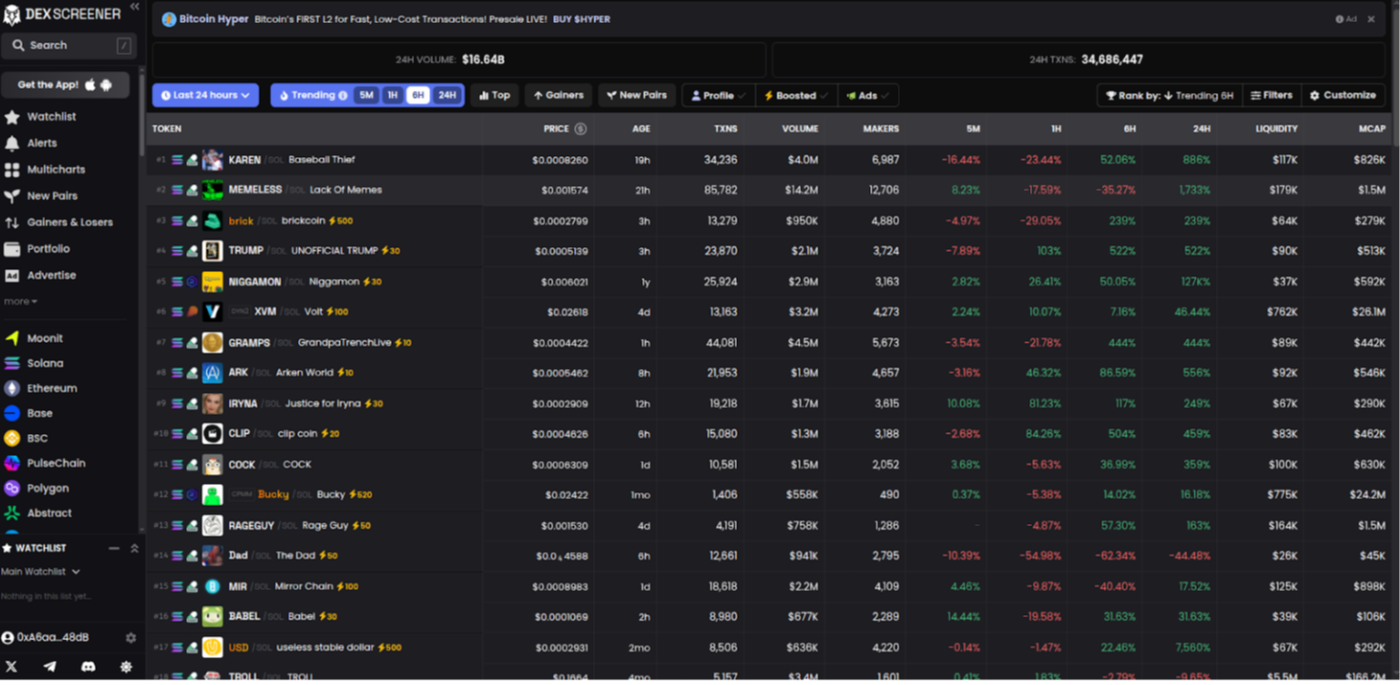
DEX Screener is used by crypto traders who need access to on-chain data like trading volumes, liquidity, and token prices. This information allows them to analyze trends, monitor new listings, and make informed investment decisions. In this tutorial, I will build a DEXScreener clone from scratch, covering everything from the initial design to a functional app. We will use Streamlit, a Python framework for building full-stack apps.
Share
Hackernoon2025/09/18 15:05
Which DOGE? Musk's Cryptic Post Explodes Confusion

Which DOGE? Musk's Cryptic Post Explodes Confusion

A viral chart documenting a sharp decline in U.S. federal employment during President Trump's second term has sparked unexpected confusion in cryptocurrency markets
Share
Coinstats2025/12/20 01:13
Google's AP2 protocol has been released. Does encrypted AI still have a chance?

Google's AP2 protocol has been released. Does encrypted AI still have a chance?

Following the MCP and A2A protocols, the AI Agent market has seen another blockbuster arrival: the Agent Payments Protocol (AP2), developed by Google. This will clearly further enhance AI Agents' autonomous multi-tasking capabilities, but the unfortunate reality is that it has little to do with web3AI. Let's take a closer look: What problem does AP2 solve? Simply put, the MCP protocol is like a universal hook, enabling AI agents to connect to various external tools and data sources; A2A is a team collaboration communication protocol that allows multiple AI agents to cooperate with each other to complete complex tasks; AP2 completes the last piece of the puzzle - payment capability. In other words, MCP opens up connectivity, A2A promotes collaboration efficiency, and AP2 achieves value exchange. The arrival of AP2 truly injects "soul" into the autonomous collaboration and task execution of Multi-Agents. Imagine AI Agents connecting Qunar, Meituan, and Didi to complete the booking of flights, hotels, and car rentals, but then getting stuck at the point of "self-payment." What's the point of all that multitasking? So, remember this: AP2 is an extension of MCP+A2A, solving the last mile problem of AI Agent automated execution. What are the technical highlights of AP2? The core innovation of AP2 is the Mandates mechanism, which is divided into real-time authorization mode and delegated authorization mode. Real-time authorization is easy to understand. The AI Agent finds the product and shows it to you. The operation can only be performed after the user signs. Delegated authorization requires the user to set rules in advance, such as only buying the iPhone 17 when the price drops to 5,000. The AI Agent monitors the trigger conditions and executes automatically. The implementation logic is cryptographically signed using Verifiable Credentials (VCs). Users can set complex commission conditions, including price ranges, time limits, and payment method priorities, forming a tamper-proof digital contract. Once signed, the AI Agent executes according to the conditions, with VCs ensuring auditability and security at every step. Of particular note is the "A2A x402" extension, a technical component developed by Google specifically for crypto payments, developed in collaboration with Coinbase and the Ethereum Foundation. This extension enables AI Agents to seamlessly process stablecoins, ETH, and other blockchain assets, supporting native payment scenarios within the Web3 ecosystem. What kind of imagination space can AP2 bring? After analyzing the technical principles, do you think that's it? Yes, in fact, the AP2 is boring when it is disassembled alone. Its real charm lies in connecting and opening up the "MCP+A2A+AP2" technology stack, completely opening up the complete link of AI Agent's autonomous analysis+execution+payment. From now on, AI Agents can open up many application scenarios. For example, AI Agents for stock investment and financial management can help us monitor the market 24/7 and conduct independent transactions. Enterprise procurement AI Agents can automatically replenish and renew without human intervention. AP2's complementary payment capabilities will further expand the penetration of the Agent-to-Agent economy into more scenarios. Google obviously understands that after the technical framework is established, the ecological implementation must be relied upon, so it has brought in more than 60 partners to develop it, almost covering the entire payment and business ecosystem. Interestingly, it also involves major Crypto players such as Ethereum, Coinbase, MetaMask, and Sui. Combined with the current trend of currency and stock integration, the imagination space has been doubled. Is web3 AI really dead? Not entirely. Google's AP2 looks complete, but it only achieves technical compatibility with Crypto payments. It can only be regarded as an extension of the traditional authorization framework and belongs to the category of automated execution. There is a "paradigm" difference between it and the autonomous asset management pursued by pure Crypto native solutions. The Crypto-native solutions under exploration are taking the "decentralized custody + on-chain verification" route, including AI Agent autonomous asset management, AI Agent autonomous transactions (DeFAI), AI Agent digital identity and on-chain reputation system (ERC-8004...), AI Agent on-chain governance DAO framework, AI Agent NPC and digital avatars, and many other interesting and fun directions. Ultimately, once users get used to AI Agent payments in traditional fields, their acceptance of AI Agents autonomously owning digital assets will also increase. And for those scenarios that AP2 cannot reach, such as anonymous transactions, censorship-resistant payments, and decentralized asset management, there will always be a time for crypto-native solutions to show their strength? The two are more likely to be complementary rather than competitive, but to be honest, the key technological advancements behind AI Agents currently all come from web2AI, and web3AI still needs to keep up the good work!
Share
PANews2025/09/18 07:00