

Must Read
The National Kidney and Transplant Institute (NKTI) hospital in Quezon City turned its gym into a leptospirosis ward, on August 8, 2025. The NKTI has logged an The National Kidney and Transplant Institute (NKTI) hospital in Quezon City turned its gym into a leptospirosis ward, on August 8, 2025. The NKTI has logged an
DOH rejects proposal to funnel MAIFIP fund into PhilHealth
MANILA, Philippines – The Department of Health (DOH) rejected proposals to redirect the budget for the Medical Assistance for Indigent and Financially Incapacitated Patients (MAIFIP) Program to the Philippine Health Insurance Corporation (PhilHealth), citing the latter’s payment delays.
MAIFIP is a DOH-funded program that provides financial assistance for patients who cannot afford medical expenses. It covers costs that exceed PhilHealth’s packages.
“May delay pa rin ang bayad, pati private nga ‘di ba nagrereklamo sa’kin na hindi sila binabayaran, may utang ang PhilHealth. Ba’t mo ibibigay ang pera du’n?” DOH Secretary Teodoro Herbosa said in a chance interview on Friday, December 19.
(PhilHealth has payment delays, even private hospitals complain that the state insurer owes them. Why would you then redirect the budget there?)
PhilHealth — a government-owned and -controlled corporation attached to the DOH — pays accredited hospitals using an All Case Rates system in which the state insurer covers a fixed amount per illness or procedure to ease a patient’s out-of-pocket costs.
A recent Commission on Audit report, however, showed PhilHealth has P1 billion worth of unpaid hospital claims.
Herbosa’s remark came after the Healthcare Professionals Alliance suggested using the MAIFIP budget to fund PhilHealth, expressing concern over the program being used as a “pork barrel” through guarantee or endorsement letters.
An endorsement or guarantee letter is not a MAIFIP requirement, but some patients said they cannot avail themselves of the program without a guarantee or endorsement letter from a politician.
The group also noted that PhilHealth needs P147 billion to cover the premiums of 24.5 million indigent Filipinos.
The health secretary also disagreed with comments about the MAIFIP being a “new pork barrel.”
“Hindi naman siya binibigay du’n sa patient; sa ospital binibigay (The MAIFIP fund is given to the hospital, not the patient),” Herbosa said.
“Manghihingi ka lang du’n sa fund kung maliit masyado ‘yung PhilHealth [coverage or] meron ka pang dapat bayaran sa ospital…. So, anong pork barrel du’n?“
(You only tap MAIFIP if the PhilHealth coverage is too small or if you have other hospital expenses. How is that pork barrel?)
For 2026, the bicameral conference committee, which reconciles the budget bills of the Senate and the House of Representatives, increased PhilHealth’s budget to P129.7 billion from P53 billion under the proposed National Expenditure Program (NEP).
The bicam also agreed to boost the MAIFIP budget to P51 billion from P24 billion under the NEP.
Before agreeing on the reconciled MAIFIP budget, the bicam’s Senate contingent raised that the MAIFIP program would perpetuate patronage of public officials through guarantee letters. But the House counterpart said about 1.1 million patients would be affected if the funding is reduced from P51 billion pending the full implementation of the universal healthcare law. – Rappler.com
Market Opportunity
FUND Price(FUND)
$0.0092
$0.0092$0.0092
USD
FUND (FUND) Live Price Chart
Disclaimer: The articles reposted on this site are sourced from public platforms and are provided for informational purposes only. They do not necessarily reflect the views of MEXC. All rights remain with the original authors. If you believe any content infringes on third-party rights, please contact service@support.mexc.com for removal. MEXC makes no guarantees regarding the accuracy, completeness, or timeliness of the content and is not responsible for any actions taken based on the information provided. The content does not constitute financial, legal, or other professional advice, nor should it be considered a recommendation or endorsement by MEXC.
You May Also Like
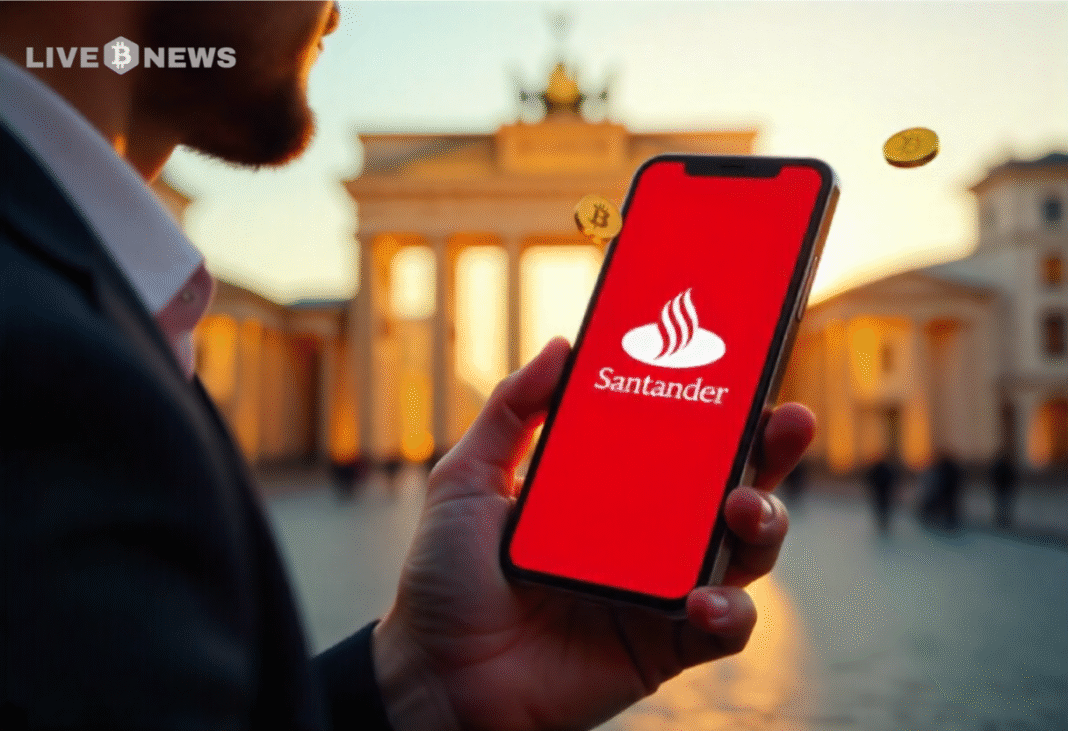
Santander’s Openbank Sparks Crypto Frenzy in Germany
In Germany, the digital bank Santander Openbank introduces trading in crypto, which offers BTC, ETH, LTC, POL, and ADA in the MiCA framework of the EU. Santander, the largest bank in Spain, has officially introduced cryptocurrency trading to its clients in Germany, using its digital division, Openbank. With this new service, users can purchase, sell, […] The post Santander’s Openbank Sparks Crypto Frenzy in Germany appeared first on Live Bitcoin News.
Share
LiveBitcoinNews2025/09/18 04:30

The GENIUS Act Is Already Law. Banks Shouldn’t Try to Rewrite It Now
The post The GENIUS Act Is Already Law. Banks Shouldn’t Try to Rewrite It Now appeared on BitcoinEthereumNews.com. Healthy competition drives innovation and better products for consumers; it is at the center of American economic leadership. Unfortunately, now that the bipartisan GENIUS Act has been signed into law, major legacy financial institutions seem to be having second thoughts about the innovations that stablecoins can bring to financial markets. Bank lobbying groups and public affairs teams have been peppering Congress with complaints about the law, urging members to reopen debate and introduce changes to the legislation that will ensure the stablecoin market doesn’t grow too quickly, protecting banks’ profits and stifling consumer choice. This reactionary response is both overblown and unnecessary. What legacy financial firms should do instead is embrace competition and offer exciting new products and services that consumers want, not try to kneecap emerging players through anti-innovation rules and regulations. The GENIUS Act was carefully designed with a thorough bipartisan process to strengthen consumer safeguards, ensure regulatory oversight, and preserve financial stability. Efforts to roll back its provisions are less about protecting families and more about protecting entrenched banking interests from the competition that helps ensure the U.S. banking system stays the strongest and most innovative in the world. Critics warn that allowing stablecoins to provide rewards could lead to massive deposit outflows from community banks, with figures as high as $6.6 trillion cited. But closer examination shows this fear is unfounded. A July 2025 analysis by consulting firm Charles River Associates found no statistically significant relationship between stablecoin adoption and community bank deposit outflows. In fact, the overwhelming majority of stablecoin reserves remain in the traditional financial system — either in commercial bank accounts or in short-term Treasuries — where they continue to support liquidity and credit in the broader U.S. economy. The dire estimates rely on unrealistic assumptions that every dollar of stablecoin issuance permanently…
Share
BitcoinEthereumNews2025/09/18 09:39

Grayscale’s GDLC Fund, Holding SOL and ADA, Receives SEC Approval for NYSE Listing
Grayscale’s GDLC Fund, holding BTC, ETH, XRP, SOL, and ADA, receives SEC approval to list on NYSE Arca, offering crypto exposure. Grayscale’s Digital Large Cap Fund (GDLC) holds major cryptocurrencies like Bitcoin, Ethereum, XRP, Solana, and Cardano. The U.S. SEC has approved GDLC to list on NYSE Arca. This gives investors regulated access to […] The post Grayscale’s GDLC Fund, Holding SOL and ADA, Receives SEC Approval for NYSE Listing appeared first on Live Bitcoin News.
Share
LiveBitcoinNews2025/09/18 19:30