Original article by Odaily (Planet Daily) Author: Azuma Leading lending protocol Aave is embroiled in controversy, with escalating tensions between the team andOriginal article by Odaily (Planet Daily) Author: Azuma Leading lending protocol Aave is embroiled in controversy, with escalating tensions between the team and

The second-largest shareholder on the leaderboard is selling off his holdings at a loss. How will this farce in the AAVE community end?

2025/12/23 08:00

Original article by Odaily (Planet Daily)

Author: Azuma

Leading lending protocol Aave is embroiled in controversy, with escalating tensions between the team and the community, which has objectively impacted the confidence of AAVE token holders.

Early this morning, the second-largest AAVE holder (excluding project owners, contract holders, and CEX holders) liquidated 230,000 AAVE tokens (worth approximately $38 million), causing AAVE to drop 12% in the short term. It is understood that this "second-largest holder" bought AAVE at an average price of $223.4 per token from the end of last year to the beginning of this year, and sold them today at an average price of approximately $165 per token, resulting in a final loss of $13.45 million.

Odaily Note: The address of this whale is https://debank.com/profile/0xa923b13270f8622b5d5960634200dc4302b7611e.

Cause of the incident: Dispute over the flow of funds

To understand Aave's current community crisis, we need to start with a recent change to Aave's front-end.

On December 4, Aave announced a partnership with Cow Swap, adopting the latter as the default trading path for Aave's front-end exchange functionality (Odaily note: previously ParaSwap), leveraging Cow Swap's MEV protection to achieve better quotes.

This was supposed to be a normal feature upgrade, but the community quickly discovered that when ParaSwap was used, the additional fees generated by the feature (including referral fees or positive slippage surplus fees) would have flowed to the Aave DAO treasury address, but after switching to Cow Swap, they flowed to the Aave Labs address instead.

Community representative EzR3aL first discovered this change, which Aave had not actively mentioned. He questioned the Aave team in the governance forum and estimated that, based solely on tracking Aave's revenue flow on Ethereum and Arbitrum, this fee was expected to generate around $200,000 per week, corresponding to an annualized revenue of over $10 million. This means that Aave transferred at least tens of millions of dollars in revenue from the community address to the team address without almost anyone knowing.

The core controversy: To whom does the Aave brand actually belong?

As the EzR3aL post gained traction, many AAVE holders felt betrayed, especially considering that AAVE made this change without communicating with the community or disclosing it at all, suggesting an attempt to conceal the change.

In response to community questions, Aave Labs directly replied to EzR3aL's post, stating that there should be a clear distinction between the protocol layer and the product layer. The redemption functionality interface on the Aave frontend is entirely operated by Aave Labs, which is responsible for funding, building, and maintaining it. This functionality is completely independent of the protocol managed by the DAO, therefore Aave Labs has the right to independently decide how to operate and profit from it… The revenue previously flowing to the Aave DAO address was a donation from Aave Labs, but not an obligation.

In short, Aave Labs' stance is that Aave's front-end interface and related functions are essentially team products, and the revenue generated from them should also be considered company property and should not be confused with the agreements and related revenue controlled by the DAO.

This statement quickly sparked heated discussions within the community regarding the ownership of the Aave protocol and its products. A well-known DeFi analyst wrote an article titled "Who Owns 'Aave': Aave Labs vs Aave DAO," which Odaily Planet Daily also reprinted in Chinese translation; those interested can refer to it for further reading.

On December 16, the conflict escalated further. Ernesto Boado, former CTO of Aave, initiated a proposal on the governance forum that day, demanding the transfer of control of Aave's brand assets (including domain names, social media accounts, naming rights, etc.) to AAVE token holders. These assets would be managed through an entity controlled by the DAO (the specific form to be determined later), with a strict anti-embezzlement protection mechanism in place.

The proposal garnered nearly 10,000 views and hundreds of high-quality responses on the Aave governance forum, with various participants within the Aave ecosystem expressing their opinions below it. While some voices argued that the proposal's implementation plan was inadequate and potentially exacerbated conflict, the majority of responses expressed support.

The founder made a statement, but the community didn't buy it.

As community sentiment escalated, Aave founder Stani responded on the forum, stating: "...This proposal leads us in a direction detrimental to the Aave ecosystem. It attempts to forcibly simplify a complex legal and operational issue into a simple 'yes/no' vote, without providing a clear implementation path. Such complex issues should be addressed through a specially designed, structured process, reaching consensus through multiple ad-hoc checks and concrete solutions. For these reasons, I will vote against this proposal..."

From a business operations perspective, Stani's claim that the proposal was too hasty may not be wrong. However, in the current discussion atmosphere, this statement can easily be interpreted as "Aave founders disagree with transferring brand assets to token holders," which obviously further exacerbates the antagonism between the community and the team.

After Stani made his statement, some offensive comments targeting Stani appeared below the original post. Many more users expressed their dissatisfaction through forums or social media. One OG user mentioned that he had the idea of selling all his AAVE for the first time, while a loyal AAVE believer said: "AAVE holders should realize that this is just another DeFi garbage coin. It is neither better nor worse than other coins."

The latest community update is what was mentioned at the beginning of this article: the second-ranked player cut his losses and left the market after losing tens of millions of dollars.

Is it still possible to buy AAVE?

Just two weeks ago, Odaily Planet Daily published an article titled "What Did the Smart Money That Rushed to Buy AAVE at Low Prices Really See?" At that time, AAVE was still a favorite of top institutions such as Multicoin Capital. Its excellent brand reputation, strong accumulated funds, clear expansion path, and robust revenue and buyback flow all proved that AAVE was a "real value coin" unlike other altcoins.

However, in just two weeks, a public opinion crisis involving issues ranging from fee allocation to brand control and team-community relations caused AAVE to quickly fall from being a "representative of value coins" into the center of controversy, and even topped the short-term decline list due to emotional shocks.

As of this writing, Aave Labs has indicated below Ernesto's proposal that it has initiated an ARFC snapshot vote on the proposal, allowing AAVE holders to formally express their stance and clarify the future direction. The outcome of this vote and the subsequent actions of the Aave Labs team will undoubtedly have a significant impact on Aave's community confidence and its short-term price performance.

It is important to emphasize that this incident is not simply a "negative news" or a "change in performance," but rather a concentrated examination of Aave's existing governance structure and the boundaries of its rights.

If you believe that Aave Labs will remain highly aligned with Aave DAO in terms of long-term interests, and that the current friction is more of a communication and procedural error, then the price pullback driven by sentiment may be a good entry point. However, if you believe that this dispute exposes not an isolated problem, but a structural contradiction stemming from long-standing ambiguity in the rights and interests of the team and the agreement, and a lack of institutional constraints, then this turmoil may just be the beginning.

From a broader perspective, Aave's controversy is not an isolated case. As DeFi matures, protocol revenues become genuinely substantial, and brands and front-ends begin to possess commercial value, structural contradictions between protocols and products, and between teams and communities, will surface. Aave has been thrust into the spotlight this time not because it made more mistakes, but because it went further.

This debate about fees, branding, and control involves far more than just AAVE; it's a question that the entire DeFi industry will inevitably have to answer sooner or later.

Market Opportunity
AaveToken Logo
AaveToken Price(AAVE)
$152,78
$152,78$152,78
-0,99%
USD
AaveToken (AAVE) Live Price Chart
Disclaimer: The articles reposted on this site are sourced from public platforms and are provided for informational purposes only. They do not necessarily reflect the views of MEXC. All rights remain with the original authors. If you believe any content infringes on third-party rights, please contact service@support.mexc.com for removal. MEXC makes no guarantees regarding the accuracy, completeness, or timeliness of the content and is not responsible for any actions taken based on the information provided. The content does not constitute financial, legal, or other professional advice, nor should it be considered a recommendation or endorsement by MEXC.

You May Also Like

U.S. Coinbase Premium Turns Negative Amid Asian Buying Surge
U.S. Coinbase Premium Turns Negative Amid Asian Buying Surge

U.S. institutional demand falls as Asian markets buy Bitcoin dips, causing negative Coinbase premium.
Share
CoinLive2025/12/23 14:20
Crucial ETH Unstaking Period: Vitalik Buterin’s Unwavering Defense for Network Security

Crucial ETH Unstaking Period: Vitalik Buterin’s Unwavering Defense for Network Security

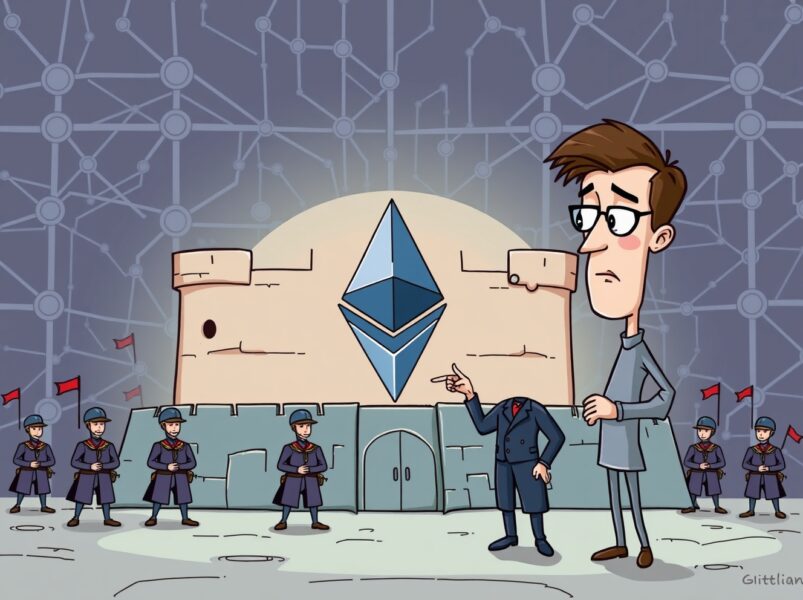
BitcoinWorld Crucial ETH Unstaking Period: Vitalik Buterin’s Unwavering Defense for Network Security Ever wondered why withdrawing your staked Ethereum (ETH) isn’t an instant process? It’s a question that often sparks debate within the crypto community. Ethereum founder Vitalik Buterin recently stepped forward to defend the network’s approximately 45-day ETH unstaking period, asserting its crucial role in safeguarding the network’s integrity. This lengthy waiting time, while sometimes seen as an inconvenience, is a deliberate design choice with profound implications for security. Why is the ETH Unstaking Period a Vital Security Measure? Vitalik Buterin’s defense comes amidst comparisons to other networks, like Solana, which boast significantly shorter unstaking times. He drew a compelling parallel to military operations, explaining that an army cannot function effectively if its soldiers can simply abandon their posts at a moment’s notice. Similarly, a blockchain network requires a stable and committed validator set to maintain its security. The current ETH unstaking period isn’t merely an arbitrary delay. It acts as a critical buffer, providing the network with sufficient time to detect and respond to potential malicious activities. If validators could instantly exit, it would open doors for sophisticated attacks, jeopardizing the entire system. Currently, Ethereum boasts over one million active validators, collectively staking approximately 35.6 million ETH, representing about 30% of the total supply. This massive commitment underpins the network’s robust security model, and the unstaking period helps preserve this stability. Network Security: Ethereum’s Paramount Concern A shorter ETH unstaking period might seem appealing for liquidity, but it introduces significant risks. Imagine a scenario where a large number of validators, potentially colluding, could quickly withdraw their stake after committing a malicious act. Without a substantial delay, the network would have limited time to penalize them or mitigate the damage. This “exit queue” mechanism is designed to prevent sudden validator exodus, which could lead to: Reduced decentralization: A rapid drop in active validators could concentrate power among fewer participants. Increased vulnerability to attacks: A smaller, less stable validator set is easier to compromise. Network instability: Frequent and unpredictable changes in validator numbers can lead to performance issues and consensus failures. Therefore, the extended period is not a bug; it’s a feature. It’s a calculated trade-off between immediate liquidity for stakers and the foundational security of the entire Ethereum ecosystem. Ethereum vs. Solana: Different Approaches to Unstaking When discussing the ETH unstaking period, many point to networks like Solana, which offers a much quicker two-day unstaking process. While this might seem like an advantage for stakers seeking rapid access to their funds, it reflects fundamental differences in network architecture and security philosophies. Solana’s design prioritizes speed and immediate liquidity, often relying on different consensus mechanisms and validator economics to manage security risks. Ethereum, on the other hand, with its proof-of-stake evolution from proof-of-work, has adopted a more cautious approach to ensure its transition and long-term stability are uncompromised. Each network makes design choices based on its unique goals and threat models. Ethereum’s substantial value and its role as a foundational layer for countless dApps necessitate an extremely robust security posture, making the current unstaking duration a deliberate and necessary component. What Does the ETH Unstaking Period Mean for Stakers? For individuals and institutions staking ETH, understanding the ETH unstaking period is crucial for managing expectations and investment strategies. It means that while staking offers attractive rewards, it also comes with a commitment to the network’s long-term health. Here are key considerations for stakers: Liquidity Planning: Stakers should view their staked ETH as a longer-term commitment, not immediately liquid capital. Risk Management: The delay inherently reduces the ability to react quickly to market volatility with staked assets. Network Contribution: By participating, stakers contribute directly to the security and decentralization of Ethereum, reinforcing its value proposition. While the current waiting period may not be “optimal” in every sense, as Buterin acknowledged, simply shortening it without addressing the underlying security implications would be a dangerous gamble for the network’s reliability. In conclusion, Vitalik Buterin’s defense of the lengthy ETH unstaking period underscores a fundamental principle: network security cannot be compromised for the sake of convenience. It is a vital mechanism that protects Ethereum’s integrity, ensuring its stability and trustworthiness as a leading blockchain platform. This deliberate design choice, while requiring patience from stakers, ultimately fortifies the entire ecosystem against potential threats, paving the way for a more secure and reliable decentralized future. Frequently Asked Questions (FAQs) Q1: What is the main reason for Ethereum’s long unstaking period? A1: The primary reason is network security. A lengthy ETH unstaking period prevents malicious actors from quickly withdrawing their stake after an attack, giving the network time to detect and penalize them, thus maintaining stability and integrity. Q2: How long is the current ETH unstaking period? A2: The current ETH unstaking period is approximately 45 days. This duration can fluctuate based on network conditions and the number of validators in the exit queue. Q3: How does Ethereum’s unstaking period compare to other blockchains? A3: Ethereum’s unstaking period is notably longer than some other networks, such as Solana, which has a two-day period. This difference reflects varying network architectures and security priorities. Q4: Does the unstaking period affect ETH stakers? A4: Yes, it means stakers need to plan their liquidity carefully, as their staked ETH is not immediately accessible. It encourages a longer-term commitment to the network, aligning staker interests with Ethereum’s stability. Q5: Could the ETH unstaking period be shortened in the future? A5: While Vitalik Buterin acknowledged the current period might not be “optimal,” any significant shortening would likely require extensive research and network upgrades to ensure security isn’t compromised. For now, the focus remains on maintaining robust network defenses. Found this article insightful? Share it with your friends and fellow crypto enthusiasts on social media to spread awareness about the critical role of the ETH unstaking period in Ethereum’s security! To learn more about the latest Ethereum trends, explore our article on key developments shaping Ethereum’s institutional adoption. This post Crucial ETH Unstaking Period: Vitalik Buterin’s Unwavering Defense for Network Security first appeared on BitcoinWorld.
Share
Coinstats2025/09/18 15:30
USD/JPY jumps to near 148.30 as Fed Powell’s caution on rate cuts boosts US Dollar

USD/JPY jumps to near 148.30 as Fed Powell’s caution on rate cuts boosts US Dollar

The post USD/JPY jumps to near 148.30 as Fed Powell’s caution on rate cuts boosts US Dollar appeared on BitcoinEthereumNews.com. USD/JPY climbs to near 148.30 as Fed’s Powell didn’t endorse aggressive dovish stance. Fed’s Powell warns of slowing job demand and upside inflation risks. Japan’s Jibun Bank Manufacturing PMI declines at a faster pace in September. The USD/JPY pair trades 0.45% higher to near 148.30 during the European trading session on Wednesday. The pair gains sharply as the US Dollar (USD) outperforms a majority of its peers, following comments from Federal Reserve (Fed) Chair Jerome Powell that the central bank needs to be cautious on further interest rate cuts. During the press time, the US Dollar Index (DXY), which tracks the Greenback’s value against six major currencies, rises almost 0.4% to near 97.60. The USD Index resumes its upside journey after a two-day corrective move. On Tuesday, Fed’s Powell stated at the Greater Providence Chamber of Commerce that the upside inflation risks and labor market concerns have posed a challenging situation for the central bank, which is prompting officials to exercise caution on further monetary policy easing. Powell also stated that the current interest rate range is “well positioned to respond to potential economic developments”. Fed Powell’s comments were similar to statements from Federal Open Market Committee (FOMC) members St. Louis Fed President Alberto Musalem, Atlanta Fed President Raphael Bostic, and Cleveland Fed President Beth Hammack who stated on Monday that the central bank needs to cautious over unwinding monetary policy restrictiveness further, citing persistent inflation risks. Going forward, investors will focus on the US Durable Goods Orders and Personal Consumption Expenditure Price Index (PCE) data for August, which will be released on Thursday and Friday, respectively. In Japan, the manufacturing business activity has declined again in September. Preliminary Jibun Bank Manufacturing PMI data came in lower at 48.4 against 49.7 in August. Economists had anticipated the Manufacturing PMI to…
Share
BitcoinEthereumNews2025/09/25 01:31
