The post How A Smaller Business Outfitted The Marshall Islands’ First Soccer Team appeared on BitcoinEthereumNews.com. The Marshall Islands have the world’s newest soccer team. Chewy Lin The soccer jersey business is worth billions of dollars. From newly released kits to retro designs harking back to ’90s legends, the allure never wanes, as supporters are prepared—even with the steep prices—to dip into their pockets. Currently, Adidas pays Real Madrid and Nike pays Barcelona comfortably over €100 million ($117 million) each year for the privilege of having their brands on the popular shirts. Then, there are the priciest soccer jerseys sold at auction; Diego Maradona’s Argentina top from 1986—made by Le Coq Sportif—went for around €8 million ($9.3 million) in 2022. But when the opportunity arose to sponsor the world’s newest international team, the top manufacturers were not on the scene in 2025. Instead, a grassroots company based in Nottingham, United Kingdom, stepped in to design and produce the first-ever shirts for the players and fans of the Marshall Islands, over 13,000 miles away in the Pacific Ocean. The Marshall Islands’ Call Launched 17 years ago, PlayerLayer—the creator in question—built a reputation from supplying kits to higher education sports clubs. And through a university student who had been tracking the Marshall Islands’ journey, the first conversations began regarding a style for the prospective team. Representing an archipelago and without FIFA membership, the squad’s first game was a heavy loss to the U.S. Virgin Islands in Arkansas in February. However, their first goals arrived two days later in a narrow defeat to the Turks and Caicos Islands. A date for the next match is still unclear. Until recently, there hasn’t been a path for soccer. An isolated territory hosting around 40,000 people—the sort of figure common in many stadiums across Europe—they have closer ties to typically U.S. sports, such as basketball and baseball, which stem from the United… The post How A Smaller Business Outfitted The Marshall Islands’ First Soccer Team appeared on BitcoinEthereumNews.com. The Marshall Islands have the world’s newest soccer team. Chewy Lin The soccer jersey business is worth billions of dollars. From newly released kits to retro designs harking back to ’90s legends, the allure never wanes, as supporters are prepared—even with the steep prices—to dip into their pockets. Currently, Adidas pays Real Madrid and Nike pays Barcelona comfortably over €100 million ($117 million) each year for the privilege of having their brands on the popular shirts. Then, there are the priciest soccer jerseys sold at auction; Diego Maradona’s Argentina top from 1986—made by Le Coq Sportif—went for around €8 million ($9.3 million) in 2022. But when the opportunity arose to sponsor the world’s newest international team, the top manufacturers were not on the scene in 2025. Instead, a grassroots company based in Nottingham, United Kingdom, stepped in to design and produce the first-ever shirts for the players and fans of the Marshall Islands, over 13,000 miles away in the Pacific Ocean. The Marshall Islands’ Call Launched 17 years ago, PlayerLayer—the creator in question—built a reputation from supplying kits to higher education sports clubs. And through a university student who had been tracking the Marshall Islands’ journey, the first conversations began regarding a style for the prospective team. Representing an archipelago and without FIFA membership, the squad’s first game was a heavy loss to the U.S. Virgin Islands in Arkansas in February. However, their first goals arrived two days later in a narrow defeat to the Turks and Caicos Islands. A date for the next match is still unclear. Until recently, there hasn’t been a path for soccer. An isolated territory hosting around 40,000 people—the sort of figure common in many stadiums across Europe—they have closer ties to typically U.S. sports, such as basketball and baseball, which stem from the United…

How A Smaller Business Outfitted The Marshall Islands’ First Soccer Team

The Marshall Islands have the world’s newest soccer team.

Chewy Lin

The soccer jersey business is worth billions of dollars.

From newly released kits to retro designs harking back to ’90s legends, the allure never wanes, as supporters are prepared—even with the steep prices—to dip into their pockets.

Currently, Adidas pays Real Madrid and Nike pays Barcelona comfortably over €100 million ($117 million) each year for the privilege of having their brands on the popular shirts. Then, there are the priciest soccer jerseys sold at auction; Diego Maradona’s Argentina top from 1986—made by Le Coq Sportif—went for around €8 million ($9.3 million) in 2022.

But when the opportunity arose to sponsor the world’s newest international team, the top manufacturers were not on the scene in 2025. Instead, a grassroots company based in Nottingham, United Kingdom, stepped in to design and produce the first-ever shirts for the players and fans of the Marshall Islands, over 13,000 miles away in the Pacific Ocean.

The Marshall Islands’ Call

Launched 17 years ago, PlayerLayer—the creator in question—built a reputation from supplying kits to higher education sports clubs.

And through a university student who had been tracking the Marshall Islands’ journey, the first conversations began regarding a style for the prospective team. Representing an archipelago and without FIFA membership, the squad’s first game was a heavy loss to the U.S. Virgin Islands in Arkansas in February. However, their first goals arrived two days later in a narrow defeat to the Turks and Caicos Islands. A date for the next match is still unclear.

Until recently, there hasn’t been a path for soccer. An isolated territory hosting around 40,000 people—the sort of figure common in many stadiums across Europe—they have closer ties to typically U.S. sports, such as basketball and baseball, which stem from the United States’ occupation after World War II.

Marshall Islands athletes made an appearance at the Olympic Games in France last year.

Anadolu via Getty Images

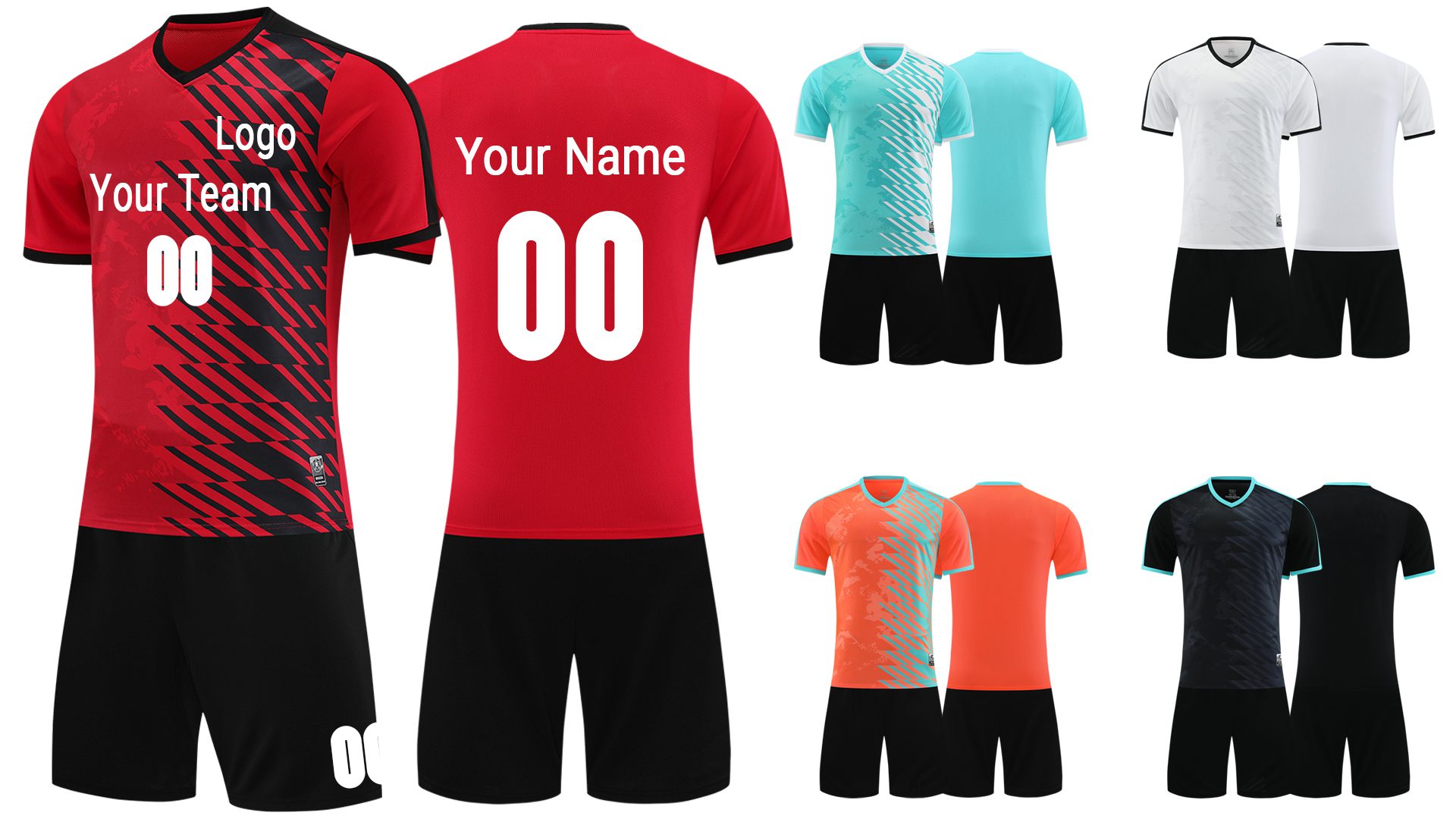
The environment is also a factor. The Marshall Islands’ very existence is under threat due to rapidly rising sea levels, reflected in sustainability-focused PlayerLayer’s fading illustrations of fauna on its alternative white and orange jersey.

“We’ve made kit out of bamboo, charcoal, coffee beans, and all kinds of things,” says its cofounder, Rod Bradley, who plays American football and is known to many as Spartan from the hit television show Gladiators. “But it’s predominantly recycled polyesters and PT plastics—essentially water bottles taken out of the ocean that we then turn into sports kit.

In a field dominated by the major retailers, Bradley believes there’s space for other labels to do their thing, as he mentions his son and the enduring appeal of different jerseys.

“He gets it all, from ‘Why are you wearing your pyjamas?’ to ‘That’s the best kit’. They’re quirky, unusual designs. I like to think it’s a real zig to the zag of the day-to-day Premier League and global clubs (jerseys) you see people in, and it’s nice for that to be supported globally, albeit on a small scale initially.

“You don’t find football shirts in charity shops because they’re generally treasured and not thrown away. They’re the kind of things that people love, cherish, and pass on. They’re part of people’s lineage and have a generational consistency. So, there’s always space in the wardrobe for next year’s kit.”

Speaking about his company, he adds, “We can be a global name, but we are not on a rocket ship paying out for big deals.”

Island Soccer

The possibility of making the World Cup on day is wafer-thin for the Marshall Islands. Yet lesser-discussed islands are making a racket on the international scene. Cape Verde will be at the global tournament in 2026, becoming the second-smallest participating nation after Iceland.

Meanwhile, New Caledonia has snuck into the playoffs, and the Faroe Islands have a chance—albeit remote. Alongside them is a group of riders in the CONCACAF region, including Haiti (from Hispaniola), aiming to make the expanded format.

And for those simply proud to wear the jersey? Running around in their colors and on their grass for years to come would be a dream itself. The changing Earth may not allow it, but at least the Marshall Islands are finally being heard.

Source: https://www.forbes.com/sites/henryflynn/2025/11/02/how-a-smaller-business-outfitted-the-marshall-islands-first-soccer-team/


Market Opportunity
RealLink Logo
RealLink Price(REAL)
$0.07569
$0.07569$0.07569
+0.11%
USD
RealLink (REAL) Live Price Chart
Disclaimer: The articles reposted on this site are sourced from public platforms and are provided for informational purposes only. They do not necessarily reflect the views of MEXC. All rights remain with the original authors. If you believe any content infringes on third-party rights, please contact service@support.mexc.com for removal. MEXC makes no guarantees regarding the accuracy, completeness, or timeliness of the content and is not responsible for any actions taken based on the information provided. The content does not constitute financial, legal, or other professional advice, nor should it be considered a recommendation or endorsement by MEXC.

You May Also Like

Satoshi-Era Mt. Gox’s 1,000 Bitcoin Wallet Suddenly Reactivated

Satoshi-Era Mt. Gox’s 1,000 Bitcoin Wallet Suddenly Reactivated

The post Satoshi-Era Mt. Gox’s 1,000 Bitcoin Wallet Suddenly Reactivated appeared on BitcoinEthereumNews.com. X account @SaniExp, which belongs to the founder of the Timechain Index explorer, has published data showing that a dormant BTC wallet was activated after hibernating for six years. However, it was set up 13 years ago, according to the tweet — the time when Satoshi Nakamoto’s shadow was still casting itself around, so to speak. The X post states that the tweet belongs to infamous early Bitcoin exchange Mt. Gox, which suffered from a major hack in the early 2010s, and last year it began paying out compensation to clients who lost their crypto in that hack. The deadline was eventually extended to October 2025. Mt. Gox’s wallet with 1,000 BTC reactivated The above-mentioned data source shared a screenshot from the Timechain Index explorer, showing multiple transactions marked as confirmed and moving a total of 1,000 Bitcoins. This amount of crypto is valued at $116,195,100 at the time of the initiated transaction. Last year, Mt. Gox began to move the remains of its gargantuan funds to pay out compensations to its creditors. Earlier this year, it also made several massive transactions to partner exchanges to distribute funds to Mt. Gox investors. All of the compensations were promised to be paid out by Oct. 31, 2025. The aforementioned transaction is likely preparation for another payout. The exchange was hacked for several years due to multiple unnoticed security breaches, and in 2014, when the site went offline, 744,408 Bitcoins were reported stolen. Source: https://u.today/satoshi-era-mtgoxs-1000-bitcoin-wallet-suddenly-reactivated
Share
BitcoinEthereumNews2025/09/18 10:18
Zycus Launches Industry-First AI Adoption Index to Measure Real-World AI Maturity in Procurement

Zycus Launches Industry-First AI Adoption Index to Measure Real-World AI Maturity in Procurement

Princeton, NJ | Dec 26th, 2025 — Zycus, a global leader in AI-powered Source-to-Pay (S2P) solutions, today announced the launch of the AI Adoption Index for Procurement
Share
Techbullion2025/12/26 17:57
Soccer Replica Jerseys – Kits, Customization, and Best Practices for Caring for Them

Soccer Replica Jerseys – Kits, Customization, and Best Practices for Caring for Them

Today’s soccer jersey is more than just athletic clothing; it is a representation of loyalty, a statement of fashion, and an example of technical development. The
Share
Techbullion2025/12/26 18:04