The post Brazilian crypto users hit by WhatsApp malware campaign targeting crypto wallets appeared on BitcoinEthereumNews.com. Bad actors are weaponizing WhatsApp to deliver a hijacking worm and banking trojan in Brazil that targets their crypto wallets. Summary SpiderLabs has warned about a WhatsApp‑based malware campaign in Brazil that deploys a worm and banking trojan to target crypto users. The malware is able to harvest sensitive information related to the victim’s crypto exchange account and wallets. Trustwave’s cybersecurity research team SpiderLabs has uncovered a major campaign involving the Eternidade Stealer, which can quietly harvest financial information, login data, and other sensitive details associated with banking portals, fintech apps, and crypto exchanges on the victim’s device. Threat actors were found to be using complex social engineering schemes involving “fake government programs, delivery notifications, and even fraudulent investment groups shared through WhatsApp messages and groups,” the report said. Attackers are using a two‑stage process to deliver the malicious payload that includes a WhatsApp‑propagating worm and a Delphi‑based banking trojan. When the victim clicks a worm link, it triggers an automated sequence that hijacks the WhatsApp session, downloads the MSI installer in the background, and deploys the stealer that scans for financial applications and crypto wallets. “When it detects a match, for example, a window title or process name linked to Bradesco, BTG Pactual, Binance, Coinbase, MetaMask, Trust Wallet, or another financial brand, the malware immediately decrypts and activates its next-stage payload,” Spiderlabs researchers explained. Another concerning trait of the campaign, besides its stealthy nature, is that the worm is able to access the victim’s contact list, which lets it target other potential victims. Meanwhile, it prevents detection by using “hardcoded credentials to log into its email account,” which is retrieved from a Gmail inbox controlled by the operator. By using IMAP over SSL to fetch commands, a method that blends with ordinary user email traffic, the malware is able… The post Brazilian crypto users hit by WhatsApp malware campaign targeting crypto wallets appeared on BitcoinEthereumNews.com. Bad actors are weaponizing WhatsApp to deliver a hijacking worm and banking trojan in Brazil that targets their crypto wallets. Summary SpiderLabs has warned about a WhatsApp‑based malware campaign in Brazil that deploys a worm and banking trojan to target crypto users. The malware is able to harvest sensitive information related to the victim’s crypto exchange account and wallets. Trustwave’s cybersecurity research team SpiderLabs has uncovered a major campaign involving the Eternidade Stealer, which can quietly harvest financial information, login data, and other sensitive details associated with banking portals, fintech apps, and crypto exchanges on the victim’s device. Threat actors were found to be using complex social engineering schemes involving “fake government programs, delivery notifications, and even fraudulent investment groups shared through WhatsApp messages and groups,” the report said. Attackers are using a two‑stage process to deliver the malicious payload that includes a WhatsApp‑propagating worm and a Delphi‑based banking trojan. When the victim clicks a worm link, it triggers an automated sequence that hijacks the WhatsApp session, downloads the MSI installer in the background, and deploys the stealer that scans for financial applications and crypto wallets. “When it detects a match, for example, a window title or process name linked to Bradesco, BTG Pactual, Binance, Coinbase, MetaMask, Trust Wallet, or another financial brand, the malware immediately decrypts and activates its next-stage payload,” Spiderlabs researchers explained. Another concerning trait of the campaign, besides its stealthy nature, is that the worm is able to access the victim’s contact list, which lets it target other potential victims. Meanwhile, it prevents detection by using “hardcoded credentials to log into its email account,” which is retrieved from a Gmail inbox controlled by the operator. By using IMAP over SSL to fetch commands, a method that blends with ordinary user email traffic, the malware is able…

Brazilian crypto users hit by WhatsApp malware campaign targeting crypto wallets

Bad actors are weaponizing WhatsApp to deliver a hijacking worm and banking trojan in Brazil that targets their crypto wallets.

Summary

  • SpiderLabs has warned about a WhatsApp‑based malware campaign in Brazil that deploys a worm and banking trojan to target crypto users.
  • The malware is able to harvest sensitive information related to the victim’s crypto exchange account and wallets.

Trustwave’s cybersecurity research team SpiderLabs has uncovered a major campaign involving the Eternidade Stealer, which can quietly harvest financial information, login data, and other sensitive details associated with banking portals, fintech apps, and crypto exchanges on the victim’s device.

Threat actors were found to be using complex social engineering schemes involving “fake government programs, delivery notifications, and even fraudulent investment groups shared through WhatsApp messages and groups,” the report said.

Attackers are using a two‑stage process to deliver the malicious payload that includes a WhatsApp‑propagating worm and a Delphi‑based banking trojan. When the victim clicks a worm link, it triggers an automated sequence that hijacks the WhatsApp session, downloads the MSI installer in the background, and deploys the stealer that scans for financial applications and crypto wallets.

“When it detects a match, for example, a window title or process name linked to Bradesco, BTG Pactual, Binance, Coinbase, MetaMask, Trust Wallet, or another financial brand, the malware immediately decrypts and activates its next-stage payload,” Spiderlabs researchers explained.

Another concerning trait of the campaign, besides its stealthy nature, is that the worm is able to access the victim’s contact list, which lets it target other potential victims.

Meanwhile, it prevents detection by using “hardcoded credentials to log into its email account,” which is retrieved from a Gmail inbox controlled by the operator. By using IMAP over SSL to fetch commands, a method that blends with ordinary user email traffic, the malware is able to bypass network filters and remain difficult to trace.

“It is a very clever way to update its C2, maintain persistence, and evade detections or takedowns on a network level. If the malware cannot connect to the email account, it uses a hardcoded fallback C2 address,” researchers added.

SpiderLabs researchers have urged Brazilian crypto users to remain alert, especially on WhatsApp, which has become a favored tool for social engineering-based malware campaigns.

“WhatsApp continues to be one of the most exploited communication channels in Brazil’s cybercrime ecosystem. Over the past two years, threat actors have refined their tactics, using the platform’s immense popularity to distribute banker trojans and information-stealing malware,” researchers warned.

Crypto adoption in Brazil has soared over the past few years, and with recent developments like potential plans to establish a national Bitcoin reserve and enforce a proper regulatory framework, the country has drawn increased attention from global investors and local users alike. On the Chainalysis Global Crypto Adoption Index, Brazil ranks fifth, while it stands as Latin America’s largest crypto market by volume.

As such, it remains a prime target for scammers and other bad actors seeking to exploit inexperienced users or take advantage of poorly protected systems.

Eternidade Stealer is a kind of infostealer, which, as mentioned above, can silently monitor applications, extract sensitive credentials, and activate fake overlays to harvest user data..

Back in September, security platform Mosyle uncovered one such cross-platform threat called ModStealer that remained undetected for weeks and was found to be targeting crypto wallets across macOS, Windows, and Linux environments. By using obfuscated JavaScript code within a Node.js environment, the malware was able to infiltrate developer systems and exfiltrate private keys and clipboard data from over 50 browser wallet extensions.

More recently, a Google Threat Intelligence Group report warned that bad actors have started using artificial intelligence to develop malware that can rewrite its own code in real time, making it a lot harder to detect or neutralize.

Source: https://crypto.news/brazilian-crypto-users-hit-by-whatsapp-malware-campaign-targeting-crypto-wallets/


Market Opportunity
Bad Idea AI Logo
Bad Idea AI Price(BAD)
$0,00000000141
$0,00000000141$0,00000000141
-0,70%
USD
Bad Idea AI (BAD) Live Price Chart
Disclaimer: The articles reposted on this site are sourced from public platforms and are provided for informational purposes only. They do not necessarily reflect the views of MEXC. All rights remain with the original authors. If you believe any content infringes on third-party rights, please contact service@support.mexc.com for removal. MEXC makes no guarantees regarding the accuracy, completeness, or timeliness of the content and is not responsible for any actions taken based on the information provided. The content does not constitute financial, legal, or other professional advice, nor should it be considered a recommendation or endorsement by MEXC.

You May Also Like

Satoshi-Era Mt. Gox’s 1,000 Bitcoin Wallet Suddenly Reactivated

Satoshi-Era Mt. Gox’s 1,000 Bitcoin Wallet Suddenly Reactivated

The post Satoshi-Era Mt. Gox’s 1,000 Bitcoin Wallet Suddenly Reactivated appeared on BitcoinEthereumNews.com. X account @SaniExp, which belongs to the founder of the Timechain Index explorer, has published data showing that a dormant BTC wallet was activated after hibernating for six years. However, it was set up 13 years ago, according to the tweet — the time when Satoshi Nakamoto’s shadow was still casting itself around, so to speak. The X post states that the tweet belongs to infamous early Bitcoin exchange Mt. Gox, which suffered from a major hack in the early 2010s, and last year it began paying out compensation to clients who lost their crypto in that hack. The deadline was eventually extended to October 2025. Mt. Gox’s wallet with 1,000 BTC reactivated The above-mentioned data source shared a screenshot from the Timechain Index explorer, showing multiple transactions marked as confirmed and moving a total of 1,000 Bitcoins. This amount of crypto is valued at $116,195,100 at the time of the initiated transaction. Last year, Mt. Gox began to move the remains of its gargantuan funds to pay out compensations to its creditors. Earlier this year, it also made several massive transactions to partner exchanges to distribute funds to Mt. Gox investors. All of the compensations were promised to be paid out by Oct. 31, 2025. The aforementioned transaction is likely preparation for another payout. The exchange was hacked for several years due to multiple unnoticed security breaches, and in 2014, when the site went offline, 744,408 Bitcoins were reported stolen. Source: https://u.today/satoshi-era-mtgoxs-1000-bitcoin-wallet-suddenly-reactivated
Share
BitcoinEthereumNews2025/09/18 10:18
Zycus Launches Industry-First AI Adoption Index to Measure Real-World AI Maturity in Procurement

Zycus Launches Industry-First AI Adoption Index to Measure Real-World AI Maturity in Procurement

Princeton, NJ | Dec 26th, 2025 — Zycus, a global leader in AI-powered Source-to-Pay (S2P) solutions, today announced the launch of the AI Adoption Index for Procurement
Share
Techbullion2025/12/26 17:57
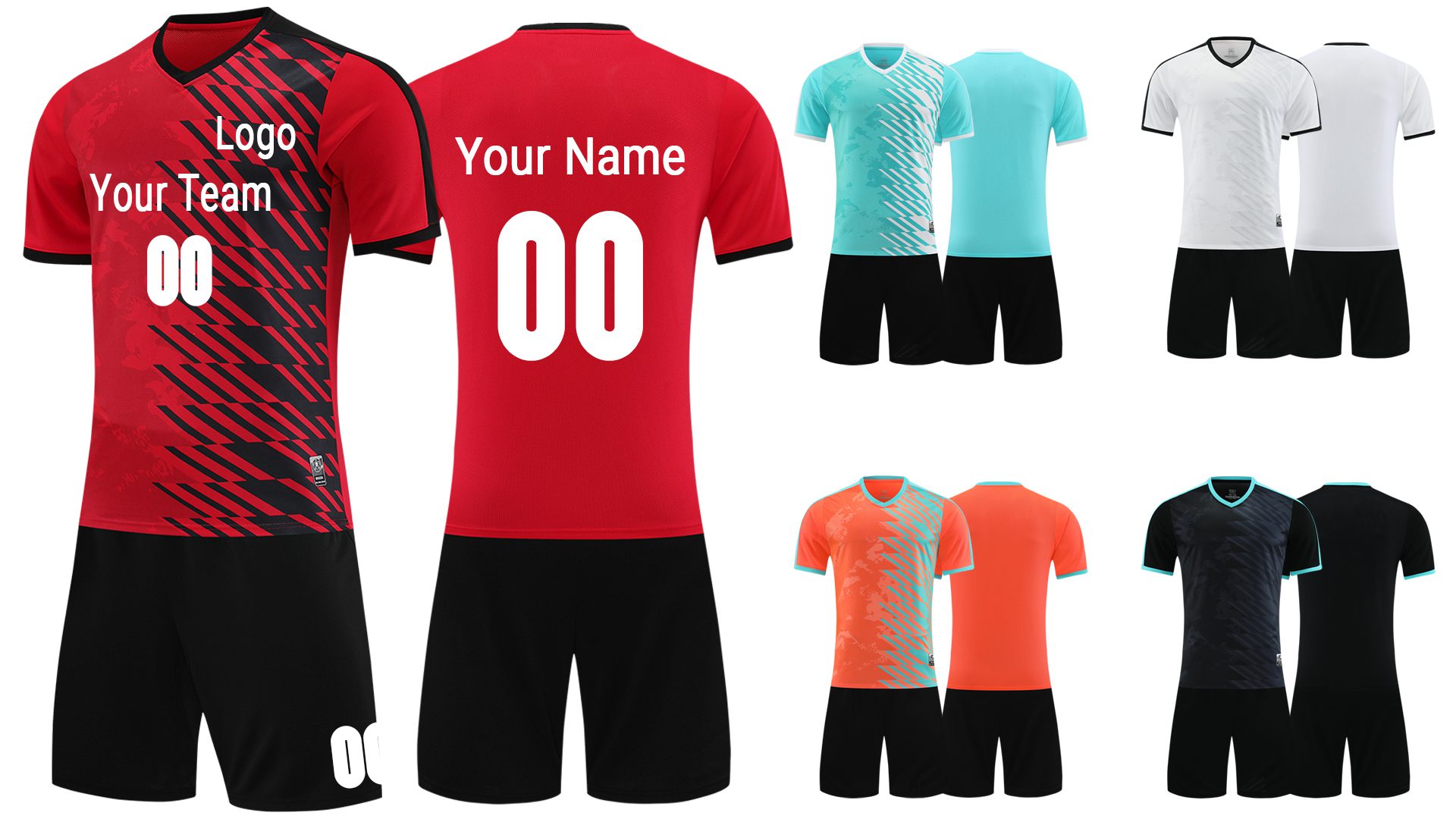
Soccer Replica Jerseys – Kits, Customization, and Best Practices for Caring for Them

Soccer Replica Jerseys – Kits, Customization, and Best Practices for Caring for Them

Today’s soccer jersey is more than just athletic clothing; it is a representation of loyalty, a statement of fashion, and an example of technical development. The
Share
Techbullion2025/12/26 18:04