Omi Wagyu is part of the same elite group of Japan’s 'Sandai Wagyū' or 'Three Great Wagyu,' alongside Kobe and MatsusakaOmi Wagyu is part of the same elite group of Japan’s 'Sandai Wagyū' or 'Three Great Wagyu,' alongside Kobe and Matsusaka

What is Omi Wagyu, and why is it ideal for yakiniku?

2025/12/09 20:25

MANILA, Philippines – Omi Wagyu, a name that doesn’t get as much mainstream attention as Kobe or Matsusaka, belongs to the same elite group of Japan’s “Sandai Wagyū” or “Three Great Wagyu.”

Considered a premium cut, especially for Japan’s yakiniku grilling experience, A5 Grade Omi Wagyu is the highest possible grade for Wagyu beef in Japan, according to the Japanese Meat Grading Association (JMGA).

Omi Wagyu hails from Shiga prefecture and is produced by some of Japan’s oldest and most respected cattle-farming families, many tracing their craft back hundreds of years in the Edo era. Among them is Daikichi Japanese Black Wagyu Farm, known for its slow fattening process and emphasis on animal welfare. These practices directly affect how wagyu develops marbling, texture, and flavor.

The farm is in collaboration with homegrown yakiniku chain Hiro Premier, which opened its newest branch in SM Aura, Taguig City.

Chef Shogo Izawa from Tokyo is helming the yakiniku grill. All photos by Steph Arnaldo/Rappler

Hiro Premier’s chefs are fully Japanese-trained, led by MasterChef Shogo Izawa, a Tokyo-born, award-winning chef with over 40 years of experience. Having cooked for world championships in England and Taiwan to the GRAMMYs, Izawa’s quiet skill is grounded in discipline and respect for every ingredient.

The spirit of “omotenashi” (the Japanese philosophy of hospitality) fires up Hiro Premier’s yakiniku experience — each grill temperature is monitored with precision by the staff. Servers help angle the tongs for you, adjust heat zones, and can even grill each meat slice for you until it reaches your desired sear and doneness. Smoke doesn’t get too in the way of cooking and conversations, either.

Omi Wagyu works best in yakinku: the high heat adds a smokiness and char-grilled profile to the otherwise fatty and indulgent meat.

Yakiniku looks simple — grill beef, eat, repeat — but there are reasons for the precision. The heat level determines whether the fat melts cleanly or pools, the cut thickness affects tenderness, and even the grill placement changes flavor.

Omi-gosh: Guide to wagyu grading

Each grade actually combines two evaluations: the yield grade, which measures how much usable meat comes from the cow (with A being the highest, followed by B and C), and the quality grade, scored from 1 to 5 based on marbling, meat color and brightness, texture and firmness, and the fat’s color and luster.

An A5 rating means the beef has achieved both the top yield and the highest possible quality score, a combination that results in the intricate marbling and tenderness wagyu is famous for.

Enjoyed with raw egg and Japanese rice, just like they do in Japan.

But where the beef is extracted can change a lot.

At Hiro Premier, beautifully presented platters of different cuts provide for an exploratory dive into a variety of flavor profiles and textures, but all within Izawa’s range of high-quality standards.

Hiro Premier’s premium yakiniku platter of the best wagyu cuts.

Karubi, or short rib, is the juiciest and most well-marbled of the basics, especially the premium Jo Karubi, and it’s best given a quick sear; a familiar, reliable “intro” cut. Chuck roll sits comfortably in the middle with even marbling and a balanced fat-to-lean ratio for a straightforward bite.

You can ask the staff to grill them for you, or you can do it yourself.

Misuji (top blade) is considered a prized cut for its fine marbling, tenderness, and slight natural sweetness. Chuck ribs lean richer, with moderate fat and a fuller beef flavor, while Tokyo Karubi is a leaner short rib variant that delivers a robust, beefier taste, ideal for diners who prefer less fat. And then there’s the ribeye — including the sought-after Omi ribeye — soft, buttery, and quick to cook, often the star of any wagyu set.

There’s also a teppan type of seating, where chefs cook in front of you.

Yakiniku is meant to be slow and intentional, not rushed or focused on quantity. The Japanese typically choose methodical grilling and premium ingredients over unlimited servings, and Hiro Premier embodies this practice: the restaurant’s minimalist and clean interiors feature bonsai trees, wood-and-stone textures, soft and warm pendant lights, and leather couches that surround authentic Japanese grills, providing an elegant space to match a coveted cut of Japanese beef. – Rappler.com

Market Opportunity
ECOMI Logo
ECOMI Price(OMI)
$0.0002186
$0.0002186$0.0002186
+4.34%
USD
ECOMI (OMI) Live Price Chart
Disclaimer: The articles reposted on this site are sourced from public platforms and are provided for informational purposes only. They do not necessarily reflect the views of MEXC. All rights remain with the original authors. If you believe any content infringes on third-party rights, please contact service@support.mexc.com for removal. MEXC makes no guarantees regarding the accuracy, completeness, or timeliness of the content and is not responsible for any actions taken based on the information provided. The content does not constitute financial, legal, or other professional advice, nor should it be considered a recommendation or endorsement by MEXC.

You May Also Like

Two new wallets withdrew 26,241 ZEC from Binance within 12 hours, worth $13.5 million.
Two new wallets withdrew 26,241 ZEC from Binance within 12 hours, worth $13.5 million.

PANews reported on December 28 that, according to Lookonchain monitoring, two newly created wallets withdrew 26,241 ZEC (US$13.5 million) from Binance in the past
Share
PANews2025/12/28 09:13
Crucial ETH Unstaking Period: Vitalik Buterin’s Unwavering Defense for Network Security

Crucial ETH Unstaking Period: Vitalik Buterin’s Unwavering Defense for Network Security

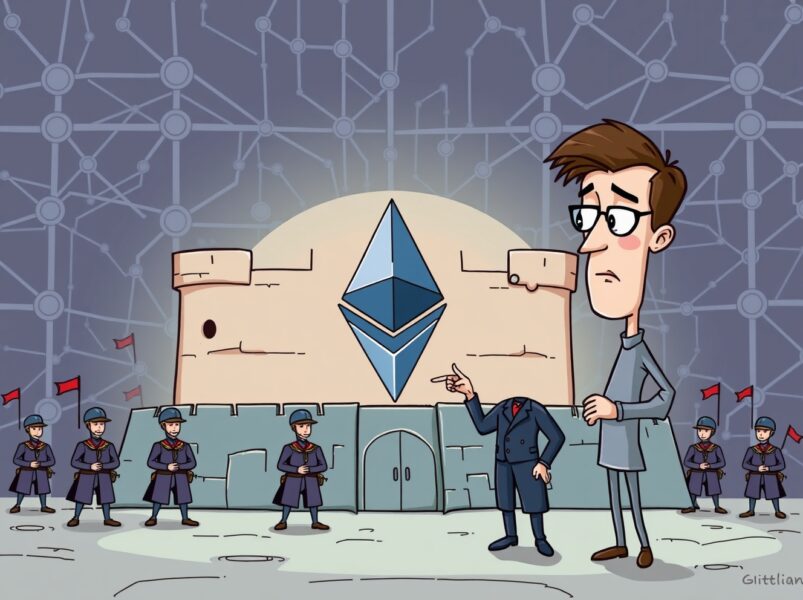
BitcoinWorld Crucial ETH Unstaking Period: Vitalik Buterin’s Unwavering Defense for Network Security Ever wondered why withdrawing your staked Ethereum (ETH) isn’t an instant process? It’s a question that often sparks debate within the crypto community. Ethereum founder Vitalik Buterin recently stepped forward to defend the network’s approximately 45-day ETH unstaking period, asserting its crucial role in safeguarding the network’s integrity. This lengthy waiting time, while sometimes seen as an inconvenience, is a deliberate design choice with profound implications for security. Why is the ETH Unstaking Period a Vital Security Measure? Vitalik Buterin’s defense comes amidst comparisons to other networks, like Solana, which boast significantly shorter unstaking times. He drew a compelling parallel to military operations, explaining that an army cannot function effectively if its soldiers can simply abandon their posts at a moment’s notice. Similarly, a blockchain network requires a stable and committed validator set to maintain its security. The current ETH unstaking period isn’t merely an arbitrary delay. It acts as a critical buffer, providing the network with sufficient time to detect and respond to potential malicious activities. If validators could instantly exit, it would open doors for sophisticated attacks, jeopardizing the entire system. Currently, Ethereum boasts over one million active validators, collectively staking approximately 35.6 million ETH, representing about 30% of the total supply. This massive commitment underpins the network’s robust security model, and the unstaking period helps preserve this stability. Network Security: Ethereum’s Paramount Concern A shorter ETH unstaking period might seem appealing for liquidity, but it introduces significant risks. Imagine a scenario where a large number of validators, potentially colluding, could quickly withdraw their stake after committing a malicious act. Without a substantial delay, the network would have limited time to penalize them or mitigate the damage. This “exit queue” mechanism is designed to prevent sudden validator exodus, which could lead to: Reduced decentralization: A rapid drop in active validators could concentrate power among fewer participants. Increased vulnerability to attacks: A smaller, less stable validator set is easier to compromise. Network instability: Frequent and unpredictable changes in validator numbers can lead to performance issues and consensus failures. Therefore, the extended period is not a bug; it’s a feature. It’s a calculated trade-off between immediate liquidity for stakers and the foundational security of the entire Ethereum ecosystem. Ethereum vs. Solana: Different Approaches to Unstaking When discussing the ETH unstaking period, many point to networks like Solana, which offers a much quicker two-day unstaking process. While this might seem like an advantage for stakers seeking rapid access to their funds, it reflects fundamental differences in network architecture and security philosophies. Solana’s design prioritizes speed and immediate liquidity, often relying on different consensus mechanisms and validator economics to manage security risks. Ethereum, on the other hand, with its proof-of-stake evolution from proof-of-work, has adopted a more cautious approach to ensure its transition and long-term stability are uncompromised. Each network makes design choices based on its unique goals and threat models. Ethereum’s substantial value and its role as a foundational layer for countless dApps necessitate an extremely robust security posture, making the current unstaking duration a deliberate and necessary component. What Does the ETH Unstaking Period Mean for Stakers? For individuals and institutions staking ETH, understanding the ETH unstaking period is crucial for managing expectations and investment strategies. It means that while staking offers attractive rewards, it also comes with a commitment to the network’s long-term health. Here are key considerations for stakers: Liquidity Planning: Stakers should view their staked ETH as a longer-term commitment, not immediately liquid capital. Risk Management: The delay inherently reduces the ability to react quickly to market volatility with staked assets. Network Contribution: By participating, stakers contribute directly to the security and decentralization of Ethereum, reinforcing its value proposition. While the current waiting period may not be “optimal” in every sense, as Buterin acknowledged, simply shortening it without addressing the underlying security implications would be a dangerous gamble for the network’s reliability. In conclusion, Vitalik Buterin’s defense of the lengthy ETH unstaking period underscores a fundamental principle: network security cannot be compromised for the sake of convenience. It is a vital mechanism that protects Ethereum’s integrity, ensuring its stability and trustworthiness as a leading blockchain platform. This deliberate design choice, while requiring patience from stakers, ultimately fortifies the entire ecosystem against potential threats, paving the way for a more secure and reliable decentralized future. Frequently Asked Questions (FAQs) Q1: What is the main reason for Ethereum’s long unstaking period? A1: The primary reason is network security. A lengthy ETH unstaking period prevents malicious actors from quickly withdrawing their stake after an attack, giving the network time to detect and penalize them, thus maintaining stability and integrity. Q2: How long is the current ETH unstaking period? A2: The current ETH unstaking period is approximately 45 days. This duration can fluctuate based on network conditions and the number of validators in the exit queue. Q3: How does Ethereum’s unstaking period compare to other blockchains? A3: Ethereum’s unstaking period is notably longer than some other networks, such as Solana, which has a two-day period. This difference reflects varying network architectures and security priorities. Q4: Does the unstaking period affect ETH stakers? A4: Yes, it means stakers need to plan their liquidity carefully, as their staked ETH is not immediately accessible. It encourages a longer-term commitment to the network, aligning staker interests with Ethereum’s stability. Q5: Could the ETH unstaking period be shortened in the future? A5: While Vitalik Buterin acknowledged the current period might not be “optimal,” any significant shortening would likely require extensive research and network upgrades to ensure security isn’t compromised. For now, the focus remains on maintaining robust network defenses. Found this article insightful? Share it with your friends and fellow crypto enthusiasts on social media to spread awareness about the critical role of the ETH unstaking period in Ethereum’s security! To learn more about the latest Ethereum trends, explore our article on key developments shaping Ethereum’s institutional adoption. This post Crucial ETH Unstaking Period: Vitalik Buterin’s Unwavering Defense for Network Security first appeared on BitcoinWorld.
Share
Coinstats2025/09/18 15:30
Musk expressed concern about the soaring price of silver.

Musk expressed concern about the soaring price of silver.

PANews reported on December 28th that Tesla CEO Elon Musk expressed concern about rising silver prices. He posted on the social media platform "X," stating, "This
Share
PANews2025/12/28 09:24