

Cryptocurrency Mining Proposal at Zaporizhzhia Plant Sparks Intense Geopolitical Debate Between US and Russia
BitcoinWorld
Cryptocurrency Mining Proposal at Zaporizhzhia Plant Sparks Intense Geopolitical Debate Between US and Russia
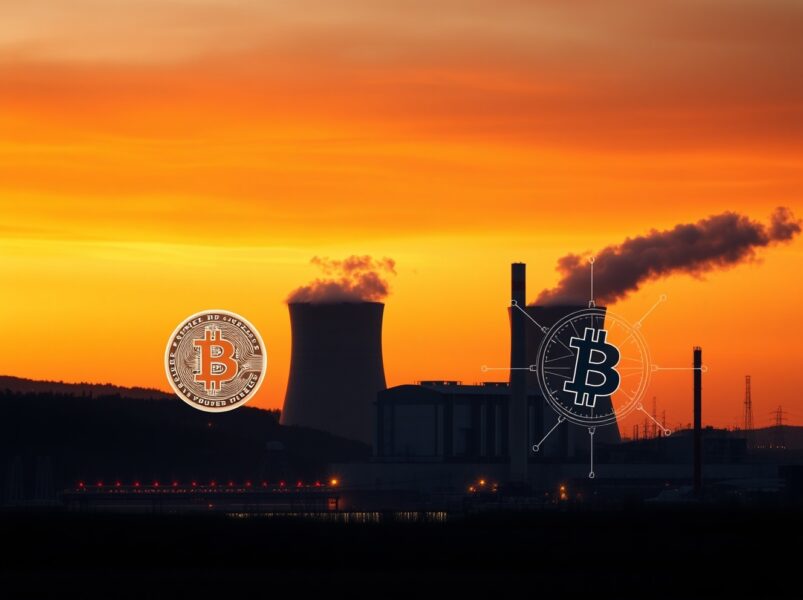
MOSCOW, RUSSIA – March 2025 – A startling report from Russian newspaper Kommersant has revealed that cryptocurrency mining operations at the contested Zaporizhzhia Nuclear Power Plant (ZNPP) became a unexpected topic during recent ceasefire negotiations between Russia and Ukraine. According to the publication, Russian President Vladimir Putin stated that United States representatives expressed direct interest in establishing a cryptocurrency mining facility utilizing the plant’s substantial energy output. This revelation immediately raises profound questions about energy security, wartime diplomacy, and the evolving intersection of digital assets with global power dynamics.
Cryptocurrency Mining Proposal Emerges From Ceasefire Talks
The Kommersant report, which has drawn significant international attention, details how discussions about the Zaporizhzhia plant extended beyond immediate security concerns. Consequently, the dialogue reportedly included speculative economic projects for the facility’s future. Russian officials apparently expressed hope for cooperation with the United States on operating the plant. Meanwhile, U.S. negotiators, according to the same sources, proposed a potential joint operation structure. This structure would theoretically grant equal stakes to Russia, Ukraine, and the United States. However, the outlet crucially emphasized that the feasibility of any cryptocurrency mining project remains entirely uncertain at this stage. No concrete technical or financial agreements have been reached, and the proposal exists primarily as a discussed concept.
This development occurs against a complex geopolitical backdrop. The Zaporizhzhia facility, Europe’s largest nuclear power plant, has been under Russian military control since early 2022. Its status remains a persistent flashpoint in the ongoing conflict. The International Atomic Energy Agency (IAEA) has repeatedly warned of the severe safety risks posed by military activity near the reactors. Therefore, introducing a discussion about energy-intensive cryptocurrency mining adds a novel and contentious layer to an already volatile situation. Industry analysts note that nuclear power plants offer a unique proposition for bitcoin mining operations: they provide massive, consistent baseload power, which is a critical requirement for the energy-hungry process of validating blockchain transactions.
Analyzing the Technical and Political Feasibility
The technical logistics of establishing a mining operation at an active nuclear facility are extraordinarily complex. First, cryptocurrency mining requires dedicated, high-capacity computing infrastructure—thousands of specialized ASIC miners. These machines would need secure installation, constant cooling, and a direct, stable connection to the plant’s power grid. Second, diverting significant megawatts from a critical civilian energy source during a regional war would inevitably trigger humanitarian and ethical concerns. Ukraine has previously faced severe energy shortages due to targeted infrastructure attacks. Third, the security of such an operation in a conflict zone would be nearly impossible to guarantee, posing risks to both the physical hardware and the digital assets being mined.
From a political perspective, the proposal appears equally fraught. The United States government maintains stringent sanctions against Russian entities and has been a leading military supporter of Ukraine. A joint commercial venture on occupied territory would contradict established policy positions. Furthermore, the Ukrainian government has consistently stated its goal is the full restoration of its territorial integrity, including the Zaporizhzhia plant. Kyiv would likely view any deal legitimizing Russian control as unacceptable. Experts in international law suggest such an arrangement would face immediate legal challenges and could be seen as violating sanctions regimes.
Expert Perspectives on Nuclear Energy and Crypto Mining
Energy economists and cryptocurrency analysts provide critical context for this unusual proposal. Dr. Elena Petrova, a senior fellow at the Center for Energy Policy, notes, “Nuclear plants are designed for steady-state grid load. Cryptocurrency mining can act as a controllable, flexible demand source, potentially helping to balance a grid. However, co-locating major computing infrastructure at a plant under international scrutiny and in a war zone introduces unprecedented risk factors that likely outweigh any theoretical economic benefit.” Her analysis underscores the tension between a technically interesting application of excess energy and the grim reality of the plant’s current situation.
Meanwhile, blockchain technology experts point to precedent. “There are existing pilot projects exploring behind-the-meter bitcoin mining at power generation sites, including some in the United States,” explains Mark Chen, a data center strategist. “The goal is to monetize stranded or excess energy and improve grid stability. The Zaporizhzhia concept follows this logic but transplants it into a completely non-commercial, hyper-politicized environment. The primary hurdles here are not technological; they are overwhelmingly geopolitical and security-based.” This expert view frames the proposal as a familiar idea placed in a uniquely hostile context.
The Broader Context of Crypto Mining and Geopolitics
The discussion does not exist in a vacuum. It reflects a broader global trend where nations are strategically positioning themselves within the cryptocurrency mining ecosystem. Following China’s 2021 mining ban, operations relocated to countries with cheap, abundant energy, often from fossil fuels. This has led to environmental criticism. Proponents of nuclear-powered mining argue it offers a low-carbon alternative. A joint U.S.-Russia venture, however hypothetical, could be interpreted as an attempt to shape governance and gain influence in this emerging sector, using the ZNPP as a high-stakes bargaining chip.
The timeline of events is also crucial. The Zaporizhzhia plant has been a central concern since its capture. IAEA missions have continuously advocated for a safety and security protection zone. Introducing a commercial mining proposal during ceasefire talks suggests some parties are thinking about long-term economic utilization of captured infrastructure. This could complicate diplomatic efforts focused solely on demilitarization and return to Ukrainian control. The table below outlines key conflicting priorities at play:
Table: Conflicting Priorities at Zaporizhzhia Nuclear Power Plant
- Humanitarian & Safety Priority: Immediate demilitarization, establishment of a safety zone, prevention of a nuclear accident.
- Ukrainian Sovereignty Priority: Full restoration of Ukrainian control and operational authority over the plant.
- Proposed Economic Priority: Leveraging the plant’s energy for commercial projects like cryptocurrency mining.
- Diplomatic Priority: Using the plant as a point of negotiation in broader ceasefire and settlement talks.
Conclusion
The reported discussion of cryptocurrency mining at the Zaporizhzhia Nuclear Power Plant reveals the increasingly complex intersection of digital asset economies with traditional geopolitics. While the proposal remains speculative and faces monumental technical, legal, and ethical barriers, its mere mention in high-level ceasefire talks is significant. It highlights how actors may view strategic infrastructure through multiple lenses: as military assets, diplomatic leverage, and potential economic platforms. The future of the Zaporizhzhia plant will ultimately be decided by security and sovereignty concerns. However, this episode underscores that the global contest for influence now extends into the virtual realms of blockchain and bitcoin mining, even amidst the stark realities of armed conflict.
FAQs
Q1: What exactly was proposed regarding cryptocurrency mining at the Zaporizhzhia plant?
According to the Kommersant report, the idea was discussed for the United States and Russia to potentially cooperate on a cryptocurrency mining operation using power from the nuclear plant, with a U.S. suggestion of a three-way equal stake including Ukraine. No formal agreement exists.
Q2: Why would a nuclear power plant be considered for cryptocurrency mining?
Cryptocurrency mining, especially for Bitcoin, requires immense, constant electricity. Nuclear power plants provide reliable, high-output baseload power, making them a theoretically suitable, low-carbon energy source for large-scale mining operations.
Q3: Is it safe to run a crypto mining farm at a nuclear facility?
Safety experts express major concerns. Adding large, non-essential industrial load to a plant in a conflict zone could complicate operational safety. The required infrastructure and personnel also introduce new security risks to an already vulnerable site.
Q4: How has Ukraine responded to this reported proposal?
Ukrainian officials have not formally commented on this specific report. However, Ukraine’s consistent position is the full de-occupation and return of the Zaporizhzhia plant to its control, making any commercial deal involving Russian administration highly unlikely to be accepted.
Q5: Does this mean the US is changing its stance on sanctions or the war?
Analysts widely interpret the reported discussion as exploratory and highly preliminary. It does not signify a change in official U.S. policy, which continues to support Ukraine and enforce sanctions against Russia. The political and legal obstacles to such a joint venture remain enormous.
This post Cryptocurrency Mining Proposal at Zaporizhzhia Plant Sparks Intense Geopolitical Debate Between US and Russia first appeared on BitcoinWorld.
You May Also Like

Markets await Fed’s first 2025 cut, experts bet “this bull market is not even close to over”

Vitalik Slams EU ‘No-Space’ Rules, Fuels Privacy Coin Debate
