

Critical Update: Netanyahu Reveals No Timeline for Ending War with Iran as U.S. Prioritizes Uranium and Strait
BitcoinWorld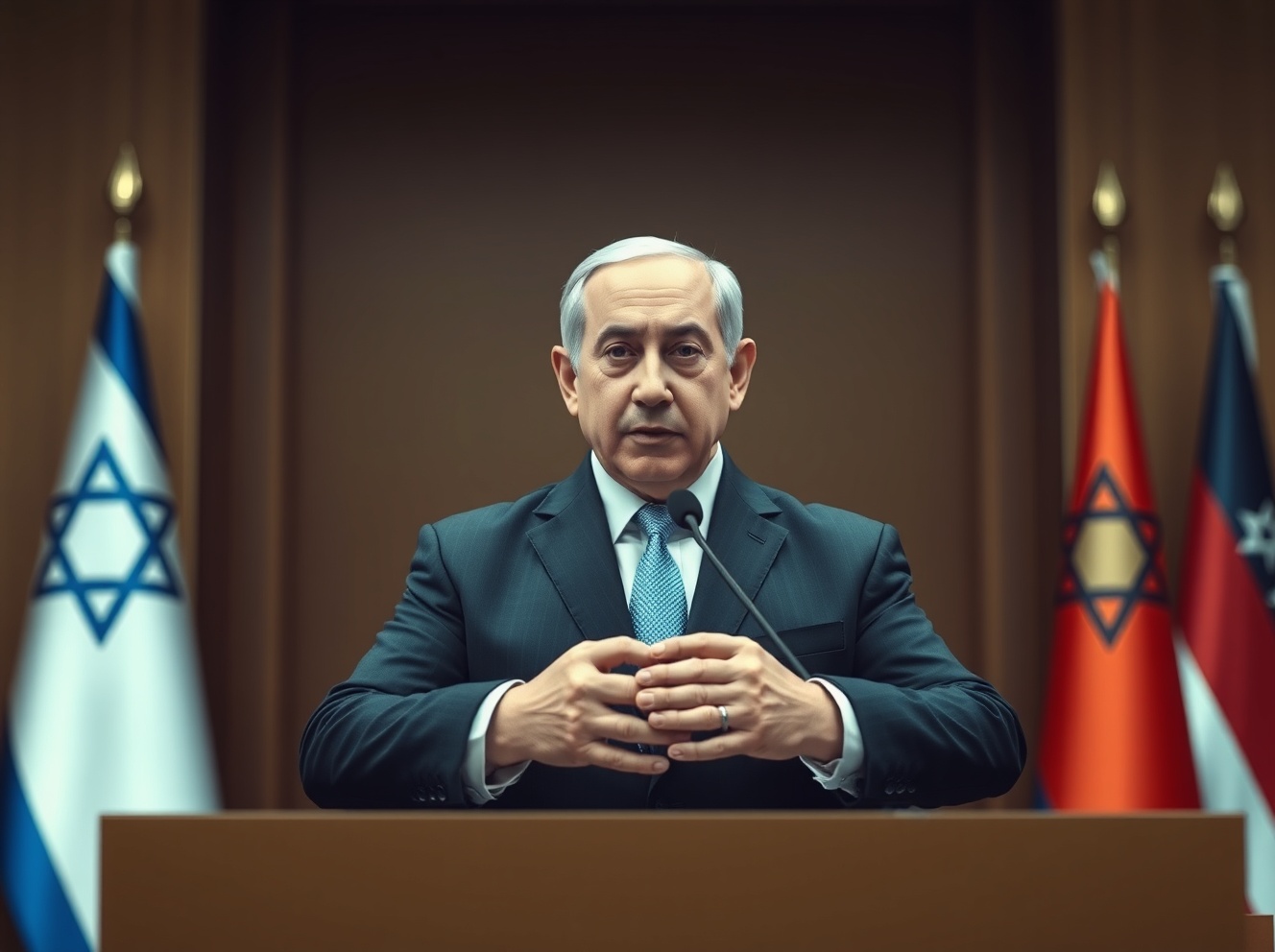
Critical Update: Netanyahu Reveals No Timeline for Ending War with Iran as U.S. Prioritizes Uranium and Strait
JERUSALEM, March 30 — In a significant development that underscores the protracted nature of Middle Eastern tensions, Israeli Prime Minister Benjamin Netanyahu has declared there is no set timeline for ending the war with Iran. This statement, delivered during a comprehensive interview, fundamentally reshapes expectations for regional conflict resolution. Consequently, analysts are now reassessing the potential duration and strategic objectives of this ongoing confrontation. Meanwhile, Netanyahu confirmed that the United States is spearheading critical military operations to secure the Strait of Hormuz, a global oil transit chokepoint. Furthermore, he emphasized that U.S. President Donald Trump’s administration maintains a laser focus on Iran’s program for enriched uranium, a core component for nuclear capability.
Netanyahu’s Statement on the Iran War Timeline
Prime Minister Netanyahu’s remarks explicitly reject the notion of a predetermined conclusion to hostilities. Historically, modern conflicts involving state actors often lack clear endpoints, evolving instead into prolonged periods of strategic competition. For instance, the situation mirrors aspects of frozen conflicts seen in other regions, where military engagement fluctuates without formal peace declarations. The Israeli leader’s framing suggests a conflict managed through sustained military and diplomatic pressure rather than a decisive, climactic battle. Therefore, this approach indicates a long-term strategy of containment and deterrence. Defense experts note that such conflicts demand continuous resource allocation and complex international coordination. Ultimately, the absence of a timeline introduces significant uncertainty for regional stability and global energy markets.
The U.S. Military Role in the Strait of Hormuz
Netanyahu identified the United States as the lead force in efforts to reopen the Strait of Hormuz. This narrow sea passage is arguably the world’s most critical maritime oil artery. Approximately 21 million barrels of oil, representing nearly 21% of global petroleum consumption, transit the strait daily. Any prolonged closure would trigger immediate and severe shocks to the global economy. The U.S. Fifth Fleet, based in Bahrain, possesses the primary naval assets in the region for such a mission. Operations would likely involve mine countermeasure vessels, destroyers, and aerial surveillance to ensure safe passage. However, military action in the congested waterway carries high risks of escalation and accidental engagement. Regional partners, including Saudi Arabia and the United Arab Emirates, would undoubtedly provide logistical and intelligence support for any U.S.-led operation.
Strategic Importance of the Waterway
The Strait of Hormuz connects the Persian Gulf with the Gulf of Oman and the Arabian Sea. Its geographical narrowness, at points only 21 nautical miles wide, makes it inherently easy to monitor and difficult to secure. Iran has repeatedly demonstrated its capacity to harass shipping through fast-attack craft, anti-ship missiles, and naval mines. A successful U.S. operation to keep it open would reaffirm American security guarantees to Gulf allies. Conversely, failure or a protracted campaign could undermine U.S. credibility and empower Iranian regional influence. The economic stakes are monumental, influencing oil prices, inflation rates, and industrial output worldwide.
Trump’s Focus on Iran’s Enriched Uranium Program
According to Netanyahu, President Trump’s top priority remains Iran’s enriched uranium stockpile. Uranium enrichment is a dual-use process that can fuel both civilian nuclear reactors and, at higher concentrations, nuclear weapons. The 2015 Joint Comprehensive Plan of Action (JCPOA), or Iran nuclear deal, imposed strict limits on enrichment levels and stockpile sizes. Following the U.S. withdrawal from the deal in 2018, Iran has progressively escalated its enrichment activities. The International Atomic Energy Agency (IAEA) now reports that Iran possesses uranium enriched up to 60% purity. While this is still short of the 90% typically considered weapons-grade, it significantly shortens the theoretical “breakout” time needed to produce a bomb. The Trump administration’s stated policy of “maximum pressure” aims to force Iran into a new agreement with more stringent, permanent restrictions.
Key Metrics of Iran’s Nuclear Program (Recent IAEA Reports):
- Enrichment Level: Up to 60% U-235 purity.
- Total Stockpile: Several times the limit allowed under the JCPOA.
- Advanced Centrifuges: Deploying more efficient IR-2m and IR-6 models.
- Breakout Time: Estimated by experts to be a matter of weeks, down from over a year under the JCPOA.
Regional and Global Implications of a Protracted Conflict
A war with no defined endpoint creates profound ripple effects. For regional actors, it means enduring security dilemmas and economic disruption. Countries like Saudi Arabia and Israel must maintain high defense readiness, draining national budgets. Global powers, including China and Russia, are forced to navigate a complex diplomatic landscape, balancing energy needs with geopolitical rivalries. The conflict also exacerbates humanitarian crises, potentially displacing populations and straining international aid resources. For the global economy, persistent tension guarantees volatile energy prices, affecting everything from manufacturing costs to household utility bills. Investors typically seek stability, and its absence in the Persian Gulf region discourages long-term capital investment in critical infrastructure projects.
Expert Analysis on Conflict Trajectory
Security analysts interpret Netanyahu’s timeline comment as a reflection of the conflict’s fundamental nature. Dr. Amina Al-Said, a senior fellow at the Middle East Institute, explains, “This is not a war for territorial conquest in the traditional sense. It is a multi-domain struggle involving cyber operations, proxy forces, economic warfare, and diplomatic isolation. Such conflicts resist neat calendar-based conclusions.” The objective appears to be degrading Iran’s capability to project power and its nuclear advancement, not achieving regime change or a signed surrender. This strategy requires persistent effort without a clear victory parade, a concept that challenges domestic political narratives in both Israel and the United States.
Historical Context of Israel-Iran Hostilities
The current open conflict follows decades of shadow war. Since the 1979 Iranian Revolution, the two nations have engaged in a protracted struggle via proxies like Hezbollah in Lebanon and Hamas in Gaza. Direct military engagements were historically rare, but that threshold has been crossed repeatedly in recent years with strikes on Iranian assets in Syria and cyber-attacks on nuclear facilities. The shift to more overt confrontation marks a dangerous escalation in the region’s security paradigm. Each action risks triggering a broader war that could draw in multiple state actors and non-state groups across the Levant.
Conclusion
Prime Minister Benjamin Netanyahu’s declaration that there is no set timeline for ending the war with Iran confirms the conflict’s indefinite and complex character. The intertwined priorities of securing the Strait of Hormuz and countering Iran’s enriched uranium program define the current U.S.-led strategy. This situation presents enduring challenges for global security, economic stability, and diplomatic efforts. The path forward likely involves sustained military preparedness, intricate international sanctions enforcement, and high-stakes diplomacy to prevent a catastrophic regional escalation. The world must now adjust to a reality where this pivotal conflict lacks a foreseeable conclusion, demanding constant vigilance and strategic patience from all involved parties.
FAQs
Q1: What did Netanyahu specifically say about the war timeline?
In his March 30 interview, Netanyahu stated explicitly that there is “no set timeline” for concluding the military conflict with Iran, indicating an open-ended commitment to military and strategic pressure.
Q2: Why is the Strait of Hormuz so important?
The Strait of Hormuz is a critical maritime chokepoint through which about 21% of the world’s seaborne oil trade passes daily. Its closure would severely disrupt global energy supplies and spike prices.
Q3: What is the current status of Iran’s enriched uranium program?
According to the IAEA, Iran has enriched uranium up to 60% purity and has accumulated a stockpile far exceeding limits set by the 2015 nuclear deal, significantly reducing the time it would need to produce weapons-grade material.
Q4: How is the United States involved militarily?
The U.S., through its Fifth Fleet, is leading military efforts to ensure the Strait of Hormuz remains open to navigation and is focused on countering threats to shipping from Iranian forces.
Q5: What are the broader implications of a war with no end date?
An indefinite conflict leads to sustained regional instability, continuous humanitarian strain, persistent volatility in global oil markets, and requires long-term military and financial commitments from involved nations.
This post Critical Update: Netanyahu Reveals No Timeline for Ending War with Iran as U.S. Prioritizes Uranium and Strait first appeared on BitcoinWorld.
Potrebbe anche piacerti

SEC decisions scrutinized as senator seeks records on crypto enforcement rollbacks

Crypto Supercycle in 2025? DeepSeek Ranks the Best Altcoins to Buy Right Now


