The post Potential U.S. Recession Could Buy Japan More Time as It Faces Debt Implosion, Says Brookings Economist Robin Brooks appeared on BitcoinEthereumNews.com. While much of the attention from the crypto and traditional markets remains on the U.S., a recent analysis by a leading economist suggests it’s time to look east. Japan is teetering on the edge of a debt crisis, but a potential recession in the U.S. could provide the land of the rising sun a temporary window of relief, according to Robin Brooks, senior fellow in the Global Economy and Development program at the Brookings Institution. Japan’s debt-to-GDP is a problem For years, Japan has held the highest public debt-to-GDP ratio among advanced economies, consistently hovering above 200%. However, in the post-COVID era marked by massive fiscal spending, investors’ tolerance for such high debt levels has waned. To complicate matters, Japan’s inflation, as measured by the consumer price index (CPI), has surged since mid-2022, bringing inflation rates up to levels not seen since the 1980s. The trend is consistent with the sticky price pressures worldwide. The elevated inflation has pushed government bond yields higher and increased the cost of additional fiscal borrowing. These combined pressures have thrust Japan’s staggering debt-to-GDP ratio of around 240% into the spotlight, effectively boxing the government into a difficult position. Brooks put it best in his latest Substack post: “The bottom line is that exceptionally high government debt is putting Japan in a terrible bind. If Japan sticks with low interest rates, it risks further Yen depreciation, which could cause inflation to run out of control. If it anchors the Yen by allowing yields to rise further, this could put Japan’s debt sustainability at risk.” “This catch-22 means a debt crisis is much closer than people think,” he added. Growing debt concerns could drive investors to alternative financial escape valves such as cryptocurrencies, mainly stablecoins. Japanese startup JPYC is planning to issue the first stablecoin pegged… The post Potential U.S. Recession Could Buy Japan More Time as It Faces Debt Implosion, Says Brookings Economist Robin Brooks appeared on BitcoinEthereumNews.com. While much of the attention from the crypto and traditional markets remains on the U.S., a recent analysis by a leading economist suggests it’s time to look east. Japan is teetering on the edge of a debt crisis, but a potential recession in the U.S. could provide the land of the rising sun a temporary window of relief, according to Robin Brooks, senior fellow in the Global Economy and Development program at the Brookings Institution. Japan’s debt-to-GDP is a problem For years, Japan has held the highest public debt-to-GDP ratio among advanced economies, consistently hovering above 200%. However, in the post-COVID era marked by massive fiscal spending, investors’ tolerance for such high debt levels has waned. To complicate matters, Japan’s inflation, as measured by the consumer price index (CPI), has surged since mid-2022, bringing inflation rates up to levels not seen since the 1980s. The trend is consistent with the sticky price pressures worldwide. The elevated inflation has pushed government bond yields higher and increased the cost of additional fiscal borrowing. These combined pressures have thrust Japan’s staggering debt-to-GDP ratio of around 240% into the spotlight, effectively boxing the government into a difficult position. Brooks put it best in his latest Substack post: “The bottom line is that exceptionally high government debt is putting Japan in a terrible bind. If Japan sticks with low interest rates, it risks further Yen depreciation, which could cause inflation to run out of control. If it anchors the Yen by allowing yields to rise further, this could put Japan’s debt sustainability at risk.” “This catch-22 means a debt crisis is much closer than people think,” he added. Growing debt concerns could drive investors to alternative financial escape valves such as cryptocurrencies, mainly stablecoins. Japanese startup JPYC is planning to issue the first stablecoin pegged…

Potential U.S. Recession Could Buy Japan More Time as It Faces Debt Implosion, Says Brookings Economist Robin Brooks

For feedback or concerns regarding this content, please contact us at crypto.news@mexc.com

While much of the attention from the crypto and traditional markets remains on the U.S., a recent analysis by a leading economist suggests it’s time to look east.

Japan is teetering on the edge of a debt crisis, but a potential recession in the U.S. could provide the land of the rising sun a temporary window of relief, according to Robin Brooks, senior fellow in the Global Economy and Development program at the Brookings Institution.

Japan’s debt-to-GDP is a problem

For years, Japan has held the highest public debt-to-GDP ratio among advanced economies, consistently hovering above 200%. However, in the post-COVID era marked by massive fiscal spending, investors’ tolerance for such high debt levels has waned.

To complicate matters, Japan’s inflation, as measured by the consumer price index (CPI), has surged since mid-2022, bringing inflation rates up to levels not seen since the 1980s. The trend is consistent with the sticky price pressures worldwide.

The elevated inflation has pushed government bond yields higher and increased the cost of additional fiscal borrowing. These combined pressures have thrust Japan’s staggering debt-to-GDP ratio of around 240% into the spotlight, effectively boxing the government into a difficult position.

Brooks put it best in his latest Substack post: “The bottom line is that exceptionally high government debt is putting Japan in a terrible bind. If Japan sticks with low interest rates, it risks further Yen depreciation, which could cause inflation to run out of control. If it anchors the Yen by allowing yields to rise further, this could put Japan’s debt sustainability at risk.”

“This catch-22 means a debt crisis is much closer than people think,” he added.

Growing debt concerns could drive investors to alternative financial escape valves such as cryptocurrencies, mainly stablecoins. Japanese startup JPYC is planning to issue the first stablecoin pegged to the yen later this year.

The yen has appreciated by nearly 7% to 146.50 per U.S. dollar this year as expectations for Fed rate cuts have led to a broad-based dollar sell-off.

However, zooming out tells an entirely different story. Since 2021, the yen has depreciated by a solid 41%, adding to domestic inflation.

Meanwhile, the 10-year Japanese bond yield surged to 1.60% from nearly zero in 2020, reaching its highest level since 2008. The 30-year yield has also hit multi-decade highs. In other words, investors are demanding a higher premium to lend money to the government to compensate for the growing fiscal risks.

U.S. recession may offer temporary relief

Japan may find some relief in a potential U.S. recession, marked by consecutive quarterly contractions in the GDP. Such a situation would see investors worldwide park money in government bonds, driving yields lower. (Bond yields and prices move in opposite directions).

The resulting drop in Japanese yields could then buy time for Japan, according to Brooks.

“It’s possible that the U.S. goes into recession, which will cause U.S. and global yields to fall. That will buy Japan time. But – in the end – the only sustainable way out of this catch-22 is for Japan to cut spending and/or raise taxes,” Brooks noted.

Still, the big question remains: will Japanese citizens accept higher taxes and spending cuts? Only time will tell.

Source: https://www.coindesk.com/markets/2025/09/17/bitcoin-traders-should-pay-attention-to-japan-as-top-economist-warns-of-debt-implosion

Market Opportunity
null Logo
null Price(null)
--
----
USD
null (null) Live Price Chart
Disclaimer: The articles reposted on this site are sourced from public platforms and are provided for informational purposes only. They do not necessarily reflect the views of MEXC. All rights remain with the original authors. If you believe any content infringes on third-party rights, please contact crypto.news@mexc.com for removal. MEXC makes no guarantees regarding the accuracy, completeness, or timeliness of the content and is not responsible for any actions taken based on the information provided. The content does not constitute financial, legal, or other professional advice, nor should it be considered a recommendation or endorsement by MEXC.

You May Also Like

Franklin Templeton CEO Dismisses 50bps Rate Cut Ahead FOMC

Franklin Templeton CEO Dismisses 50bps Rate Cut Ahead FOMC

The post Franklin Templeton CEO Dismisses 50bps Rate Cut Ahead FOMC appeared on BitcoinEthereumNews.com. Franklin Templeton CEO Jenny Johnson has weighed in on whether the Federal Reserve should make a 25 basis points (bps) Fed rate cut or 50 bps cut. This comes ahead of the Fed decision today at today’s FOMC meeting, with the market pricing in a 25 bps cut. Bitcoin and the broader crypto market are currently trading flat ahead of the rate cut decision. Franklin Templeton CEO Weighs In On Potential FOMC Decision In a CNBC interview, Jenny Johnson said that she expects the Fed to make a 25 bps cut today instead of a 50 bps cut. She acknowledged the jobs data, which suggested that the labor market is weakening. However, she noted that this data is backward-looking, indicating that it doesn’t show the current state of the economy. She alluded to the wage growth, which she remarked is an indication of a robust labor market. She added that retail sales are up and that consumers are still spending, despite inflation being sticky at 3%, which makes a case for why the FOMC should opt against a 50-basis-point Fed rate cut. In line with this, the Franklin Templeton CEO said that she would go with a 25 bps rate cut if she were Jerome Powell. She remarked that the Fed still has the October and December FOMC meetings to make further cuts if the incoming data warrants it. Johnson also asserted that the data show a robust economy. However, she noted that there can’t be an argument for no Fed rate cut since Powell already signaled at Jackson Hole that they were likely to lower interest rates at this meeting due to concerns over a weakening labor market. Notably, her comment comes as experts argue for both sides on why the Fed should make a 25 bps cut or…
Share
BitcoinEthereumNews2025/09/18 00:36
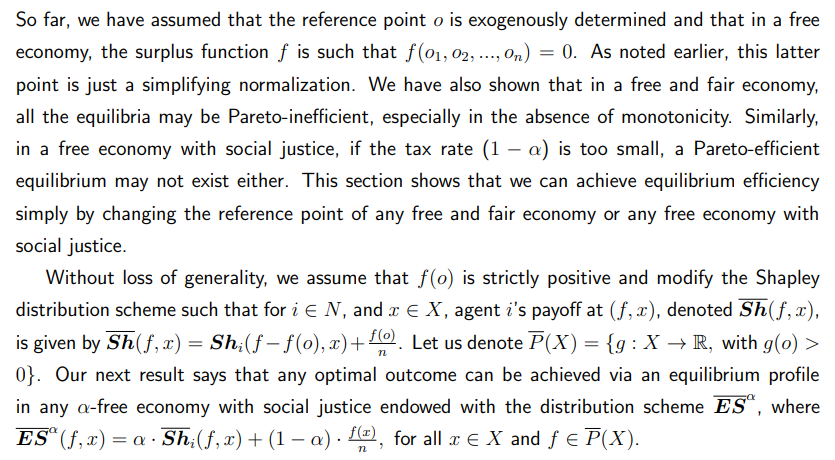
The Role of Reference Points in Achieving Equilibrium Efficiency in Fair and Socially Just Economies

The Role of Reference Points in Achieving Equilibrium Efficiency in Fair and Socially Just Economies

This article explores how a simple change in the reference point can achieve a Pareto-efficient equilibrium in both free and fair economies and those with social justice.
Share
Hackernoon2025/09/17 22:30
Cryptos Signal Divergence Ahead of Fed Rate Decision

Cryptos Signal Divergence Ahead of Fed Rate Decision

The post Cryptos Signal Divergence Ahead of Fed Rate Decision appeared on BitcoinEthereumNews.com. Crypto assets send conflicting signals ahead of the Federal Reserve’s September rate decision. On-chain data reveals a clear decrease in Bitcoin and Ethereum flowing into centralized exchanges, but a sharp increase in altcoin inflows. The findings come from a Tuesday report by CryptoQuant, an on-chain data platform. The firm’s data shows a stark divergence in coin volume, which has been observed in movements onto centralized exchanges over the past few weeks. Bitcoin and Ethereum Inflows Drop to Multi-Month Lows Sponsored Sponsored Bitcoin has seen a dramatic drop in exchange inflows, with the 7-day moving average plummeting to 25,000 BTC, its lowest level in over a year. The average deposit per transaction has fallen to 0.57 BTC as of September. This suggests that smaller retail investors, rather than large-scale whales, are responsible for the recent cash-outs. Ethereum is showing a similar trend, with its daily exchange inflows decreasing to a two-month low. CryptoQuant reported that the 7-day moving average for ETH deposits on exchanges is around 783,000 ETH, the lowest in two months. Other Altcoins See Renewed Selling Pressure In contrast, other altcoin deposit activity on exchanges has surged. The number of altcoin deposit transactions on centralized exchanges was quite steady in May and June of this year, maintaining a 7-day moving average of about 20,000 to 30,000. Recently, however, that figure has jumped to 55,000 transactions. Altcoins: Exchange Inflow Transaction Count. Source: CryptoQuant CryptoQuant projects that altcoins, given their increased inflow activity, could face relatively higher selling pressure compared to BTC and ETH. Meanwhile, the balance of stablecoins on exchanges—a key indicator of potential buying pressure—has increased significantly. The report notes that the exchange USDT balance, around $273 million in April, grew to $379 million by August 31, marking a new yearly high. CryptoQuant interprets this surge as a reflection of…
Share
BitcoinEthereumNews2025/09/18 01:01

