Space-based solar power (SBSP) changes how we think about making energy. Instead of being limited by Earth's weather and day-night cycle, SBSP systems work in the constant sunlight of space. This method is exciting because solar energy in space is always available and about eight times stronger than on Earth, all day, every day.Space-based solar power (SBSP) changes how we think about making energy. Instead of being limited by Earth's weather and day-night cycle, SBSP systems work in the constant sunlight of space. This method is exciting because solar energy in space is always available and about eight times stronger than on Earth, all day, every day.

What If Your Electricity Came from Space?

2025/10/06 21:21
7 min read

Space-based solar power (SBSP) can change how we think about generating energy. Instead of being limited by Earth's weather and day-night cycle, SBSP systems work in the constant sunlight of space.
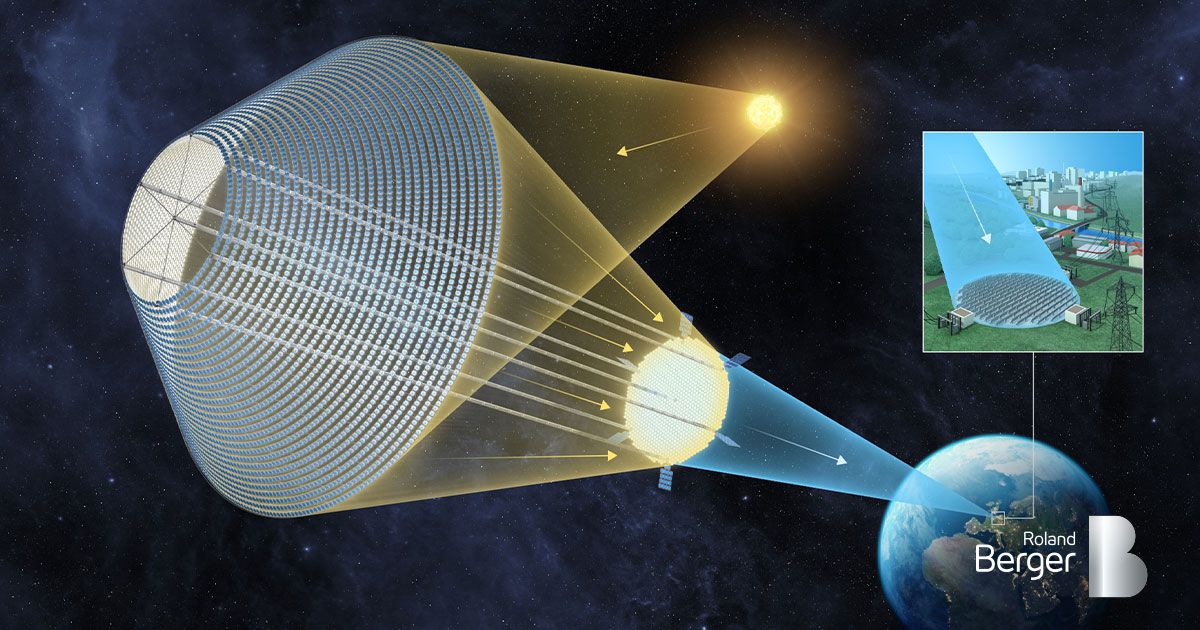
Source: https://www.rolandberger.com/en/Insights/Publications/Space-based-solar-power.html

\ The idea is simple: put large solar panels in orbit, turn the energy into microwaves, and send it wirelessly to stations on Earth. This method is exciting because solar energy in space is always available and about eight times stronger than on Earth, all day, every day.
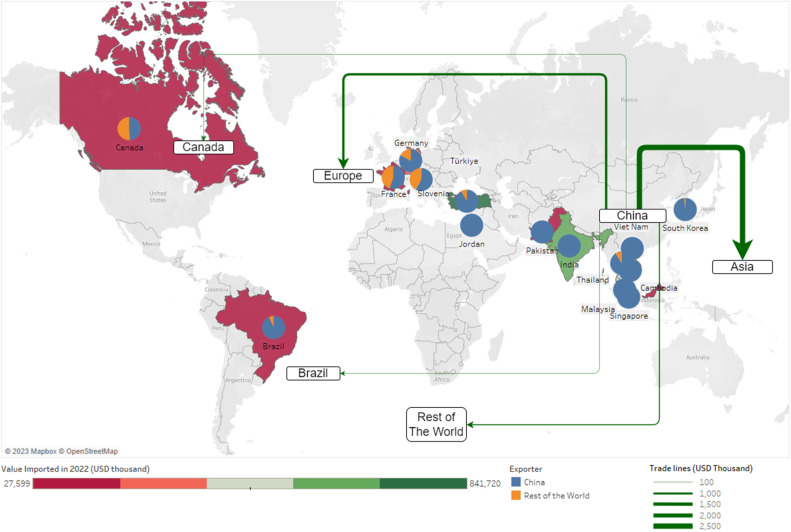
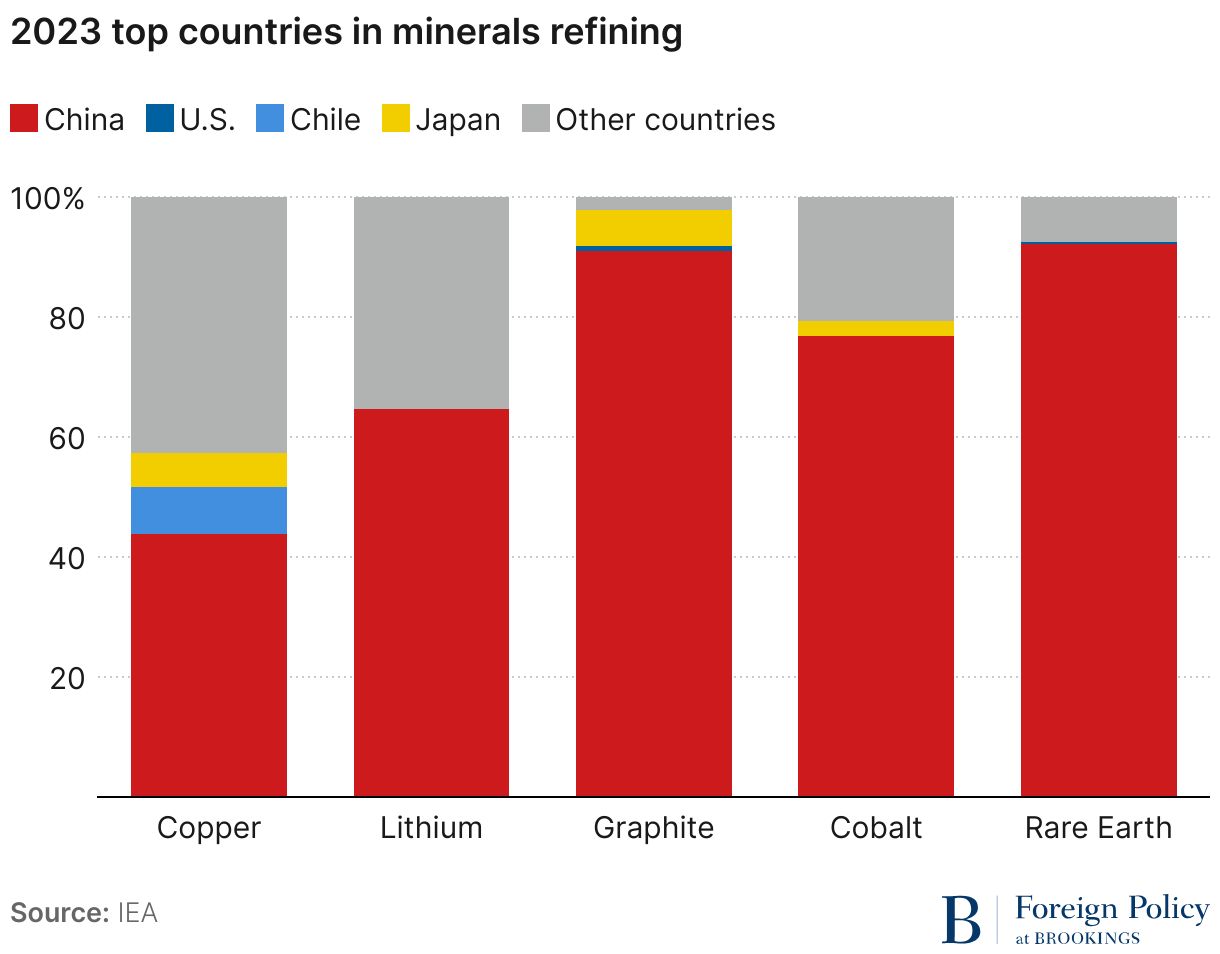
State of global solar energy market

Energy transition is necessary

\ Countries like Japan, China, and the United States are investing in SBSP research to see if it can work and grow. Japan's OHISAMA program plans to show space-to-Earth power transmission in 2025, while China aims for kilometer-wide solar panels in space by the 2030s.


How SBSP Works
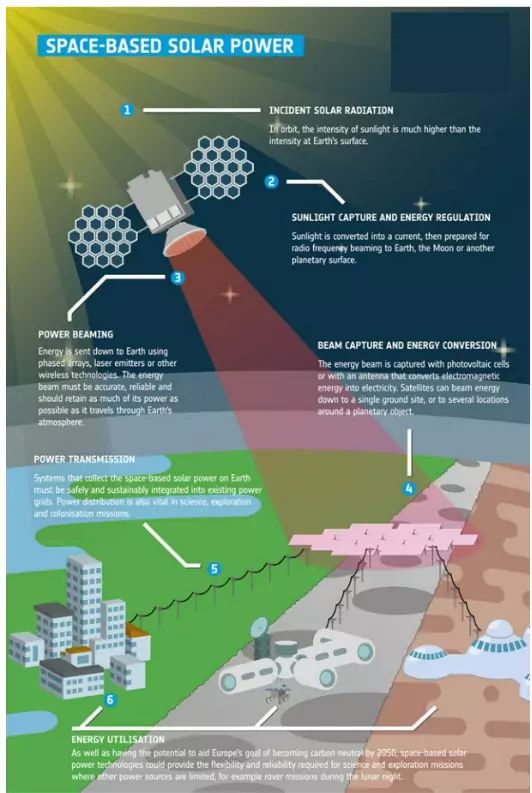
How SBSP Works

The basic setup of space-based solar power includes three main parts that work together to send energy from space to Earth.

Orbital Solar Arrays

Most SBSP designs imagine large solar panels placed in geostationary Earth orbit (GEO), about 22,000 miles above the equator. Here, satellites stay in the same spot relative to Earth's surface, allowing them to send power continuously to specific places on the ground.
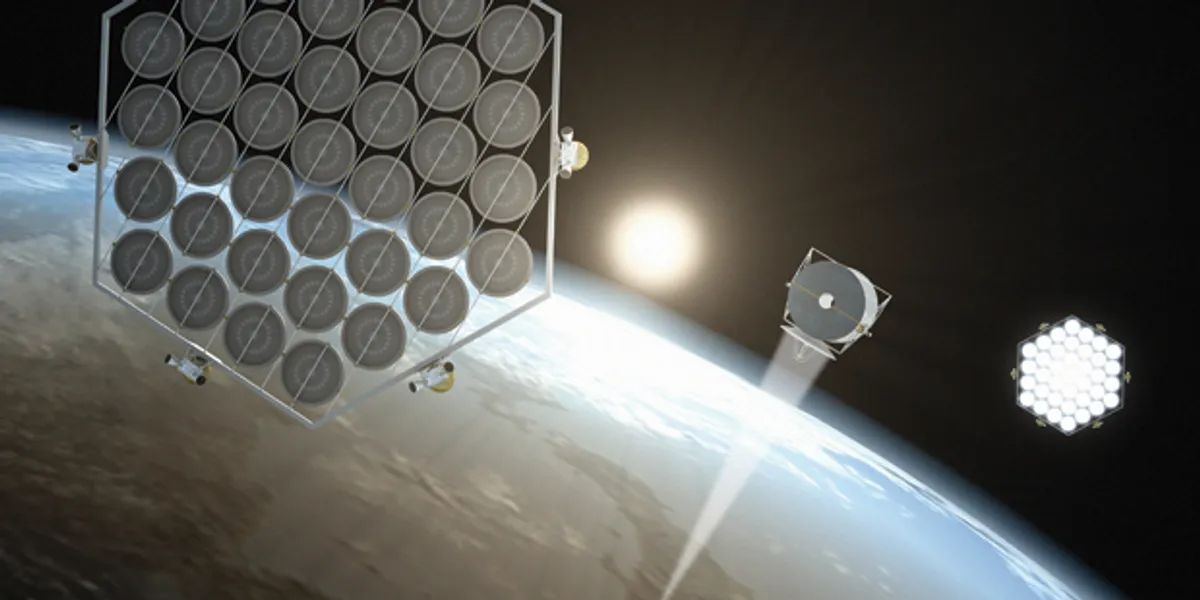
Reflects Sunlight

\ Other designs think about using low Earth orbit (LEO) groups at 400-1,200 miles high. These need more complex tracking and more satellites for continuous coverage but have lower launch costs and shorter distances for sending power. The solar panels use high-efficiency photovoltaic cells designed for space, achieving conversion efficiencies of 40-50% without atmospheric interference, much higher than solar panels on Earth.

Microwave Power Transmission
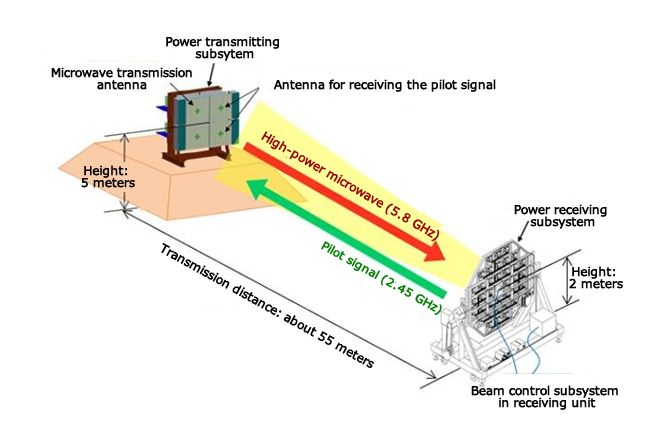
\ The solar energy collected is changed into microwaves to be sent wirelessly to Earth. This happens at frequencies between 2.45 GHz and 5.8 GHz to reduce atmospheric absorption and avoid disrupting current communication systems. The microwave beam is precisely aimed using phased array antennas, forming a narrow beam that sends power to specific receiving stations. The beam's strength is carefully managed to keep it safe for aircraft and wildlife that might cross its path.

Ground-Based Rectennas
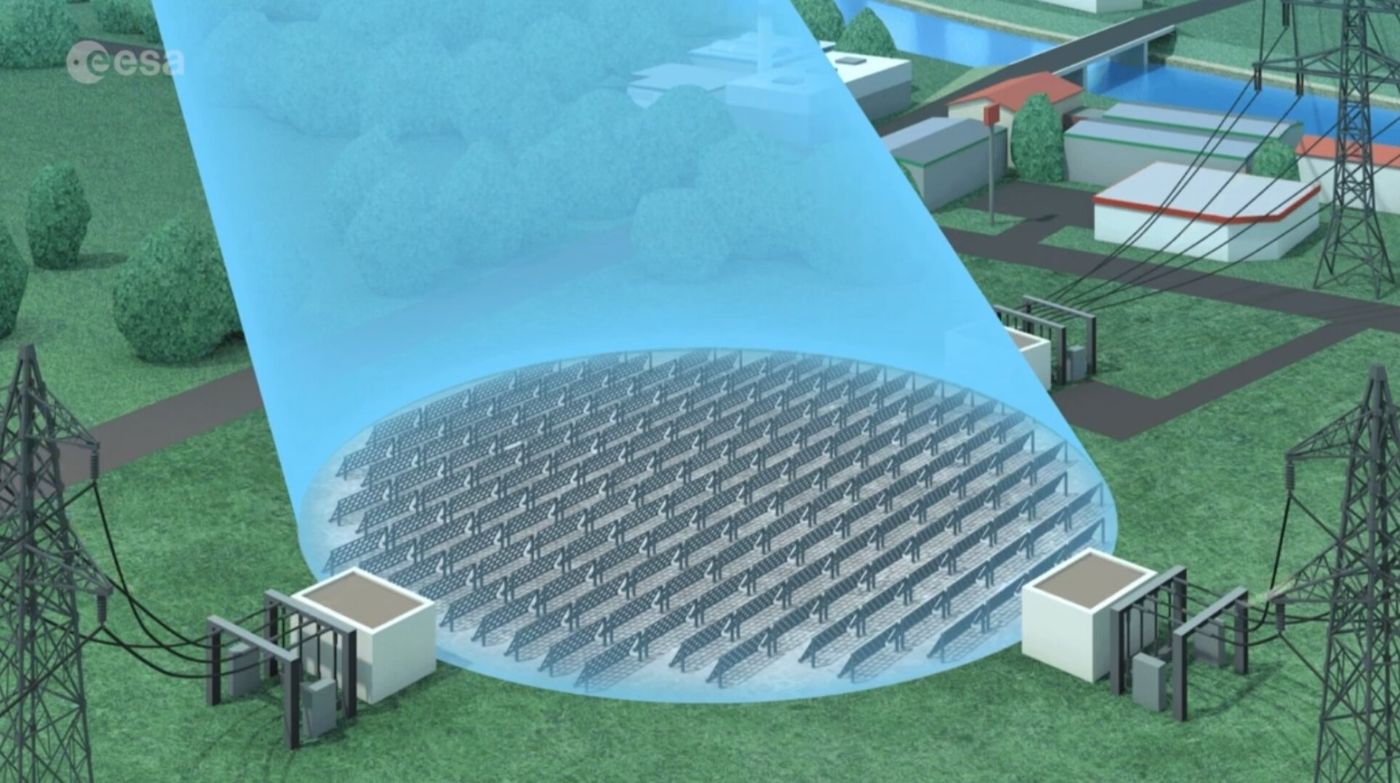
\ On Earth, special receiving antennas called rectennas capture the microwave energy and turn it back into electricity. These setups include arrays of dipole antennas with diodes that change the AC microwave signal into DC power.

Rectenna farms usually cover several square kilometers to effectively capture the transmitted beam. The converted electricity is then adjusted and fed into the existing power grid using standard power electronics


Earthside Benefits

Space-based solar power (SBSP) has many benefits that could change how we use renewable energy and manage power grids. Unlike solar and wind power on Earth, SBSP gives continuous and predictable energy, solving the problem of renewable energy being inconsistent.
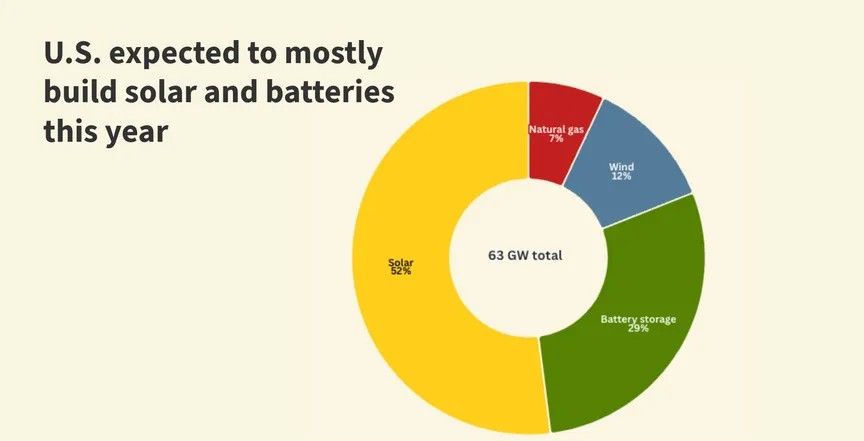
Source: https://www.canarymedia.com/articles/clean-energy/chart-solar-batteries-to-lead-us-power-plant-construction-in-2025

\ This steady power means we don't need big energy storage systems, which usually help balance out energy changes, making the shift to clean energy cheaper and simpler. SBSP can also send power to temporary stations, which is very helpful for disaster relief by quickly providing electricity to areas hit by hurricanes, earthquakes, or other disasters that damage ground infrastructure. Remote places like islands, mining sites, and military bases can get power without needing long transmission lines, which is useful where extending the grid isn't cost-effective. SBSP's reliability helps stabilize power grids by providing steady clean energy, reducing the need for fossil fuel backup plants. Large-scale SBSP could also lower electricity price changes by offering consistent low-cost energy, much like how nuclear power provides a steady energy supply.


Early Use Cases & Phased Deployment

The path to commercial space-based solar power will likely happen in stages, starting with specific uses before expanding to larger utility-level use. Japan's OHISAMA project is the first step, using a 180-kilogram satellite to send about 1 kilowatt of power from 400 kilometers up, enough for a household appliance but not yet at commercial scale. These early tests aim to prove key technologies: sending power from space to Earth, accurately directing beams, and efficient rectennas. Success here will show that bigger systems can work.

Initial commercial uses will focus on remote areas where power is costly or unavailable, like military bases, Arctic stations, and deep-sea platforms. Space-based power could also help lunar and Mars bases. For utility use, much larger installations are needed, which will require cheaper space access and construction. Utility partnerships and long-term deals will be important for funding, and government support could speed up deployment


Challenges

Space-based solar power has a lot of potential, but there are big technical, economic, and regulatory challenges to overcome before it can be widely used. Launching costs are high, making large-scale projects expensive. Even with SpaceX's Falcon Heavy lowering costs to about $1,400 per kilogram to GEO, launching large solar arrays would still cost tens of billions of dollars. Building these arrays in space is also tough, needing special robots, precise positioning, and the ability to work in harsh space conditions, so designs that can be put together automatically are important. Additionally, using microwaves to transmit power raises safety issues for planes, satellites, and living things, so power limits are needed to keep it safe while still being efficient.

International cooperation is needed to assign frequencies and orbital slots. The ITU and other regulatory bodies must set up rules for managing space-based power systems along with current satellite services. When microwaves pass through Earth's atmosphere, some energy can be lost, almost 100% efficiency in clear weather, but 2-5% less in heavy rain or clouds. Ground-based rectenna systems must manage changing power levels and might need backups during bad weather, which can reduce their reliability. SBSP systems need specific radio frequencies to avoid interfering with existing services, and there are only a few suitable frequencies, which might limit how much power can be sent at once. Working with satellite operators, radio astronomy, and wireless services is crucial, needing international agreements similar to those for satellite communications.


Path Forward

Creating commercially viable space-based solar power needs teamwork in different areas like technology, policy, and international collaboration. We need to improve high-efficiency solar cells for space, lightweight structures, and systems for building in orbit, as these will impact cost and feasibility. Rectenna technology also needs to be better to increase efficiency and reduce space on the ground, while solid-state power amplifiers and advanced beam-forming systems will make transmission more efficient and safe.

Governments should create rules for space-based power systems, including safety standards, to attract investment. Adding space-based solar power to carbon credits and renewable incentives can ensure stable income. International cooperation is needed to manage orbits and radio frequencies. Sharing technology and working together on missions can speed up development and reduce costs. Standard rectenna kits and modular parts can lower deployment costs, allowing for multiple suppliers. Recognizing the clean energy benefits in carbon credits can increase revenue. Connecting with existing renewable energy markets is essential for success


Conclusion

Space-based solar power could change clean energy by giving us constant power along with earth-based renewables. Although there are challenges, progress in space technology and interest from big agencies suggest that orbital power systems might work in the next twenty years. This will require investment, rules, and teamwork. If successful, space-based solar power could become important for global clean energy, working alongside land-based renewables. Together with solar, wind, hydro, and nuclear power, it could help reduce carbon emissions and meet global energy needs. The idea of endless clean energy from space might soon be possible, providing sustainable power for Earth and future space communities.


\

Market Opportunity
Spacecoin Logo
Spacecoin Price(SPACE)
$0.005387
$0.005387$0.005387
-3.70%
USD
Spacecoin (SPACE) Live Price Chart
Disclaimer: The articles reposted on this site are sourced from public platforms and are provided for informational purposes only. They do not necessarily reflect the views of MEXC. All rights remain with the original authors. If you believe any content infringes on third-party rights, please contact service@support.mexc.com for removal. MEXC makes no guarantees regarding the accuracy, completeness, or timeliness of the content and is not responsible for any actions taken based on the information provided. The content does not constitute financial, legal, or other professional advice, nor should it be considered a recommendation or endorsement by MEXC.

You May Also Like

Momentous Grayscale ETF: GDLC Fund’s Historic Conversion Set to Trade Tomorrow

Momentous Grayscale ETF: GDLC Fund’s Historic Conversion Set to Trade Tomorrow

BitcoinWorld Momentous Grayscale ETF: GDLC Fund’s Historic Conversion Set to Trade Tomorrow Get ready for a significant shift in the world of digital asset investing! A truly momentous event is unfolding as Grayscale’s Digital Large Cap Fund (GDLC) makes its highly anticipated transition into a spot crypto exchange-traded fund. This isn’t just a name change; it’s a pivotal moment for the broader cryptocurrency market, bringing a new era of accessibility and institutional participation through the Grayscale ETF. What’s Happening with the Grayscale ETF Conversion? Tomorrow marks a historic day for Grayscale’s Digital Large Cap Fund (GDLC). This existing spot crypto basket is officially scheduled to begin trading under its new identity: the Grayscale CoinDesk Crypto5 ETF. This exciting development comes directly after the U.S. Securities and Exchange Commission (SEC) gave its stamp of approval to Grayscale’s application for this conversion. As Bloomberg ETF analyst Eric Balchunas highlighted, this move has been keenly watched. The approval and subsequent launch underscore a growing acceptance of crypto-backed financial products within traditional markets. For investors, this conversion of the Grayscale ETF represents a more streamlined and regulated way to gain exposure to a diversified basket of large-cap digital assets. Why is the Grayscale ETF a Game-Changer for Investors? The conversion of GDLC into a Grayscale ETF offers several compelling benefits, fundamentally changing how investors can access the crypto market. Firstly, ETFs are known for their ease of trading. They can be bought and sold on traditional stock exchanges, just like company shares, making them incredibly accessible to a wider range of investors who might be hesitant to directly hold cryptocurrencies. Consider these key advantages: Enhanced Accessibility: Investors can gain exposure to a diversified crypto portfolio without needing to set up crypto wallets or manage private keys. Increased Liquidity: Trading on major exchanges typically means higher liquidity, allowing for easier entry and exit points. Regulatory Oversight: As an SEC-approved product, the Grayscale ETF operates under a regulated framework, potentially offering greater investor protection and confidence. Diversification: The Grayscale CoinDesk Crypto5 ETF tracks a basket of large-cap cryptocurrencies, offering immediate diversification rather than exposure to a single asset. This development is a strong indicator of the maturation of the digital asset space. It signals a bridge between the innovative world of crypto and the established financial system. Navigating the New Grayscale ETF Landscape While the launch of the Grayscale CoinDesk Crypto5 ETF brings exciting opportunities, it’s also important for investors to understand its implications. The shift from a closed-end fund structure (GDLC) to an open-ended ETF means that the fund’s shares can now be created and redeemed daily. This mechanism helps keep the ETF’s market price closely aligned with the net asset value (NAV) of its underlying holdings. Historically, closed-end funds like GDLC could trade at significant premiums or discounts to their NAV. The ETF structure is designed to mitigate these discrepancies, providing a more efficient pricing mechanism. This change offers a more transparent and potentially less volatile investment experience for those looking to invest in a Grayscale ETF. What’s Next for Crypto ETFs and Grayscale? The successful conversion and launch of the Grayscale CoinDesk Crypto5 ETF could pave the way for similar transformations of other Grayscale products. It also sets a precedent for how existing crypto investment vehicles might evolve to meet market demand for regulated, accessible products. The increasing number of spot crypto ETFs, including this new Grayscale ETF, reflects a growing institutional appetite for digital assets. This trend suggests a future where cryptocurrency investing becomes an even more integrated part of mainstream financial portfolios. As regulatory clarity continues to improve, we can anticipate further innovation and expansion in the crypto ETF landscape, offering investors diverse options to participate in the digital economy. The launch of the Grayscale CoinDesk Crypto5 ETF is more than just a new product; it’s a testament to the persistent efforts to bring digital assets into the mainstream financial fold. By offering a regulated, accessible, and diversified investment vehicle, Grayscale is not only expanding opportunities for investors but also reinforcing the legitimacy and staying power of the crypto market. This momentous step truly reshapes the investment landscape, making it easier for a broader audience to engage with the exciting potential of cryptocurrencies through a trusted Grayscale ETF. Frequently Asked Questions (FAQs) What is the Grayscale CoinDesk Crypto5 ETF? The Grayscale CoinDesk Crypto5 ETF is the new name and structure for Grayscale’s former Digital Large Cap Fund (GDLC). It’s a spot crypto basket that holds a diversified portfolio of large-cap digital assets, now trading as an exchange-traded fund. When will the Grayscale ETF begin trading? The Grayscale CoinDesk Crypto5 ETF is scheduled to begin trading tomorrow, following its approval by the U.S. Securities and Exchange Commission (SEC). How does an ETF differ from the previous GDLC fund? As an ETF, the fund’s shares can be created and redeemed daily, which helps keep its market price closely aligned with the value of its underlying assets. The previous GDLC fund was a closed-end fund that could trade at significant premiums or discounts to its net asset value. What are the benefits of investing in the Grayscale ETF? Benefits include enhanced accessibility (trading on traditional exchanges), increased liquidity, regulatory oversight by the SEC, and immediate diversification into a basket of large-cap cryptocurrencies. Is the Grayscale ETF suitable for all investors? While the Grayscale ETF offers a regulated and accessible way to invest in crypto, all investments carry risks. Investors should conduct their own research and consider their financial goals and risk tolerance before investing in any ETF, including this Grayscale ETF. Did you find this article informative? Share this exciting news about the Grayscale ETF conversion with your friends, family, and fellow investors on social media to keep them informed about the latest developments in the crypto world! To learn more about the latest crypto market trends, explore our article on key developments shaping Bitcoin and Ethereum price action. This post Momentous Grayscale ETF: GDLC Fund’s Historic Conversion Set to Trade Tomorrow first appeared on BitcoinWorld.
Share
Coinstats2025/09/19 17:45
The UA Sprinkler Fitters Local 669 JATC – Notice of Privacy Incident

The UA Sprinkler Fitters Local 669 JATC – Notice of Privacy Incident

Landover, Maryland, February 6, 2026– The UA Sprinkler Fitters Local 669 Joint Apprenticeship and Training Committee (“JATC”) is providing notice of an event that
Share
AI Journal2026/02/07 07:30
Vitalik Buterin Reveals Ethereum’s (ETH) Future Plans – Here’s What’s Planned

Vitalik Buterin Reveals Ethereum’s (ETH) Future Plans – Here’s What’s Planned

The post Vitalik Buterin Reveals Ethereum’s (ETH) Future Plans – Here’s What’s Planned appeared on BitcoinEthereumNews.com. Ethereum founder Vitalik Buterin presented the network’s new roadmap, which includes its short-, medium-, and long-term goals, at the Developer Conference held in Japan today. Scalability, cross-layer compatibility, privacy, and security were the prominent topics in Buterin’s speech. Buterin stated that the short-term focus will be on increasing gas limits on the Ethereum mainnet (L1). He said that tools such as block-level access lists, ZK-EVMs, gas price restructuring, and slot optimization will be used in this context. The goal is to maintain the network’s decentralization while increasing scalability. The medium-term goal is to enable trustless asset transfers between Layer-2 (L2) networks and achieve faster transaction finality. In this context, “Stage 2 Rollup” solutions, proof-of-conduct combinations, and optimizations for reading data from L1 are on the agenda. Furthermore, network optimizations such as shortening slot times, fast finality protocols, and erasure coding are planned to improve user experience and security. Buterin emphasized that privacy is a priority for both the short and medium term. Zero-knowledge (ZK) proofs, anonymous pools, encrypted voting, and scrambling network solutions are highlighted to protect the privacy of users’ on-chain payments, voting, DeFi transactions, and account changes. Furthermore, secure execution environments, secret query techniques, and the ability to conceal fraudulent requests and data access patterns are also targeted when reading data from the chain. Buterin’s long-term vision highlights a minimalist, secure, and simple Ethereum. This roadmap includes resistance to the risks posed by quantum computers, securing the protocol with mathematical methods (formal verification), and transitioning to ideal cryptographic solutions. Buterin stated that these strategic steps will transform Ethereum into a more scalable, user-friendly, and secure infrastructure. With the strengthening of L2 networks, more users will be able to use Ethereum with less trust assumptions. The ultimate goal is for Ethereum to become a reliable foundational infrastructure for global…
Share
BitcoinEthereumNews2025/09/18 15:57