The post Anchor Enhances Ethereum Staking with New Validator Client appeared on BitcoinEthereumNews.com. Joerg Hiller Oct 30, 2025 01:08 Sigma Prime’s Anchor client, now live on Ethereum’s mainnet, introduces client diversity to SSV Network’s Distributed Validator Technology, enhancing security and performance for Ethereum staking. In a significant development for Ethereum’s staking infrastructure, the SSV Network has announced that the Anchor client, developed by Sigma Prime, is now operational on the Ethereum mainnet. This marks a pivotal moment for the network as it continues to evolve into a multi-client protocol, similar to Ethereum itself, according to SSV Network. Advancing Client Diversity in SSV Network The introduction of Anchor, a Rust-based validator client, enhances the SSV Network’s Distributed Validator Technology (DVT) by providing a robust architecture and promoting client diversity. This diversity is crucial for minimizing risks associated with a single-client system, which can lead to vulnerabilities if bugs or failures occur. With approximately 14% of Ethereum validators secured by SSV DVT, the addition of a new client strengthens this critical component of Ethereum staking. Prior to Anchor, the SSV node operated primarily on a single Go implementation. The introduction of Anchor allows for mixed clusters of Anchor and Go SSV, reducing correlated failures and increasing the fault tolerance of Ethereum validators. Technical Advantages of Anchor Anchor leverages Rust’s memory-safety features and modern concurrency model to offer fewer runtime errors and better predictability. This is expected to result in higher stability for hybrid clusters. Additionally, operators benefit from enhanced observability through built-in metrics compatible with Prometheus and Grafana, along with HTTP APIs and monitoring hooks. Another advantage of Anchor is its seamless migration path. It uses the same operator key formats as Go-SSV, facilitating easy transitions and hybrid setups with minimal retooling. As SSV technology evolves, Anchor’s modular architecture positions it well for adopting future upgrades and… The post Anchor Enhances Ethereum Staking with New Validator Client appeared on BitcoinEthereumNews.com. Joerg Hiller Oct 30, 2025 01:08 Sigma Prime’s Anchor client, now live on Ethereum’s mainnet, introduces client diversity to SSV Network’s Distributed Validator Technology, enhancing security and performance for Ethereum staking. In a significant development for Ethereum’s staking infrastructure, the SSV Network has announced that the Anchor client, developed by Sigma Prime, is now operational on the Ethereum mainnet. This marks a pivotal moment for the network as it continues to evolve into a multi-client protocol, similar to Ethereum itself, according to SSV Network. Advancing Client Diversity in SSV Network The introduction of Anchor, a Rust-based validator client, enhances the SSV Network’s Distributed Validator Technology (DVT) by providing a robust architecture and promoting client diversity. This diversity is crucial for minimizing risks associated with a single-client system, which can lead to vulnerabilities if bugs or failures occur. With approximately 14% of Ethereum validators secured by SSV DVT, the addition of a new client strengthens this critical component of Ethereum staking. Prior to Anchor, the SSV node operated primarily on a single Go implementation. The introduction of Anchor allows for mixed clusters of Anchor and Go SSV, reducing correlated failures and increasing the fault tolerance of Ethereum validators. Technical Advantages of Anchor Anchor leverages Rust’s memory-safety features and modern concurrency model to offer fewer runtime errors and better predictability. This is expected to result in higher stability for hybrid clusters. Additionally, operators benefit from enhanced observability through built-in metrics compatible with Prometheus and Grafana, along with HTTP APIs and monitoring hooks. Another advantage of Anchor is its seamless migration path. It uses the same operator key formats as Go-SSV, facilitating easy transitions and hybrid setups with minimal retooling. As SSV technology evolves, Anchor’s modular architecture positions it well for adopting future upgrades and…

Anchor Enhances Ethereum Staking with New Validator Client


Joerg Hiller
Oct 30, 2025 01:08

Sigma Prime’s Anchor client, now live on Ethereum’s mainnet, introduces client diversity to SSV Network’s Distributed Validator Technology, enhancing security and performance for Ethereum staking.

In a significant development for Ethereum’s staking infrastructure, the SSV Network has announced that the Anchor client, developed by Sigma Prime, is now operational on the Ethereum mainnet. This marks a pivotal moment for the network as it continues to evolve into a multi-client protocol, similar to Ethereum itself, according to SSV Network.

Advancing Client Diversity in SSV Network

The introduction of Anchor, a Rust-based validator client, enhances the SSV Network’s Distributed Validator Technology (DVT) by providing a robust architecture and promoting client diversity. This diversity is crucial for minimizing risks associated with a single-client system, which can lead to vulnerabilities if bugs or failures occur. With approximately 14% of Ethereum validators secured by SSV DVT, the addition of a new client strengthens this critical component of Ethereum staking.

Prior to Anchor, the SSV node operated primarily on a single Go implementation. The introduction of Anchor allows for mixed clusters of Anchor and Go SSV, reducing correlated failures and increasing the fault tolerance of Ethereum validators.

Technical Advantages of Anchor

Anchor leverages Rust’s memory-safety features and modern concurrency model to offer fewer runtime errors and better predictability. This is expected to result in higher stability for hybrid clusters. Additionally, operators benefit from enhanced observability through built-in metrics compatible with Prometheus and Grafana, along with HTTP APIs and monitoring hooks.

Another advantage of Anchor is its seamless migration path. It uses the same operator key formats as Go-SSV, facilitating easy transitions and hybrid setups with minimal retooling. As SSV technology evolves, Anchor’s modular architecture positions it well for adopting future upgrades and features.

Implementing Anchor

For those looking to integrate Anchor into their operations, the process involves several steps, including stopping the existing Go-SSV node, backing up the operator key, and setting up Anchor with the necessary password files. This ensures a smooth transition and prevents conflicts from running dual operator instances.

After migration, operators should verify the node’s performance and monitor for any issues. Known migration issues, such as key formatting errors, have been documented and can be resolved through minor adjustments.

Real-world Benefits

For professional node operators and staking services, adopting Anchor can mitigate the risks associated with single-client dependencies. In practice, this means that issues with one client, such as connectivity problems, will not disrupt validator duties in a hybrid cluster. This redundancy ensures continuous operation and reliability, which can be a significant competitive advantage.

As the Ethereum staking landscape continues to grow and evolve, the adoption of client-diverse clusters like those enabled by Anchor can provide operators with greater confidence in their infrastructure’s resilience and performance.

Image source: Shutterstock

Source: https://blockchain.news/news/anchor-enhances-ethereum-staking-with-new-validator-client

Market Opportunity
Omnity Network Logo
Omnity Network Price(OCT)
$0.02868
$0.02868$0.02868
+4.70%
USD
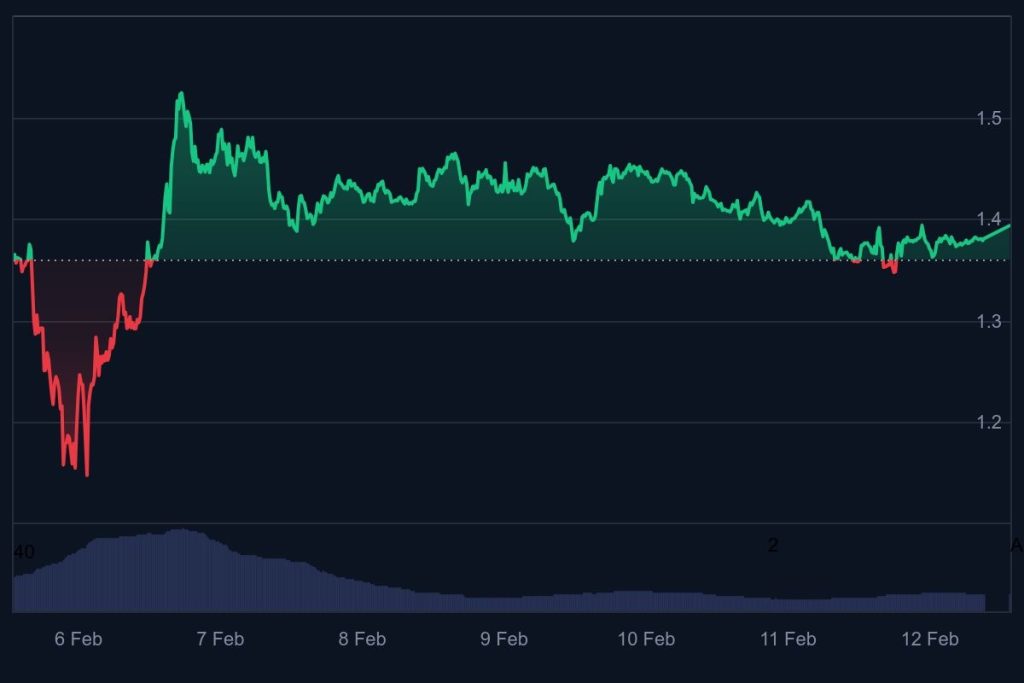
Omnity Network (OCT) Live Price Chart
Disclaimer: The articles reposted on this site are sourced from public platforms and are provided for informational purposes only. They do not necessarily reflect the views of MEXC. All rights remain with the original authors. If you believe any content infringes on third-party rights, please contact service@support.mexc.com for removal. MEXC makes no guarantees regarding the accuracy, completeness, or timeliness of the content and is not responsible for any actions taken based on the information provided. The content does not constitute financial, legal, or other professional advice, nor should it be considered a recommendation or endorsement by MEXC.

You May Also Like

What Does Coinbase’s New Move Mean for Crypto and Finance?

What Does Coinbase’s New Move Mean for Crypto and Finance?

The post What Does Coinbase’s New Move Mean for Crypto and Finance? appeared on BitcoinEthereumNews.com. The most prominent cryptocurrency exchange in the United States, Coinbase, revealed a significant step on October 3rd by applying for national trust company status with the Office of the Comptroller of the Currency (OCC). This initiative aims to consolidate oversight for new product developments under a centralized federal structure, streamlining the integration of cryptocurrencies with […] Continue Reading:What Does Coinbase’s New Move Mean for Crypto and Finance? Source: https://en.bitcoinhaber.net/what-does-coinbases-new-move-mean-for-crypto-and-finance
Share
BitcoinEthereumNews2025/10/04 14:32
Tesla, Inc. (TSLA) Stock: Rises as Battery Cell Investment Expands at German Gigafactory

Tesla, Inc. (TSLA) Stock: Rises as Battery Cell Investment Expands at German Gigafactory

  TLDR TSLA trades near $485 after news of higher battery investment in Germany • Tesla targets up to 8 GWh of annual battery cell output by 2027 • Total cell factory
Share
Coincentral2025/12/17 04:37
‘One Battle After Another’ Hits Peak Popularity With 97% Rotten Tomatoes Score

‘One Battle After Another’ Hits Peak Popularity With 97% Rotten Tomatoes Score

The post ‘One Battle After Another’ Hits Peak Popularity With 97% Rotten Tomatoes Score appeared on BitcoinEthereumNews.com. ‘One Battle After Another’ is already being tipped for Oscar success Warner Bros It tends to take time to build interest in movies, even ones which seem to be sure-fire successes. In the era of social media, many movie fans want to read reviews from their counterparts rather than mainstream outlets. As a result, all but the biggest franchises usually only gain traction once they have been released. There are however exceptions to this rule and one is on the verge of release. Called One Battle After Another, it stars Leonardo DiCaprio as a washed-up delusional revolutionary who lives off grid with his teenage daughter. When one of his old enemies resurfaces and his daughter is abducted, the movie turns into a game of cat and mouse with car chases aplenty as well as the involvement of militias and mysterious organizations. The plot has a hint of 80s action extravaganza Commando but is actually loosely based on a book written by American author Thomas Pynchon. The movie hits a timely note as Pynchon is famous for sending up nefarious quasi-government organisations in his novels and director Paul Thomas Anderson continues that theme on screen. It has been seen as a political commentary and DiCaprio was a natural fit. His role combines the paranoia he portrayed in Howard Hughes biopic The Aviator with the comedic chases from his crime comedy Catch Me If You Can. DiCaprio is supported by an equally heavyweight cast led by Benicio del Toro as his accomplice and Sean Penn as his nemesis. One Battle After Another premiered in Los Angeles on September 8 and was met with universal acclaim. It has a critics’ rating of 97% on review aggregator Rotten Tomatoes but doesn’t yet have a single score from audiences as the film won’t be released…
Share
BitcoinEthereumNews2025/09/19 06:41