Over 13,000 Live Listeners Highlight Strong Global Web3 Interest Punkvism (PVT), a global Web3 ecosystem bridging real-world assets with culture-driven blockchain initiatives, has successfully concluded its PVT AMA (Ask Me Anything) session with world-renowned blockchain influencer Evan Luthra. The live AMA took place on November 17 at 2 PM KST through Evan Luthra’s official X […] The post Punkvism Successfully Hosts PVT AMA with Global Influencer Evan Luthra appeared first on TechBullion.Over 13,000 Live Listeners Highlight Strong Global Web3 Interest Punkvism (PVT), a global Web3 ecosystem bridging real-world assets with culture-driven blockchain initiatives, has successfully concluded its PVT AMA (Ask Me Anything) session with world-renowned blockchain influencer Evan Luthra. The live AMA took place on November 17 at 2 PM KST through Evan Luthra’s official X […] The post Punkvism Successfully Hosts PVT AMA with Global Influencer Evan Luthra appeared first on TechBullion.

Punkvism Successfully Hosts PVT AMA with Global Influencer Evan Luthra

Over 13,000 Live Listeners Highlight Strong Global Web3 Interest

Punkvism (PVT), a global Web3 ecosystem bridging real-world assets with culture-driven blockchain initiatives, has successfully concluded its PVT AMA (Ask Me Anything) session with world-renowned blockchain influencer Evan Luthra.

The live AMA took place on November 17 at 2 PM KST through Evan Luthra’s official X (Twitter) Spaces channel. Punkvism’s CPO, Katrina Park, joined as the featured speaker, presenting the philosophy behind PVT, its structural design, and Punkvism’s expanding global initiatives across sports, culture, and RWA-driven models.

From the moment the broadcast went live, the session gained exceptional traction, recording over 13,000 real-time listeners and underscoring the increasing global attention surrounding Punkvism’s ecosystem vision.

Evan Luthra: One of Web3’s Most Influential Voices

Evan Luthra, who hosted the AMA, is widely recognized as one of the most impactful figures in the Web3 sector, with over 1 million followers worldwide.
He also serves as an official advisor to Punkvism, contributing to global expansion efforts and supporting the project’s cultural and technological direction.

During the session, he remarked:

“Web3 is not just technology — it’s a philosophy. And PUNKVISM is a project that expresses this philosophy through a people-centered approach.”

He further expressed strong confidence in Punkvism’s long-term direction and its cultural relevance in the evolving Web3 landscape.

“PVT is not just a token — it represents human value.”

During the session, Punkvism’s CPO Katrina Park highlighted:

“PVT is more than just a coin. It is a token that represents human time, effort, and creation — a token of value in the Web3 era. Its philosophy is rooted in standing against irrationality and building a new order.”

She emphasized that Punkvism is not merely a technology-driven initiative, but a platform based on trust, participation, and people-focused value creation.

Katrina also highlighted Punkvism’s recent real-world achievements, presented as leading examples of connecting blockchain mechanisms with tangible cultural and economic activity, including:

  • the RWA acquisition of the Ronaldinho Soccer Show Switzerland event, and
  • the Fierce Haechi RWA project.

PVT and Punkvism’s Vision Shared with the Global Community

Through this AMA, Punkvism successfully communicated the philosophy behind PVT — a token designed to represent human contribution — and presented a new direction for Web3 that shifts from purely technical innovation toward human-centered value ecosystems.

Punkvism CEO Hyun-ki Hwang commented:

“This AMA offered a meaningful opportunity for the global community to directly experience Punkvism’s philosophy and future vision.
We will continue expanding our global AMA series to grow the worldwide community of ‘Punkyvists,’ and together, we will shape a new culture for the next era of Web3.”


Comments
Market Opportunity
PUNKVISM Logo
PUNKVISM Price(PVT)
$0.001597
$0.001597$0.001597
-0.31%
USD
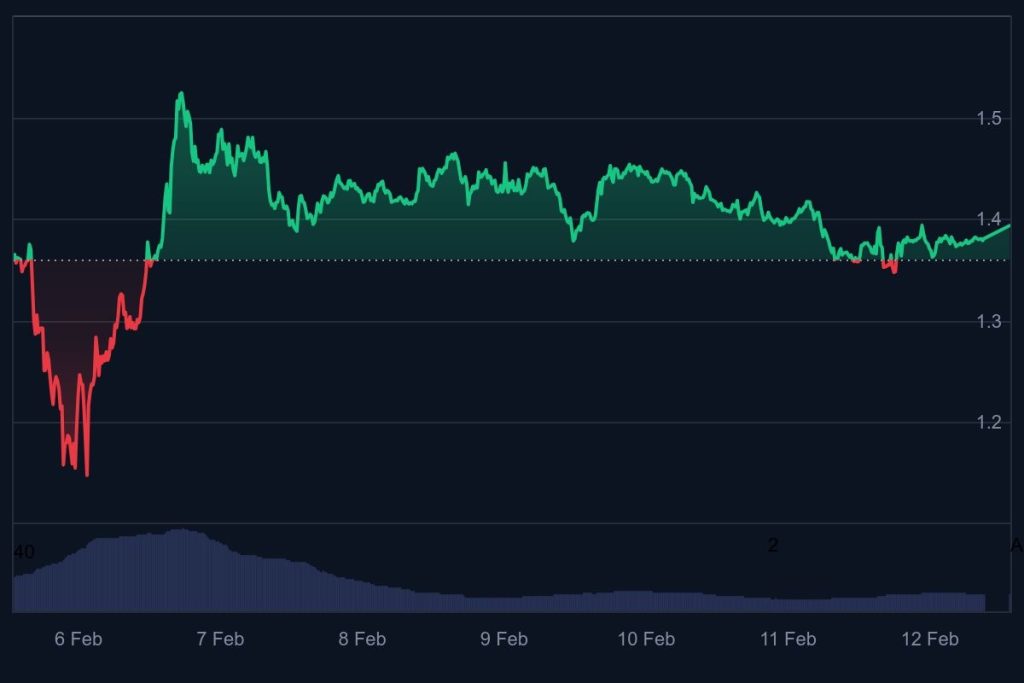
PUNKVISM (PVT) Live Price Chart
Disclaimer: The articles reposted on this site are sourced from public platforms and are provided for informational purposes only. They do not necessarily reflect the views of MEXC. All rights remain with the original authors. If you believe any content infringes on third-party rights, please contact service@support.mexc.com for removal. MEXC makes no guarantees regarding the accuracy, completeness, or timeliness of the content and is not responsible for any actions taken based on the information provided. The content does not constitute financial, legal, or other professional advice, nor should it be considered a recommendation or endorsement by MEXC.

You May Also Like

South Korea Launches Innovative Stablecoin Initiative

South Korea Launches Innovative Stablecoin Initiative

The post South Korea Launches Innovative Stablecoin Initiative appeared on BitcoinEthereumNews.com. South Korea has witnessed a pivotal development in its cryptocurrency landscape with BDACS introducing the nation’s first won-backed stablecoin, KRW1, built on the Avalanche network. This stablecoin is anchored by won assets stored at Woori Bank in a 1:1 ratio, ensuring high security. Continue Reading:South Korea Launches Innovative Stablecoin Initiative Source: https://en.bitcoinhaber.net/south-korea-launches-innovative-stablecoin-initiative
Share
BitcoinEthereumNews2025/09/18 17:54
Trump Cancels Tech, AI Trade Negotiations With The UK

Trump Cancels Tech, AI Trade Negotiations With The UK

The US pauses a $41B UK tech and AI deal as trade talks stall, with disputes over food standards, market access, and rules abroad.   The US has frozen a major tech
Share
LiveBitcoinNews2025/12/17 01:00
Summarize Any Stock’s Earnings Call in Seconds Using FMP API

Summarize Any Stock’s Earnings Call in Seconds Using FMP API

Turn lengthy earnings call transcripts into one-page insights using the Financial Modeling Prep APIPhoto by Bich Tran Earnings calls are packed with insights. They tell you how a company performed, what management expects in the future, and what analysts are worried about. The challenge is that these transcripts often stretch across dozens of pages, making it tough to separate the key takeaways from the noise. With the right tools, you don’t need to spend hours reading every line. By combining the Financial Modeling Prep (FMP) API with Groq’s lightning-fast LLMs, you can transform any earnings call into a concise summary in seconds. The FMP API provides reliable access to complete transcripts, while Groq handles the heavy lifting of distilling them into clear, actionable highlights. In this article, we’ll build a Python workflow that brings these two together. You’ll see how to fetch transcripts for any stock, prepare the text, and instantly generate a one-page summary. Whether you’re tracking Apple, NVIDIA, or your favorite growth stock, the process works the same — fast, accurate, and ready whenever you are. Fetching Earnings Transcripts with FMP API The first step is to pull the raw transcript data. FMP makes this simple with dedicated endpoints for earnings calls. If you want the latest transcripts across the market, you can use the stable endpoint /stable/earning-call-transcript-latest. For a specific stock, the v3 endpoint lets you request transcripts by symbol, quarter, and year using the pattern: https://financialmodelingprep.com/api/v3/earning_call_transcript/{symbol}?quarter={q}&year={y}&apikey=YOUR_API_KEY here’s how you can fetch NVIDIA’s transcript for a given quarter: import requestsAPI_KEY = "your_api_key"symbol = "NVDA"quarter = 2year = 2024url = f"https://financialmodelingprep.com/api/v3/earning_call_transcript/{symbol}?quarter={quarter}&year={year}&apikey={API_KEY}"response = requests.get(url)data = response.json()# Inspect the keysprint(data.keys())# Access transcript contentif "content" in data[0]: transcript_text = data[0]["content"] print(transcript_text[:500]) # preview first 500 characters The response typically includes details like the company symbol, quarter, year, and the full transcript text. If you aren’t sure which quarter to query, the “latest transcripts” endpoint is the quickest way to always stay up to date. Cleaning and Preparing Transcript Data Raw transcripts from the API often include long paragraphs, speaker tags, and formatting artifacts. Before sending them to an LLM, it helps to organize the text into a cleaner structure. Most transcripts follow a pattern: prepared remarks from executives first, followed by a Q&A session with analysts. Separating these sections gives better control when prompting the model. In Python, you can parse the transcript and strip out unnecessary characters. A simple way is to split by markers such as “Operator” or “Question-and-Answer.” Once separated, you can create two blocks — Prepared Remarks and Q&A — that will later be summarized independently. This ensures the model handles each section within context and avoids missing important details. Here’s a small example of how you might start preparing the data: import re# Example: using the transcript_text we fetched earliertext = transcript_text# Remove extra spaces and line breaksclean_text = re.sub(r'\s+', ' ', text).strip()# Split sections (this is a heuristic; real-world transcripts vary slightly)if "Question-and-Answer" in clean_text: prepared, qna = clean_text.split("Question-and-Answer", 1)else: prepared, qna = clean_text, ""print("Prepared Remarks Preview:\n", prepared[:500])print("\nQ&A Preview:\n", qna[:500]) With the transcript cleaned and divided, you’re ready to feed it into Groq’s LLM. Chunking may be necessary if the text is very long. A good approach is to break it into segments of a few thousand tokens, summarize each part, and then merge the summaries in a final pass. Summarizing with Groq LLM Now that the transcript is clean and split into Prepared Remarks and Q&A, we’ll use Groq to generate a crisp one-pager. The idea is simple: summarize each section separately (for focus and accuracy), then synthesize a final brief. Prompt design (concise and factual) Use a short, repeatable template that pushes for neutral, investor-ready language: You are an equity research analyst. Summarize the following earnings call sectionfor {symbol} ({quarter} {year}). Be factual and concise.Return:1) TL;DR (3–5 bullets)2) Results vs. guidance (what improved/worsened)3) Forward outlook (specific statements)4) Risks / watch-outs5) Q&A takeaways (if present)Text:<<<{section_text}>>> Python: calling Groq and getting a clean summary Groq provides an OpenAI-compatible API. Set your GROQ_API_KEY and pick a fast, high-quality model (e.g., a Llama-3.1 70B variant). We’ll write a helper to summarize any text block, then run it for both sections and merge. import osimport textwrapimport requestsGROQ_API_KEY = os.environ.get("GROQ_API_KEY") or "your_groq_api_key"GROQ_BASE_URL = "https://api.groq.com/openai/v1" # OpenAI-compatibleMODEL = "llama-3.1-70b" # choose your preferred Groq modeldef call_groq(prompt, temperature=0.2, max_tokens=1200): url = f"{GROQ_BASE_URL}/chat/completions" headers = { "Authorization": f"Bearer {GROQ_API_KEY}", "Content-Type": "application/json", } payload = { "model": MODEL, "messages": [ {"role": "system", "content": "You are a precise, neutral equity research analyst."}, {"role": "user", "content": prompt}, ], "temperature": temperature, "max_tokens": max_tokens, } r = requests.post(url, headers=headers, json=payload, timeout=60) r.raise_for_status() return r.json()["choices"][0]["message"]["content"].strip()def build_prompt(section_text, symbol, quarter, year): template = """ You are an equity research analyst. Summarize the following earnings call section for {symbol} ({quarter} {year}). Be factual and concise. Return: 1) TL;DR (3–5 bullets) 2) Results vs. guidance (what improved/worsened) 3) Forward outlook (specific statements) 4) Risks / watch-outs 5) Q&A takeaways (if present) Text: <<< {section_text} >>> """ return textwrap.dedent(template).format( symbol=symbol, quarter=quarter, year=year, section_text=section_text )def summarize_section(section_text, symbol="NVDA", quarter="Q2", year="2024"): if not section_text or section_text.strip() == "": return "(No content found for this section.)" prompt = build_prompt(section_text, symbol, quarter, year) return call_groq(prompt)# Example usage with the cleaned splits from Section 3prepared_summary = summarize_section(prepared, symbol="NVDA", quarter="Q2", year="2024")qna_summary = summarize_section(qna, symbol="NVDA", quarter="Q2", year="2024")final_one_pager = f"""# {symbol} Earnings One-Pager — {quarter} {year}## Prepared Remarks — Key Points{prepared_summary}## Q&A Highlights{qna_summary}""".strip()print(final_one_pager[:1200]) # preview Tips that keep quality high: Keep temperature low (≈0.2) for factual tone. If a section is extremely long, chunk at ~5–8k tokens, summarize each chunk with the same prompt, then ask the model to merge chunk summaries into one section summary before producing the final one-pager. If you also fetched headline numbers (EPS/revenue, guidance) earlier, prepend them to the prompt as brief context to help the model anchor on the right outcomes. Building the End-to-End Pipeline At this point, we have all the building blocks: the FMP API to fetch transcripts, a cleaning step to structure the data, and Groq LLM to generate concise summaries. The final step is to connect everything into a single workflow that can take any ticker and return a one-page earnings call summary. The flow looks like this: Input a stock ticker (for example, NVDA). Use FMP to fetch the latest transcript. Clean and split the text into Prepared Remarks and Q&A. Send each section to Groq for summarization. Merge the outputs into a neatly formatted earnings one-pager. Here’s how it comes together in Python: def summarize_earnings_call(symbol, quarter, year, api_key, groq_key): # Step 1: Fetch transcript from FMP url = f"https://financialmodelingprep.com/api/v3/earning_call_transcript/{symbol}?quarter={quarter}&year={year}&apikey={api_key}" resp = requests.get(url) resp.raise_for_status() data = resp.json() if not data or "content" not in data[0]: return f"No transcript found for {symbol} {quarter} {year}" text = data[0]["content"] # Step 2: Clean and split clean_text = re.sub(r'\s+', ' ', text).strip() if "Question-and-Answer" in clean_text: prepared, qna = clean_text.split("Question-and-Answer", 1) else: prepared, qna = clean_text, "" # Step 3: Summarize with Groq prepared_summary = summarize_section(prepared, symbol, quarter, year) qna_summary = summarize_section(qna, symbol, quarter, year) # Step 4: Merge into final one-pager return f"""# {symbol} Earnings One-Pager — {quarter} {year}## Prepared Remarks{prepared_summary}## Q&A Highlights{qna_summary}""".strip()# Example runprint(summarize_earnings_call("NVDA", 2, 2024, API_KEY, GROQ_API_KEY)) With this setup, generating a summary becomes as simple as calling one function with a ticker and date. You can run it inside a notebook, integrate it into a research workflow, or even schedule it to trigger after each new earnings release. Free Stock Market API and Financial Statements API... Conclusion Earnings calls no longer need to feel overwhelming. With the Financial Modeling Prep API, you can instantly access any company’s transcript, and with Groq LLM, you can turn that raw text into a sharp, actionable summary in seconds. This pipeline saves hours of reading and ensures you never miss the key results, guidance, or risks hidden in lengthy remarks. Whether you track tech giants like NVIDIA or smaller growth stocks, the process is the same — fast, reliable, and powered by the flexibility of FMP’s data. Summarize Any Stock’s Earnings Call in Seconds Using FMP API was originally published in Coinmonks on Medium, where people are continuing the conversation by highlighting and responding to this story
Share
Medium2025/09/18 14:40