

15 Best No KYC Crypto Exchanges for 2025

Are you seeking the best no-KYC crypto exchanges for trading anonymously? If so, you’re exactly where you need to be. KYC is the abbreviation for Know Your Customer. It is a regulatory and security process conducted by businesses, financial institutions, and crypto platforms to verify customers’ identities (IDs). By using a non-KYC exchange, users can trade crypto without revealing their ID and personal details.
In this article, we’ll provide valuable insights into the top-notch crypto exchanges for trading digital assets without KYC. We’ll also walk you through their pros and cons.
Top Non KYC Crypto Exchanges Compared
| Crypto exchange | Supported coins | Trading pairs | Registered users | Global coverage | |
| Spot | Derivatives | ||||
| Binance | 441+ | 1,646+ | 671+ | 280M+ | 100+ countries |
| MEXC | 4,000+ | 2,500+ | 1,181+ | 40M+ | 170+ countries |
| BingX | 1,000+ | 1,113+ | 790+ | 20M+ | 160+ countries |
| Bybit | 1o00+ | 652+ | 876+ | 79M+ | 241+ countries |
| KuCoin | 1,000+ | 1,258+ | 573+ | 40M+ | 200+ countries |
| WEEX | 1,700+ | 687+ | 918+ | 6.2M+ | 130+ countries |
| OKX | 350+ | 699+ | 478+ | – | 100+ countries |
| PrimeXBT | – | – | 136+ | 1M+ | 150+ countries |
| Changelly | 1,000+ | – | – | 10M+ | 200+ countries |
| Uniswap | 1,110+ | – | – | 7.26M+ | 185+ countries |
| dYdX | – | – | 241+ | – | 180+ countries |
| Hodl Hodl | Only BTC | – | – | 300,000+ | 194+ countries |
| SwapRocket | 2,000+ | – | – | 150,000+ | 180+ countries |
| CoinEx | 1,300+ | 1,521+ | 269+ | 10M+ | 200+ countries |
| PancakeSwap | 809+ | – | – | 143M+ | Worldwide |
15 Best No KYC Crypto Exchange Reviewed & Ranked in 2025
1. Binance
Binance is the largest cryptocurrency exchange by trading volumes and customer assets. It is also the most sought-after platform for spot, margin, futures, options, block, and P2P trading. If you want to explore limited functionalities without completing identity verification, Binance is the best crypto trading platforms. As an unverified user, you can also withdraw up to 0.06 BTC daily.
Presently, Binance offers four KYC levels: Basic, Intermediate, Advanced, and Corporate. Depending on your KYC level, you’ll get daily fiat limits of up to $2 million. You’ll also get daily crypto withdrawal limits of up to 8M USDT and unlimited deposits/P2P transaction limits.
Additionally, Binance has set up the Secure Asset Fund for Users (SAFU), valued at $1 billion. It has also implemented other security features like biometric passkeys, 2FA, anti-phishing code, and cold storage. Lastly, the exchange charges low fees, starting from 0.1% for spot trading.
Pros |
Cons |
|
|
2. MEXC
MEXC is a reputable non-KYC crypto exchange, known for its low trading fees, memecoin gems, and extensive token selection. It enables peer-to-peer (P2P), spot, margin, pre-market, perpetual futures, grid, demo, and copy trading. It also offers Earn products to help you generate passive income from your idle crypto assets.
Currently, MEXC offers three KYC verification levels: Unverified, Primary KYC, and Advanced KYC. The exchange allows users to make unlimited cryptocurrency deposits, regardless of their identity verification status. Unverified users can withdraw crypto up to 10 BTC per day, engage in spot/futures trading, and access platform events.
However, you must complete primary KYC to unlock a higher daily withdrawal limit of 80 BTC. To access MEXC’s full suite of features, you need to complete advanced KYC. Once verified, you can withdraw up to 200 BTC and trade up to $20,000 per day.
Regarding trading costs, MEXC doesn’t charge maker fees on spot transactions, while the taker fee is 0.05%. For trading derivatives, MEXC imposes maker and taker fees of 0.01% and 0.04%, respectively. Eligible users may get a 20% MX deduction or a 50% MX holder discount.
Pros |
Cons |
|
|
3. BingX
BingX is a well-known no-KYC crypto exchange, especially for social trading. It also enables spot, margin, signal, and contract trading. Other notable offerings from BingX include Launchhub and staking products like Simple Earn, Shark Fin, and Dual Investment. It has three KYC levels: Unverified, Basic KYC, and Advanced KYC.
Whether you’re an unverified or basic KYC-verified user, you can’t withdraw crypto over 20,000 USDT within 24 hours. To use other services, including trading, fiat on/off ramping, unlimited deposits, and Launchpad, you must complete advanced ID verification. By doing so, you’ll also unlock a higher daily withdrawal limit of 5,000,000 USDT.
Moreover, BingX charges competitive fees. It follows a tier-based structure, where your trading costs decrease as your volumes increase. For regular users (VIP0), the exchange levies a 0.1% maker and taker fee for spot trading. For perpetuals trading, BingX charges 0.02% for makers and 0.05% for takers.
Pros |
Cons |
|
|
4. Bybit
Bybit often features among the top three centralized exchanges by trading volumes. It is also the best no-KYC crypto exchange for newcomers who want to explore a platform without completing KYC. From futures and options trading to staking products and advanced trading tools, Bybit offers a diverse range of features. It also supports copy trading, enabling you to replicate expert strategies.
At present, the platform offers four KYC levels: Non-KYC, Standard, Advanced/Pro, and Business. Non-KYC accounts can withdraw crypto up to $20,000 daily and up to $100,000 monthly. However, the exchange reserves the right to request identity details at any time, especially if you intend to withdraw crypto frequently. To access any other feature, you must complete KYC at least to the Standard level.
Pros |
Cons |
|
|
5. KuCoin
KuCoin is a versatile crypto exchange, recognized for providing early access to crypto gems. With multiple trading options like spot, margin, derivatives, and copy trading, KuCoin caters to both new and experienced traders. Additionally, the exchange offers many balanced, advanced, and specialized passive income products.
For safeguarding user funds, KuCoin has implemented cutting-edge security measures, including DDoS protection, data encryption, proof-of-reserves, and withdrawal anti-tampering.
Without KYC verification, the platform allows you to withdraw up to 30,000 USDT daily. However, you must verify your identity to access other features.
Pros |
Cons |
|
|
6. WEEX
Weex is one of the few crypto exchanges that doesn’t enforce mandatory KYC. Hence, you can trade, deposit, or withdraw cryptocurrencies without completing identity verification. A notable aspect of Weex is that unverified users can engage in both spot and futures trading, and withdraw up to 10,000 USDT daily.
If you want to enjoy higher withdrawal limits of 1,000,000 USDT daily, you must complete the KYC process. Verified users also gain access to Weex’s premium features and advanced security measures.
Lastly, WEEX imposes a 0.1% maker and taker fee for trading major spot pairs. For most futures pairs, it levies a 0.02% maker and 0.08% taker fees.
Pros |
Cons |
|
|
7. OKX
OKX is a top-ranked crypto exchange, offering spot, derivatives, and leveraged trading along with Earn products. As per the latest KYC policy updates, unverified users can navigate the platform, access educational resources/price charts, and get basic customer support. They cannot deposit, trade, withdraw, stake, earn passive income, lend crypto, or engage in API trading.
In short, all the core features are inaccessible. Thus, you must complete at least Basic verification, if not the Advanced KYC level.
While OKX imposes varying trading charges across locations, its transaction fees are overall competitive. A standout aspect of the exchange is OKX Protect. It includes security measures like 24/7 threat detectors, multi-layer crypto wallet security, proof-of-reserves, and AI surveillance.
Pros |
Cons |
|
|
8. PrimeXBT
PrimeXBT is a licensed, non-KYC exchange that enables users to trade 100+ contracts for differences (CFDs) from 0.1 pips. These include CFDs on shares, stock indices, crypto, forex, and commodities. Besides, it facilitates cryptocurrency futures trading, instant crypto purchases, and copy trading.
While unverified users can start trading on PrimeXBT, their daily crypto withdrawal limit is capped at $20,000 USDT. Plus, they can make deposits of only up to $2,000 per day. If you complete identity verification, you’ll get higher deposit and withdrawal limits. You can also make deposits using bank cards and withdrawals via fiat methods.
Pros |
Cons |
|
|
9. Changelly
Changelly is an instant crypto exchange that enables buying/selling of 1,000+ digital assets at the best exchange rates. It has collaborated with 20+ crypto platforms to deliver competitive rates. It is also known for its average transaction processing speed of 5-40 minutes and secure handling of customer assets. Instead of storing/holding your funds, Changelly directly sends the swapped cryptocurrencies to your wallet.
Presently, the exchange offers three KYC verification levels: Starter, Trader, and Pro. You’ll automatically become a starter once you finish your registration process. You can withdraw up to 1 Bitcoin every day and up to 5 BTC monthly. When you upgrade to Trader, you’ll get higher daily and monthly withdrawal limits of 50 BTC and 500 BTC, respectively. However, if you want to enjoy unlimited withdrawals, you must become a Pro.
Pros |
Cons |
|
|
10. Uniswap
Uniswap is a renowned decentralized exchange, built on top of the Ethereum blockchain. It leverages the Automated Market Maker (AMM) model to facilitate peer-to-peer trading of cryptocurrencies. It doesn’t require KYC verification and enables you to trade crypto by directly connecting your wallet to its user interface. However, if you buy crypto using third-party providers, ID verification is mandatory.
Moreover, Uniswap is the largest permissionless exchange for trading 1,000+ tokens across 16+ blockchains. Furthermore, the platform offers liquidity pools, eliminating the need for order books or intermediary infrastructure for trading ERC-20 tokens. You can also become a liquidity provider by depositing designated tokens into these pools and earn rewards.
Pros |
Cons |
|
|
11. dYdX
dYdX is another dominant DeFi protocol and non-KYC crypto exchange, offering a decentralized infrastructure for trading perpetual contracts. You can start trading on the platform by simply connecting a compatible wallet. Currently, the exchange supports numerous wallets, including Metamask, Ledger, Coinbase, and all WalletConnect-enabled wallets.
You can also trade across 220+ markets and use a leverage of up to 50x for specific coin pairs. Furthermore, dYdX charges nominal fees for perpetuals trading: 0.01% for makers and 0.05% for takers. Based on the amount of DYDX tokens you stake, you can receive up to 50% rebates.
Pros |
Cons |
|
|
12. Hodl Hodl
If you’re seeking a non-KYC exchange for engaging in peer-to-peer trading of Bitcoin, Hodl Hodl is the best. Rather than holding user funds, the platform generates a unique multisignature escrow address for each contract created by buyers and sellers. The seller deposits the required BTC amount in the escrow account. As soon as the buyer makes the payment, the seller releases the Bitcoins into the buyer’s wallet. This way, the platform minimizes trading time and the possibility of theft of customer assets.
Additionally, Hodl Hodl is a non-custodial solution. Therefore, you control the keys to the funds stored in the escrow account. Since the platform doesn’t hold Bitcoin or fiat money, it is not subject to tedious compliance norms. Lastly, you can create an account with just an email address.
Pros |
Cons |
|
|
13. SwapRocket
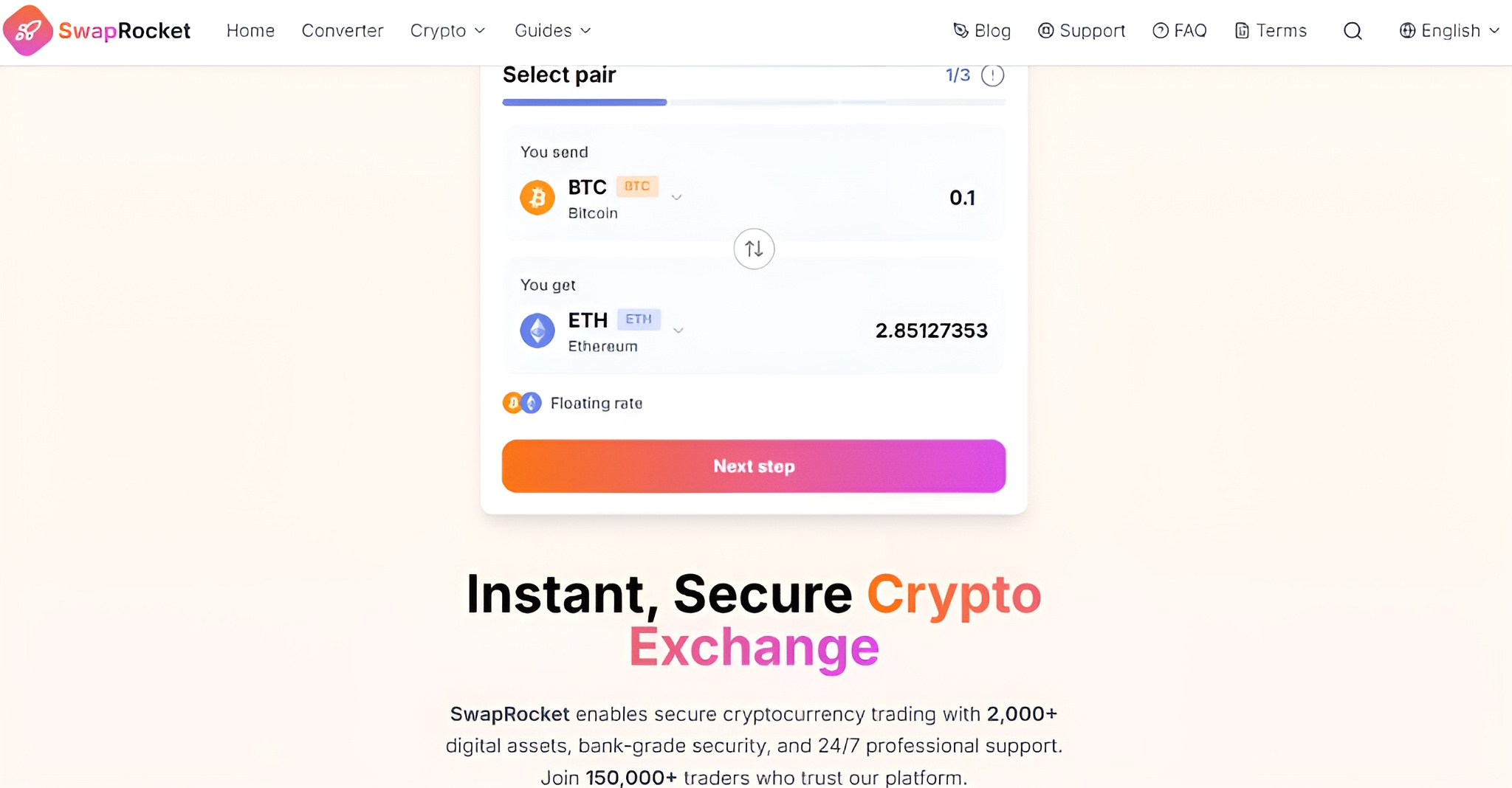
Swaprocket is a non-custodial decentralized exchange that helps users swap fiat currencies and cryptocurrencies at competitive conversion rates. It is also a privacy-focused non-KYC exchange, and doesn’t require users to sign up before they start trading.
To provide users with the best exchange rates, SwapRocket has partnered with 20+ crypto platforms. Its Converter uses real-time market data from top cryptocurrency exchanges to offer accurate rates.
Additionally, the exchange processes every transaction within 5-40 minutes, helping users take advantage of market opportunities. It doesn’t store your funds or assets. Instead, they’re credited to your wallet address directly.
Pros |
Cons |
|
|
14. CoinEx
Users who are looking for a no-KYC exchange that facilitates basic crypto trading without KYC approval can check out CoinEx. It is also an excellent platform for earning trending tokens through mining. Additionally, it helps you earn passive income from Earn products like Fixed Savings, Flexible Savings, Staking, AMM, and Dual Investment.
Since CoinEx is a privacy-oriented exchange, KYC is optional. As a non-verified user, you can withdraw up to $10,000 daily and browse the platform’s features.
From a security standpoint, CoinEx has implemented robust asset safety measures. These include 2FA, 100% reserves, cold storage, risk alerts, and multiple withdrawal confirmations.
Lastly, the exchange charges modest fees, starting from 0.2% for spot transactions. If you hold CET tokens, you’ll receive a 20% discount (0.16%). For regular users, the stablecoin and regular AMM market rates are 0.1% and 0.3%, respectively. At the non-VIP level, futures fees are 0.03% for makers and 0.05% for takers.
Pros |
Cons |
|
|
15. PancakeSwap
PancakeSwap is the largest DEX by trading volumes globally. It is also the most popular decentralized trading platform on the Binance Smart Chain for swapping cryptocurrencies without KYC verification. In fact, you don’t even need to furnish personal details for trading perpetuals or gaining early access to new tokens. You can begin crypto trading by connecting a compatible non-custodial wallet like Trust Wallet, Solflare, and Metamask.
Pros |
Cons |
|
|
What is KYC in crypto?
KYC refers to the user identity verification process conducted by crypto trading platforms, especially centralized exchanges. By verifying their identities, users help these exchanges comply with global anti-money laundering and countering the financing of terrorism laws.
ID verification also helps both you and the exchanges to adhere to crypto tax policies. Additionally, KYC exists to safeguard user accounts from misuse, fraud risks, and identity theft. In case you lose/misplace your login credentials, account recovery becomes easier if you’re KYC-verified.
Many exchanges offer enhanced security, higher withdrawal limits, and access to their full suite of features only to verified users. They also mandate identity verification for users who want to participate in reward tasks, exclusive events, and referral/affiliate programs.
What Are Non-KYC Crypto Exchanges?
Non-KYC crypto exchanges are platforms that have flexible identity verification policies. They allow you to use their features, products, and services without KYC approval.
While the number of centralized exchanges that don’t require user IDs is declining, many enable non-verified customers to access basic features. These include spot markets, educational resources, price charts, and low withdrawal limits.
Conversely, decentralized exchanges don’t require KYC validation, as they don’t store or manage user funds. Every asset you purchase is directly credited to your connected crypto wallet. Simply put, DEXs facilitate peer-to-peer interactions between buyers’ and sellers’ wallets using smart contracts or escrow accounts. Hence, they’re best-suited for active traders who want to execute anonymous transactions.
How to Buy Crypto Without KYC?
- Select a no-KYC crypto exchange: Choose a suitable platform to buy crypto based on your needs. It should support the cryptocurrencies or token pairs you want to trade. It should also allow you to access your preferred features without KYC.
- Create an account: Sign up on the chosen exchange. Most platforms allow you to register with just an email address or phone number. To finish the registration process, specify your location, generate a secure password, and verify your e-mail/phone number.
- Fund your account: After signing up, you need to deposit funds to begin trading. Based on the platform’s rules, you can make crypto or fiat deposits into your account.
- Commence trading: Once your account has a sufficient balance, you can start trading. Many no-KYC exchanges allow only spot trading for unverified users.
- Review the platform’s terms and conditions: Non-KYC crypto exchanges enable unverified customers to access only limited features and lower withdrawal limits. Additionally, you may not be allowed to use fiat payment options for buying crypto. Understanding the terms and conditions beforehand will help you select the right payment method for buying crypto.
Benefits of Using Anonymous Non-KYC Exchanges
- Privacy and anonymity: A no-KYC crypto exchange enables users to trade digital assets without sharing their personal data with third parties. It helps users protect their identity from data leaks, government surveillance, and hackers.
- Quick onboarding: Most exchanges complete KYC procedures within 24-48 hours after you submit your documents. Till then, you can’t start trading on the exchange and may miss out on potential market opportunities. Non-KYC exchanges allow you to trade immediately after registering.
- Better accessibility: Non-KYC platforms, especially decentralized exchanges, are beneficial for users based in jurisdictions with poor banking/government infrastructure. Anonymous exchanges lower barriers to crypto trading, enabling users worldwide to grow their wealth in a KYC-free manner.
- Minimal data misuse: Since you don’t share personal information like name, photo, address, or contact number, third parties can’t misuse your sensitive data.
Risks of Using No KYC Crypto Exchanges
- Legal implications: Many non-KYC exchanges don’t possess the required licenses to operate in various jurisdictions. They may be functioning in a legal grey area, and hence, if any untoward event occurs, you won’t have legal recourse to recover your losses
- Low liquidity: No-KYC exchanges are usually small, often lacking order book depth and liquidity. Your buy/sell orders won’t get executed quickly, and you may lose out on profitable opportunities. Illiquid exchanges are often plagued by issues related to failed orders, price manipulations, lower user trust, and high slippage.
- Illegal activities and scams: No-KYC crypto exchanges could be scams in disguise that lure people into investing their money. These exchanges can also be hotbeds for raising finances for illegal activities.
Criteria for Choosing a Reliable No KYC Crypto Exchange
Payment Methods
Choose a no-KYC exchange that supports multiple global and local payment methods, including bank transfers, third-party gateways, credit cards, etc. Flexible payment options help you send, receive, deposit, and withdraw funds seamlessly.
Trading Fees
The lower the trading charges, the higher your earnings. Moreover, the non-KYC exchange you select should clearly disclose its fee structure, including maker, taker, deposit, and withdrawal fees. Usually, reputable platforms don’t charge fees for crypto deposits and offer attractive discounts to native token holders.
Trading Volume and Liquidity
Deep liquidity coupled with high trading volumes ensures tighter spreads and speedy order executions, minimizing slippage. Conversely, poor liquidity leads to delayed/failed transactions and increases transaction costs for bulk orders. Generally, the top non-KYC crypto exchanges offer profound liquidity across most coin pairs.
Trading Tools and Features
Advanced features and tools like automated bots, technical indicators, multiple order types, etc., boost your trading experience. They also promote more efficient trading.
How to Use No KYC Crypto Exchanges Safely?
- Choose reputable non-KYC crypto exchanges like Bybit, PancakeSwap, and Bingx with strong security, transparent pricing, and liquidity.
- Double-check website links and URLs to avoid getting trapped in phishing scams.
- If you’re using a centralized exchange, avoid keeping large amounts in your exchange wallet. Use non-custodial exchanges like SwapRocket, as these platforms directly send your assets to the linked wallet address.
- Enable security features in your crypto wallets and store your private keys and seed phrases offline.
- Safekeep your crypto assets in cold wallets like Trezor, Ledger, etc.
Are Non-KYC Exchanges Legal?
Non-KYC exchanges that are licensed by recognized bodies to operate in your jurisdiction are legal. As many countries are formulating stricter KYC, anti-money laundering, and crypto tax laws, regulatory compliance has become daunting for no-KYC exchanges.
Non-compliant exchanges can be seized, restricted, or blocked by governments at any time, leaving your funds trapped. For example, popular exchanges like Binance Global, CoinEX, and Bittrex shut down US operations due to regulatory hurdles. Thus, opt for authorized exchanges that adhere to local and global cryptocurrency laws.
Conclusion
No-KYC exchanges help users interact with various platform features and trade cryptocurrencies without ID verification. While KYC limits your anonymity, KYC exists to enhance regulatory compliance and user security. Thus, many exchanges require KYC to let you unlock all their features. Overall, staying informed and using safe non-custodial wallets is imperative to trade smarter while balancing security with privacy.
FAQs
What is the best no KYC crypto exchange in [year]?
MEXC is the best centralized platform, while PancakeSwap is the top decentralized exchange for trading without KYC. For instant token swaps, Changelly is commendable. If you want to buy Bitcoin KYC-free, Hodl Hodl and Peach Bitcoin are the best peer-to-peer exchanges.
Will the government crack down on non-KYC exchanges?
Many governments are enforcing stringent KYC, anti-money laundering, and crypto tax laws to curtail illegal activities and terrorism financing. Therefore, governments may crack down on no-KYC crypto exchanges, forcing them to cease operations.
Are all non-KYC exchanges safe?
Not all non-KYC crypto exchanges are safe. While they offer enhanced privacy and anonymity, they tend to carry higher risks. Lack of regulatory oversight makes them more vulnerable to cyber threats.
Can I trade crypto anonymously without KYC?
You can trade cryptocurrencies anonymously without identity verification on no-KYC exchanges like PrimeXBT, CoinEx, etc. However, not all exchanges may allow users to trade derivatives without KYC. You can only use basic features like spot trading or cryptocurrency swapping.
Do no-KYC exchanges have withdrawal limits?
Most centralized exchanges like Binance, KuCoin, Weex, etc., offer lower withdrawal limits to unverified users. Conversely, DEXs like Pancakeswap allow traders to withdraw 100% of their staked assets/liquidity tokens in one go.
The post 15 Best No KYC Crypto Exchanges for 2025 appeared first on NFT Plazas.
You May Also Like

Botanix launches stBTC to deliver Bitcoin-native yield

PBOC sets USD/CNY reference rate at 6.9590 vs. 6.9570 previous
