

Chasing Mavericks and Sheila Waswa’s bet on Africa’s blockchain future
The first thing Sheila Waswa wants you to understand is that she is a builder. Not a crypto evangelist. Not a hype merchant. A builder who has found her most consequential work inside Africa’s blockchain ecosystem.
As founder and CEO of Chasing Mavericks, the Nairobi-based founder has become one of the quieter architects behind Kenya’s Web3 infrastructure. Her work rarely makes headlines. Yet it shapes who shows up, who understands the technology, and who regulators are willing to listen to. That influence did not start in crypto. It started much earlier and much closer to home.
Chasing Mavericks began while Sheila was still a university student. The trigger was not technology but exposure.
After interning at an events company, she saw how convening power could transfer knowledge quickly and at scale. Within a week of registering the company, she organised her first forum for young professionals in western Kenya. The aim was simple. Show people that their futures could extend beyond default paths.
“I come from a place that’s very fertile,” she says. “But people are used to a certain way of living. I really wanted to change that.”
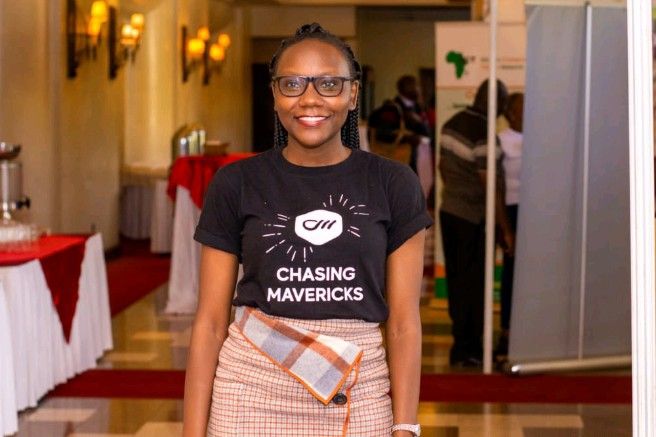 Sheila Waswa, founder and CEO of Chasing Mavericks
Events became a tool, not a product. They were a way to move information, connect people, and challenge assumptions. Over time, Chasing Mavericks built a reputation in corporate communications and tech events across edtech and healthtech.
The work was solid. The growth was steady. But something was missing.
Chasing Mavericks and Sheila’s cautious pivot into Web3
Blockchain did not arrive with fanfare. It arrived through an internal debate.
One team member had been immersed in crypto since 2017. He kept pushing the idea that this was the next frontier. Sheila resisted. Crypto’s reputation mattered. Chasing Mavericks worked with blue-chip brands. Association risk was real.
The shift came in 2023 after attending two blockchain events in Kenya. One was informal. The others are more structured. What stood out were the gaps. Poor execution. Weak education. Limited audience engagement. To Sheila, these were not red flags, but signals.
“These were skill sets we already had from Web2,” she says. “It would be easy to replicate them in Web3.”
Their first blockchain event was a debate between Bitcoin and altcoins. More than 200 people attended. That was the moment, not because of the numbers, but because of the intent. People were hungry for understanding, not speculation.
Today, Chasing Mavericks is deeply embedded in Africa’s blockchain ecosystem. Sheila is clear about the thesis. Mass adoption will not come from trading apps or X (Twitter) threads. It will come from education, segmentation, and relevance.
She points to a basic mismatch. Most Africans who are familiar with cryptocurrency are aware of Binance. Binance is built for traders. Traders are not the economy.
“If you want to send money to China for imports, that’s not straightforward,” she explains. “Unless everyone on both sides knows how to off-ramp.”
Chasing Mavericks responds with targeted education. Community crypto days. SME workshops. Webinars on regulation. Sessions for accountants, exporters and banks. One workshop with SMEs revealed a critical insight. Many waited three to five days for payments. Cash flow was being strangled. Stablecoins suddenly became practical, not theoretical.
Education, in this model, is operational. It is about showing how blockchain fits into existing pain points, not replacing them.
Also read: Here are 5 policy decisions that reshaped Africa’s crypto map in 2025
The real gap is not capital
Ask Sheila what African Web3 founders lack most, and she does not say funding. She says product thinking.
Early adoption was led by young developers. Strong on code. Weak on problem definition. Too many products were built to win grants or hackathons, not to solve real user needs.
“You have to start from a problem statement,” she says. “Not a solution statement.”
Chasing Mavericks responded with its Innovation Series, pushing founders to align product, market, user and business model. Over time, the ecosystem adjusted. Developers partnered with product managers and marketers. Kenyan-built platforms like Kotani Pay and Honeycoin emerged.
The maturity is visible.
 Sheila
Sheila’s leadership style has evolved alongside the sector. Adaptability is now non-negotiable. Trends move fast. Bitcoin today. Stablecoins tomorrow. NFTs yesterday.
The bigger shift is cultural. “We used to wear jeans on panels,” she says. “Now we wear suits.”
The ambition is practical. Make cross-border value transfer as easy as sending a message. If that sounds unglamorous, that is the point. Africa’s blockchain future will not be loud. It will be useful.
You May Also Like

Thyroid Eye Disease (TED) Treatments Market Nears $4.3 Billion by 2032: Emerging Small Molecule Therapies Targeting Orbital Fibroblasts Drive Revenue Growth – ResearchAndMarkets.com

Virtus Equity & Convertible Income Fund Announces Special Year-End Distribution and Discloses Sources of Distribution – Section 19(a) Notice
