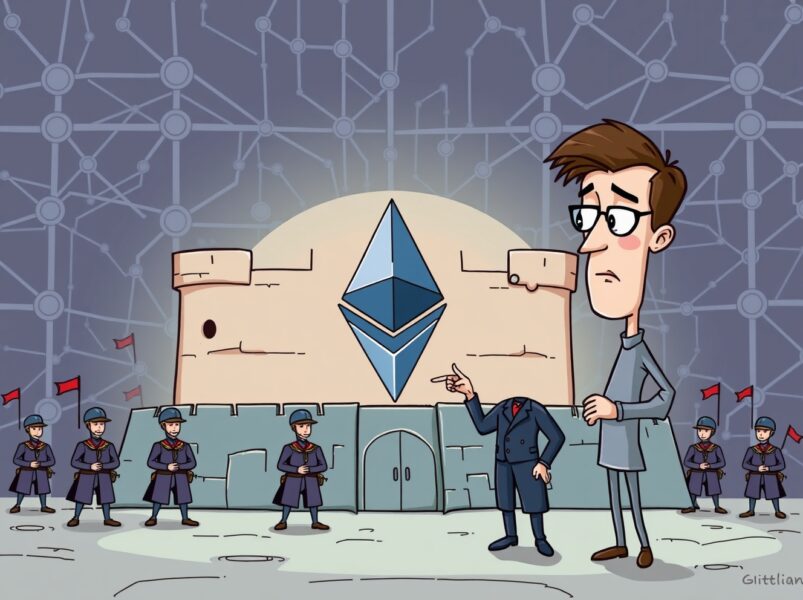
The post Aave DAO Rejects Brand Assets Proposal Amid Record Revenue and Kulechov’s AAVE Purchase appeared on BitcoinEthereumNews.com. Aave DAO rejected a proposalThe post Aave DAO Rejects Brand Assets Proposal Amid Record Revenue and Kulechov’s AAVE Purchase appeared on BitcoinEthereumNews.com. Aave DAO rejected a proposal

Aave DAO Rejects Brand Assets Proposal Amid Record Revenue and Kulechov’s AAVE Purchase

  • Aave DAO vote in December rejected brand asset transfer; 55.29% opposed, 41.21% abstained, 3.5% supported.

  • Aave DAO achieved $140M revenue in 2025, surpassing prior three years combined, per founder Stani Kulechov.

  • Kulechov purchased $15M in AAVE tokens before vote close at ~$176 average but confirmed no voting participation.

Aave DAO rejects brand asset transfer amid governance tensions. Kulechov discloses $140M revenue, addresses $15M buy. Explore vote details, revenue surge, and DAO future. Stay informed on DeFi governance shifts today!

What was the outcome of the Aave DAO brand asset transfer proposal?

Aave DAO brand asset transfer proposal was rejected in a December 2025 vote, with Snapshot data showing 55.29% voting against, 41.21% abstaining, and only 3.5% in support. The proposal sought to shift control of trademarks, repositories, and aave.com to the DAO for better alignment with token holders bearing economic risk. The vote concluded amid heated public debates on governance forums and social media.

Why did governance tensions arise in Aave DAO?

Governance tensions in Aave DAO stemmed from debates over brand asset control and alignment between Aave Labs and token holders. Founder Stani Kulechov noted communication shortfalls in explaining how Aave Labs products generate DAO value. Snapshot data revealed top three voters held over 58% of power, fueling concerns about concentration. Kulechov pledged clearer future disclosures on revenue flows, integrations, and contributions. Additional scrutiny involved CoW Swap fee routing allegations, which Kulechov refuted, stressing diverse ecosystem providers.

Frequently Asked Questions

What caused Aave DAO to reject the brand asset transfer?

The rejection arose from limited support amid alignment debates; 55% opposed transferring assets like trademarks fearing inadequate risk-reward balance, per Snapshot voting data. Abstentions hit 41%, signaling uncertainty after public disagreements.

How much revenue did Aave DAO generate in 2025?

Aave DAO recorded $140 million in revenue for 2025, exceeding the prior three years combined, as stated by Stani Kulechov. Token holders oversee the treasury managing these funds, underscoring DAO economic control.

Key Takeaways

  • Vote Rejection Signals Caution: 55% opposition to brand transfer highlights DAO preference for measured governance changes.
  • Revenue Milestone: $140M in 2025 outperforms previous years, affirming Aave’s strong financial position under token holder oversight.
  • Transparency Push: Kulechov’s $15M token buy sparked questions, but no-vote confirmation and future disclosures aim to rebuild trust.

Conclusion

The Aave DAO brand asset transfer proposal rejection underscores ongoing Aave governance tensions, balanced by impressive $140M revenue in 2025 and Kulechov’s proactive clarifications on his token purchase. As debates on voting power and value alignment continue, enhanced transparency from Aave Labs could strengthen DAO resilience. Token holders should monitor upcoming proposals for clearer economic incentives and ecosystem growth opportunities.

DAO Vote Ends as Revenue Hits Record High

The pivotal December 2025 Aave DAO vote centered on transferring critical brand assets—including trademarks, code repositories, and the aave.com domain—to DAO control. Proponents viewed this as essential for aligning decision-making with those assuming economic risks through token holdings. Yet, the vote wrapped up with decisive opposition, reflecting broader unease aired across governance channels.

Specific Snapshot voting statistics illustrated the divide: 55.29% against, 41.21% abstaining, and a mere 3.5% in favor. This outcome capped weeks of discourse, where participants dissected incentives, control mechanisms, and long-term sustainability. Kulechov stepped in during deliberations, revealing Aave DAO’s $140 million revenue for 2025—a figure dwarfing the aggregate from 2022-2024. He stressed that AAVE holders govern the treasury safeguarding these assets, reinforcing decentralized principles.

Alignment Concerns and the $15M Token Purchase

Post-vote scrutiny pivoted to Aave Labs-token holder alignment. Kulechov admitted gaps in communicating product value creation, such as revenue-generating integrations. He committed to detailed breakdowns of DAO inflows from Labs initiatives moving forward, aiming to demystify contributions.

Tensions peaked with Kulechov’s disclosure of a $15 million AAVE acquisition right before vote closure. On-chain records confirm purchases at an average $176 per token during price dips tied to the dispute. Kulechov affirmed these holdings abstained from voting, backed by Snapshot’s lack of activity logs. Critics eyed the timing, but no evidence linked it to sway.

Voting Dynamics and Stakeholder Reactions

Governance discourse persisted beyond the vote, spotlighting power distribution. Shared Snapshot analytics indicated the top three addresses commanded over 58% of voting weight, prompting centralization worries. Wintermute founder Evgeny Gaevoy disclosed his entity’s against vote, anticipating refined value-capture plans from Aave Labs in 2026. Ex-Aave Labs CTO Ernesto Boado distanced himself, noting the proposal proceeded sans his endorsement.

Separate friction emerged over CoW Swap fees; DAO participant EzR3aL claimed routing to an Aave Labs-linked wallet. Kulechov countered, denying vote manipulation and advocating pluralistic service providers to bolster ecosystem robustness. These exchanges highlight maturing DeFi governance, where transparency and incentives drive resolutions.

Overall, Aave’s ecosystem demonstrates resilience amid debates. Record revenues signal operational strength, while vote outcomes and founder responses pave ways for refined processes. Stakeholders eye forthcoming initiatives to bridge gaps and sustain growth.

Source: https://en.coinotag.com/aave-dao-rejects-brand-assets-proposal-amid-record-revenue-and-kulechovs-aave-purchase

Market Opportunity
AaveToken Logo
AaveToken Price(AAVE)
$156,01
$156,01$156,01
-0,38%
USD
AaveToken (AAVE) Live Price Chart
Disclaimer: The articles reposted on this site are sourced from public platforms and are provided for informational purposes only. They do not necessarily reflect the views of MEXC. All rights remain with the original authors. If you believe any content infringes on third-party rights, please contact service@support.mexc.com for removal. MEXC makes no guarantees regarding the accuracy, completeness, or timeliness of the content and is not responsible for any actions taken based on the information provided. The content does not constitute financial, legal, or other professional advice, nor should it be considered a recommendation or endorsement by MEXC.

You May Also Like

Here’s How Consumers May Benefit From Lower Interest Rates

Here’s How Consumers May Benefit From Lower Interest Rates

The post Here’s How Consumers May Benefit From Lower Interest Rates appeared on BitcoinEthereumNews.com. Topline The Federal Reserve on Wednesday opted to ease interest rates for the first time in months, leading the way for potentially lower mortgage rates, bond yields and a likely boost to cryptocurrency over the coming weeks. Average long-term mortgage rates dropped to their lowest levels in months ahead of the central bank’s policy shift. Copyright{2018} The Associated Press. All rights reserved. Key Facts The central bank’s policymaking panel voted this week to lower interest rates, which have sat between 4.25% and 4.5% since December, to a new range of 4% and 4.25%. How Will Lower Interest Rates Impact Mortgage Rates? Mortgage rates tend to fall before and during a period of interest rate cuts: The average 30-year fixed-rate mortgage dropped to 6.35% from 6.5% last week, the lowest level since October 2024, mortgage buyer Freddie Mac reported. Borrowing costs on 15-year fixed-rate mortgages also dropped to 5.5% from 5.6% as they neared the year-ago rate of 5.27%. When the Federal Reserve lowered the funds rate to between 0% and 0.25% during the pandemic, 30-year mortgage rates hit record lows between 2.7% and 3% by the end of 2020, according to data published by Freddie Mac. Consumers who refinanced their mortgages in 2020 saved about $5.3 billion annually as rates dropped, according to the Consumer Financial Protection Bureau. Similarly, mortgage rates spiked around 7% as interest rates were hiked in 2022 and 2023, though mortgage rates appeared to react within weeks of the Fed opting to cut or raise rates. How Do Treasury Bonds Respond To Lower Interest Rates? Long-term Treasury yields are more directly influenced by interest rates, as lower rates tend to result in lower yields. When the Fed pushed rates to near zero during the pandemic, 10-year Treasury yields fell to an all-time low of 0.5%. As…
Share
BitcoinEthereumNews2025/09/18 05:59
Two new wallets withdrew 26,241 ZEC from Binance within 12 hours, worth $13.5 million.

Two new wallets withdrew 26,241 ZEC from Binance within 12 hours, worth $13.5 million.

PANews reported on December 28 that, according to Lookonchain monitoring, two newly created wallets withdrew 26,241 ZEC (US$13.5 million) from Binance in the past
Share
PANews2025/12/28 09:13
Crucial ETH Unstaking Period: Vitalik Buterin’s Unwavering Defense for Network Security

Crucial ETH Unstaking Period: Vitalik Buterin’s Unwavering Defense for Network Security

BitcoinWorld Crucial ETH Unstaking Period: Vitalik Buterin’s Unwavering Defense for Network Security Ever wondered why withdrawing your staked Ethereum (ETH) isn’t an instant process? It’s a question that often sparks debate within the crypto community. Ethereum founder Vitalik Buterin recently stepped forward to defend the network’s approximately 45-day ETH unstaking period, asserting its crucial role in safeguarding the network’s integrity. This lengthy waiting time, while sometimes seen as an inconvenience, is a deliberate design choice with profound implications for security. Why is the ETH Unstaking Period a Vital Security Measure? Vitalik Buterin’s defense comes amidst comparisons to other networks, like Solana, which boast significantly shorter unstaking times. He drew a compelling parallel to military operations, explaining that an army cannot function effectively if its soldiers can simply abandon their posts at a moment’s notice. Similarly, a blockchain network requires a stable and committed validator set to maintain its security. The current ETH unstaking period isn’t merely an arbitrary delay. It acts as a critical buffer, providing the network with sufficient time to detect and respond to potential malicious activities. If validators could instantly exit, it would open doors for sophisticated attacks, jeopardizing the entire system. Currently, Ethereum boasts over one million active validators, collectively staking approximately 35.6 million ETH, representing about 30% of the total supply. This massive commitment underpins the network’s robust security model, and the unstaking period helps preserve this stability. Network Security: Ethereum’s Paramount Concern A shorter ETH unstaking period might seem appealing for liquidity, but it introduces significant risks. Imagine a scenario where a large number of validators, potentially colluding, could quickly withdraw their stake after committing a malicious act. Without a substantial delay, the network would have limited time to penalize them or mitigate the damage. This “exit queue” mechanism is designed to prevent sudden validator exodus, which could lead to: Reduced decentralization: A rapid drop in active validators could concentrate power among fewer participants. Increased vulnerability to attacks: A smaller, less stable validator set is easier to compromise. Network instability: Frequent and unpredictable changes in validator numbers can lead to performance issues and consensus failures. Therefore, the extended period is not a bug; it’s a feature. It’s a calculated trade-off between immediate liquidity for stakers and the foundational security of the entire Ethereum ecosystem. Ethereum vs. Solana: Different Approaches to Unstaking When discussing the ETH unstaking period, many point to networks like Solana, which offers a much quicker two-day unstaking process. While this might seem like an advantage for stakers seeking rapid access to their funds, it reflects fundamental differences in network architecture and security philosophies. Solana’s design prioritizes speed and immediate liquidity, often relying on different consensus mechanisms and validator economics to manage security risks. Ethereum, on the other hand, with its proof-of-stake evolution from proof-of-work, has adopted a more cautious approach to ensure its transition and long-term stability are uncompromised. Each network makes design choices based on its unique goals and threat models. Ethereum’s substantial value and its role as a foundational layer for countless dApps necessitate an extremely robust security posture, making the current unstaking duration a deliberate and necessary component. What Does the ETH Unstaking Period Mean for Stakers? For individuals and institutions staking ETH, understanding the ETH unstaking period is crucial for managing expectations and investment strategies. It means that while staking offers attractive rewards, it also comes with a commitment to the network’s long-term health. Here are key considerations for stakers: Liquidity Planning: Stakers should view their staked ETH as a longer-term commitment, not immediately liquid capital. Risk Management: The delay inherently reduces the ability to react quickly to market volatility with staked assets. Network Contribution: By participating, stakers contribute directly to the security and decentralization of Ethereum, reinforcing its value proposition. While the current waiting period may not be “optimal” in every sense, as Buterin acknowledged, simply shortening it without addressing the underlying security implications would be a dangerous gamble for the network’s reliability. In conclusion, Vitalik Buterin’s defense of the lengthy ETH unstaking period underscores a fundamental principle: network security cannot be compromised for the sake of convenience. It is a vital mechanism that protects Ethereum’s integrity, ensuring its stability and trustworthiness as a leading blockchain platform. This deliberate design choice, while requiring patience from stakers, ultimately fortifies the entire ecosystem against potential threats, paving the way for a more secure and reliable decentralized future. Frequently Asked Questions (FAQs) Q1: What is the main reason for Ethereum’s long unstaking period? A1: The primary reason is network security. A lengthy ETH unstaking period prevents malicious actors from quickly withdrawing their stake after an attack, giving the network time to detect and penalize them, thus maintaining stability and integrity. Q2: How long is the current ETH unstaking period? A2: The current ETH unstaking period is approximately 45 days. This duration can fluctuate based on network conditions and the number of validators in the exit queue. Q3: How does Ethereum’s unstaking period compare to other blockchains? A3: Ethereum’s unstaking period is notably longer than some other networks, such as Solana, which has a two-day period. This difference reflects varying network architectures and security priorities. Q4: Does the unstaking period affect ETH stakers? A4: Yes, it means stakers need to plan their liquidity carefully, as their staked ETH is not immediately accessible. It encourages a longer-term commitment to the network, aligning staker interests with Ethereum’s stability. Q5: Could the ETH unstaking period be shortened in the future? A5: While Vitalik Buterin acknowledged the current period might not be “optimal,” any significant shortening would likely require extensive research and network upgrades to ensure security isn’t compromised. For now, the focus remains on maintaining robust network defenses. Found this article insightful? Share it with your friends and fellow crypto enthusiasts on social media to spread awareness about the critical role of the ETH unstaking period in Ethereum’s security! To learn more about the latest Ethereum trends, explore our article on key developments shaping Ethereum’s institutional adoption. This post Crucial ETH Unstaking Period: Vitalik Buterin’s Unwavering Defense for Network Security first appeared on BitcoinWorld.
Share
Coinstats2025/09/18 15:30