

De recente data op de Dogecoin blockchain laat een duidelijke verschuiving zien in het gedrag van DOGE holders. Speculatieve tokens bewegen minder vaak tussen walletsDe recente data op de Dogecoin blockchain laat een duidelijke verschuiving zien in het gedrag van DOGE holders. Speculatieve tokens bewegen minder vaak tussen wallets
Daalt Dogecoin koers verder met een RSI rond 42 terwijl de lagere toppen intact zijn?
De recente data op de Dogecoin blockchain laat een duidelijke verschuiving zien in het gedrag van DOGE holders. Speculatieve tokens bewegen minder vaak tussen wallets, terwijl adressen die hun DOGE al langer vasthouden hun positie langzaam vergroten. Deze combinatie wijst op een afnemende verkoopdruk vanuit kortetermijn holders. Tegelijkertijd blijft de technische structuur op lagere timeframes negatief. Wat doet de Dogecoin koers hiermee? Check onze Discord Connect met "like-minded" crypto enthousiastelingen Leer gratis de basis van Bitcoin & trading - stap voor stap, zonder voorkennis. Krijg duidelijke uitleg & charts van ervaren analisten. Sluit je aan bij een community die samen groeit. Nu naar Discord Dogecoin koers: de on-chain activiteit wijst op een afnemende verkoopdruk Uit blockchain data blijkt dat het aantal DOGE tokens dat actief wordt verplaatst sterk is afgenomen. Dit wordt gemeten met de zogenaamde spent coins age band. Deze indicator laat zien hoeveel oudere tokens opnieuw worden uitgegeven. Wanneer deze waarde daalt, betekent dit dat de holders hun tokens minder vaak versturen of verkopen. De hoeveelheid DOGE die via deze metric werd verplaatst, daalde van ongeveer 252 miljoen tokens naar rond de 94 miljoen tokens. Dat is een afname van meer dan 60%. Dit wijst erop dat de oudere tokens minder snel op exchanges terechtkomen. Historisch gezien gebeurt dit vooral wanneer de Dogecoin holders minder reden zien om op korte termijn te verkopen. Deze afname in activiteit is geen garantie voor een trendomkeer, maar het laat wel zien dat de verkoopdruk vanuit bestaande holders afneemt. Dit vormt een duidelijke en meetbare verandering ten opzichte van eerdere weken waarin de oudere tokens juist vaker werden verplaatst. Welke crypto nu kopen?Lees onze uitgebreide gids en leer welke crypto nu kopen verstandig kan zijn! Welke crypto nu kopen? De Federal Reserve heeft zoals verwacht de rentes verlaagd en dus zullen er deze maand weer kansen gaan ontstaan op de cryptomarkt. Dit is erg bullish voor crypto en dus gaan wereldberoemde traders ineens all-in op altcoins als XRP. Eén vraag komt telkens terug: welke crypto moet je nu kopen? In dit… Continue reading Daalt Dogecoin koers verder met een RSI rond 42 terwijl de lagere toppen intact zijn? document.addEventListener('DOMContentLoaded', function() { var screenWidth = window.innerWidth; var excerpts = document.querySelectorAll('.lees-ook-description'); excerpts.forEach(function(description) { var excerpt = description.getAttribute('data-description'); var wordLimit = screenWidth wordLimit) { var trimmedDescription = excerpt.split(' ').slice(0, wordLimit).join(' ') + '...'; description.textContent = trimmedDescription; } }); }); Langere termijn holders kopen voorzichtig DOGE bij Naast de dalende activiteit valt ook een lichte verschuiving in token verdeling op. Adressen die DOGE al tussen één en twee jaar holden, bezitten nu een groter deel van het totale aanbod. Hun aandeel steeg van ongeveer 21,84% naar 22,34%. Hoewel dit verschil klein lijkt, is het relevant omdat deze groep historisch gezien niet snel op korte termijn prijsbewegingen reageert. Deze DOGE holders kopen meestal alleen bij wanneer zij inschatten dat het neerwaartse risico afneemt. Het gaat hier dus niet om traders, maar om merktpartijen die de langere cycli volgen. Deze combinatie van minder actieve tokens en lichte accumulatie door langetermijn holders zorgt voor een stabieler on-chain beeld. De Dogecoin markt laat daarmee zien dat het aanbod aan DOGE dat direct beschikbaar is om te verkopen, kleiner wordt. DOGE koers blijft technisch in een neerwaartse structuur Ondanks de verbeterende on-chain signalen blijft de technische structuur van de Dogecoin koers zwak op de 4-uurs grafiek. De prijs beweegt nog steeds in een patroon van lagere toppen en lagere bodems. Dit betekent dat elke koersstijging tot nu toe wordt verkocht voordat er een hogere top kan ontstaan. De DOGE koers beweegt momenteel rond een belangrijk steungebied nabij $0,12. Deze zone werd al meerdere keren getest. Elke herhaalde test vergroot statistisch gezien de kans dat een steun breekt, omdat de bulls daar steeds minder volume voor inzetten. Zolang de Dogecoin koers onder de prijszone rond $0,14 blijft, blijft de koersbeweging technisch gezien correctief. Dit niveau fungeert immers al een lange tijd als een weerstand en valt samen met eerdere consolidatiezones en afwijzingen. Pas wanneer dit prijsniveau structureel wordt teruggewonnen, verandert het technische beeld van Dogecoin op de korte termijn. $Doge/daily#Dogecoin has reached the previous symmetrical triangle breakdown target. It’s now forming a new chart pattern and searching for a new trend. 👀 pic.twitter.com/uWq2WW90yi — Trader Tardigrade (@TATrader_Alan) December 26, 2025 De weerstandszones beperken de DOGE herstelpogingen Boven de huidige Dogecoin prijs liggen meerdere duidelijke weerstanden. De prijszone rond $0,14 is de eerste barrière. Daarboven ligt een bredere weerstand rond $0,16. Dit gebied speelde eerder een belangrijke rol als steun, maar fungeert nu als een aanbodzone waar de bears actief blijven. Zolang de Dogecoin koers deze prijszones niet overtuigend doorbreekt en vasthoudt, blijft elke koersstijging kwetsbaar. In eerdere situaties leidde vergelijkbare structuren tot korte oplevingen die later weer volledig werden teruggedraaid. Het ontbreken van hogere bodems op de 4-uurs grafiek bevestigt dat de bulls nog geen structurele controle hebben overgenomen. De DOGE markt bevindt zich daardoor in een fase waarin de on-chain verbeteringen nog niet in de prijs zichtbaar worden. De momentum indicatoren tonen een beperkte kracht De Relative Strength Index op de 4-uurs grafiek bevindt zich in de lage 40-zone. Dit ligt onder het neutrale niveau van 50 en wijst op een aanhoudende zwakte. Tegelijkertijd is de RSI niet diep oversold. Dat betekent dat er technisch ruimte voor korte oplevingen is, maar zonder sterke trendverandering. In eerdere DOGE fases waarin de RSI langdurig onder 50 bleef, volgden er vaak consolidatiefases voordat een koersrichting werd gekozen. Zonder een duidelijke momentum verschuiving blijft de Dogecoin markt afhankelijk van externe impulsen zoals een verdere on-chain accumulatie of een afnemend aanbod van DOGE op exchanges. Vooruitblik op de volgende fase voor de Dogecoin koers De huidige situatie laat twee duidelijk meetbare krachten zien. Aan de ene kant neemt de verkoopdruk af doordat de oudere DOGE tokens minder bewegen en de langetermijn holders voorzichtig kopen. Aan de andere kant blijft de technische structuur van Dogecoin zwak zolang de belangrijke weerstanden intact blijven. Zolang de Dogecoin koers onder de prijszone rond $0,14 blijft, verandert het technische beeld niet. Tegelijk zorgt de dalende on-chain activiteit ervoor dat verdere sterke koersdalingen minder waarschijnlijk worden zolang dit patroon aanhoudt. De markt bevindt zich daardoor in een overgangsfase waarin de structuur en data nog niet volledig samenvallen. De komende koersbeweging zal bepalen of deze on-chain signalen voldoende zijn om de neerwaartse Dogecoin structuur te doorbreken, of dat zij slechts voor een tijdelijke stabilisatie zorgen binnen een bredere dalende trend. Best wallet - betrouwbare en anonieme wallet Best wallet - betrouwbare en anonieme wallet Meer dan 60 chains beschikbaar voor alle crypto Vroege toegang tot nieuwe projecten Hoge staking belongingen Lage transactiekosten Best wallet review Koop nu via Best Wallet Let op: cryptocurrency is een zeer volatiele en ongereguleerde investering. Doe je eigen onderzoek.
Het bericht Daalt Dogecoin koers verder met een RSI rond 42 terwijl de lagere toppen intact zijn? is geschreven door Dirk van Haaster en verscheen als eerst op Bitcoinmagazine.nl.
Market Opportunity
Meteora Price(MET)
$0,2568
$0,2568$0,2568
USD
Meteora (MET) Live Price Chart
Disclaimer: The articles reposted on this site are sourced from public platforms and are provided for informational purposes only. They do not necessarily reflect the views of MEXC. All rights remain with the original authors. If you believe any content infringes on third-party rights, please contact service@support.mexc.com for removal. MEXC makes no guarantees regarding the accuracy, completeness, or timeliness of the content and is not responsible for any actions taken based on the information provided. The content does not constitute financial, legal, or other professional advice, nor should it be considered a recommendation or endorsement by MEXC.
You May Also Like

Here’s How Consumers May Benefit From Lower Interest Rates
The post Here’s How Consumers May Benefit From Lower Interest Rates appeared on BitcoinEthereumNews.com. Topline The Federal Reserve on Wednesday opted to ease interest rates for the first time in months, leading the way for potentially lower mortgage rates, bond yields and a likely boost to cryptocurrency over the coming weeks. Average long-term mortgage rates dropped to their lowest levels in months ahead of the central bank’s policy shift. Copyright{2018} The Associated Press. All rights reserved. Key Facts The central bank’s policymaking panel voted this week to lower interest rates, which have sat between 4.25% and 4.5% since December, to a new range of 4% and 4.25%. How Will Lower Interest Rates Impact Mortgage Rates? Mortgage rates tend to fall before and during a period of interest rate cuts: The average 30-year fixed-rate mortgage dropped to 6.35% from 6.5% last week, the lowest level since October 2024, mortgage buyer Freddie Mac reported. Borrowing costs on 15-year fixed-rate mortgages also dropped to 5.5% from 5.6% as they neared the year-ago rate of 5.27%. When the Federal Reserve lowered the funds rate to between 0% and 0.25% during the pandemic, 30-year mortgage rates hit record lows between 2.7% and 3% by the end of 2020, according to data published by Freddie Mac. Consumers who refinanced their mortgages in 2020 saved about $5.3 billion annually as rates dropped, according to the Consumer Financial Protection Bureau. Similarly, mortgage rates spiked around 7% as interest rates were hiked in 2022 and 2023, though mortgage rates appeared to react within weeks of the Fed opting to cut or raise rates. How Do Treasury Bonds Respond To Lower Interest Rates? Long-term Treasury yields are more directly influenced by interest rates, as lower rates tend to result in lower yields. When the Fed pushed rates to near zero during the pandemic, 10-year Treasury yields fell to an all-time low of 0.5%. As…
Share
BitcoinEthereumNews2025/09/18 05:59

Two new wallets withdrew 26,241 ZEC from Binance within 12 hours, worth $13.5 million.
PANews reported on December 28 that, according to Lookonchain monitoring, two newly created wallets withdrew 26,241 ZEC (US$13.5 million) from Binance in the past
Share
PANews2025/12/28 09:13
Crucial ETH Unstaking Period: Vitalik Buterin’s Unwavering Defense for Network Security
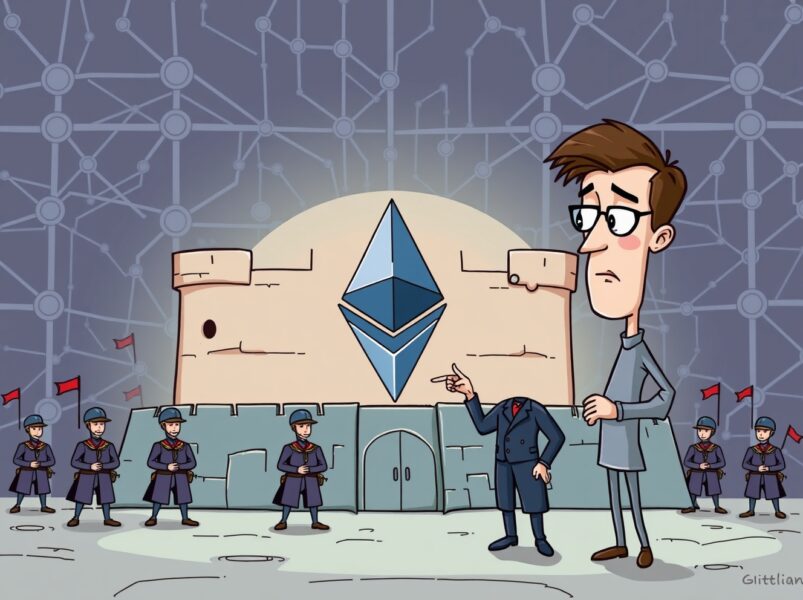
BitcoinWorld Crucial ETH Unstaking Period: Vitalik Buterin’s Unwavering Defense for Network Security Ever wondered why withdrawing your staked Ethereum (ETH) isn’t an instant process? It’s a question that often sparks debate within the crypto community. Ethereum founder Vitalik Buterin recently stepped forward to defend the network’s approximately 45-day ETH unstaking period, asserting its crucial role in safeguarding the network’s integrity. This lengthy waiting time, while sometimes seen as an inconvenience, is a deliberate design choice with profound implications for security. Why is the ETH Unstaking Period a Vital Security Measure? Vitalik Buterin’s defense comes amidst comparisons to other networks, like Solana, which boast significantly shorter unstaking times. He drew a compelling parallel to military operations, explaining that an army cannot function effectively if its soldiers can simply abandon their posts at a moment’s notice. Similarly, a blockchain network requires a stable and committed validator set to maintain its security. The current ETH unstaking period isn’t merely an arbitrary delay. It acts as a critical buffer, providing the network with sufficient time to detect and respond to potential malicious activities. If validators could instantly exit, it would open doors for sophisticated attacks, jeopardizing the entire system. Currently, Ethereum boasts over one million active validators, collectively staking approximately 35.6 million ETH, representing about 30% of the total supply. This massive commitment underpins the network’s robust security model, and the unstaking period helps preserve this stability. Network Security: Ethereum’s Paramount Concern A shorter ETH unstaking period might seem appealing for liquidity, but it introduces significant risks. Imagine a scenario where a large number of validators, potentially colluding, could quickly withdraw their stake after committing a malicious act. Without a substantial delay, the network would have limited time to penalize them or mitigate the damage. This “exit queue” mechanism is designed to prevent sudden validator exodus, which could lead to: Reduced decentralization: A rapid drop in active validators could concentrate power among fewer participants. Increased vulnerability to attacks: A smaller, less stable validator set is easier to compromise. Network instability: Frequent and unpredictable changes in validator numbers can lead to performance issues and consensus failures. Therefore, the extended period is not a bug; it’s a feature. It’s a calculated trade-off between immediate liquidity for stakers and the foundational security of the entire Ethereum ecosystem. Ethereum vs. Solana: Different Approaches to Unstaking When discussing the ETH unstaking period, many point to networks like Solana, which offers a much quicker two-day unstaking process. While this might seem like an advantage for stakers seeking rapid access to their funds, it reflects fundamental differences in network architecture and security philosophies. Solana’s design prioritizes speed and immediate liquidity, often relying on different consensus mechanisms and validator economics to manage security risks. Ethereum, on the other hand, with its proof-of-stake evolution from proof-of-work, has adopted a more cautious approach to ensure its transition and long-term stability are uncompromised. Each network makes design choices based on its unique goals and threat models. Ethereum’s substantial value and its role as a foundational layer for countless dApps necessitate an extremely robust security posture, making the current unstaking duration a deliberate and necessary component. What Does the ETH Unstaking Period Mean for Stakers? For individuals and institutions staking ETH, understanding the ETH unstaking period is crucial for managing expectations and investment strategies. It means that while staking offers attractive rewards, it also comes with a commitment to the network’s long-term health. Here are key considerations for stakers: Liquidity Planning: Stakers should view their staked ETH as a longer-term commitment, not immediately liquid capital. Risk Management: The delay inherently reduces the ability to react quickly to market volatility with staked assets. Network Contribution: By participating, stakers contribute directly to the security and decentralization of Ethereum, reinforcing its value proposition. While the current waiting period may not be “optimal” in every sense, as Buterin acknowledged, simply shortening it without addressing the underlying security implications would be a dangerous gamble for the network’s reliability. In conclusion, Vitalik Buterin’s defense of the lengthy ETH unstaking period underscores a fundamental principle: network security cannot be compromised for the sake of convenience. It is a vital mechanism that protects Ethereum’s integrity, ensuring its stability and trustworthiness as a leading blockchain platform. This deliberate design choice, while requiring patience from stakers, ultimately fortifies the entire ecosystem against potential threats, paving the way for a more secure and reliable decentralized future. Frequently Asked Questions (FAQs) Q1: What is the main reason for Ethereum’s long unstaking period? A1: The primary reason is network security. A lengthy ETH unstaking period prevents malicious actors from quickly withdrawing their stake after an attack, giving the network time to detect and penalize them, thus maintaining stability and integrity. Q2: How long is the current ETH unstaking period? A2: The current ETH unstaking period is approximately 45 days. This duration can fluctuate based on network conditions and the number of validators in the exit queue. Q3: How does Ethereum’s unstaking period compare to other blockchains? A3: Ethereum’s unstaking period is notably longer than some other networks, such as Solana, which has a two-day period. This difference reflects varying network architectures and security priorities. Q4: Does the unstaking period affect ETH stakers? A4: Yes, it means stakers need to plan their liquidity carefully, as their staked ETH is not immediately accessible. It encourages a longer-term commitment to the network, aligning staker interests with Ethereum’s stability. Q5: Could the ETH unstaking period be shortened in the future? A5: While Vitalik Buterin acknowledged the current period might not be “optimal,” any significant shortening would likely require extensive research and network upgrades to ensure security isn’t compromised. For now, the focus remains on maintaining robust network defenses. Found this article insightful? Share it with your friends and fellow crypto enthusiasts on social media to spread awareness about the critical role of the ETH unstaking period in Ethereum’s security! To learn more about the latest Ethereum trends, explore our article on key developments shaping Ethereum’s institutional adoption. This post Crucial ETH Unstaking Period: Vitalik Buterin’s Unwavering Defense for Network Security first appeared on BitcoinWorld.
Share
Coinstats2025/09/18 15:30