Ethereum co-founder Vitalik Buterin has reopened debate over the role of stablecoins in Ethereum’s future, warning that the network’s long-term independence mayEthereum co-founder Vitalik Buterin has reopened debate over the role of stablecoins in Ethereum’s future, warning that the network’s long-term independence may

Vitalik Buterin: Ethereum’s Independence Hinges on Better Decentralized Stablecoins — Here’s Why

2026/01/12 19:09
3 min read

Ethereum co-founder Vitalik Buterin has reopened debate over the role of stablecoins in Ethereum’s future, warning that the network’s long-term independence may depend on developing decentralized alternatives that rely less on the U.S. dollar and centralized issuers.

Stablecoins have become core infrastructure for crypto markets, with a combined market value of about $307.8 billion, but yet the sector remains heavily concentrated around centralized, dollar-backed products.

Tether’s USDT dominates the market with roughly $186.8 billion in circulation, accounting for more than 60% of total supply, while Circle’s USDC follows at about $74.6 billion.
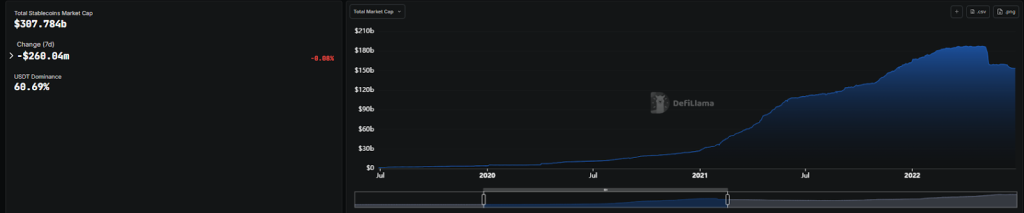
Source: DefiLlama

Decentralized stablecoins remain far smaller by comparison with Ethena’s USDe and Sky Dollar, each hovering around $6.3 billion in market value, while Dai, once Ethereum’s flagship decentralized stablecoin, has declined to roughly $4.5 billion in circulation after years of contraction.

Buterin Highlights Hidden Risks Behind Dollar-Pegged Stablecoins

Buterin’s comments came in response to Gabriel Shapiro of Delphi Labs, who described Ethereum as an increasingly “contrarian bet” against venture-backed trends.

While acknowledging the short-term usefulness of dollar-pegged assets, Buterin argued that deeper reliance on the U.S. dollar exposes Ethereum-based finance to monetary policy decisions and geopolitical risks beyond its control.

Over a longer horizon, he has questioned what happens if the dollar experiences sustained inflation or loses credibility, noting that Ethereum’s vision of nation-state resilience implies independence even from dominant fiat price references.

Beyond the peg itself, Buterin identified two deeper technical challenges that have repeatedly undermined decentralized stablecoins.

The first is oracle design, which stablecoins rely on price feeds to manage collateral and liquidations, but if those feeds can be manipulated by well-funded actors, protocols must resort to expensive economic defenses.

Buterin noted that those costs are often passed on to users through higher fees, inflation, or aggressive value extraction, weakening usability and trust.

Another issue is Ethereum’s staking economy, with rising staking yields competing directly with stablecoin designs that require ETH as collateral, making it less appealing to lock assets unless protocols can offset or integrate those returns.

Lessons From Terra Still Shape Stablecoin Design

Buterin outlined possible paths forward, ranging from sharply reducing staking yields to creating new staking categories with lower slashing risk to redesigning collateral systems so staking and stablecoin use are compatible.

He also emphasized that stablecoins cannot rely on fixed collateral ratios and must be able to rebalance during sharp market moves, even if that means temporarily sacrificing yield.

The debate is not theoretical, as past attempts at decentralized stablecoins have ended badly.

Terra’s UST collapse in 2022 wiped out tens of billions of dollars, and Terraform Labs founder Do Kwon was sentenced last month to 15 years in prison, reinforcing skepticism around high-yield, algorithmic designs.

Since then, progress has been cautious, with MakerDAO’s DAI remaining widely used, but its growth has slowed, and newer designs have yet to reach a comparable scale.

Reflexer’s RAI, an ETH-backed stablecoin not pegged to fiat, was once praised by Buterin as an ideal model, yet its limited adoption and trade-offs around staking yield highlighted how difficult these designs are to sustain.

The comments sparked wide discussion within the Ethereum community, with some developers and users arguing that non-USD stablecoins are conceptually appealing but lack real demand, pointing out that most users still default to dollar-pegged assets for payments and savings.

Others pushed back, saying the difficulty of the problem does not make it unsolvable and that a truly decentralized, free-floating stablecoin with resilient oracles is consistent with Ethereum’s long-term mission, even if mass adoption remains years away.

Disclaimer: The articles reposted on this site are sourced from public platforms and are provided for informational purposes only. They do not necessarily reflect the views of MEXC. All rights remain with the original authors. If you believe any content infringes on third-party rights, please contact service@support.mexc.com for removal. MEXC makes no guarantees regarding the accuracy, completeness, or timeliness of the content and is not responsible for any actions taken based on the information provided. The content does not constitute financial, legal, or other professional advice, nor should it be considered a recommendation or endorsement by MEXC.

You May Also Like

Momentous Grayscale ETF: GDLC Fund’s Historic Conversion Set to Trade Tomorrow

Momentous Grayscale ETF: GDLC Fund’s Historic Conversion Set to Trade Tomorrow

BitcoinWorld Momentous Grayscale ETF: GDLC Fund’s Historic Conversion Set to Trade Tomorrow Get ready for a significant shift in the world of digital asset investing! A truly momentous event is unfolding as Grayscale’s Digital Large Cap Fund (GDLC) makes its highly anticipated transition into a spot crypto exchange-traded fund. This isn’t just a name change; it’s a pivotal moment for the broader cryptocurrency market, bringing a new era of accessibility and institutional participation through the Grayscale ETF. What’s Happening with the Grayscale ETF Conversion? Tomorrow marks a historic day for Grayscale’s Digital Large Cap Fund (GDLC). This existing spot crypto basket is officially scheduled to begin trading under its new identity: the Grayscale CoinDesk Crypto5 ETF. This exciting development comes directly after the U.S. Securities and Exchange Commission (SEC) gave its stamp of approval to Grayscale’s application for this conversion. As Bloomberg ETF analyst Eric Balchunas highlighted, this move has been keenly watched. The approval and subsequent launch underscore a growing acceptance of crypto-backed financial products within traditional markets. For investors, this conversion of the Grayscale ETF represents a more streamlined and regulated way to gain exposure to a diversified basket of large-cap digital assets. Why is the Grayscale ETF a Game-Changer for Investors? The conversion of GDLC into a Grayscale ETF offers several compelling benefits, fundamentally changing how investors can access the crypto market. Firstly, ETFs are known for their ease of trading. They can be bought and sold on traditional stock exchanges, just like company shares, making them incredibly accessible to a wider range of investors who might be hesitant to directly hold cryptocurrencies. Consider these key advantages: Enhanced Accessibility: Investors can gain exposure to a diversified crypto portfolio without needing to set up crypto wallets or manage private keys. Increased Liquidity: Trading on major exchanges typically means higher liquidity, allowing for easier entry and exit points. Regulatory Oversight: As an SEC-approved product, the Grayscale ETF operates under a regulated framework, potentially offering greater investor protection and confidence. Diversification: The Grayscale CoinDesk Crypto5 ETF tracks a basket of large-cap cryptocurrencies, offering immediate diversification rather than exposure to a single asset. This development is a strong indicator of the maturation of the digital asset space. It signals a bridge between the innovative world of crypto and the established financial system. Navigating the New Grayscale ETF Landscape While the launch of the Grayscale CoinDesk Crypto5 ETF brings exciting opportunities, it’s also important for investors to understand its implications. The shift from a closed-end fund structure (GDLC) to an open-ended ETF means that the fund’s shares can now be created and redeemed daily. This mechanism helps keep the ETF’s market price closely aligned with the net asset value (NAV) of its underlying holdings. Historically, closed-end funds like GDLC could trade at significant premiums or discounts to their NAV. The ETF structure is designed to mitigate these discrepancies, providing a more efficient pricing mechanism. This change offers a more transparent and potentially less volatile investment experience for those looking to invest in a Grayscale ETF. What’s Next for Crypto ETFs and Grayscale? The successful conversion and launch of the Grayscale CoinDesk Crypto5 ETF could pave the way for similar transformations of other Grayscale products. It also sets a precedent for how existing crypto investment vehicles might evolve to meet market demand for regulated, accessible products. The increasing number of spot crypto ETFs, including this new Grayscale ETF, reflects a growing institutional appetite for digital assets. This trend suggests a future where cryptocurrency investing becomes an even more integrated part of mainstream financial portfolios. As regulatory clarity continues to improve, we can anticipate further innovation and expansion in the crypto ETF landscape, offering investors diverse options to participate in the digital economy. The launch of the Grayscale CoinDesk Crypto5 ETF is more than just a new product; it’s a testament to the persistent efforts to bring digital assets into the mainstream financial fold. By offering a regulated, accessible, and diversified investment vehicle, Grayscale is not only expanding opportunities for investors but also reinforcing the legitimacy and staying power of the crypto market. This momentous step truly reshapes the investment landscape, making it easier for a broader audience to engage with the exciting potential of cryptocurrencies through a trusted Grayscale ETF. Frequently Asked Questions (FAQs) What is the Grayscale CoinDesk Crypto5 ETF? The Grayscale CoinDesk Crypto5 ETF is the new name and structure for Grayscale’s former Digital Large Cap Fund (GDLC). It’s a spot crypto basket that holds a diversified portfolio of large-cap digital assets, now trading as an exchange-traded fund. When will the Grayscale ETF begin trading? The Grayscale CoinDesk Crypto5 ETF is scheduled to begin trading tomorrow, following its approval by the U.S. Securities and Exchange Commission (SEC). How does an ETF differ from the previous GDLC fund? As an ETF, the fund’s shares can be created and redeemed daily, which helps keep its market price closely aligned with the value of its underlying assets. The previous GDLC fund was a closed-end fund that could trade at significant premiums or discounts to its net asset value. What are the benefits of investing in the Grayscale ETF? Benefits include enhanced accessibility (trading on traditional exchanges), increased liquidity, regulatory oversight by the SEC, and immediate diversification into a basket of large-cap cryptocurrencies. Is the Grayscale ETF suitable for all investors? While the Grayscale ETF offers a regulated and accessible way to invest in crypto, all investments carry risks. Investors should conduct their own research and consider their financial goals and risk tolerance before investing in any ETF, including this Grayscale ETF. Did you find this article informative? Share this exciting news about the Grayscale ETF conversion with your friends, family, and fellow investors on social media to keep them informed about the latest developments in the crypto world! To learn more about the latest crypto market trends, explore our article on key developments shaping Bitcoin and Ethereum price action. This post Momentous Grayscale ETF: GDLC Fund’s Historic Conversion Set to Trade Tomorrow first appeared on BitcoinWorld.
Share
Coinstats2025/09/19 17:45
The UA Sprinkler Fitters Local 669 JATC – Notice of Privacy Incident

The UA Sprinkler Fitters Local 669 JATC – Notice of Privacy Incident

Landover, Maryland, February 6, 2026– The UA Sprinkler Fitters Local 669 Joint Apprenticeship and Training Committee (“JATC”) is providing notice of an event that
Share
AI Journal2026/02/07 07:30
Vitalik Buterin Reveals Ethereum’s (ETH) Future Plans – Here’s What’s Planned

Vitalik Buterin Reveals Ethereum’s (ETH) Future Plans – Here’s What’s Planned

The post Vitalik Buterin Reveals Ethereum’s (ETH) Future Plans – Here’s What’s Planned appeared on BitcoinEthereumNews.com. Ethereum founder Vitalik Buterin presented the network’s new roadmap, which includes its short-, medium-, and long-term goals, at the Developer Conference held in Japan today. Scalability, cross-layer compatibility, privacy, and security were the prominent topics in Buterin’s speech. Buterin stated that the short-term focus will be on increasing gas limits on the Ethereum mainnet (L1). He said that tools such as block-level access lists, ZK-EVMs, gas price restructuring, and slot optimization will be used in this context. The goal is to maintain the network’s decentralization while increasing scalability. The medium-term goal is to enable trustless asset transfers between Layer-2 (L2) networks and achieve faster transaction finality. In this context, “Stage 2 Rollup” solutions, proof-of-conduct combinations, and optimizations for reading data from L1 are on the agenda. Furthermore, network optimizations such as shortening slot times, fast finality protocols, and erasure coding are planned to improve user experience and security. Buterin emphasized that privacy is a priority for both the short and medium term. Zero-knowledge (ZK) proofs, anonymous pools, encrypted voting, and scrambling network solutions are highlighted to protect the privacy of users’ on-chain payments, voting, DeFi transactions, and account changes. Furthermore, secure execution environments, secret query techniques, and the ability to conceal fraudulent requests and data access patterns are also targeted when reading data from the chain. Buterin’s long-term vision highlights a minimalist, secure, and simple Ethereum. This roadmap includes resistance to the risks posed by quantum computers, securing the protocol with mathematical methods (formal verification), and transitioning to ideal cryptographic solutions. Buterin stated that these strategic steps will transform Ethereum into a more scalable, user-friendly, and secure infrastructure. With the strengthening of L2 networks, more users will be able to use Ethereum with less trust assumptions. The ultimate goal is for Ethereum to become a reliable foundational infrastructure for global…
Share
BitcoinEthereumNews2025/09/18 15:57