Noble, a blockchain protocol initially developed on the Cosmos blockchain, has announced that it will discontinue its Cosmos SDK-based blockchain and develop anNoble, a blockchain protocol initially developed on the Cosmos blockchain, has announced that it will discontinue its Cosmos SDK-based blockchain and develop an

Noble to Migrate From Cosmos SDK to EVM Layer-1, Mainnet Set for March 2026

3 min read
  • Noble is migrating from the Cosmos SDK to an EVM-compatible Layer 1 chain focused on stablecoin applications and plans to go live on March 18, 2026.
  • The new EVM chain should support stablecoin apps, currency payment rails, and DeFi applications with sub-second finality.

Noble, a blockchain protocol initially developed on the Cosmos blockchain, has announced that it will discontinue its Cosmos SDK-based blockchain and develop an Ethereum Virtual Machine (EVM)-based Layer 1 blockchain, which will be deployed on the Mainnet on March 18, 2026.

The move is quite significant from a tech shift standpoint for Noble. Since its launch in 2023, the solution has enabled stablecoin liquidity and interoperability for over different blockchains using the IBC provided by the Cosmos ecosystem for asset transfer/transactions. 

As per the announcements, the EVM Layer 1 will be designed specifically to support the function of stablecoins, foreign exchange (FX), and payments, and will be more performant and accommodating of developers compared to the original chain. As revealed by the team at Noble, during the transition, the original chain would be kept in maintenance mode.

iExec (EVM Chain) – To Enable Scalable Financial Services

The migration of an EVM-compatible architecture is designed to be a response to the shortcomings of the former Cosmos infrastructure, specifically with regard to programmability and the development of the ecosystem. EVM-compatibility, which has become a standard procedure on most blockchain platforms, will facilitate the development of applications on the chain, thereby expanding the ecosystem.

The newly formed Noble EVM chain is envisioned to provide sub-second finality for transactions, enabling a quick user experience for transfer, swap, and other types of transactions that are essential for payment system functionality. The addition of efficient consensus layers, such as Commonware primitives, enables the protocol to achieve synchronization between the need for security and the requirements of stablecoin-friendly workloads.

This follows industry trends where projects that started as experiments in developer frameworks like Cosmos are now moving towards EVM compatibility to benefit from larger developer bases and tooling ecosystems. 

The migration of the Noble network from being developed in the Cosmos SDK to being an independent EVM Layer-1 blockchain is a major shift in the alignment of the network’s infrastructure to meet the growing demand in the market for a scalable and programmatic space for stable and financial dApps. With the planned mainnet launch set for March 2026, Noble’s EVM seeks to ensure constant interoperability with the established infrastructure within the Cosmos ecosystem.

Highlighted Crypto News:

‌Bitcoin Cash (BCH) in Tug-of-War Mode: Where Does the Price Go From Here?

Market Opportunity
Ucan fix life in1day Logo
Ucan fix life in1day Price(1)
$0.0007066
$0.0007066$0.0007066
-7.68%
USD
Ucan fix life in1day (1) Live Price Chart
Disclaimer: The articles reposted on this site are sourced from public platforms and are provided for informational purposes only. They do not necessarily reflect the views of MEXC. All rights remain with the original authors. If you believe any content infringes on third-party rights, please contact service@support.mexc.com for removal. MEXC makes no guarantees regarding the accuracy, completeness, or timeliness of the content and is not responsible for any actions taken based on the information provided. The content does not constitute financial, legal, or other professional advice, nor should it be considered a recommendation or endorsement by MEXC.

You May Also Like

XRP Enters ‘Washout Zone,’ Then Targets $30, Crypto Analyst Says
XRP Enters ‘Washout Zone,’ Then Targets $30, Crypto Analyst Says

XRP has entered what Korean Certified Elliott Wave Analyst XForceGlobal (@XForceGlobal) calls a “washout” phase inside a broader Elliott Wave corrective structure
Share
NewsBTC2026/02/05 08:00
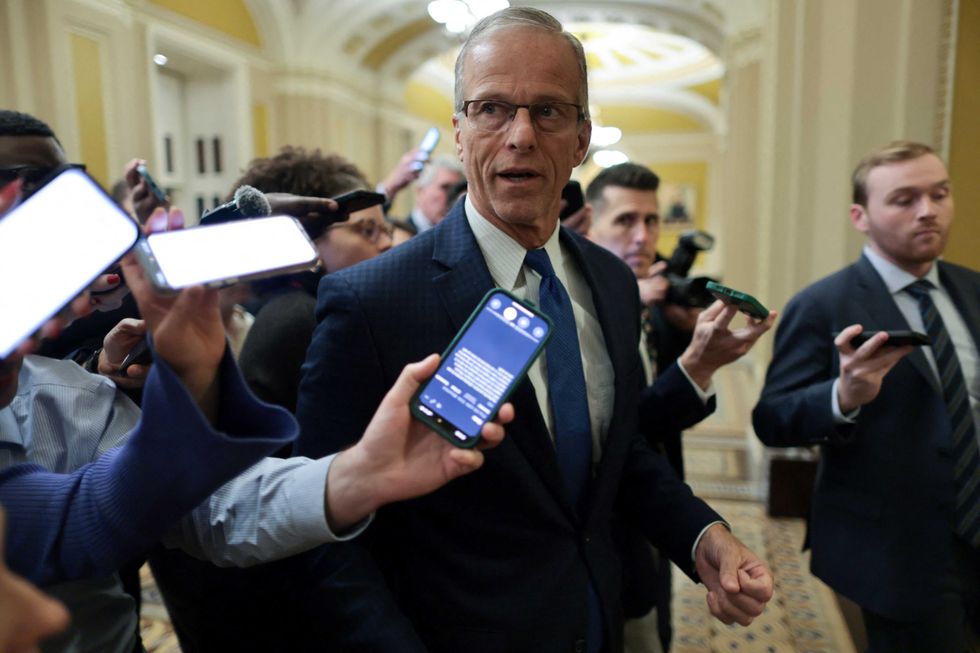
Republicans are 'very concerned about Texas' turning blue: GOP senator

Republicans are 'very concerned about Texas' turning blue: GOP senator

While Republicans in the U.S. House of Representatives have a razor-thin with just a four-seat advantage, their six-seat advantage in the U.S. Senate is seen as
Share
Alternet2026/02/05 08:38
Headwind Helps Best Wallet Token

Headwind Helps Best Wallet Token

The post Headwind Helps Best Wallet Token appeared on BitcoinEthereumNews.com. Google has announced the launch of a new open-source protocol called Agent Payments Protocol (AP2) in partnership with Coinbase, the Ethereum Foundation, and 60 other organizations. This allows AI agents to make payments on behalf of users using various methods such as real-time bank transfers, credit and debit cards, and, most importantly, stablecoins. Let’s explore in detail what this could mean for the broader cryptocurrency markets, and also highlight a presale crypto (Best Wallet Token) that could explode as a result of this development. Google’s Push for Stablecoins Agent Payments Protocol (AP2) uses digital contracts known as ‘Intent Mandates’ and ‘Verifiable Credentials’ to ensure that AI agents undertake only those payments authorized by the user. Mandates, by the way, are cryptographically signed, tamper-proof digital contracts that act as verifiable proof of a user’s instruction. For example, let’s say you instruct an AI agent to never spend more than $200 in a single transaction. This instruction is written into an Intent Mandate, which serves as a digital contract. Now, whenever the AI agent tries to make a payment, it must present this mandate as proof of authorization, which will then be verified via the AP2 protocol. Alongside this, Google has also launched the A2A x402 extension to accelerate support for the Web3 ecosystem. This production-ready solution enables agent-based crypto payments and will help reshape the growth of cryptocurrency integration within the AP2 protocol. Google’s inclusion of stablecoins in AP2 is a massive vote of confidence in dollar-pegged cryptocurrencies and a huge step toward making them a mainstream payment option. This widens stablecoin usage beyond trading and speculation, positioning them at the center of the consumption economy. The recent enactment of the GENIUS Act in the U.S. gives stablecoins more structure and legal support. Imagine paying for things like data crawls, per-task…
Share
BitcoinEthereumNews2025/09/18 01:27