The post Best Crypto Payment Plugins for WooCommerce [2026 Guide] appeared on BitcoinEthereumNews.com. When choosing a crypto payment plugin for WooCommerce, understandingThe post Best Crypto Payment Plugins for WooCommerce [2026 Guide] appeared on BitcoinEthereumNews.com. When choosing a crypto payment plugin for WooCommerce, understanding

Best Crypto Payment Plugins for WooCommerce [2026 Guide]

2 min read

When choosing a crypto payment plugin for WooCommerce, understanding the difference between custodial and non-custodial models is essential. This choice has direct implications for fund handling, security ownership, compliance obligations, and overall operational control.

In a custodial model, the payment service provider temporarily holds customer funds on the merchant’s behalf. Platforms such as BitPay, CoinGate, and Coinbase operate under this structure.

These crypto payment gateways manage wallets, payment processing, and often offer automatic fiat conversion and settlements. While their setup is convenient and beginner-friendly, it usually comes with mandatory KYC requirements, reliance on third-party custody, and withdrawal limits or delays depending on compliance rules.

A non-custodial model allows merchants to retain full control over their funds at all times.

Solutions like BTCPay Server and Blockonomics facilitate direct wallet-to-wallet payments, where crypto moves straight from the customer’s wallet to the merchant’s wallet without intermediaries holding funds.

This approach minimizes counterparty risk, avoids custody-related restrictions, and often eliminates forced KYC, and merchants remain responsible for managing their own wallets and security.

From a compliance perspective, custodial providers typically enforce identity verification, transaction monitoring, and regulatory controls, making them suitable for businesses that need structured compliance or fiat settlements. Non-custodial setups generally offer greater privacy and autonomy but place compliance responsibility entirely on the merchant.

Security considerations also differ significantly. Custodial platforms invest heavily in infrastructure security, but they introduce third-party risk and potential account freezes. Non-custodial systems reduce external risk but require merchants to secure private keys, backups, and wallet access independently.

However, both solutions can enable crypto settlements through any plugin, including the WooCommerce Bitcoin plugin, but choosing between the two depends on business needs.

Custodial solutions are ideal for merchants seeking simplicity, fiat payouts, and regulatory alignment. Non-custodial options are better suited for businesses that prioritize self-custody, lower fees, censorship resistance, and direct blockchain payments without intermediaries.

Source: https://coingape.com/crypto-payment-plugins-for-woocommerce/

Disclaimer: The articles reposted on this site are sourced from public platforms and are provided for informational purposes only. They do not necessarily reflect the views of MEXC. All rights remain with the original authors. If you believe any content infringes on third-party rights, please contact service@support.mexc.com for removal. MEXC makes no guarantees regarding the accuracy, completeness, or timeliness of the content and is not responsible for any actions taken based on the information provided. The content does not constitute financial, legal, or other professional advice, nor should it be considered a recommendation or endorsement by MEXC.

You May Also Like

Once Upon a Farm Announces Pricing of Initial Public Offering

Once Upon a Farm Announces Pricing of Initial Public Offering

BERKELEY, Calif.–(BUSINESS WIRE)–Once Upon a Farm today announced the pricing of its initial public offering of 10,997,209 shares of its common stock, 7,631,537
Share
AI Journal2026/02/06 08:15
Forward Industries Bets Big on Solana With $4B Capital Plan

Forward Industries Bets Big on Solana With $4B Capital Plan

The firm has filed with the U.S. Securities and Exchange Commission to launch a $4 billion at-the-market (ATM) equity program, […] The post Forward Industries Bets Big on Solana With $4B Capital Plan appeared first on Coindoo.
Share
Coindoo2025/09/18 04:15
332M accounts and $28B TVL,

332M accounts and $28B TVL,

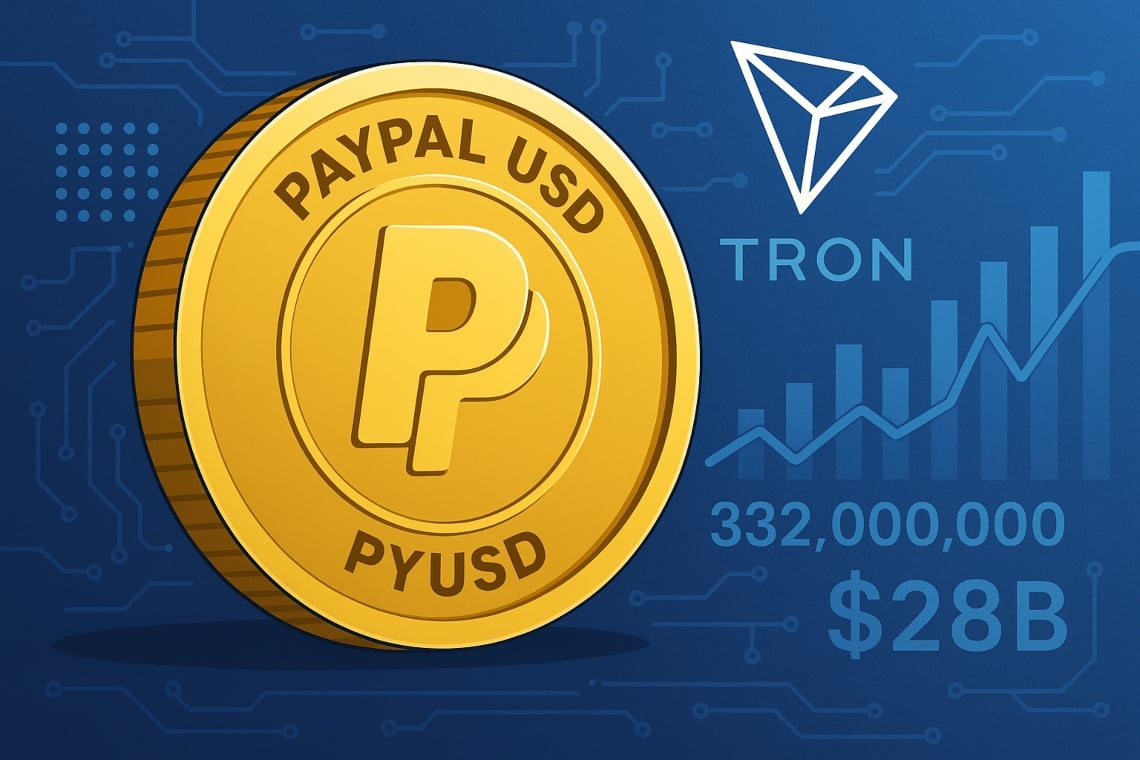
The post 332M accounts and $28B TVL, appeared on BitcoinEthereumNews.com. PayPal USD debuts on TRON as a permissionless token PYUSD0, enabled by LayerZero’s OFT standard and the Stargate Hydra extension. The announcement on September 18, 2025 (Geneva) introduces native interoperability between chains and transfers without manual steps for users; the news echoes elements already communicated by PayPal at the launch of PYUSD PayPal Newsroom. The move concerns an ecosystem that includes 332 million accounts and over $28 billion in TVL. In this context, the fungibility of a stablecoin regulated across multiple networks and the use of TRON as a settlement layer for payments and remittances is at stake. According to the data collected by TRONSCAN updated as of September 18, 2025, the network metrics confirm the cited volumes and highlighted traffic patterns. Our editorial team has verified the transaction logs and monitored the public chain metrics to corroborate the reported figures; the observations on daily flows and TVL are consistent with the network dashboards. Industry analysts observe that the entry of a regulated issuer like PayPal tends to increase institutional interest, provided there is transparency on reserves and compliance checks. What is PYUSD0 on TRON and why is it relevant PYUSD0 is the representation of PayPal USD on TRON. It is pegged one-to-one to PYUSD through the OFT standard: the two tokens remain a single stablecoin, fungible and reconciled across chains. The integration is made possible by Stargate Hydra, now operational through LayerZero. According to the founder of TRON, Justin Sun, the extension on TRON expands access and trust for users and institutions. For Bryan Pellegrino (CEO of LayerZero Labs), stablecoins represent a pillar of global payments and remittances, as the native compatibility between chains enables their operational scalability. It must be said that the alignment between issuer, cross-chain infrastructure, and settlement network is a key element. Key Numbers: TRON…
Share
BitcoinEthereumNews2025/09/19 08:18