The post Fact Check: Do the Epstein Files Show Israel Took Control of Bitcoin? appeared first on Coinpedia Fintech News As the Epstein files continue to be releasedThe post Fact Check: Do the Epstein Files Show Israel Took Control of Bitcoin? appeared first on Coinpedia Fintech News As the Epstein files continue to be released

Fact Check: Do the Epstein Files Show Israel Took Control of Bitcoin?

4 min read
Israel controls Bitcoin fact check

The post Fact Check: Do the Epstein Files Show Israel Took Control of Bitcoin? appeared first on Coinpedia Fintech News

As the Epstein files continue to be released, new claims are surfacing almost every day, raising serious concerns. One recent claim circulating on X and within crypto circles alleges that Israel secretly gained control of the Bitcoin network more than a decade ago. 

The claim also tries to connect the newly discussed Epstein files with Bitcoin core developers, Blockstream, and Tether.

So Coinpedia stepped in to fact-check whether the claim is real or just another false allegation.

Who Made This Claim?

The claim was made by SwanDesk CEO Jacob King, who cited an alleged Epstein file document. He says the document shows a conversation between Jeffrey Epstein and Joichi Ito, a Japanese entrepreneur, suggesting that some Bitcoin core developers received hidden gifts. 
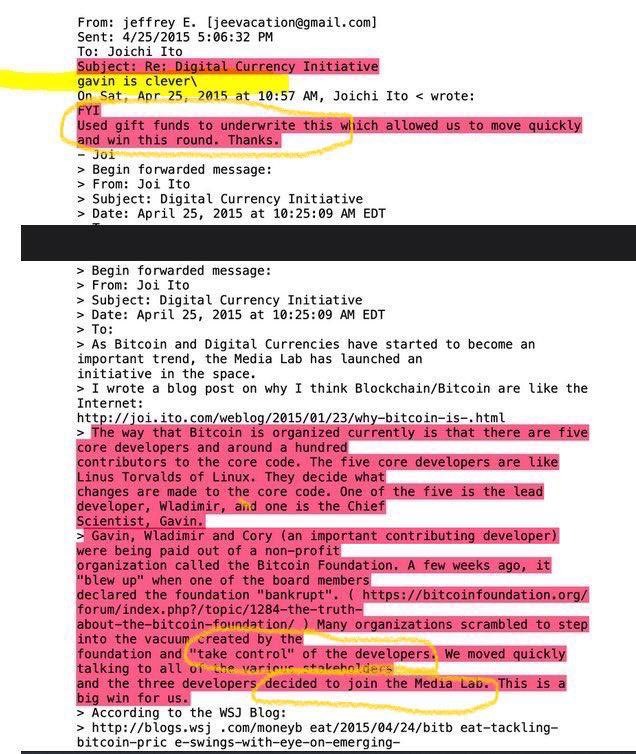
Epstein files

King also claimed that Israel paid the salaries of about 60% of Bitcoin developers. He further alleged that Epstein and Israel were major investors in Blockstream, and that Blockstream and Tether could influence Bitcoin’s price and code.

But is all this claim true? Let’s break it down.

Coinpedia’s Key Findings: What’s Actually True?

No Evidence Israel Controlled Bitcoin Developers

The recent release of millions of documents by the U.S. Department of Justice (DOJ) under the Epstein Files Transparency Act has found no substantiated evidence that Israel hijacked control of the Bitcoin network

Also, the claim that Israel paid 60% of Bitcoin core developers is unsupported. Meanwhile, no document proves Israeli state payrolls or centralized hiring.

Epstein Had a Minor, Indirect Blockstream Investment

MIT Digital Currency Initiative (DCI) records show that Jeffrey Epstein donated around $850,000 to MIT between 2002 and 2017. Perhaps, this does not amount to control or major ownership.

In 2015, part of this money was reportedly used by MIT’s Digital Currency Initiative to pay salaries of Bitcoin Core developers like Gavin Andresen and Wladimir van der Laan. This support came after the Bitcoin Foundation shut down, and funding for developers became uncertain.
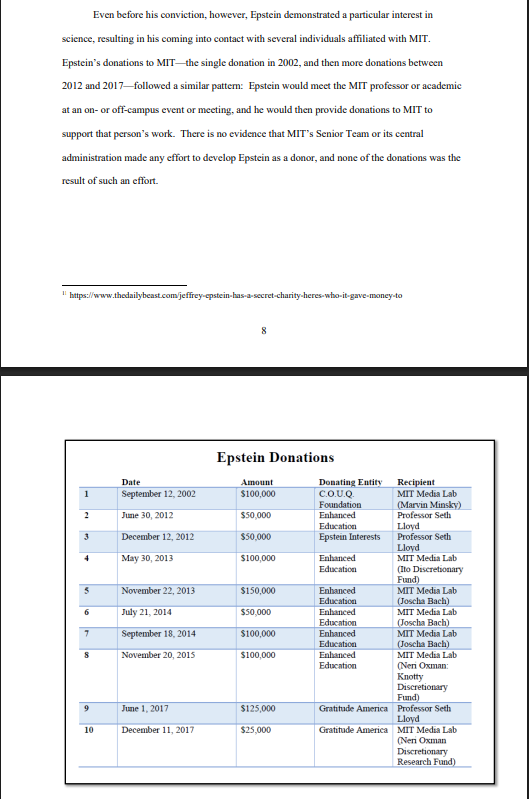
funding details

Why is Israel being linked to the Bitcoin Foundation and MIT Media Lab?

The main Israel link comes through former Prime Minister Ehud Barak. Records show Barak stayed at Jeffrey Epstein’s New York home several times between 2013 and 2017, the same period when claims of Israeli control over Bitcoin.

Epstein also reportedly acted as a backchannel for Israeli interests, helping arrange security deals in several countries. 

In 2015, Epstein donated $850,000 to the MIT Media Lab. Prominent Israeli figures, such as designer Neri Oxman, were senior researchers at the Media Lab during the period it was accepting Epstein’s funds.

Epstein was also connected to Bitcoin infrastructure as well. In 2014, he joined an $18 million funding round for Blockstream, a company that employs important Bitcoin developers. 

However, Blockstream CEO Adam Back later clarified that Epstein’s stake was quickly sold and the company has no financial ties to him today.

Tether Allegations Are Unrelated and Unproven

Claims that Bitcoin’s price can be manipulated using “unbacked Tether” are separate allegations. These claims do not prove that anyone controls the Bitcoin network, controls Bitcoin developers, or that any government is manipulating Bitcoin.

Summary Table: Coinpedia’s Evidence Against the Theory

Claim Made by TheoryCoinpedia’s Counter-Evidence
Does Israel Hijack Control of the Bitcoin Network?U.S. Department of Justice (DOJ) said their were no substantiated evidence to support this claim
Did Epstein funded Bitcoin takeover?Minor, but that was also through indirect investment of only $50,000 and $500,000
Were 60% of devs paid by IsraelNo Document to support these claims.

Conclusion

ClaimDo the Epstein Files Reveal Israel Hijacked Control of the Bitcoin Network?
Verdict❌ False
Fact-Check by CoinpediaAs per Coinpedia research and a review of official sources, there is no credible evidence that Israel controls Bitcoin, pays core developers, or manipulates the network through Blockstream or Tether. Until then, this claim remains unverified and speculative.
Never Miss a Beat in the Crypto World!

Stay ahead with breaking news, expert analysis, and real-time updates on the latest trends in Bitcoin, altcoins, DeFi, NFTs, and more.

bell icon Subscribe to News
Disclaimer: The articles reposted on this site are sourced from public platforms and are provided for informational purposes only. They do not necessarily reflect the views of MEXC. All rights remain with the original authors. If you believe any content infringes on third-party rights, please contact service@support.mexc.com for removal. MEXC makes no guarantees regarding the accuracy, completeness, or timeliness of the content and is not responsible for any actions taken based on the information provided. The content does not constitute financial, legal, or other professional advice, nor should it be considered a recommendation or endorsement by MEXC.

You May Also Like

Ethereum unveils roadmap focusing on scaling, interoperability, and security at Japan Dev Conference

Ethereum unveils roadmap focusing on scaling, interoperability, and security at Japan Dev Conference

The post Ethereum unveils roadmap focusing on scaling, interoperability, and security at Japan Dev Conference appeared on BitcoinEthereumNews.com. Key Takeaways Ethereum’s new roadmap was presented by Vitalik Buterin at the Japan Dev Conference. Short-term priorities include Layer 1 scaling and raising gas limits to enhance transaction throughput. Vitalik Buterin presented Ethereum’s development roadmap at the Japan Dev Conference today, outlining the blockchain platform’s priorities across multiple timeframes. The short-term goals focus on scaling solutions and increasing Layer 1 gas limits to improve transaction capacity. Mid-term objectives target enhanced cross-Layer 2 interoperability and faster network responsiveness to create a more seamless user experience across different scaling solutions. The long-term vision emphasizes building a secure, simple, quantum-resistant, and formally verified minimalist Ethereum network. This approach aims to future-proof the platform against emerging technological threats while maintaining its core functionality. The roadmap presentation comes as Ethereum continues to compete with other blockchain platforms for market share in the smart contract and decentralized application space. Source: https://cryptobriefing.com/ethereum-roadmap-scaling-interoperability-security-japan/
Share
BitcoinEthereumNews2025/09/18 00:25
Here’s How Consumers May Benefit From Lower Interest Rates

Here’s How Consumers May Benefit From Lower Interest Rates

The post Here’s How Consumers May Benefit From Lower Interest Rates appeared on BitcoinEthereumNews.com. Topline The Federal Reserve on Wednesday opted to ease interest rates for the first time in months, leading the way for potentially lower mortgage rates, bond yields and a likely boost to cryptocurrency over the coming weeks. Average long-term mortgage rates dropped to their lowest levels in months ahead of the central bank’s policy shift. Copyright{2018} The Associated Press. All rights reserved. Key Facts The central bank’s policymaking panel voted this week to lower interest rates, which have sat between 4.25% and 4.5% since December, to a new range of 4% and 4.25%. How Will Lower Interest Rates Impact Mortgage Rates? Mortgage rates tend to fall before and during a period of interest rate cuts: The average 30-year fixed-rate mortgage dropped to 6.35% from 6.5% last week, the lowest level since October 2024, mortgage buyer Freddie Mac reported. Borrowing costs on 15-year fixed-rate mortgages also dropped to 5.5% from 5.6% as they neared the year-ago rate of 5.27%. When the Federal Reserve lowered the funds rate to between 0% and 0.25% during the pandemic, 30-year mortgage rates hit record lows between 2.7% and 3% by the end of 2020, according to data published by Freddie Mac. Consumers who refinanced their mortgages in 2020 saved about $5.3 billion annually as rates dropped, according to the Consumer Financial Protection Bureau. Similarly, mortgage rates spiked around 7% as interest rates were hiked in 2022 and 2023, though mortgage rates appeared to react within weeks of the Fed opting to cut or raise rates. How Do Treasury Bonds Respond To Lower Interest Rates? Long-term Treasury yields are more directly influenced by interest rates, as lower rates tend to result in lower yields. When the Fed pushed rates to near zero during the pandemic, 10-year Treasury yields fell to an all-time low of 0.5%. As…
Share
BitcoinEthereumNews2025/09/18 05:59
The Giants Are Stumbling: Why BlockDAG’s 20-Exchange Launch is the Market’s New Safe Haven

The Giants Are Stumbling: Why BlockDAG’s 20-Exchange Launch is the Market’s New Safe Haven

The cryptocurrency market seems to have caught headwinds entering February. Portfolios across the globe are flashing red as the flash crash of February 2nd wreaks
Share
Captainaltcoin2026/02/04 02:30