Key Takeaways : In 2024, Germany sold nearly 50,000 BTC for $2.89 billion, missing out on an estimated $3.17 billion in profit. By August 2025, those holdings would have been worth around $6 billion. Although no longer a top-four government BTC holder, Germany supports crypto adoption and regulation. With BTC making new all-time-highs, countries like Germany are missing out on a significant opportunity to boost their economy, potentially by billions of dollars, had they kept their holdings instead of selling. Germany was ranked as the fourth-largest government holder of Bitcoin in January 2024. It had seized 50,000 BTC, worth approximately $2.2 billion at the time, from the operators of Movie2K, a movie piracy network. However, by July 12, 2024, the German government, through its Federal Criminal Police Office (BKA), had sold a total of 49,858 BTC for approximately $2.89 billion, at an average sale price of $57,900 per BTC. The decision to sell was not purely an investment move but was made in compliance with German law, which mandates the sale of seized assets prone to significant market volatility to prevent further losses. Barely a year later, the price of BTC has more than doubled, surging above $122,000 on August 11, 2025. Had the government kept the seized Bitcoin, its value would be approximately $6.06 billion, representing a missed profit of $3.17 billion compared to the average sale proceeds. This would place Germany among the world’s four largest government holders. German lawmaker Joana Cotar argued in a July 4 letter to members of the German government that Bitcoin should have been held as a strategic reserve, stating: It is not sensible to sell the Bitcoins now. It would be better to keep them as a reserve currency. Meanwhile, the United States has taken a different approach to managing its Bitcoin holdings. The U.S. government holds approximately 198,022 BTC, valued at over $24 billion, primarily acquired through seizures. Earlier this year, it established a Strategic Bitcoin Reserve with no announced plans to sell. Is Germany Still Interested in Crypto? Although Germany has slipped from its rank as the fourth-largest government Bitcoin holder and missed the chance to earn an additional $3 billion, the country is actively supporting crypto adoption and regulation. Following the approval of the Markets in Crypto Assets (MiCA) regulation, crypto assets have become legal in Germany. However, exchanges are required to obtain necessary licenses from the Federal Financial Supervisory Authority (BaFin) to operate in the country. Crypto users in Germany were projected to reach 27.32 million , with GenZ and millennials accounting for up to 50%. Institutional adoption is also rising, with Deutsche Bank reportedly planning to launch a digital assets custody service in 2026. Revenue from the German crypto market is expected to reach $2.5 billion in 2025 and about $2.9 billion by the end of 2026, with a compound annual growth rate (CAGR) of 16.33%. Germany is also creating a favourable tax policy for long-term crypto holders. Gains from crypto are tax-free if held for more than one year, while short-term gains (less than one year) are subject to progressive income tax of up to 45%. The government is also working to improve its tax transparency through the Directive on Administrative Cooperation ( DAC 8 ), which mandates crypto asset providers (CASPs) to report transaction details to tax authorities. This will take effect from January 1, 2026. Closing Thoughts With Bitcoin’s role in global markets continuing to grow and other countries reassessing their crypto strategies, Germany’s early Bitcoin liquidation and missed financial opportunity have become a case study in the importance of long-term planning for managing digital asset holdings.Key Takeaways : In 2024, Germany sold nearly 50,000 BTC for $2.89 billion, missing out on an estimated $3.17 billion in profit. By August 2025, those holdings would have been worth around $6 billion. Although no longer a top-four government BTC holder, Germany supports crypto adoption and regulation. With BTC making new all-time-highs, countries like Germany are missing out on a significant opportunity to boost their economy, potentially by billions of dollars, had they kept their holdings instead of selling. Germany was ranked as the fourth-largest government holder of Bitcoin in January 2024. It had seized 50,000 BTC, worth approximately $2.2 billion at the time, from the operators of Movie2K, a movie piracy network. However, by July 12, 2024, the German government, through its Federal Criminal Police Office (BKA), had sold a total of 49,858 BTC for approximately $2.89 billion, at an average sale price of $57,900 per BTC. The decision to sell was not purely an investment move but was made in compliance with German law, which mandates the sale of seized assets prone to significant market volatility to prevent further losses. Barely a year later, the price of BTC has more than doubled, surging above $122,000 on August 11, 2025. Had the government kept the seized Bitcoin, its value would be approximately $6.06 billion, representing a missed profit of $3.17 billion compared to the average sale proceeds. This would place Germany among the world’s four largest government holders. German lawmaker Joana Cotar argued in a July 4 letter to members of the German government that Bitcoin should have been held as a strategic reserve, stating: It is not sensible to sell the Bitcoins now. It would be better to keep them as a reserve currency. Meanwhile, the United States has taken a different approach to managing its Bitcoin holdings. The U.S. government holds approximately 198,022 BTC, valued at over $24 billion, primarily acquired through seizures. Earlier this year, it established a Strategic Bitcoin Reserve with no announced plans to sell. Is Germany Still Interested in Crypto? Although Germany has slipped from its rank as the fourth-largest government Bitcoin holder and missed the chance to earn an additional $3 billion, the country is actively supporting crypto adoption and regulation. Following the approval of the Markets in Crypto Assets (MiCA) regulation, crypto assets have become legal in Germany. However, exchanges are required to obtain necessary licenses from the Federal Financial Supervisory Authority (BaFin) to operate in the country. Crypto users in Germany were projected to reach 27.32 million , with GenZ and millennials accounting for up to 50%. Institutional adoption is also rising, with Deutsche Bank reportedly planning to launch a digital assets custody service in 2026. Revenue from the German crypto market is expected to reach $2.5 billion in 2025 and about $2.9 billion by the end of 2026, with a compound annual growth rate (CAGR) of 16.33%. Germany is also creating a favourable tax policy for long-term crypto holders. Gains from crypto are tax-free if held for more than one year, while short-term gains (less than one year) are subject to progressive income tax of up to 45%. The government is also working to improve its tax transparency through the Directive on Administrative Cooperation ( DAC 8 ), which mandates crypto asset providers (CASPs) to report transaction details to tax authorities. This will take effect from January 1, 2026. Closing Thoughts With Bitcoin’s role in global markets continuing to grow and other countries reassessing their crypto strategies, Germany’s early Bitcoin liquidation and missed financial opportunity have become a case study in the importance of long-term planning for managing digital asset holdings.

Germany Missed Out on $3B From Selling BTC Before the Rally

3 min read

Key Takeaways:

  • In 2024, Germany sold nearly 50,000 BTC for $2.89 billion, missing out on an estimated $3.17 billion in profit.
  • By August 2025, those holdings would have been worth around $6 billion.
  • Although no longer a top-four government BTC holder, Germany supports crypto adoption and regulation.

With BTC making new all-time-highs, countries like Germany are missing out on a significant opportunity to boost their economy, potentially by billions of dollars, had they kept their holdings instead of selling.

Germany was ranked as the fourth-largest government holder of Bitcoin in January 2024. It had seized 50,000 BTC, worth approximately $2.2 billion at the time, from the operators of Movie2K, a movie piracy network.

However, by July 12, 2024, the German government, through its Federal Criminal Police Office (BKA), had sold a total of 49,858 BTC for approximately $2.89 billion, at an average sale price of $57,900 per BTC. The decision to sell was not purely an investment move but was made in compliance with German law, which mandates the sale of seized assets prone to significant market volatility to prevent further losses.
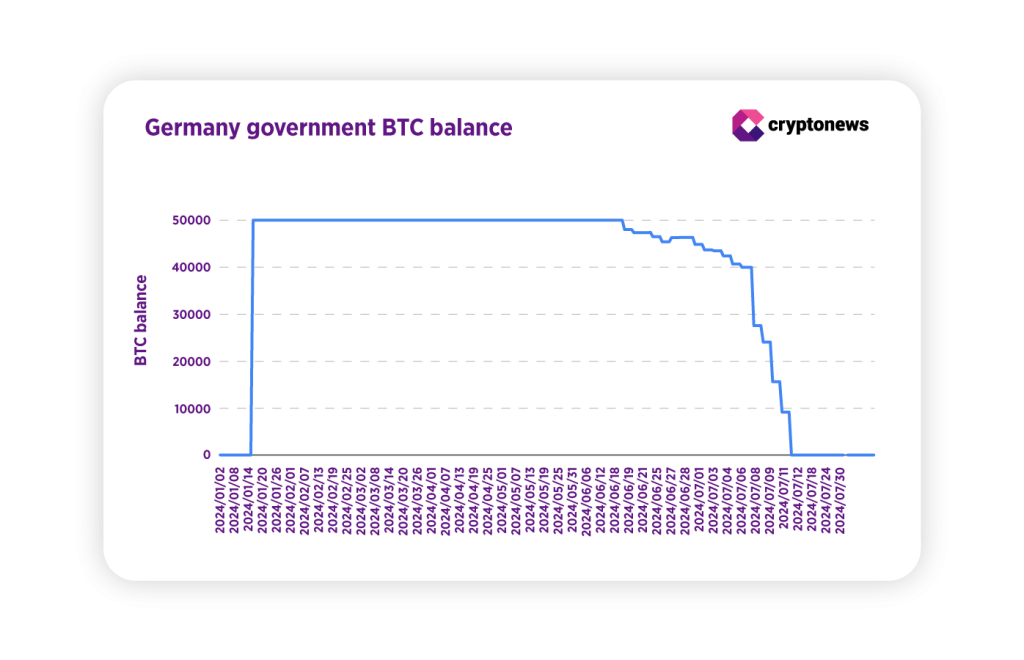
Barely a year later, the price of BTC has more than doubled, surging above $122,000 on August 11, 2025. Had the government kept the seized Bitcoin, its value would be approximately $6.06 billion, representing a missed profit of $3.17 billion compared to the average sale proceeds. This would place Germany among the world’s four largest government holders.

German lawmaker Joana Cotar argued in a July 4 letter to members of the German government that Bitcoin should have been held as a strategic reserve, stating:

Meanwhile, the United States has taken a different approach to managing its Bitcoin holdings. The U.S. government holds approximately 198,022 BTC, valued at over $24 billion, primarily acquired through seizures. Earlier this year, it established a Strategic Bitcoin Reserve with no announced plans to sell.

Is Germany Still Interested in Crypto?

Although Germany has slipped from its rank as the fourth-largest government Bitcoin holder and missed the chance to earn an additional $3 billion, the country is actively supporting crypto adoption and regulation.

Following the approval of the Markets in Crypto Assets (MiCA) regulation, crypto assets have become legal in Germany. However, exchanges are required to obtain necessary licenses from the Federal Financial Supervisory Authority (BaFin) to operate in the country.

Crypto users in Germany were projected to reach 27.32 million, with GenZ and millennials accounting for up to 50%. Institutional adoption is also rising, with Deutsche Bank reportedly planning to launch a digital assets custody service in 2026. Revenue from the German crypto market is expected to reach $2.5 billion in 2025 and about $2.9 billion by the end of 2026, with a compound annual growth rate (CAGR) of 16.33%.

Germany is also creating a favourable tax policy for long-term crypto holders. Gains from crypto are tax-free if held for more than one year, while short-term gains (less than one year) are subject to progressive income tax of up to 45%.

The government is also working to improve its tax transparency through the Directive on Administrative Cooperation (DAC 8), which mandates crypto asset providers (CASPs) to report transaction details to tax authorities. This will take effect from January 1, 2026.

Closing Thoughts

With Bitcoin’s role in global markets continuing to grow and other countries reassessing their crypto strategies, Germany’s early Bitcoin liquidation and missed financial opportunity have become a case study in the importance of long-term planning for managing digital asset holdings.

Market Opportunity
Bitcoin Logo
Bitcoin Price(BTC)
$75 305,02
$75 305,02$75 305,02
-3,61%
USD
Bitcoin (BTC) Live Price Chart
Disclaimer: The articles reposted on this site are sourced from public platforms and are provided for informational purposes only. They do not necessarily reflect the views of MEXC. All rights remain with the original authors. If you believe any content infringes on third-party rights, please contact service@support.mexc.com for removal. MEXC makes no guarantees regarding the accuracy, completeness, or timeliness of the content and is not responsible for any actions taken based on the information provided. The content does not constitute financial, legal, or other professional advice, nor should it be considered a recommendation or endorsement by MEXC.

You May Also Like

Payward Revenue Hits $2.2 Billion as Kraken Exchange Reports Strong 2025 Growth

Payward Revenue Hits $2.2 Billion as Kraken Exchange Reports Strong 2025 Growth

TLDR Payward, Kraken’s parent company, earned $2.2 billion in 2025, a 33% increase from 2024’s $1.6 billion Trading revenue and asset-based services each contributed
Share
Blockonomi2026/02/04 20:11
BetFury is at SBC Summit Lisbon 2025: Affiliate Growth in Focus

BetFury is at SBC Summit Lisbon 2025: Affiliate Growth in Focus

The post BetFury is at SBC Summit Lisbon 2025: Affiliate Growth in Focus appeared on BitcoinEthereumNews.com. Press Releases are sponsored content and not a part of Finbold’s editorial content. For a full disclaimer, please . Crypto assets/products can be highly risky. Never invest unless you’re prepared to lose all the money you invest. Curacao, Curacao, September 17th, 2025, Chainwire BetFury steps onto the stage of SBC Summit Lisbon 2025 — one of the key gatherings in the iGaming calendar. From 16 to 18 September, the platform showcases its brand strength, deepens affiliate connections, and outlines its plans for global expansion. BetFury continues to play a role in the evolving crypto and iGaming partnership landscape. BetFury’s Participation at SBC Summit The SBC Summit gathers over 25,000 delegates, including 6,000+ affiliates — the largest concentration of affiliate professionals in iGaming. For BetFury, this isn’t just visibility, it’s a strategic chance to present its Affiliate Program to the right audience. Face-to-face meetings, dedicated networking zones, and affiliate-focused sessions make Lisbon the ideal ground to build new partnerships and strengthen existing ones. BetFury Meets Affiliate Leaders at its Massive Stand BetFury arrives at the summit with a massive stand placed right in the center of the Affiliate zone. Designed as a true meeting hub, the stand combines large LED screens, a sleek interior, and the best coffee at the event — but its core mission goes far beyond style. Here, BetFury’s team welcomes partners and affiliates to discuss tailored collaborations, explore growth opportunities across multiple GEOs, and expand its global Affiliate Program. To make the experience even more engaging, the stand also hosts: Affiliate Lottery — a branded drum filled with exclusive offers and personalized deals for affiliates. Merch Kits — premium giveaways to boost brand recognition and leave visitors with a lasting conference memory. Besides, at SBC Summit Lisbon, attendees have a chance to meet the BetFury team along…
Share
BitcoinEthereumNews2025/09/18 01:20
Super Micro Computer (SMCI) Stock: Revenue Soars Past $12B on AI Server Boom

Super Micro Computer (SMCI) Stock: Revenue Soars Past $12B on AI Server Boom

TLDR Revenue hit $12.7 billion, crushing $10.42 billion estimate and up 123.4% year-over-year EPS of $0.69 beat consensus $0.49 by 40.8% in fiscal Q2 Q3 guidance
Share
Blockonomi2026/02/04 20:36