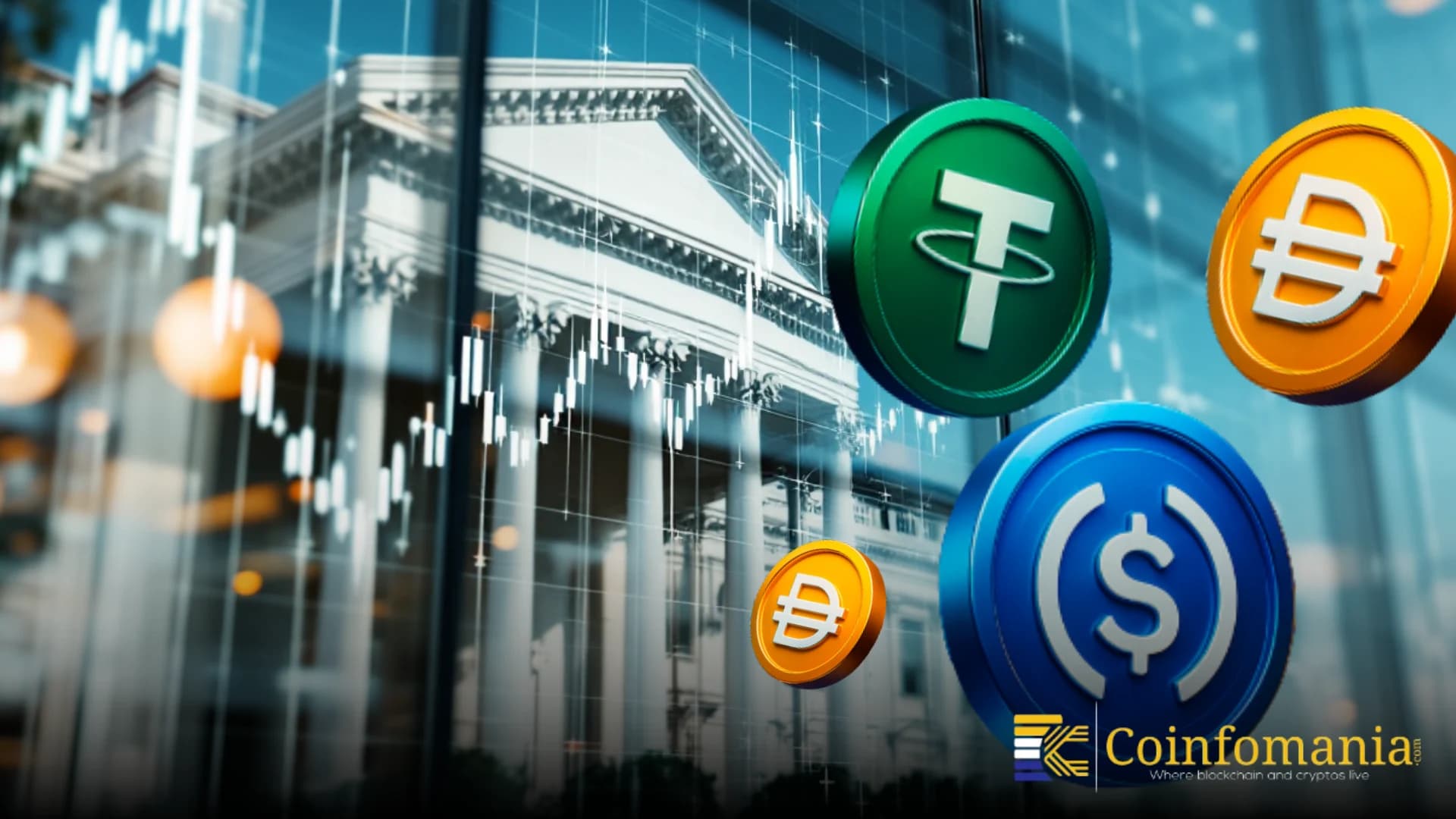
Stablecoins Surge as USDT and USDC Drive Global Digital Payment Adoption
TLDR:
- USDT and USDC dominate stablecoin supply as demand grows across trading, payments, and global settlements.
- Emerging markets rely on stablecoins to protect value and bypass weak banking and volatile local currencies.
- Regulatory clarity improves issuer transparency and strengthens trust in reserve-backed digital dollars.
- Commodity and cross-border trade increasingly adopt stablecoins for faster and cheaper settlement.
Stablecoins reached record adoption in 2026 as global supply exceeded 270 billion dollars. This rise was led by Tether near 185 billion, and USDC above 70 billion.
Trading volume and active wallets continued to rise, showing that demand for digital dollars across exchanges.
Many used them for payments and commodity settlements as regulatory clarity improves in major markets. This institutional interest supports stable growth during current market conditions.
Emergence and Technology of Stablecoins
Stablecoins were developed to solve inefficiencies in transferring fiat currency across early cryptocurrency exchanges. USDT launched in 2014 as Realcoin and later rebranded as Tether.
It was aimed to enable faster digital movement of dollar equivalents between platforms such as Bitfinex and Kraken. This innovation reduced delays that previously limited arbitrage and liquidity in fragmented crypto markets.
USDT initially operated on the Bitcoin-based Omni Layer before expanding to Ethereum, Tron, Solana, and other blockchains. These transitions increased transaction speed, lowered fees, and strengthened interoperability between networks.
By 2019, Tether became the most traded crypto asset by daily volume, exceeding bitcoin activity. The COVID-19 period accelerated adoption, particularly in emerging economies.
Users in Venezuela, Lebanon, and Argentina relied on USDT for payments and savings as local currencies weakened. Stablecoins offered access to digital dollars without dependence on fragile banking systems or physical cash markets.
Tether and Circle issue tokens through KYC-compliant institutions that deposit cash in exchange for newly minted stablecoins. Arbitrage mechanisms maintain the peg close to one dollar.
Reserves consist mainly of short-term U.S. Treasuries, commercial paper, and cash equivalents. These structures improved reliability compared with early private money systems.
Regular audits and on-chain transparency further strengthened confidence in large issuers.
Global Adoption and Expanding Use Cases
Stablecoins are extending beyond crypto trading into broader financial activity. Tether plans to introduce USAT for developed markets.
This includes the United States, alongside existing digital payment platforms such as Venmo and Cash App. However, the GENIUS Act places limits on yield-bearing stablecoins to maintain regulatory clarity and investor protection.
Innovation continues with asset-backed designs. Gold-linked tokens such as Alloy and XAUT allow users to transact with stable value while holding appreciating collateral.
Decentralized models like USDS rely on overcollateralized loans, diversified reserves, and on-chain lending to maintain stability while offering savings features supported by interest revenues.
Commodity markets increasingly adopt stablecoins for settlement. For example, USDT has been used in oil transactions and international trade, reducing reliance on slow banking rails.
These uses demonstrate efficiency in cross-border payments and wholesale finance.
In emerging markets, stablecoins function as payment tools, savings instruments, and stores of value. Their circulation persists because local currencies often experience inflation and limited accessibility.
Digital wallets allow users to transact globally without traditional intermediaries. Global supply growth reflects continued reliance on blockchain-based private money.
Stablecoins represent digital assets in national currencies while operating on decentralized infrastructure. Their expansion across decentralized finance indicates a shift toward tokenized money systems that combine technological efficiency with financial backing.
The post Stablecoins Surge as USDT and USDC Drive Global Digital Payment Adoption appeared first on Blockonomi.
You May Also Like

Huawei goes public with chip ambitions, boosting China’s tech autonomy post-Nvidia

Tron Makes Bold Moves in TRX Tokens Acquisition