The post Thursday links: Investing, revenue meta, DATs, prediction markets appeared on BitcoinEthereumNews.com. “Investing is about beliefs in the future, and what to do when they’re wrong.” — Rohit Krishnan Fundamentals vs. flows The crypto investor Jon Charbonneau explains that crypto investing is just investing. Whatever the asset class, he argues, there are only two basic ways to approach investing: forecasting fundamentals or predicting flows. Fundamental investors form beliefs about future cash flows: “The whole point of fundamental investing is that you don’t need other people to agree with you” (aka the Warren Buffett way). Flow investors form beliefs about future trading flows: “You’re just hoping someone else will buy it from you at an even higher multiple” (aka the greater fool theory). These are familiar concepts, but it’s helpful to see them framed so thoughtfully in the context of crypto. Either approach can work, Charbonneau says, but things get muddled if you don’t know which one you’re taking. For example, is ETH a fundamental investment or a flows one?  It seems to be a little of both, which makes the investment case more complex: “It requires taking more leaps of faith around human behavior and market psychology.” That sounds difficult.  The simplicity of Bitcoin’s flows-based investment thesis, by contrast, has been so successful that it “can straddle the line of ‘fundamental investing’ and ‘greater fool investing’ depending on how you quantify monetary utility.” I personally think “monetary utility” is mostly fake news, but I also think bitcoin has probably hit escape velocity and can now be considered a fundamental investment, like gold.  Crypto investing more generally may be at a similar inflection point.  “Historically, it has paid off to be primarily flows-driven as a crypto investor,” Charbonneau notes. “Looking forward though, I believe that focusing more on fundamentals…could finally produce more alpha as the industry matures.” That would be good news because, as… The post Thursday links: Investing, revenue meta, DATs, prediction markets appeared on BitcoinEthereumNews.com. “Investing is about beliefs in the future, and what to do when they’re wrong.” — Rohit Krishnan Fundamentals vs. flows The crypto investor Jon Charbonneau explains that crypto investing is just investing. Whatever the asset class, he argues, there are only two basic ways to approach investing: forecasting fundamentals or predicting flows. Fundamental investors form beliefs about future cash flows: “The whole point of fundamental investing is that you don’t need other people to agree with you” (aka the Warren Buffett way). Flow investors form beliefs about future trading flows: “You’re just hoping someone else will buy it from you at an even higher multiple” (aka the greater fool theory). These are familiar concepts, but it’s helpful to see them framed so thoughtfully in the context of crypto. Either approach can work, Charbonneau says, but things get muddled if you don’t know which one you’re taking. For example, is ETH a fundamental investment or a flows one?  It seems to be a little of both, which makes the investment case more complex: “It requires taking more leaps of faith around human behavior and market psychology.” That sounds difficult.  The simplicity of Bitcoin’s flows-based investment thesis, by contrast, has been so successful that it “can straddle the line of ‘fundamental investing’ and ‘greater fool investing’ depending on how you quantify monetary utility.” I personally think “monetary utility” is mostly fake news, but I also think bitcoin has probably hit escape velocity and can now be considered a fundamental investment, like gold.  Crypto investing more generally may be at a similar inflection point.  “Historically, it has paid off to be primarily flows-driven as a crypto investor,” Charbonneau notes. “Looking forward though, I believe that focusing more on fundamentals…could finally produce more alpha as the industry matures.” That would be good news because, as…

Thursday links: Investing, revenue meta, DATs, prediction markets

6 min read

Fundamentals vs. flows

The crypto investor Jon Charbonneau explains that crypto investing is just investing.

Whatever the asset class, he argues, there are only two basic ways to approach investing: forecasting fundamentals or predicting flows.

Fundamental investors form beliefs about future cash flows: “The whole point of fundamental investing is that you don’t need other people to agree with you” (aka the Warren Buffett way).

Flow investors form beliefs about future trading flows: “You’re just hoping someone else will buy it from you at an even higher multiple” (aka the greater fool theory).

These are familiar concepts, but it’s helpful to see them framed so thoughtfully in the context of crypto.

Either approach can work, Charbonneau says, but things get muddled if you don’t know which one you’re taking.

For example, is ETH a fundamental investment or a flows one? 

It seems to be a little of both, which makes the investment case more complex: “It requires taking more leaps of faith around human behavior and market psychology.”

That sounds difficult. 

The simplicity of Bitcoin’s flows-based investment thesis, by contrast, has been so successful that it “can straddle the line of ‘fundamental investing’ and ‘greater fool investing’ depending on how you quantify monetary utility.”

I personally think “monetary utility” is mostly fake news, but I also think bitcoin has probably hit escape velocity and can now be considered a fundamental investment, like gold. 

Crypto investing more generally may be at a similar inflection point. 

“Historically, it has paid off to be primarily flows-driven as a crypto investor,” Charbonneau notes. “Looking forward though, I believe that focusing more on fundamentals…could finally produce more alpha as the industry matures.”

That would be good news because, as Charbonneau adds, “narrative trading” is a zero-sum game (I’d call it negative sum), while “allocating capital to projects capable of generating cashflows can be a positive-sum game.” 

Charbonneau highlights digital asset treasury companies as flows-based investments, so it’s perhaps ironic that they’re catching on with TradFi investors at the same time that fundamentals are catching on in crypto.

“Crypto investing is becoming relatively more fundamentals-driven,” he says, while “TradFi investing is becoming relatively more flows-driven.”

“Someday they’ll converge, and we’ll just be talking about investing.”

Let’s hope they meet somewhere on the fundamentals side of center.

Rethinking the value game

To Charbonneau’s take on fundamental investing, I would add that people who think they are investing on fundamentals are often investing on flows. 

Last year, David Einhorn declared that “markets are fundamentally broken,” because his standard playbook of buying a stock at, say, 10x earnings and then selling it at 15x earnings was no longer working.

“The competitors have effectively left the field,” he explained.

That sounds like good news — it’s always good to have less competition, right?

But fewer competitors gave Einhorn fewer opportunities to play his preferred game of “anticipating the anticipations of others.” 

So he was forced to find a new game: “We can’t count on other long-only investors to buy our things after us,” he explained. “We’re going to have to get paid by the company.”

Charbonneau and Buffett would approve.

The revenue meta

Luca Netz is also hopeful that crypto investing will become more fundamentals-driven: “The days of no revenue being worth billions of dollars has to be over,” he told Laura Shin. “I think this is going to be the era of result-driven success and less speculative success.”

This, he says, will help crypto build “disruptive technologies that change the world” and not just “pseudo-disruptive technologies that you tell a story around.”

Let’s hope so.

Note: Netz runs a cartoon-penguin business based on an NFT collection and an affiliated memecoin.

Chanos is winning

MSTR is down 21% over the past month, vs. bitcoin down just 2.5%.

That has taken MSTR’s all-important “mNAV” metric to just 1.34x (i.e., the stock is worth 34% more than the bitcoin it holds).

The falling mNAV represents a profit for short-seller Jim Chanos and a problem for Michael Saylor.

Saylor has said that Chanos doesn’t understand Strategy’s business model, but his decision to continue selling stock at current levels seems like a tacit admission that the investment case for MSTR remains circularly dependent on the premium investors are willing to pay for it.

I’m not sure how investors should think about this.

The Ethereum DAT BTCS, for example, now trades at 0.65x NAV — does that make it a better or worse investment than, say, the Ethereum DAT BMNR at 1.35x NAV?

You usually want to pay as little for a stock as possible, but if the value of that stock is a function of people paying more for it, maybe you want to pay more?

I really don’t know. But falling multiples are certainly not good for existing shareholders.

Metaplanet (the Japanese version of Strategy) now trades on 1.95x NAV, down from 8x just two months ago.

What’s the math on breaking even if you bought the stock at 8x NAV and you’re getting diluted by new sales at 1.95x?

Flows-based investing is hard.

The case against prediction markets

Trader-philosopher Agustin Lebron says prediction markets are 1) bad at being markets and 2) bad for society.

They fail as markets, he explains, because every participant is trying to do the same thing: to make money trading.

This is different from financial markets, which work because “different participants have different risk preferences.” 

Differing preferences means that both sides of a trade can benefit — like an airline buying a futures contract from an oil company, for example.

In prediction markets, where the buyer and seller have the same motivation, trades are zero-sum (just like the flows-based investing).

Supporters of prediction markets say they provide a service by giving people better information. 

But Lebron (who, no, does not play for the Lakers) argues that “most or all of the supposed value of [prediction markets] for hedging evaporates under closer inspection.”

In short, he argues there’s no risk that can be effectively hedged by betting on something like a presidential election.

And since there’s no benefit from hedging, “prediction markets only work when there is a steady supply of dumb money.”

Casinos, sports betting and memecoins have proved there is a steady supply of dumb money, so I’d note that prediction markets might well be a successful market. 

Lebron hopes they don’t, though, because “the very existence of the prediction market influences and hence distorts the underlying event that’s being predicted.”

He cites the example of someone who claims to have bet on Zoran Mamdani to win the New York City mayoral race and then funded Mamdani’s campaign to win the bet. 

I’m not sure how likely or repeatable that is, but it illustrates the feedback loops that might amplify the kind of chaotic events that people like to bet on.

As a result, Lebron warns that, if prediction markets get big enough, “they might just kill our society.”

Let’s hope everyone does some fundamental investing instead.


Get the news in your inbox. Explore Blockworks newsletters:

Source: https://blockworks.co/news/flows-versus-fundamentals
Market Opportunity
Threshold Logo
Threshold Price(T)
$0.006813
$0.006813$0.006813
-2.74%
USD
Threshold (T) Live Price Chart
Disclaimer: The articles reposted on this site are sourced from public platforms and are provided for informational purposes only. They do not necessarily reflect the views of MEXC. All rights remain with the original authors. If you believe any content infringes on third-party rights, please contact service@support.mexc.com for removal. MEXC makes no guarantees regarding the accuracy, completeness, or timeliness of the content and is not responsible for any actions taken based on the information provided. The content does not constitute financial, legal, or other professional advice, nor should it be considered a recommendation or endorsement by MEXC.

You May Also Like

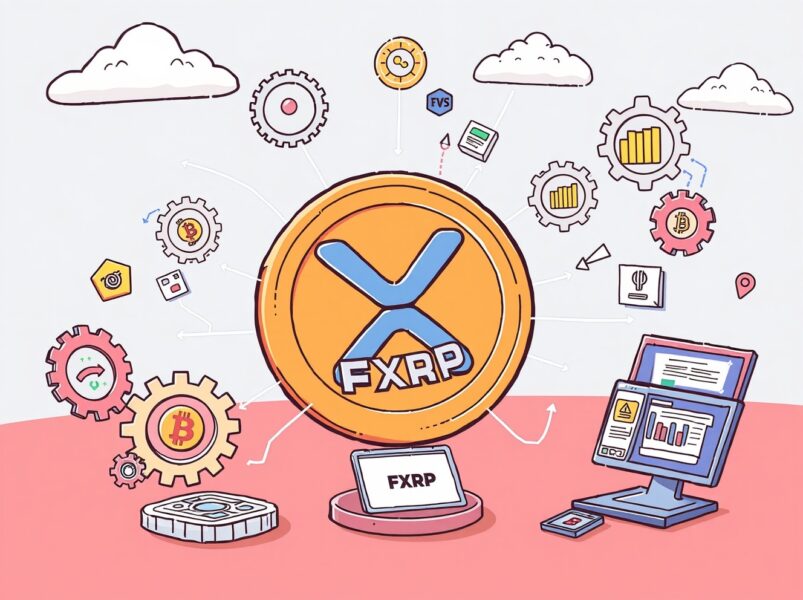
Unleash Potential: Flare Network’s FXRP Revolutionizes DeFi Access for XRP

Unleash Potential: Flare Network’s FXRP Revolutionizes DeFi Access for XRP

BitcoinWorld Unleash Potential: Flare Network’s FXRP Revolutionizes DeFi Access for XRP The world of decentralized finance (DeFi) is constantly evolving, and a major new development is set to excite XRP enthusiasts. Flare Network has just launched FXRP, an innovative solution designed to bring XRP directly into the heart of DeFi applications. This move opens up a wealth of new possibilities for XRP holders, allowing them to engage with lending, borrowing, and trading platforms like never before. It’s a significant step towards a more interconnected crypto ecosystem. What is FXRP and Why is it a Game-Changer for XRP? At its core, FXRP is an over-collateralized, wrapped version of XRP. Think of it as a digital twin of XRP, but one that lives on the Flare Network. This design is crucial because XRP itself doesn’t natively support smart contracts in the same way that Ethereum or other DeFi-centric blockchains do. Consequently, XRP has largely been excluded from the burgeoning DeFi sector. However, FXRP changes this narrative completely. By wrapping XRP, Flare Network creates a token that can interact with smart contracts on its own blockchain. This means XRP holders can now: Access a wider range of DeFi protocols. Participate in decentralized lending and borrowing. Engage in yield farming opportunities. Trade their XRP on decentralized exchanges. This initiative transforms XRP from a primarily transactional asset into a more versatile, programmable one within the DeFi landscape. How Can You Acquire and Utilize FXRP? Getting your hands on FXRP is straightforward, offering flexibility for users. You have two primary methods to acquire this wrapped token. First, users can mint FXRP directly on the Flare Network. This process typically involves locking up an equivalent amount of XRP as collateral, ensuring the wrapped token remains fully backed. Alternatively, if direct minting isn’t your preference, you can acquire FXRP on various decentralized exchanges (DEXs). Platforms like SparkDEX, BlazeSwap, and Enosys are among the initial venues where you can trade for FXRP. This accessibility makes it easy for existing DeFi users and new participants alike to join the Flare Network ecosystem and explore its offerings. The over-collateralization aspect adds an extra layer of security, providing confidence in the token’s backing. Expanding DeFi Horizons: The Broader Impact of FXRP The introduction of FXRP extends far beyond just enabling XRP holders to participate in DeFi. It has a much broader impact on the entire decentralized finance ecosystem. By integrating a widely adopted asset like XRP, Flare Network significantly boosts the total value locked (TVL) and liquidity available within DeFi. This influx of capital and users can lead to more robust and efficient markets. Moreover, FXRP positions Flare Network as a vital bridge between different blockchain ecosystems. It demonstrates how assets from one chain can gain new functionality and utility on another, fostering greater interoperability. This cross-chain capability is essential for the long-term growth and sustainability of decentralized finance, as it breaks down silos and encourages a more unified digital economy. The potential for future integrations with other tokens and protocols is immense, further solidifying Flare’s role. Navigating the Challenges and Future of FXRP While the launch of FXRP presents exciting opportunities, it’s also important to consider potential challenges. As with any new technology in the crypto space, security remains a paramount concern. The integrity of the wrapping mechanism and the underlying smart contracts must be rigorously maintained. Furthermore, user adoption and education will be key to the success of FXRP. New users need clear guidance on how to safely mint, acquire, and use the token in various DeFi applications. The competitive landscape also plays a role; other wrapped assets exist, and FXRP must demonstrate its unique value proposition. However, with its strong backing and the innovative approach of Flare Network, FXRP is well-positioned for growth. Its ability to unlock XRP’s potential for DeFi is a powerful differentiator, promising a vibrant future for both the token and the network. Actionable Insights: Getting Started with FXRP in DeFi If you’re an XRP holder looking to explore the new opportunities presented by FXRP, here are some actionable insights to help you get started: Do Your Research: Before engaging with any DeFi platform, thoroughly research its reputation, security audits, and user reviews. Understand how FXRP interacts with specific protocols. Understand the Risks: DeFi carries inherent risks, including smart contract vulnerabilities, impermanent loss, and market volatility. Familiarize yourself with these risks before committing funds. Start Small: Consider starting with a small amount of FXRP to familiarize yourself with the process of minting, acquiring, and using it in DeFi applications. Stay Informed: Follow official Flare Network channels and reputable crypto news sources to stay updated on new integrations, security announcements, and community developments related to FXRP. By taking these steps, you can confidently navigate the exciting new world that FXRP opens up for XRP within decentralized finance. In conclusion, the launch of FXRP by Flare Network is a monumental step forward for the XRP community and the broader DeFi ecosystem. It effectively bridges a gap, allowing one of the most widely held cryptocurrencies to participate actively in decentralized finance. This innovation not only expands the utility of XRP but also reinforces Flare Network’s commitment to building a more interconnected and functional blockchain world. As FXRP gains traction, we can expect to see a surge in innovative DeFi applications and a more vibrant, inclusive financial landscape for all. Frequently Asked Questions (FAQs) Q1: What exactly is FXRP? A1: FXRP is an over-collateralized, wrapped version of XRP, specifically designed to enable XRP holders to use their assets within decentralized finance (DeFi) applications on the Flare Network. Q2: How is FXRP different from standard XRP? A2: While FXRP is backed by XRP, its key difference is that it resides on the Flare Network and is compatible with smart contracts. This allows it to be used in DeFi protocols for lending, borrowing, and trading, which standard XRP cannot do natively. Q3: Where can I acquire FXRP? A3: You can acquire FXRP by minting it directly on the Flare Network by locking up XRP, or by purchasing it on decentralized exchanges such as SparkDEX, BlazeSwap, and Enosys. Q4: What are the main benefits of using FXRP in DeFi? A4: The primary benefits include gaining access to a wide array of DeFi services like lending, borrowing, and trading on DEXs, thereby increasing the utility and potential earning opportunities for XRP holders within the decentralized ecosystem. Q5: What is Flare Network’s role in the creation of FXRP? A5: Flare Network is the blockchain platform that hosts FXRP. It provides the smart contract functionality and infrastructure necessary to wrap XRP and enable its use in DeFi applications, acting as a bridge for XRP into the decentralized world. If you found this article insightful and believe in the potential of FXRP to revolutionize DeFi, please share it with your network! Help spread the word about how Flare Network is bridging the gap for XRP holders and expanding the possibilities within decentralized finance. Your support helps grow our community and keeps everyone informed about the latest crypto innovations. To learn more about the latest crypto market trends, explore our article on key developments shaping decentralized finance institutional adoption. This post Unleash Potential: Flare Network’s FXRP Revolutionizes DeFi Access for XRP first appeared on BitcoinWorld.
Share
Coinstats2025/09/24 22:45
Fed Lowers Rates By 25bps: How Bitcoin And Crypto Prices Responded And What’s Next

Fed Lowers Rates By 25bps: How Bitcoin And Crypto Prices Responded And What’s Next

The Federal Reserve (Fed) announced its first interest rate cut of the year, leading to an immediate reaction in the cryptocurrency market. Bitcoin (BTC) experienced a notable decline, dropping below the $115,000 threshold shortly after the announcement.  Expert Predicts Crypto Rally Fed Chair Jerome Powell addressed the current economic landscape, noting that while inflation has […]
Share
Bitcoinist2025/09/18 03:11
XRP Price Outlook As Peter Brandt Predicts BTC Price Might Crash to $42k

XRP Price Outlook As Peter Brandt Predicts BTC Price Might Crash to $42k

The post XRP Price Outlook As Peter Brandt Predicts BTC Price Might Crash to $42k appeared on BitcoinEthereumNews.com. XRP price led cryptocurrency losses on Friday
Share
BitcoinEthereumNews2026/02/06 19:06