Cardano is aggressively expanding the types of tokens that can operate on its network and raise the ceiling for its decentralized finance ecosystem over the nextCardano is aggressively expanding the types of tokens that can operate on its network and raise the ceiling for its decentralized finance ecosystem over the next

New Cardano deal opens a path to $80 billion in omnichain assets, but liquidity still isn’t guaranteed

2026/02/13 02:18
6 min read

Cardano is aggressively expanding the types of tokens that can operate on its network and raise the ceiling for its decentralized finance ecosystem over the next 12 to 18 months.

On Feb. 12, the Charles Hoskinson-led blockchain announced it would integrate with LayerZero, a widely used cross-chain messaging system.

This move represents the single largest interoperability unlock in Cardano’s history as LayerZero connects over 160 blockchains and has facilitated more than $200 billion in cross-chain volume.

A pipeline into 400 tokens and $80 billion in omnichain assets

LayerZero’s core value proposition is its chain-agnostic messaging layer. This means that applications can send and receive messages between endpoints, regardless of the execution model on the underlying chains.

For Cardano, this enables direct access to major blockchain ecosystems, including Ethereum, Solana, Base, Arbitrum, BNB Chain, Sui, and more than 140 others, without changing its underlying model.

That model difference has been a practical hurdle. Cardano is built on an extended UTXO architecture, the same foundational approach as Bitcoin, which is designed for determinism, predictability, and security.

However, much of the broader crypto economy runs on account-based architectures, including Ethereum, Solana, and Base. Because much cross-chain tooling has been designed primarily for account-based systems, Cardano has often faced additional friction when accessing cross-chain liquidity.

LayerZero’s integration is positioned to address that tooling gap. It does not require Cardano to become account-based. Instead, it routes interoperability through messaging endpoints.

If Cardano becomes a supported endpoint, it becomes part of the same connectivity layer that many projects already use to coordinate cross-chain actions.

The most direct asset-level implication comes from the OFT standard.

OFTs are designed to exist natively across multiple blockchains while maintaining a single, unified supply through a burn-and-mint mechanism. A token is burned on one chain and minted on another, coordinated through the messaging layer.

This design reduces reliance on traditional token wrapping and on liquidity pools that sit between users and the assets they want to move.

The scale of that catalog is what makes the LayerZero integration meaningful in a Cardano context. More than 400 tokens, with a combined market capitalization of more than $80 billion, already use the OFT standard.

While Cardano does not automatically inherit the liquidity, it provides a technical pathway for those live assets to expand to Cardano.

Why Cardano is pushing interoperability now

Cardano has spent years leaning into a development style built around formal methods and a security-first posture.

It has also spent years contending with a practical drawback, it has not been as connected to the broader multichain economy as many other networks, and that has limited how much liquidity and application activity it can compete for.

The timing is important because Cardano’s DeFi starting point is modest enough that incremental changes can have visible effects.

DefiLlama data show Cardano with roughly $125 million in total value locked, about $37 million in stablecoin market capitalization, and around $2 million in 24-hour DEX volume. Those numbers are small relative to the largest DeFi venues, which is why interoperability is being viewed as a potential catalyst.

This is where LayerZero’s value to Cardano becomes concrete.

If Cardano becomes an endpoint for a system that already spans more than 160 blockchains, and if it becomes a viable deployment target for more than 400 OFT tokens with more than $80 billion in combined market capitalization, Cardano does not need to win a large share of global liquidity for its on-chain profile to change.

But the mechanism is not automatic. Cardano needs actual deployments and actual usage. It needs stablecoins that sit on Cardano long enough to support trading and lending.

It needs tokenized assets that become collateral, not just transitory flows. It needs applications that draw users who would otherwise stay on other networks.

So, supporters of the integration argue it would make categories of assets that have been difficult to use on Cardano more accessible, including stablecoins, Bitcoin-linked liquidity, tokenized real-world assets, and DeFi building blocks.

This includes lending assets, governance tokens, and liquid staking derivatives that already operate across many networks through LayerZero.

What it changes for builders and for users

For developers, the integration is positioned as a shift from building for a single network to building for a distribution layer.

This means Cardano developers can build omnichain applications using LayerZero’s OApp standard, the same framework used by projects including Ethena, PayPal, BitGo, Stargate, and many other protocols.

Moreover, it means a team can build on Cardano while still reaching users and liquidity across LayerZero-connected chains.

For context, a lending protocol on Cardano could source collateral from Ethereum, or a stablecoin product could launch on Cardano and distribute across other ecosystems from the start.

The key point is that Cardano’s developer experience and chain model do not need to change. What expands is the addressable market.

For users, the shift is framed more simply. The integration is supposed to remove barriers that have made certain assets and strategies easier on other chains than on Cardano.

Stablecoins from other ecosystems could be brought to Cardano without complex workflows and assets held on Hoskinson-led network could more easily move into the broader crypto economy.

LayerZero’s Stargate product is also part of the rollout story.

Stargate is the largest cross-chain bridge by volume its unified-liquidity model enables asset transfers without fragmentation or wrapped-token designs, emphasizing native asset movement between chains.

For Cardano users, this would mean a widely used transfer interface becomes directly available within its ecosystem.

What comes next, and how the market will judge it

The most important near-term milestone is implementation.

The integration involves deploying LayerZero Endpoint smart contracts on Cardano, with OFT-compatible token support to follow.

Cardano backers have also emphasized that the network is investing in critical infrastructure in parallel, including stablecoins, cross-chain connectivity, custody solutions, and institutional tooling.

The argument is that LayerZero is just one component of a broader effort to make Cardano a place where assets can arrive and stay.

That is the core test. Interoperability can make assets technically accessible. It does not automatically make them sticky.

The next few quarters will show whether OFT token issuers actually extend to Cardano, whether stablecoin balances grow from the current roughly $37 million base, and whether Cardano’s DeFi activity rises in a sustained way from roughly $125 million in TVL and about $2 million in daily DEX volume.

If those metrics move together, the LayerZero integration will look like more than plumbing. It will look like a distribution.

If they do not, Cardano will still have expanded its connectivity, but it will also have reinforced a familiar lesson in crypto markets: interoperability is increasingly necessary, but demand still has to be earned

The post New Cardano deal opens a path to $80 billion in omnichain assets, but liquidity still isn’t guaranteed appeared first on CryptoSlate.

Market Opportunity
Movement Logo
Movement Price(MOVE)
$0.02448
$0.02448$0.02448
0.00%
USD
Movement (MOVE) Live Price Chart
Disclaimer: The articles reposted on this site are sourced from public platforms and are provided for informational purposes only. They do not necessarily reflect the views of MEXC. All rights remain with the original authors. If you believe any content infringes on third-party rights, please contact service@support.mexc.com for removal. MEXC makes no guarantees regarding the accuracy, completeness, or timeliness of the content and is not responsible for any actions taken based on the information provided. The content does not constitute financial, legal, or other professional advice, nor should it be considered a recommendation or endorsement by MEXC.

You May Also Like

Fan Token Firm Chiliz Acquires 2-Time ‘Dota 2’ Champions, OG Esports

Fan Token Firm Chiliz Acquires 2-Time ‘Dota 2’ Champions, OG Esports

The post Fan Token Firm Chiliz Acquires 2-Time ‘Dota 2’ Champions, OG Esports appeared on BitcoinEthereumNews.com. In brief The Chiliz Group has acquired a controlling stake in OG Esports, a prominent competitive gaming organization. OG Esports unveiled its own fan token on Chiliz’s Socios.com platform back in 2020. It recently hit an all-time high price. Chiliz has teased various future team-related benefits for OG token holders, along with a new Web3-related project. The Chiliz Group, which operates the Socios.com crypto fan token platform, announced Tuesday that it has acquired a 51% controlling stake in OG Esports, the competitive gaming organization founded in 2015 by Dota 2 legends Johan “nOtail” Sundstein and Sébastien “Ceb” Debs. OG made history as the first team to win consecutive titles at The International—the annual, high-profile Dota 2 world championship tournament—in 2018 and 2019, and has since expanded into multiple games including Counter-Strike, Honor of Kings, and Marvel Rivals. The team was also the first esports organization to join the Socios platform with the 2020 debut of its own fan token, which Chiliz said recently became the first esports team token to exceed a $100 million market capitalization. OG was recently priced at $16.88, up nearly 9% on the day following the announcement. The token’s price peaked at a new all-time high of $24.78 last week ahead of The International 2025, where OG did not compete this year. Following the acquisition, Xavier Oswald will assume the CEO role, while the co-founders will turn their attention to “a new strategic project consolidating the team’s competitive foundation [and] driving innovation at the intersection of esports and Web3,” per a press release. No further details were provided regarding that project. “Bringing OG into the Chiliz Group is a major step toward further strengthening fan experiences, one where the community doesn’t just watch from the sidelines but gets to shape the journey,” Chiliz CEO Alex Dreyfus…
Share
BitcoinEthereumNews2025/09/18 09:40
Health Insurers To Cover Covid Vaccines Despite RFK, Jr. Moves
Health Insurers To Cover Covid Vaccines Despite RFK, Jr. Moves

The post Health Insurers To Cover Covid Vaccines Despite RFK, Jr. Moves appeared on BitcoinEthereumNews.com. The nation’s biggest health insurance companies will continue to cover vaccinations – including those against Covid-19 and seasonal flu – previously recommended by a federal advisory committee, America’s Health Insurance Plans said Wednesday, Sept. 17, 2025. In this photo is a free flu and Covid-19 vaccine shots available sign, CVS, Queens, New York. (Photo by: Lindsey Nicholson/Universal Images Group via Getty Images) UCG/Universal Images Group via Getty Images The nation’s biggest health insurance companies will continue to cover vaccinations – including those against Covid-19 and seasonal flu – previously recommended by a federal advisory committee. The announcement by America’s Health Insurance Plans (AHIP), which includes CVS Health’s Aetna, Humana, Cigna, Centene and an array of Blue Cross and Blue Shield plans as members, comes ahead of the first meeting of the reconstituted Advisory Committee on Immunization Practices, which now has new members chosen by U.S. Health and Human Services Secretary Robert F. Kennedy Jr., a vaccine critic. “Health plans are committed to maintaining and ensuring affordable access to vaccines,” AHIP said in a statement Wednesday. “Health plan coverage decisions for immunizations are grounded in each plan’s ongoing, rigorous review of scientific and clinical evidence, and continual evaluation of multiple sources of data.” The move by AHIP is good news for millions of Americans at a time of year when they flock to drugstores, pharmacies, physician’s offices and outpatient clinics to get their seasonal flu and Covid shots. Kennedy’s changes to U.S. vaccine policy have created confusion across the country over whether certain vaccines long covered by insurance would continue to be. AHIP has now provided some clarity for millions of Americans. “Health plans will continue to cover all ACIP-recommended immunizations that were recommended as of September 1, 2025, including updated formulations of the COVID-19 and influenza vaccines, with no cost-sharing…
Share
BitcoinEthereumNews2025/09/18 03:11
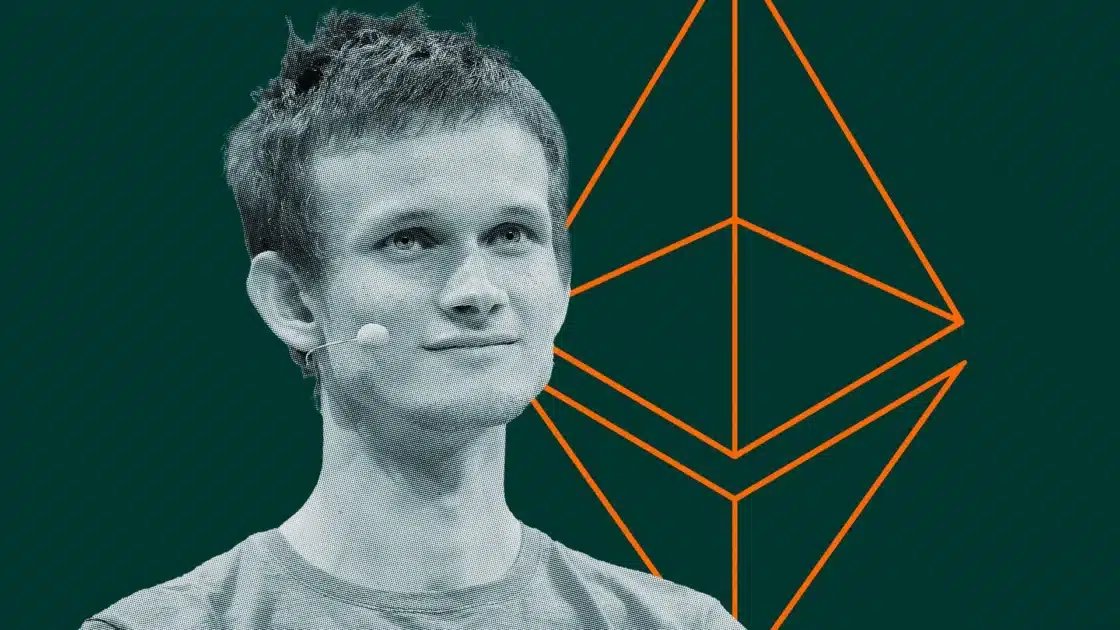
Vitalik Buterin Reveals Ethereum’s Bold Plan to Stay Quantum-Secure and Simple!

Vitalik Buterin Reveals Ethereum’s Bold Plan to Stay Quantum-Secure and Simple!

Buterin unveils Ethereum’s strategy to tackle quantum security challenges ahead. Ethereum focuses on simplifying architecture while boosting security for users. Ethereum’s market stability grows as Buterin’s roadmap gains investor confidence. Ethereum founder Vitalik Buterin has unveiled his long-term vision for the blockchain, focusing on making Ethereum quantum-secure while maintaining its simplicity for users. Buterin presented his roadmap at the Japanese Developer Conference, and splits the future of Ethereum into three phases: short-term, mid-term, and long-term. Buterin’s most ambitious goal for Ethereum is to safeguard the blockchain against the threats posed by quantum computing.  The danger of such future developments is that the future may call into question the cryptographic security of most blockchain systems, and Ethereum will be able to remain ahead thanks to more sophisticated mathematical techniques to ensure the safety and integrity of its protocols. Buterin is committed to ensuring that Ethereum evolves in a way that not only meets today’s security challenges but also prepares for the unknowns of tomorrow. Also Read: Ethereum Giant The Ether Machine Takes Major Step Toward Going Public! However, in spite of such high ambitions, Buterin insisted that Ethereum also needed to simplify its architecture. An important aspect of this vision is to remove unnecessary complexity and make Ethereum more accessible and maintainable without losing its strong security capabilities. Security and simplicity form the core of Buterin’s strategy, as they guarantee that the users of Ethereum experience both security and smooth processes. Focus on Speed and Efficiency in the Short-Term In the short term, Buterin aims to enhance Ethereum’s transaction efficiency, a crucial step toward improving scalability and reducing transaction costs. These advantages are attributed to the fact that, within the mid-term, Ethereum is planning to enhance the speed of transactions in layer-2 networks. According to Butterin, this is part of Ethereum’s expansion, particularly because there is still more need to use blockchain technology to date. The other important aspect of Ethereum’s development is the layer-2 solutions. Buterin supports an approach in which the layer-2 networks are dependent on layer-1 to perform some essential tasks like data security, proof, and censorship resistance. This will enable the layer-2 systems of Ethereum to be concerned with verifying and sequencing transactions, which will improve the overall speed and efficiency of the network. Ethereum’s Market Stability Reflects Confidence in Long-Term Strategy Ethereum’s market performance has remained solid, with the cryptocurrency holding steady above $4,000. Currently priced at $4,492.15, Ethereum has experienced a slight 0.93% increase over the last 24 hours, while its trading volume surged by 8.72%, reaching $34.14 billion. These figures point to growing investor confidence in Ethereum’s long-term vision. The crypto community remains optimistic about Ethereum’s future, with many predicting the price could rise to $5,500 by mid-October. Buterin’s clear, forward-thinking strategy continues to build trust in Ethereum as one of the most secure and scalable blockchain platforms in the market. Also Read: Whales Dump 200 Million XRP in Just 2 Weeks – Is XRP’s Price on the Verge of Collapse? The post Vitalik Buterin Reveals Ethereum’s Bold Plan to Stay Quantum-Secure and Simple! appeared first on 36Crypto.
Share
Coinstats2025/09/18 01:22