

Cardano (ADA) Price Jumps Following LayerZero Integration Announcement
TLDR
- Cardano (ADA) confirms LayerZero integration, connecting to 160+ blockchains and over $80 billion in omnichain assets
- Charles Hoskinson announced USDCx stablecoin launch on Cardano with privacy features powered by zero-knowledge technology
- LayerZero brings Omnichain Fungible Token standard and Stargate bridge to Cardano ecosystem
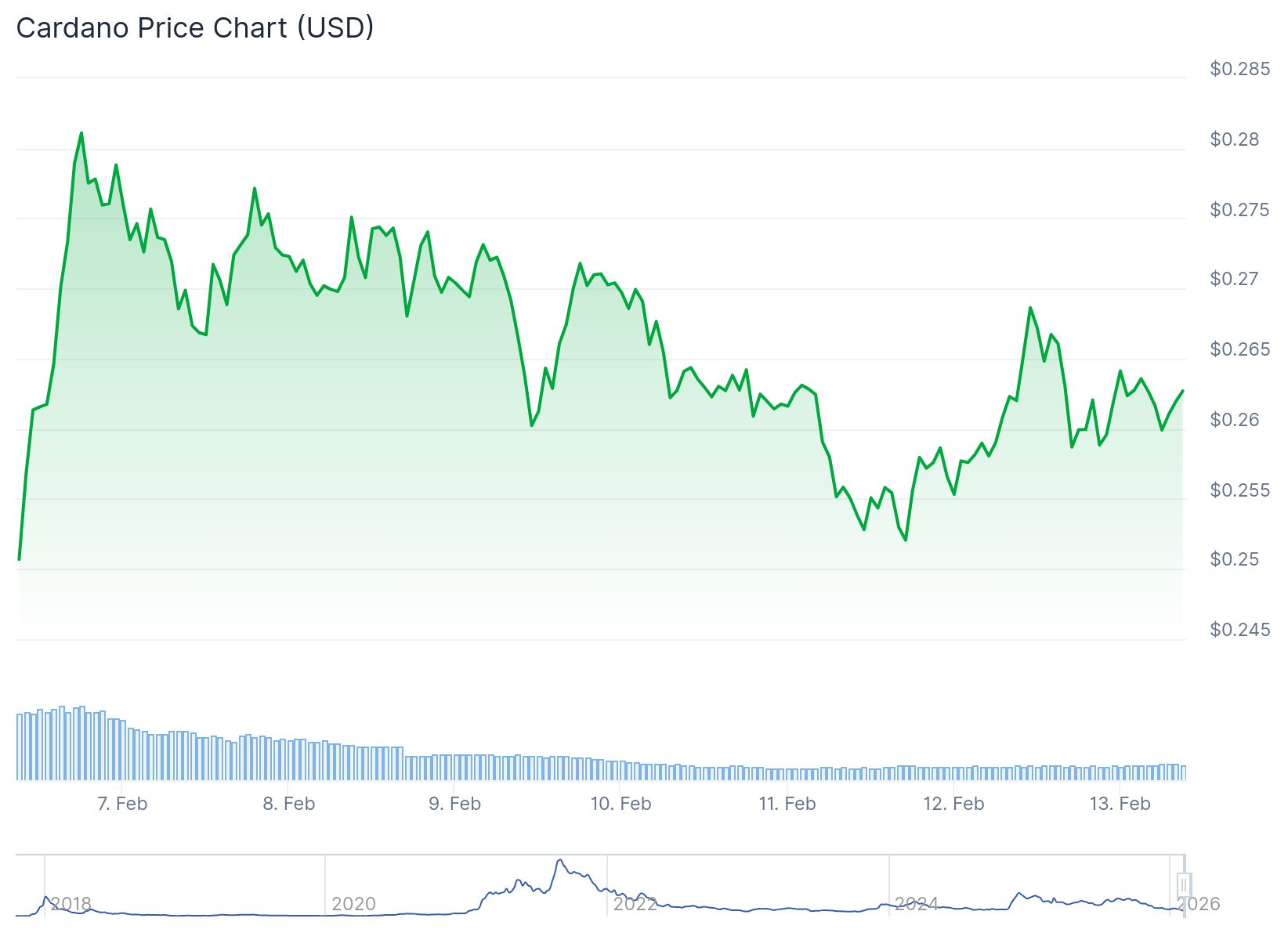
- ADA price increased 2.92% to $0.2630 following the announcement, with trading volume up 13.07%
- Integration approved by Cardano Steering Committee as part of Critical Cardano Integrations workstream
Charles Hoskinson confirmed an agreement to integrate LayerZero into Cardano during a keynote address at Consensus Hong Kong on Thursday. The Input Output CEO announced the deal alongside plans for new stablecoin infrastructure on the network.
 Cardano (ADA) Price
The integration will bring LayerZero protocol onto Cardano. LayerZero recently received investment from Citadel Securities. The agreement forms part of the Critical Cardano Integrations workstream approved by the ecosystem’s Steering Committee.
The committee includes IO Group, the Cardano Foundation, Emurgo, the Midnight Foundation, and Intersect. Intersect will act as the administrator as deployment begins. Technical implementation is now underway.
LayerZero operates as an omnichain messaging protocol. It connects more than 160 blockchains and has facilitated over $200 billion in cross-chain volume. The protocol enables access to over 400 tokens and more than $80 billion in omnichain assets.
Once deployed, LayerZero Endpoint smart contracts will connect Cardano to networks including Ethereum, Solana, Base, Arbitrum, BNB Chain, and Sui. This expands Cardano’s reach across major blockchain ecosystems.
LayerZero Brings New Token Standards to Cardano
The integration introduces the Omnichain Fungible Token standard to Cardano. This model maintains a unified token supply across chains through a burn-and-mint mechanism. Tokens move between networks without traditional wrapping or intermediary liquidity pools.
LayerZero also brings Stargate to Cardano. Stargate ranks among the largest cross-chain bridges by volume. It supports unified liquidity transfers across connected networks.
Developers will gain access to the OApp standard. This structure already supports protocols such as Ethena, PayPal, BitGo, and Stargate. Cardano builders can design applications that send messages and move assets across LayerZero-connected chains.
Hoskinson announced plans to launch USDCx on Cardano with broad wallet and exchange support. He described the rollout as institution-ready and compliant. The stablecoin infrastructure will feature privacy enhancements powered by zero-knowledge technology.
The USDCx launch coincides with Midnight’s mainnet rollout. Midnight’s mainnet is expected to go live by the end of March. Together, these steps expand Cardano’s privacy-focused ecosystem.
ADA Price Movement and Market Response
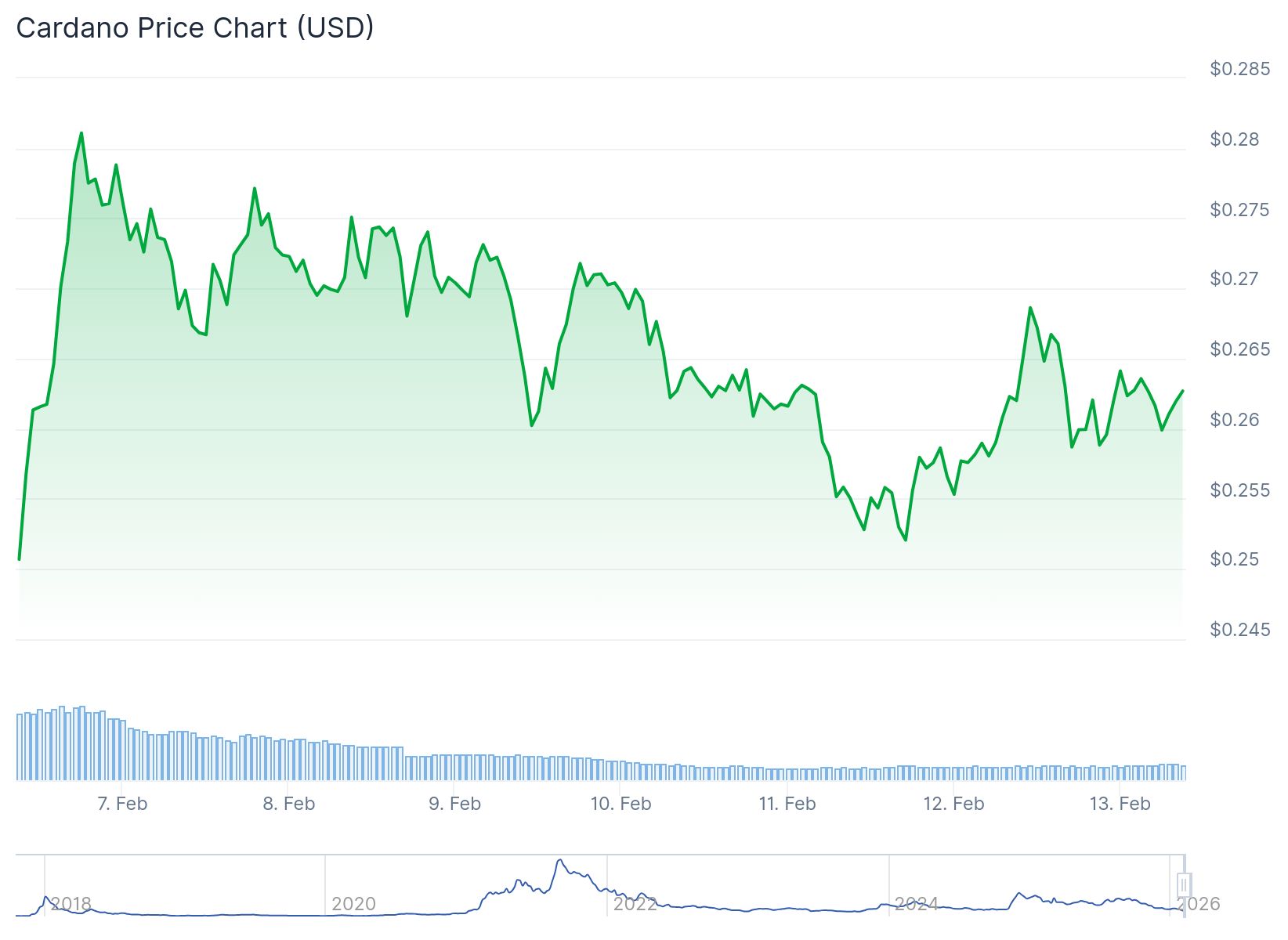
ADA traded at $0.2630, up 2.92% over 24 hours following the announcement. Market capitalization rose 2.91% to $9.48 billion. Trading volume increased 13.07% to $439.97 million.
 Cardano (ADA) Price
Intraday charts showed volatility at the beginning of the session. ADA fell towards $0.252 before rebounding above $0.260 and consolidating. The price remains sensitive to ecosystem announcements.
LayerZero’s infrastructure already supports more than 61% of issued stablecoins. Cardano gains direct exposure to established stablecoin liquidity channels through this integration. The integration also enables access to Bitcoin-backed assets and tokenized real-world assets supported under the OFT framework.
During his speech, Hoskinson discussed current market sentiment. He described the industry as having low sentiment but called the downturn micro in nature with a bullish macro outlook.
The Midnight project has processed nearly 1 million transactions in testnet. The NIGHT token has already launched with a market cap above $800 million. Midnight has secured partnerships with Telegram and Google.
ADA has lost around 80% from its 2024 high. Recent momentum could shift if development milestones are met. ADA gained attention after its CME futures listing in the U.S., offering exposure to institutional investors.
The post Cardano (ADA) Price Jumps Following LayerZero Integration Announcement appeared first on CoinCentral.
You May Also Like

WLFI Expands Into Forex With World Swap Launch

BUZZ HPC Closes Acquisition of 7.2 MW Toronto Site to Build Data Centre for Sovereign AI Infrastructure

BitGo wins BaFIN nod to offer regulated crypto trading in Europe
BitGo’s move creates further competition in a burgeoning European crypto market that is expected to generate $26 billion revenue this year, according to one estimate. BitGo, a digital asset infrastructure company with more than $100 billion in assets under custody, has received an extension of its license from Germany’s Federal Financial Supervisory Authority (BaFin), enabling it to offer crypto services to European investors. The company said its local subsidiary, BitGo Europe, can now provide custody, staking, transfer, and trading services. Institutional clients will also have access to an over-the-counter (OTC) trading desk and multiple liquidity venues.The extension builds on BitGo’s previous Markets-in-Crypto-Assets (MiCA) license, also issued by BaFIN, and adds trading to the existing custody, transfer and staking services. BitGo acquired its initial MiCA license in May 2025, which allowed it to offer certain services to traditional institutions and crypto native companies in the European Union.Read more