Indiana Senate Committee Approves Bill Allowing Crypto in Retirement Plans

Highlights:
- Indiana advances House Bill 1042, which allows public employees to invest retirement funds in cryptocurrency.
- The bill offers self-directed brokerage accounts with oversight and consistent crypto rules across the state.
- Retirement crypto investments would be limited to ETFs, while stablecoin funds are not allowed.
On February 13, Indiana lawmakers took a step toward changing retirement savings by advancing House Bill 1042. The Senate committee approved it, so the bill now goes to the full Senate for debate and a vote. It would let public employees add cryptocurrency to state-managed retirement programs, a big change for workers who rely on these funds.
Indiana Retirement Plans May Soon Offer Crypto Options
The Indiana Public Retirement System manages about $55 billion in assets. If the bill becomes law, starting July 1, employees can open self-directed brokerage accounts. Through these accounts, they could put part of their retirement money into approved crypto products. The state will not buy crypto directly. Instead, employees will decide if they want crypto in their portfolios, based on their risk tolerance and investment goals.
House Bill 1042 creates a system that lets retirement plans offer crypto investments through brokerage accounts. This setup gives workers the choice to pick their investments while keeping oversight in place. The bill also makes rules the same across Indiana, stopping local governments from blocking legal crypto payments, custody services, or mining. Lawmakers say this will reduce confusion and give everyone equal access.
In December, State Representative Kyle Pierce, a Republican from Anderson, filed this proposal. “Digital assets are quickly becoming part of everyday finances, and Indiana should be ready to engage in a smart, responsible way,” bill author Rep. Kyle Pierce, R-Anderson, said last month. “This bill gives Hoosiers more investment choices while establishing guardrails and helping us explore how blockchain and digital asset technology can benefit communities across our state.”
HB1042 Restricts Retirement Crypto to ETFs, Excludes Stablecoins
The bill limits which crypto funds can be used. Pension plans could invest in cryptocurrency exchange-traded funds, but stablecoin-focused funds are not allowed. This keeps retirement exposure tied to market-traded crypto instead of dollar-pegged tokens. Supporters say ETF-based access lets workers get regulated crypto exposure without the risks of holding tokens directly.
It is not the only state considering crypto investments in public retirement plans. New Hampshire, Texas, North Carolina, and Oklahoma are some other states that have proposed or advanced the concept of crypto investments in public retirement plans. Some of them are only considering the allocation of limited crypto investments in public retirement plans, while others are considering more investment options for the people holding the retirement accounts.
The Indiana bill shows lawmakers are trying to balance innovation with caution. By exempting stablecoin funds and concentrating on ETFs, they are attempting to provide access while reducing risks. Once the bill is approved by the full Senate, the Governor will sign the bill. This will enact the law and initiate its implementation in mid-2026.
The news comes as Bitcoin faces pressure, dropping 1.16% in the past 24 hours and trading near $66,948. Its market cap is $1.33 trillion, with $44.66 billion in daily trading. Over the past week, month, and year, Bitcoin has fallen 0.1%, 29%, and 30%, staying 47% below its all-time high of $126,198 from last October.
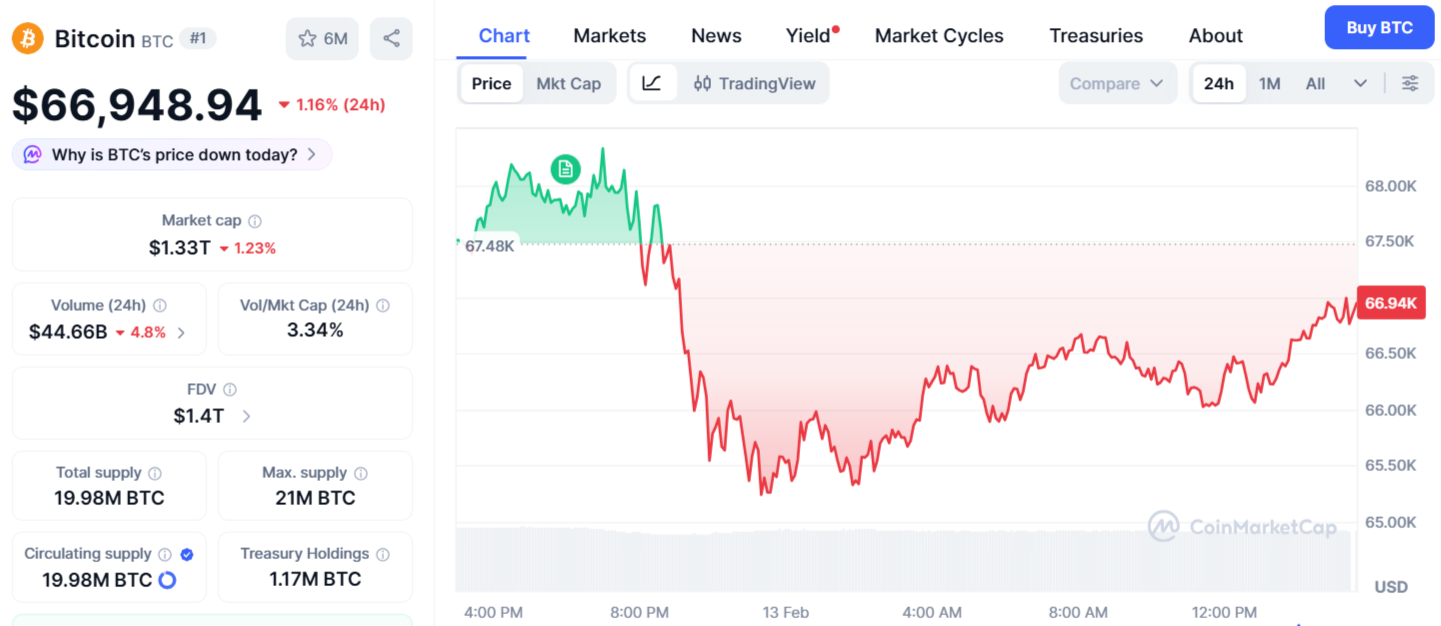 Source: CoinMarketCap
eToro Platform
Best Crypto Exchange
- Over 90 top cryptos to trade
- Regulated by top-tier entities
- User-friendly trading app
- 30+ million users
eToro is a multi-asset investment platform. The value of your investments may go up or down. Your capital is at risk. Don’t invest unless you’re prepared to lose all the money you invest. This is a high-risk investment, and you should not expect to be protected if something goes wrong.
You May Also Like

WLFI Expands Into Forex With World Swap Launch

Usdt stablecoin could challenge Bitcoin leadership