The post Retail rush into speculative ETFs may be flashing market warning appeared on BitcoinEthereumNews.com. There’s worry retail investor exuberance in the exchange-traded fund space is flashing a warning signal for markets. As individuals pour billions of dollars into some of the riskiest pockets of the exchange-traded fund market, some experts like ETF Action’s Mike Akins question whether the trend is a sign of markets overheating. “Product proliferation in the ETF market is at its all-time high right now,” the firm’s founding partner told CNBC’s “ETF Edge” this week. “We are seeing signs of all of those types of niche strategies, especially in the thematic and innovative space, starting to approach 2020, 2021 types of flows again, right at the top of the market.” Institutional investors make up roughly 64% of the overall ETF market, recent 13F filings compiled by ETF Action show. By contrast, they are largely absent from fast-growing categories like single-stock ETFs and leveraged or inverse strategies, making up approximately 9% and 10% of investors there, respectively. Nontraditional ETFs, which include inverse and leveraged funds, have raked in more than $60 billion year to date, ETF Action data shows as of Friday. According to Akins, the few institutions involved in these speculative strategies are largely there to provide liquidity rather than to allocate. “These strategies are incredibly volatile. They’re 99% owned by retail. There are no institutions allocating these strategies, but there’s billions of dollars coming into them,” he added. Yield-focused products, such as covered call ETFs tied to individual stocks, are particularly risky, Akin contends. While they may generate steady income when underlying shares are rising, the payouts can become unsustainable if the stocks falter. ‘It’s a train wreck’ “If you have a yield-covered strategy that’s paying out 100% income on an annual basis and the underlying doesn’t keep going up, it’s a train wreck,” he said. Retail appetite for these… The post Retail rush into speculative ETFs may be flashing market warning appeared on BitcoinEthereumNews.com. There’s worry retail investor exuberance in the exchange-traded fund space is flashing a warning signal for markets. As individuals pour billions of dollars into some of the riskiest pockets of the exchange-traded fund market, some experts like ETF Action’s Mike Akins question whether the trend is a sign of markets overheating. “Product proliferation in the ETF market is at its all-time high right now,” the firm’s founding partner told CNBC’s “ETF Edge” this week. “We are seeing signs of all of those types of niche strategies, especially in the thematic and innovative space, starting to approach 2020, 2021 types of flows again, right at the top of the market.” Institutional investors make up roughly 64% of the overall ETF market, recent 13F filings compiled by ETF Action show. By contrast, they are largely absent from fast-growing categories like single-stock ETFs and leveraged or inverse strategies, making up approximately 9% and 10% of investors there, respectively. Nontraditional ETFs, which include inverse and leveraged funds, have raked in more than $60 billion year to date, ETF Action data shows as of Friday. According to Akins, the few institutions involved in these speculative strategies are largely there to provide liquidity rather than to allocate. “These strategies are incredibly volatile. They’re 99% owned by retail. There are no institutions allocating these strategies, but there’s billions of dollars coming into them,” he added. Yield-focused products, such as covered call ETFs tied to individual stocks, are particularly risky, Akin contends. While they may generate steady income when underlying shares are rising, the payouts can become unsustainable if the stocks falter. ‘It’s a train wreck’ “If you have a yield-covered strategy that’s paying out 100% income on an annual basis and the underlying doesn’t keep going up, it’s a train wreck,” he said. Retail appetite for these…

Retail rush into speculative ETFs may be flashing market warning

There’s worry retail investor exuberance in the exchange-traded fund space is flashing a warning signal for markets.

As individuals pour billions of dollars into some of the riskiest pockets of the exchange-traded fund market, some experts like ETF Action’s Mike Akins question whether the trend is a sign of markets overheating.

“Product proliferation in the ETF market is at its all-time high right now,” the firm’s founding partner told CNBC’s “ETF Edge” this week. “We are seeing signs of all of those types of niche strategies, especially in the thematic and innovative space, starting to approach 2020, 2021 types of flows again, right at the top of the market.”

Institutional investors make up roughly 64% of the overall ETF market, recent 13F filings compiled by ETF Action show. By contrast, they are largely absent from fast-growing categories like single-stock ETFs and leveraged or inverse strategies, making up approximately 9% and 10% of investors there, respectively.

Nontraditional ETFs, which include inverse and leveraged funds, have raked in more than $60 billion year to date, ETF Action data shows as of Friday. According to Akins, the few institutions involved in these speculative strategies are largely there to provide liquidity rather than to allocate.

“These strategies are incredibly volatile. They’re 99% owned by retail. There are no institutions allocating these strategies, but there’s billions of dollars coming into them,” he added.

Yield-focused products, such as covered call ETFs tied to individual stocks, are particularly risky, Akin contends. While they may generate steady income when underlying shares are rising, the payouts can become unsustainable if the stocks falter.

‘It’s a train wreck’

“If you have a yield-covered strategy that’s paying out 100% income on an annual basis and the underlying doesn’t keep going up, it’s a train wreck,” he said.

Retail appetite for these funds harkens back to the pandemic-era surge in thematic ETFs including Ark Innovation (ARKK), which saw massive retail-driven inflows at the height of the bull market. The historical parallels should give investors pause, Akin says.

“When you start seeing the flows into those products take off, generally, that is a contrarian signal that we’re overheating across the market, and that’s been shown time and time again in terms of money flows chasing returns.”

Disclaimer

Source: https://www.cnbc.com/2025/08/23/retail-rush-into-speculative-etfs-may-be-flashing-market-warning.html

Market Opportunity
Threshold Logo
Threshold Price(T)
$0.007045
$0.007045$0.007045
+1.39%
USD
Threshold (T) Live Price Chart
Disclaimer: The articles reposted on this site are sourced from public platforms and are provided for informational purposes only. They do not necessarily reflect the views of MEXC. All rights remain with the original authors. If you believe any content infringes on third-party rights, please contact service@support.mexc.com for removal. MEXC makes no guarantees regarding the accuracy, completeness, or timeliness of the content and is not responsible for any actions taken based on the information provided. The content does not constitute financial, legal, or other professional advice, nor should it be considered a recommendation or endorsement by MEXC.
Tags:

You May Also Like

Ethereum unveils roadmap focusing on scaling, interoperability, and security at Japan Dev Conference

Ethereum unveils roadmap focusing on scaling, interoperability, and security at Japan Dev Conference

The post Ethereum unveils roadmap focusing on scaling, interoperability, and security at Japan Dev Conference appeared on BitcoinEthereumNews.com. Key Takeaways Ethereum’s new roadmap was presented by Vitalik Buterin at the Japan Dev Conference. Short-term priorities include Layer 1 scaling and raising gas limits to enhance transaction throughput. Vitalik Buterin presented Ethereum’s development roadmap at the Japan Dev Conference today, outlining the blockchain platform’s priorities across multiple timeframes. The short-term goals focus on scaling solutions and increasing Layer 1 gas limits to improve transaction capacity. Mid-term objectives target enhanced cross-Layer 2 interoperability and faster network responsiveness to create a more seamless user experience across different scaling solutions. The long-term vision emphasizes building a secure, simple, quantum-resistant, and formally verified minimalist Ethereum network. This approach aims to future-proof the platform against emerging technological threats while maintaining its core functionality. The roadmap presentation comes as Ethereum continues to compete with other blockchain platforms for market share in the smart contract and decentralized application space. Source: https://cryptobriefing.com/ethereum-roadmap-scaling-interoperability-security-japan/
Share
BitcoinEthereumNews2025/09/18 00:25
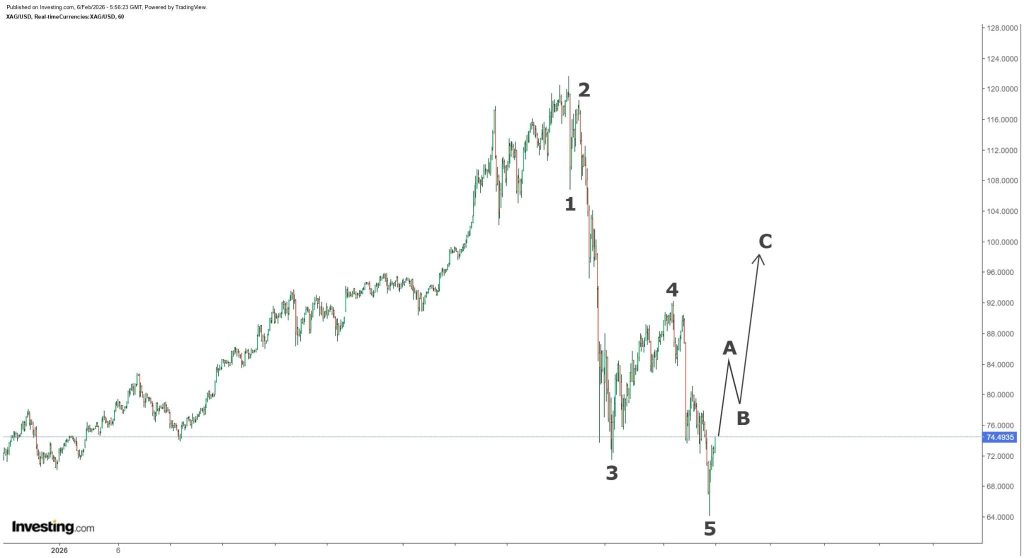
Silver Price Crash Is Over “For Real This Time,” Analyst Predicts a Surge Back Above $90

Silver Price Crash Is Over “For Real This Time,” Analyst Predicts a Surge Back Above $90

Silver has been taking a beating lately, and the Silver price hasn’t exactly been acting like a safe haven. After running up into the highs, the whole move reversed
Share
Captainaltcoin2026/02/07 03:15
Strategy, BitMine, Coinbase Shares Chart Major Rebound as Bitcoin Stabilizes

Strategy, BitMine, Coinbase Shares Chart Major Rebound as Bitcoin Stabilizes

The post Strategy, BitMine, Coinbase Shares Chart Major Rebound as Bitcoin Stabilizes appeared on BitcoinEthereumNews.com. In brief Strategy stock rose 18% to $
Share
BitcoinEthereumNews2026/02/07 02:49