The post the “million ETH” reactivates. And now? The impact of ETF flows and staking appeared on BitcoinEthereumNews.com. A purchase in ICO of about 310,000 dollars for 1,000,000 ETH, a wallet that remained dormant for years, and a recent reactivation linked to staking: the emblematic case of Ethereum’s early buyers returns to the center of the debate just as the flows related to ETF products are reshaping the institutional demand for the asset.  According to data collected from on-chain analysis updated as of September 5, 2025, movements exceeding 100,000 ETH from historical wallets are rare events and generate spikes of attention in spot and derivatives markets. On-chain analysts who monitor the markets observe that the conversion of large balances into staking tends to reduce surrounding liquidity and increase the informational value of such movements. In daily monitoring, intraday volume fluctuations of up to 20–30% have been detected on some centralized exchanges following alerts on dormant wallets. The on-chain dossier: from the ETH ICO to recent moves At the ICO of Ethereum (2014), a participant would have purchased 1M ETH for about $310,000, corresponding to a price of approximately $0.31 per token. Today, that allocation, assuming a unit price of ETH equal to $4,300 (reference estimate updated to September 5, 2025), would be equivalent to over 4.3 billion dollars. After a long period of inactivity, the wallet has been reported for new operations, including the staking of about 150,000 ETH, with a potential value in the order of hundreds of millions. It should be noted that the mere reappearance of such a balance tends to capture the attention of operators. To provide context: the reactivation of a large balance after years tends to impact market expectations more than the immediate supply, especially when the tokens are staked for validation, reducing the circulating liquidity in the short term. That said, the signaling effect can be significant even without spot movements.… The post the “million ETH” reactivates. And now? The impact of ETF flows and staking appeared on BitcoinEthereumNews.com. A purchase in ICO of about 310,000 dollars for 1,000,000 ETH, a wallet that remained dormant for years, and a recent reactivation linked to staking: the emblematic case of Ethereum’s early buyers returns to the center of the debate just as the flows related to ETF products are reshaping the institutional demand for the asset.  According to data collected from on-chain analysis updated as of September 5, 2025, movements exceeding 100,000 ETH from historical wallets are rare events and generate spikes of attention in spot and derivatives markets. On-chain analysts who monitor the markets observe that the conversion of large balances into staking tends to reduce surrounding liquidity and increase the informational value of such movements. In daily monitoring, intraday volume fluctuations of up to 20–30% have been detected on some centralized exchanges following alerts on dormant wallets. The on-chain dossier: from the ETH ICO to recent moves At the ICO of Ethereum (2014), a participant would have purchased 1M ETH for about $310,000, corresponding to a price of approximately $0.31 per token. Today, that allocation, assuming a unit price of ETH equal to $4,300 (reference estimate updated to September 5, 2025), would be equivalent to over 4.3 billion dollars. After a long period of inactivity, the wallet has been reported for new operations, including the staking of about 150,000 ETH, with a potential value in the order of hundreds of millions. It should be noted that the mere reappearance of such a balance tends to capture the attention of operators. To provide context: the reactivation of a large balance after years tends to impact market expectations more than the immediate supply, especially when the tokens are staked for validation, reducing the circulating liquidity in the short term. That said, the signaling effect can be significant even without spot movements.…

the “million ETH” reactivates. And now? The impact of ETF flows and staking

A purchase in ICO of about 310,000 dollars for 1,000,000 ETH, a wallet that remained dormant for years, and a recent reactivation linked to staking: the emblematic case of Ethereum’s early buyers returns to the center of the debate just as the flows related to ETF products are reshaping the institutional demand for the asset. 

According to data collected from on-chain analysis updated as of September 5, 2025, movements exceeding 100,000 ETH from historical wallets are rare events and generate spikes of attention in spot and derivatives markets. On-chain analysts who monitor the markets observe that the conversion of large balances into staking tends to reduce surrounding liquidity and increase the informational value of such movements. In daily monitoring, intraday volume fluctuations of up to 20–30% have been detected on some centralized exchanges following alerts on dormant wallets.

The on-chain dossier: from the ETH ICO to recent moves

At the ICO of Ethereum (2014), a participant would have purchased 1M ETH for about $310,000, corresponding to a price of approximately $0.31 per token. Today, that allocation, assuming a unit price of ETH equal to $4,300 (reference estimate updated to September 5, 2025), would be equivalent to over 4.3 billion dollars. After a long period of inactivity, the wallet has been reported for new operations, including the staking of about 150,000 ETH, with a potential value in the order of hundreds of millions. It should be noted that the mere reappearance of such a balance tends to capture the attention of operators.

To provide context: the reactivation of a large balance after years tends to impact market expectations more than the immediate supply, especially when the tokens are staked for validation, reducing the circulating liquidity in the short term. That said, the signaling effect can be significant even without spot movements.

Verification and tracking

  • On-chain: consult a block explorer like Etherscan to reconstruct the historical balance, movements, and interactions with staking contracts.
  • Identification: verify the wallet address and the TX related to deposits in the official staking contract, comparing dates and amounts.
  • Corroboration: cross-reference reports from independent on-chain analysts (e.g., reports and alerts on analytics platforms) and the public ICO records.

Ether ETF: how the flows enter the price

The flows towards listed products (ETF/ETP on Ether, both spot and futures, depending on the jurisdictions) are expanding the investor base. The most visible effect is the increase in demand “on a regulated channel,” which often reflects in the spreads, the bases between futures and spot, and the depth of the book. Indeed, such channels also impact the transmission of price information.

  • Net flows: the weekly reports from CoinShares provide a gauge of institutional participation in ETH.
  • Liquidity: the influx of capital into listed products tends to improve price formation, although it may amplify short-term movements during risk-on/risk-off phases.
  • Elasticity: the impact of flows on the price depends on the deep liquidity on the spot side; concentrated outflows can quickly reverse trends built over weeks.

In summary, constant and positive inflows support a supportive context for prices, while sequences of outflows or reversals in macro sentiment can generate marked volatility. However, sensitivity remains a function of market depth.

Staking, liquidity, and development: the structural pillars

Staking and Effective Supply

With the transition to proof-of-stake, the data on the share of ETH in staking is often discussed. While in the past reference was made to high percentages, as of September 5, 2025, the percentage of ETH locked in staking is around 11–12% of the total supply, influencing the price dynamics in the medium term due to the reduction of the liquid supply. The actual rewards generally range from 3–5% annually, varying based on participation, MEV, and network conditions. In this context, the time lock and the entry/exit cycles of validators matter.

Adoption by Developers

The ecosystem remains among the most active in the smart contract landscape. According to the Electric Capital Developer Report, Ethereum maintains a solid base of core developers and open-source “alumni,” supported by layer-2 solutions, rollups, and increasingly mature tools, which drive continuous innovations in areas such as DeFi, NFT, identity, and enterprise solutions. Yet, competition on costs and UX remains an open front.

Prices and Scenarios: Between Models and Reality

Market projections remain heterogeneous. Among the estimates cited by the sector, Standard Chartered has hypothesized, as reported by CoinDesk and Yahoo Finance, a target of $8,000 by the end of 2026 and a long-term “structural” range between $26,000–$35,000 for ETH. In general, these are trajectories conditioned by multiple variables.

The key risk factors and the quantitative context include:

  • High historical volatility: public estimates indicate annualized values often exceeding 70% during expansive cyclical phases.
  • Deep Drawdowns: ETH has experienced maximum declines exceeding 80% in past bear phases, as highlighted by long-term charts.
  • Regulation: updates on ETFs, MiCA in the EU and decisions by US authorities influence access and flows.
  • Upgrade of the protocol: optimizations at both the base level and on L2 solutions impact costs, scalability, and adoption.

Exposure Strategies with a Prudential Approach

  • Diversification by asset, instruments, and time horizon.
  • Use of platforms with reliable custody and clear regulatory compliance.
  • Exposure through regulated products (ETF/ETP) if available in your jurisdiction.
  • For staking: understand the mechanics of lock-up, variable rewards, slashing risks, and the reliability of the counterparty (carefully selected validators).
  • Ex ante definition of risk limits and rebalancing plan.
  • Constant monitoring of technical upgrades, fund flows, and the evolution of the regulatory framework.

What to Watch in the Coming Months

  • Trend of net flows on ETF/ETP and their correlation with the spot price.
  • Evolution of the ETH share in staking and the network rewards.
  • Progress of layer-2 solutions, variations in transaction costs, and usage metrics (TVL, volumes, active users).
  • Possible updates to the protocol and their impacts on scalability and UX.
  • Macroeconomic indicators: global liquidity, interest rates, and risk appetite.

Conclusions

The “million ETH case” demonstrates how time, conviction, and supply dynamics (staking) can amplify an initial investment. Today, the picture is completed with the push of flows towards regulated products and with a constantly evolving technical ecosystem. Opportunities and risks remain high: the interpretation of data—on-chain, market, and regulatory—is the compass for reading the next movements. Yet, discipline in reading the evidence remains central.

Methodological and Transparency Note

  • On-chain: the specific wallet address and the relevant TX are not reproduced here; it is necessary to confirm the details through public explorers (e.g., Etherscan) and independent analyses.
  • Valuations: the estimate “>4.3 billion $” is illustrative and based on a hypothetical price of $4,300/ETH updated as of September 5, 2025; for updated figures, use current spot data.
  • Additional sources: CoinShares (flows), Electric Capital (developers), Beaconcha.in (staking), CoinGecko/CoinMarketCap (price history). Links included in the text.

Source: https://en.cryptonomist.ch/2025/09/06/from-310000-to-over-4-3-billion-the-million-eth-reactivates-and-now-the-impact-of-etf-flows-and-staking/

Market Opportunity
Moonveil Logo
Moonveil Price(MORE)
$0.000599
$0.000599$0.000599
-1.54%
USD
Moonveil (MORE) Live Price Chart
Disclaimer: The articles reposted on this site are sourced from public platforms and are provided for informational purposes only. They do not necessarily reflect the views of MEXC. All rights remain with the original authors. If you believe any content infringes on third-party rights, please contact service@support.mexc.com for removal. MEXC makes no guarantees regarding the accuracy, completeness, or timeliness of the content and is not responsible for any actions taken based on the information provided. The content does not constitute financial, legal, or other professional advice, nor should it be considered a recommendation or endorsement by MEXC.

You May Also Like

Wormhole launches reserve tying protocol revenue to token

Wormhole launches reserve tying protocol revenue to token

The post Wormhole launches reserve tying protocol revenue to token appeared on BitcoinEthereumNews.com. Wormhole is changing how its W token works by creating a new reserve designed to hold value for the long term. Announced on Wednesday, the Wormhole Reserve will collect onchain and offchain revenues and other value generated across the protocol and its applications (including Portal) and accumulate them into W, locking the tokens within the reserve. The reserve is part of a broader update called W 2.0. Other changes include a 4% targeted base yield for tokenholders who stake and take part in governance. While staking rewards will vary, Wormhole said active users of ecosystem apps can earn boosted yields through features like Portal Earn. The team stressed that no new tokens are being minted; rewards come from existing supply and protocol revenues, keeping the cap fixed at 10 billion. Wormhole is also overhauling its token release schedule. Instead of releasing large amounts of W at once under the old “cliff” model, the network will shift to steady, bi-weekly unlocks starting October 3, 2025. The aim is to avoid sharp periods of selling pressure and create a more predictable environment for investors. Lockups for some groups, including validators and investors, will extend an additional six months, until October 2028. Core contributor tokens remain under longer contractual time locks. Wormhole launched in 2020 as a cross-chain bridge and now connects more than 40 blockchains. The W token powers governance and staking, with a capped supply of 10 billion. By redirecting fees and revenues into the new reserve, Wormhole is betting that its token can maintain value as demand for moving assets and data between chains grows. This is a developing story. This article was generated with the assistance of AI and reviewed by editor Jeffrey Albus before publication. Get the news in your inbox. Explore Blockworks newsletters: Source: https://blockworks.co/news/wormhole-launches-reserve
Share
BitcoinEthereumNews2025/09/18 01:55
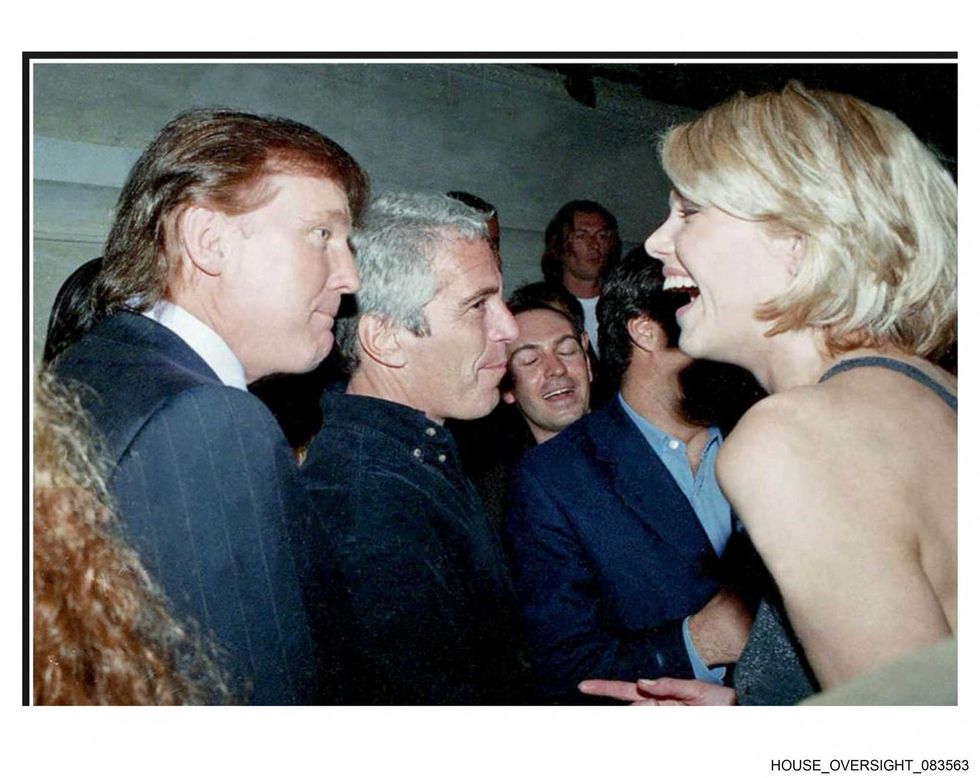
Trump's Epstein confession revealed in newly surfaced FBI files: 'Everyone knows'

Trump's Epstein confession revealed in newly surfaced FBI files: 'Everyone knows'

An explosive new report has yet again undercut President Donald Trump's repeated denials that he knew of the late sex offender Jeffrey Epstein's crimes against
Share
Rawstory2026/02/10 08:09
Trump sets a 15% growth target; Warsh's potential appointment as Fed head may increase pressure.

Trump sets a 15% growth target; Warsh's potential appointment as Fed head may increase pressure.

PANews reported on February 10th that, according to Jinshi, Trump stated that his nominee for Federal Reserve Chair could stimulate economic growth at a rate of
Share
PANews2026/02/10 08:28
