The post Trio-Tech’s Singapore subsidiary hit by ransomware attack, stolen data published online appeared on BitcoinEthereumNews.com. Trio-Tech International, aThe post Trio-Tech’s Singapore subsidiary hit by ransomware attack, stolen data published online appeared on BitcoinEthereumNews.com. Trio-Tech International, a

Trio-Tech’s Singapore subsidiary hit by ransomware attack, stolen data published online

For feedback or concerns regarding this content, please contact us at crypto.news@mexc.com

Trio-Tech International, a California-based semiconductor services firm, disclosed that its Singapore subsidiary was struck by a ransomware attack that encrypted files across its network and ultimately led to stolen data being published online.

The company filed the disclosure with the SEC after initially concluding the breach wasn’t material. That assessment changed once the threat actors started dumping data on the dark web.

From ‘no big deal’ to material cybersecurity event

The attack itself happened back on March 11. According to the SEC filing, the subsidiary detected the intrusion and immediately pulled its systems offline — the digital equivalent of yanking the power cord — to stop the encryption from spreading further.

Third-party cybersecurity professionals were brought in to investigate. Law enforcement was notified. The standard incident response playbook was followed, in other words.

Here’s where things got interesting. Trio-Tech initially told the SEC that the incident did not rise to the level of a material event. In English: management believed the damage was contained and wouldn’t meaningfully affect the company’s financial position or operations.

Then the attackers published stolen data from the subsidiary’s network. That changed the calculus entirely.

The pivot from “nothing to see here” to “actually, this might be significant” is a pattern that has played out repeatedly in corporate cyber disclosures. Companies often underestimate the blast radius of a breach until the extortion phase kicks in.

The Gunra connection

Trio-Tech didn’t name the threat actor in its SEC filing. But according to cybersecurity researchers, the Gunra ransomware group claimed responsibility by adding Trio-Tech to its Tor-based leak site — the dark web equivalent of a trophy wall.

Gunra is a relatively newer entrant in the ransomware ecosystem, though “newer” doesn’t mean “less dangerous.” The group follows the now-standard double extortion playbook: encrypt the victim’s files first, then threaten to publish stolen data if the ransom isn’t paid. The fact that data has already appeared online suggests either negotiations broke down or never happened at all.

The company says its investigation is ongoing and it hasn’t yet determined the full scope of compromised data. It’s also working with its cyber insurance provider to support remediation and any potential claims process.

Trio-Tech is currently notifying affected parties as required by applicable law, though specifics about who those parties are — customers, employees, partners — remain unclear.

What this means for investors and the semiconductor supply chain

Trio-Tech is not a household name. The company provides back-end semiconductor solutions including manufacturing, testing, and distribution services. It’s a small-cap player with a market capitalization hovering around $30M — a minnow compared to the TSMCs and ASMLs of the world.

But that’s precisely what makes this noteworthy. Ransomware groups have increasingly shifted their targeting toward smaller firms in critical supply chains. These companies often lack the cybersecurity budgets of their larger counterparts but sit on equally sensitive data — chip testing specifications, client manufacturing details, proprietary process information.

For Trio-Tech investors specifically, the financial exposure depends heavily on what data was compromised. Regulatory fines under Singapore’s Personal Data Protection Act can reach SGD 1M (roughly $740K), and remediation costs for breaches at this scale typically run into the low millions when you factor in forensics, legal counsel, notification requirements, and system hardening.

The cyber insurance angle is worth watching. Whether Trio-Tech’s policy covers the full remediation cost — and whether the insurer disputes any portion of the claim — could meaningfully impact the company’s near-term financials given its relatively modest size.

The broader takeaway for the semiconductor sector is that supply chain cybersecurity remains a glaring vulnerability. Every chip that reaches your phone or car passes through dozens of smaller firms like Trio-Tech. Each one represents a potential entry point for threat actors.

Bottom line: Trio-Tech’s breach follows a familiar and uncomfortable script — initial downplay, followed by escalation once stolen data surfaces publicly. For a small-cap firm in a critical supply chain, the financial and reputational fallout could linger well beyond the investigation itself. The Gunra group’s involvement suggests the attackers knew exactly what they were doing, even if their target wasn’t exactly a Fortune 500 name.

Disclosure: This article was edited by Estefano Gomez. For more information on how we create and review content, see our Editorial Policy.

Source: https://cryptobriefing.com/trio-tech-singapore-ransomware-attack/
Market Opportunity
OrdinalsBot Logo
OrdinalsBot Price(TRIO)
$0.01647
$0.01647$0.01647
0.00%
USD
OrdinalsBot (TRIO) Live Price Chart
Disclaimer: The articles reposted on this site are sourced from public platforms and are provided for informational purposes only. They do not necessarily reflect the views of MEXC. All rights remain with the original authors. If you believe any content infringes on third-party rights, please contact crypto.news@mexc.com for removal. MEXC makes no guarantees regarding the accuracy, completeness, or timeliness of the content and is not responsible for any actions taken based on the information provided. The content does not constitute financial, legal, or other professional advice, nor should it be considered a recommendation or endorsement by MEXC.

You May Also Like

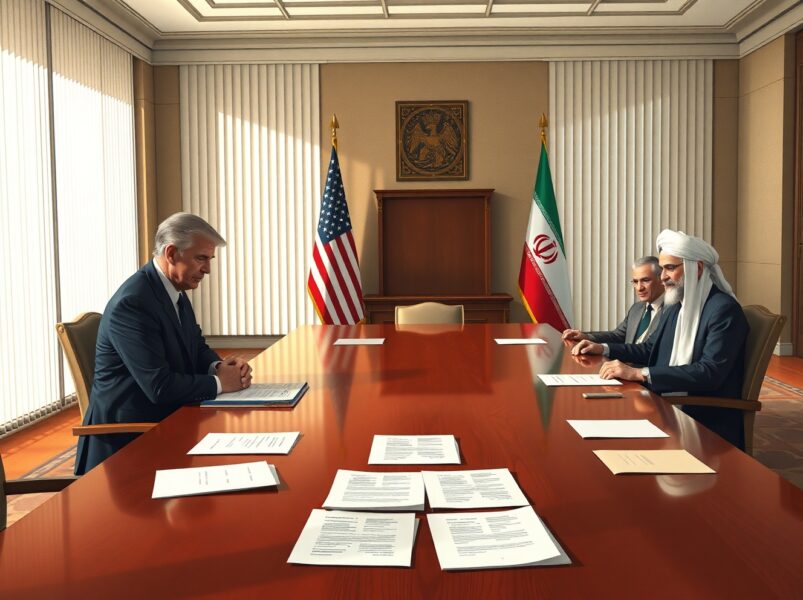
Trump’s Critical Warning: US Engages Iran’s New Regime in High-Stakes Talks, Threatens Strikes if Diplomacy Fails

Trump’s Critical Warning: US Engages Iran’s New Regime in High-Stakes Talks, Threatens Strikes if Diplomacy Fails

BitcoinWorld Trump’s Critical Warning: US Engages Iran’s New Regime in High-Stakes Talks, Threatens Strikes if Diplomacy Fails WASHINGTON, D.C. — March 15, 2025
Share
bitcoinworld2026/03/30 23:05
CME to launch Solana and XRP futures options on October 13, 2025

CME to launch Solana and XRP futures options on October 13, 2025

The post CME to launch Solana and XRP futures options on October 13, 2025 appeared on BitcoinEthereumNews.com. Key Takeaways CME Group will launch futures options for Solana (SOL) and XRP. The launch date is set for October 13, 2025. CME Group will launch futures options for Solana and XRP on October 13, 2025. The Chicago-based derivatives exchange will add the new crypto derivatives products to its existing digital asset offerings. The launch will provide institutional and retail traders with additional tools to hedge positions and speculate on price movements for both digital assets. The futures options will be based on CME’s existing Solana and XRP futures contracts. Trading will be conducted through CME Globex, the exchange’s electronic trading platform. Source: https://cryptobriefing.com/cme-solana-xrp-futures-options-launch-2025/
Share
BitcoinEthereumNews2025/09/18 01:07
If you put $1,000 in Intel at the start of 2025, here’s your return now

If you put $1,000 in Intel at the start of 2025, here’s your return now

The post If you put $1,000 in Intel at the start of 2025, here’s your return now appeared on BitcoinEthereumNews.com. Intel (NASDAQ: INTC) and Nvidia (NASDAQ: NVDA) announced a new partnership on Thursday, September 18, working on several generations of custom data center and computing chips designed to boost performance in hyperscale, enterprise, and consumer applications. As part of the collaboration, Nvidia, the undisputed leader of the semiconductor sector, will also invest $5 billion in Intel by purchasing its common stock at a price of $23.28 per share. Following the news, Intel stock jumped more than 30% in pre-market trading, while Nvidia saw a 3% uptick, a welcome change following weeks of shaky performance and controversies regarding its Chinese sales. Trading at $31.34 at the time of writing, INTC shares are up 54.99% year-to-date (YTD). INTC YTD stock price. Source: Google Accordingly, a $1,000 investment in the tech company at the start of the year would now be worth $1,549.90, giving you a return of $549.90. ‘The next era of computing’ The move follows a wave of fresh backing for the struggling Intel, including a nearly $9 billion U.S. government purchase of a 10% stake just weeks ago and a $2 billion investment from Japan’s SoftBank. As such, the deal has the potential to put Intel back into the game after years of trying to catch up not just with Nvidia but also AMD (NASDAQ: AMD) and Broadcom (NASDAQ: AVGO). “This historic collaboration tightly couples NVIDIA’s AI and accelerated computing stack with Intel’s CPUs and the vast x86 ecosystem — a fusion of two world-class platforms. Together, we will expand our ecosystems and lay the foundation for the next era of computing,” wrote Nvidia founder and chief executive officer (CEO), Jensen Huang.  However, the U.S. government’s direct involvement suggests that more is at stake than simply propping up Intel, as it likely reflects a broader concern about keeping America competitive…
Share
BitcoinEthereumNews2025/09/18 22:47

