ECB’s Critical Warning: Prolonged Conflict Forces Monetary Policy Response
BitcoinWorld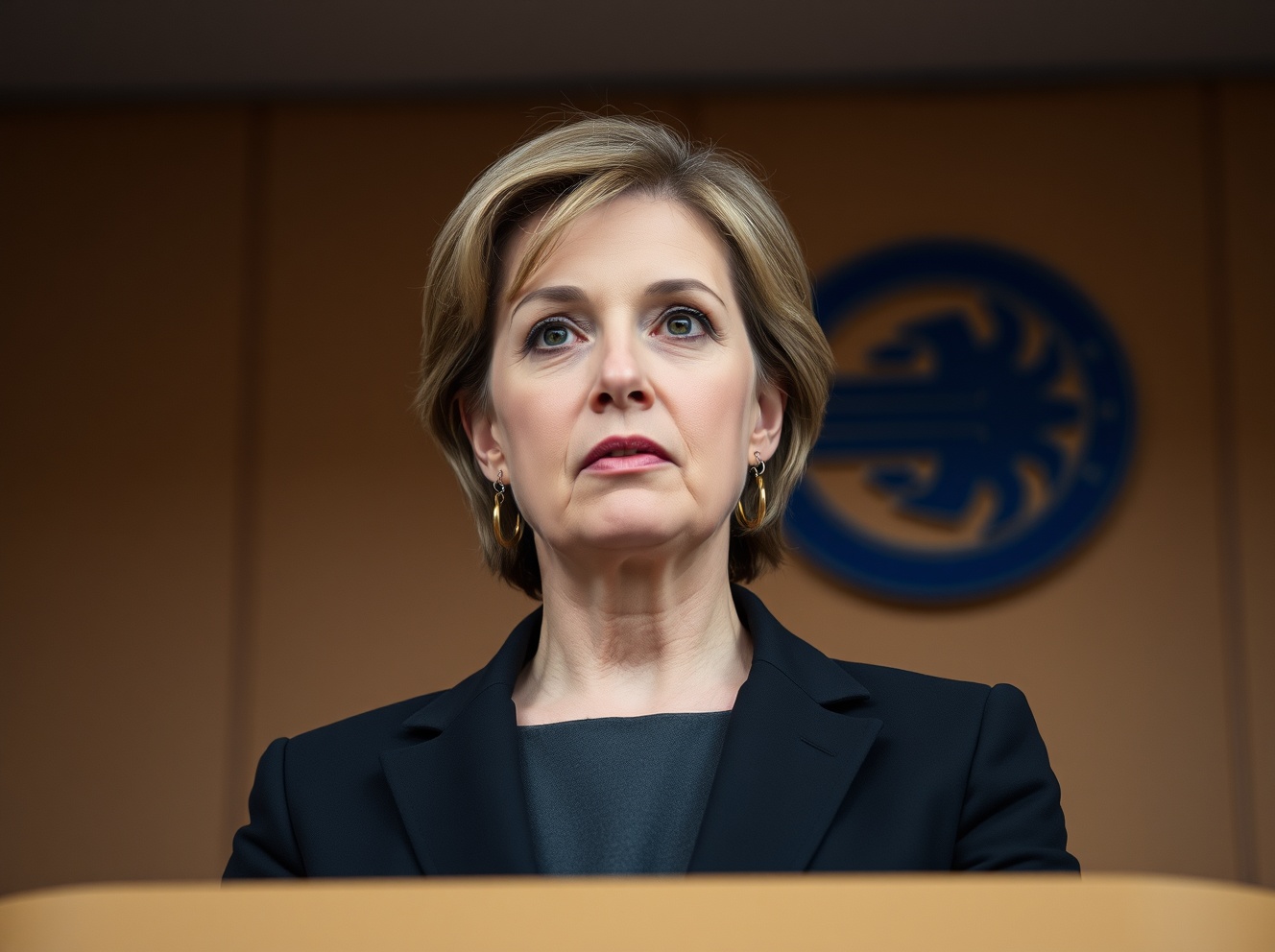
ECB’s Critical Warning: Prolonged Conflict Forces Monetary Policy Response
FRANKFURT, March 2025 – European Central Bank Executive Board member Isabel Schnabel delivered a stark warning today that the prolonged geopolitical conflict continues to reshape monetary policy considerations across the Eurozone. The ECB’s critical assessment suggests that extended warfare directly influences inflation dynamics and financial stability, potentially forcing unprecedented policy responses from Europe’s central banking authority.
ECB’s Monetary Policy Faces Unprecedented Pressure
The European Central Bank maintains its primary mandate of price stability, but external geopolitical factors increasingly challenge this objective. Recent statements from ECB officials reveal growing concern about secondary effects from prolonged conflict. These effects include persistent energy price volatility, disrupted supply chains, and shifting inflation expectations among consumers and businesses. Consequently, monetary policymakers must now consider variables beyond traditional economic indicators.
Historical data shows that central banks typically respond to supply shocks differently than demand shocks. However, the current situation presents a complex hybrid scenario. Energy markets demonstrate particular sensitivity to conflict developments, with natural gas and oil prices exhibiting heightened volatility. This volatility transmits directly to consumer prices through multiple channels, including transportation costs and manufacturing inputs.
War’s Economic Impact on Inflation Dynamics
The conflict’s duration directly correlates with inflationary pressures across multiple sectors. Food prices have increased significantly due to disrupted agricultural exports from conflict regions. Industrial production faces constraints from scarce raw materials and components. Furthermore, security concerns have elevated insurance and shipping costs for international trade. These factors collectively push inflation above the ECB’s 2% medium-term target.
Recent inflation data reveals concerning trends:
- Energy inflation: Remains elevated at 8.2% year-over-year
- Food price increases: Average 6.7% across the Eurozone
- Core inflation persistence: Services inflation at 4.1% indicates broadening price pressures
- Wage growth acceleration: Negotiated wages rising at 4.5% annually
Expert Analysis of Policy Trade-offs
Monetary policy experts emphasize the delicate balance facing the ECB. Professor Klaus Schmidt of the European Institute for Monetary Economics explains, “Central banks must distinguish between temporary price spikes and embedded inflation expectations. The longer conflict persists, the more likely temporary shocks become permanent features of the price landscape.” This analysis suggests that delayed policy responses risk allowing inflation expectations to become unanchored.
The transmission mechanism of monetary policy operates with considerable lags, typically 12-18 months for full effect. Therefore, policymakers must make decisions based on forward-looking assessments rather than current data alone. The ECB’s latest macroeconomic projections incorporate multiple conflict scenarios, ranging from rapid resolution to prolonged stalemate. Each scenario carries distinct implications for interest rate paths and balance sheet policies.
Central Bank Strategy in Geopolitical Uncertainty
The ECB’s strategic framework acknowledges that monetary policy cannot address supply-side constraints directly. However, policymakers can prevent secondary effects from amplifying initial shocks. Communication strategy becomes particularly crucial during periods of uncertainty. Clear guidance about policy intentions helps anchor market expectations and reduces unnecessary volatility.
Recent ECB communications emphasize several key principles:
- Data dependence: Decisions will follow careful analysis of incoming information
- Meeting-by-meeting approach: No pre-commitment to specific policy paths
- Risk management: Balancing inflation risks against growth concerns
- Optionality preservation: Maintaining flexibility to respond to changing circumstances
Financial markets closely monitor these communications for signals about future policy direction. Yield curves reflect expectations about both the terminal policy rate and the duration of restrictive monetary conditions. Market-implied probabilities suggest increasing expectation of policy responses if conflict-related pressures persist beyond current projections.
Comparative International Responses
Other major central banks face similar challenges from geopolitical tensions. The Federal Reserve has acknowledged global conflict as a factor in its policy deliberations, though domestic conditions remain primary drivers. The Bank of England confronts particularly acute energy price pressures due to specific trade patterns. Meanwhile, emerging market central banks often face more immediate currency and capital flow pressures from global risk aversion.
The table below illustrates different central bank approaches:
| Central Bank | Primary Concern | Policy Emphasis |
|---|---|---|
| European Central Bank | Energy-driven inflation | Gradual normalization |
| Federal Reserve | Labor market tightness | Restrictive maintenance |
| Bank of England | Wage-price spiral | Aggressive tightening |
| Swiss National Bank | Currency appreciation | FX intervention |
Financial Stability Considerations
Beyond inflation control, the ECB must consider financial stability implications. Prolonged conflict increases credit risk for exposed sectors, including energy-intensive industries and geographically concentrated businesses. Banking sector resilience becomes paramount as non-performing loans may increase. The ECB’s supervisory function therefore complements its monetary policy role during periods of geopolitical stress.
Market functioning represents another concern. Sudden shifts in risk sentiment can impair liquidity in critical markets, including government bonds and currency derivatives. The ECB maintains various tools to address market dysfunction, including collateral framework adjustments and targeted lending operations. These instruments provide backstops against disorderly market conditions.
Conclusion
The ECB’s monetary policy faces mounting pressure from prolonged geopolitical conflict. As Isabel Schnabel’s warning indicates, the duration of warfare directly influences the necessity and timing of policy responses. The European Central Bank must navigate complex trade-offs between inflation control and economic support while maintaining financial stability. Future decisions will depend critically on conflict evolution and its economic transmission mechanisms. Policymakers emphasize data-dependent approaches while preparing contingency plans for various scenarios. The coming months will test the ECB’s framework amid unprecedented challenges to its price stability mandate.
FAQs
Q1: What specific policy responses might the ECB consider?
The ECB could adjust interest rates, modify its balance sheet policies through asset purchase programs, employ targeted longer-term refinancing operations, or adjust collateral requirements. The specific response would depend on the nature and persistence of economic impacts.
Q2: How does prolonged conflict affect inflation differently than short-term disruption?
Short-term disruptions typically cause temporary price spikes that reverse once supply normalizes. Prolonged conflict can embed higher inflation expectations, trigger wage-price spirals, cause permanent supply chain reconfiguration, and lead to sustained risk premiums in energy and commodity markets.
Q3: What economic indicators is the ECB monitoring most closely?
The ECB focuses on core inflation measures, wage growth data, inflation expectations from surveys and market-based measures, energy price developments, supply chain pressure indices, and credit conditions across Eurozone economies.
Q4: How do ECB policies affect ordinary Eurozone citizens?
ECB policies influence mortgage rates, savings returns, business loan costs, and ultimately price stability. Restrictive policies may slow economic growth and increase unemployment in the short term while combating inflation that erodes purchasing power.
Q5: What historical precedents exist for monetary policy during extended conflicts?
Historical examples include Federal Reserve policies during Vietnam and Middle East conflicts, though current circumstances differ significantly due to globalization, financial market complexity, and the ECB’s specific mandate structure. Each conflict presents unique economic transmission channels.
This post ECB’s Critical Warning: Prolonged Conflict Forces Monetary Policy Response first appeared on BitcoinWorld.
You May Also Like

Zoomex Launches Earning Initiative as Inflation Drives Shift Toward Capital Efficiency in Crypto Markets

NYSE parent ICE completes new $600M investment in Polymarket