The post China’s Ban on Nvidia Chips for State Firms Sends Stock Tumbling appeared on BitcoinEthereumNews.com. Cyberspace Administration of China (CAC) has instructed big companies to stop purchasing and cancel existing orders for Nvidia’s RTX Pro 6000D chip The ban is part of China’s ongoing effort to reduce dependency on US-made AI hardware, especially after restrictive US export rules After the news, Nvidia shares dropped in premarket trading by about 1.5% Cyberspace Administration of China (CAC) has instructed big companies like Alibaba and ByteDance to stop purchasing and cancel existing orders for Nvidia’s RTX Pro 6000D chip. The ban is part of China’s ongoing effort to reduce dependency on US-made AI hardware, especially after restrictive US export rules. The RTX Pro 6000D was tailored for China to comply with some export rules, but now the regulator says even that chip is off-limits. After the news, Nvidia shares dropped in premarket trading (around 1.5%), reflecting investors’ concerns about reduced demand in one of the biggest markets. This isn’t the first time China has done something like this. For instance, in August, the country urged firms not to use Nvidia’s H20 chip due to potential security issues and the need to comply with international export control regulations. Meanwhile, Alibaba and Baidu have begun using domestically produced AI chips more heavily, which shows that China is seriously investing in building its own chip-making capacity. Additionally, a few days ago, Chinese regulators opened an antitrust review into Nvidia’s Mellanox acquisition, suggesting the company may have broken some of the promises it made to get the 2020 deal passed. From AI to blockchain and the possible effects of China’s ban The banning of Nvidia chips represents a rather notable escalation in the technological rivalry between the United States and China. Beyond tariffs or export bans, China is now proactively telling its firms to avoid even “compliant” US chips and instead shift… The post China’s Ban on Nvidia Chips for State Firms Sends Stock Tumbling appeared on BitcoinEthereumNews.com. Cyberspace Administration of China (CAC) has instructed big companies to stop purchasing and cancel existing orders for Nvidia’s RTX Pro 6000D chip The ban is part of China’s ongoing effort to reduce dependency on US-made AI hardware, especially after restrictive US export rules After the news, Nvidia shares dropped in premarket trading by about 1.5% Cyberspace Administration of China (CAC) has instructed big companies like Alibaba and ByteDance to stop purchasing and cancel existing orders for Nvidia’s RTX Pro 6000D chip. The ban is part of China’s ongoing effort to reduce dependency on US-made AI hardware, especially after restrictive US export rules. The RTX Pro 6000D was tailored for China to comply with some export rules, but now the regulator says even that chip is off-limits. After the news, Nvidia shares dropped in premarket trading (around 1.5%), reflecting investors’ concerns about reduced demand in one of the biggest markets. This isn’t the first time China has done something like this. For instance, in August, the country urged firms not to use Nvidia’s H20 chip due to potential security issues and the need to comply with international export control regulations. Meanwhile, Alibaba and Baidu have begun using domestically produced AI chips more heavily, which shows that China is seriously investing in building its own chip-making capacity. Additionally, a few days ago, Chinese regulators opened an antitrust review into Nvidia’s Mellanox acquisition, suggesting the company may have broken some of the promises it made to get the 2020 deal passed. From AI to blockchain and the possible effects of China’s ban The banning of Nvidia chips represents a rather notable escalation in the technological rivalry between the United States and China. Beyond tariffs or export bans, China is now proactively telling its firms to avoid even “compliant” US chips and instead shift…

China’s Ban on Nvidia Chips for State Firms Sends Stock Tumbling

2025/09/18 07:46
  • Cyberspace Administration of China (CAC) has instructed big companies to stop purchasing and cancel existing orders for Nvidia’s RTX Pro 6000D chip
  • The ban is part of China’s ongoing effort to reduce dependency on US-made AI hardware, especially after restrictive US export rules
  • After the news, Nvidia shares dropped in premarket trading by about 1.5%

Cyberspace Administration of China (CAC) has instructed big companies like Alibaba and ByteDance to stop purchasing and cancel existing orders for Nvidia’s RTX Pro 6000D chip.

The ban is part of China’s ongoing effort to reduce dependency on US-made AI hardware, especially after restrictive US export rules. The RTX Pro 6000D was tailored for China to comply with some export rules, but now the regulator says even that chip is off-limits.

After the news, Nvidia shares dropped in premarket trading (around 1.5%), reflecting investors’ concerns about reduced demand in one of the biggest markets.

This isn’t the first time China has done something like this. For instance, in August, the country urged firms not to use Nvidia’s H20 chip due to potential security issues and the need to comply with international export control regulations.

Meanwhile, Alibaba and Baidu have begun using domestically produced AI chips more heavily, which shows that China is seriously investing in building its own chip-making capacity.

Additionally, a few days ago, Chinese regulators opened an antitrust review into Nvidia’s Mellanox acquisition, suggesting the company may have broken some of the promises it made to get the 2020 deal passed.

From AI to blockchain and the possible effects of China’s ban

The banning of Nvidia chips represents a rather notable escalation in the technological rivalry between the United States and China. Beyond tariffs or export bans, China is now proactively telling its firms to avoid even “compliant” US chips and instead shift toward local solutions.

For Nvidia, this could mean losing market share in China at a time when global demand for AI chips is climbing.

As for the crypto industry, some crypto and blockchain projects depend on high-end GPUs for proof-of-work mining, ZK proof generation, or AI used in smart contracts. Reduced access to Nvidia hardware in China might drive more mining and node operations either to local GPU providers or outside China.

Related: Beijing Blocks State-Owned Firms From Stablecoin Businesses in Hong Kong

The push toward hardware decentralization, driven by China’s development of its domestic AI and GPU semiconductor industry (including firms such as Huawei, Baidu, and Cambricon), may lead to a more fragmented global supply landscape. Cryptocurrency infrastructure that depends on international GPU supply chains could experience disruptions or be compelled to adjust.

Also, crypto and blockchain companies with a huge reliance on Nvidia may see effects on their financial standing. At the same time, growing competition in the AI chip sector could redirect investment toward local hardware development, which may also influence innovation within AI-integrated crypto initiatives.

Related: Chinese Firms Eye RMB Stablecoins for Projects, Boosting the Use of Digital RMB

Disclaimer: The information presented in this article is for informational and educational purposes only. The article does not constitute financial advice or advice of any kind. Coin Edition is not responsible for any losses incurred as a result of the utilization of content, products, or services mentioned. Readers are advised to exercise caution before taking any action related to the company.

Source: https://coinedition.com/chinas-ban-on-nvidia-chips-for-state-firms-sends-stock-tumbling-premarket/
Piyasa Fırsatı
LETSTOP Logosu
LETSTOP Fiyatı(STOP)
$0.01652
$0.01652$0.01652
-5.16%
USD
LETSTOP (STOP) Canlı Fiyat Grafiği
Sorumluluk Reddi: Bu sitede yeniden yayınlanan makaleler, halka açık platformlardan alınmıştır ve yalnızca bilgilendirme amaçlıdır. MEXC'nin görüşlerini yansıtmayabilir. Tüm hakları telif sahiplerine aittir. Herhangi bir içeriğin üçüncü taraf haklarını ihlal ettiğini düşünüyorsanız, kaldırılması için lütfen service@support.mexc.com ile iletişime geçin. MEXC, içeriğin doğruluğu, eksiksizliği veya güncelliği konusunda hiçbir garanti vermez ve sağlanan bilgilere dayalı olarak alınan herhangi bir eylemden sorumlu değildir. İçerik, finansal, yasal veya diğer profesyonel tavsiye niteliğinde değildir ve MEXC tarafından bir tavsiye veya onay olarak değerlendirilmemelidir.

Ayrıca Şunları da Beğenebilirsiniz

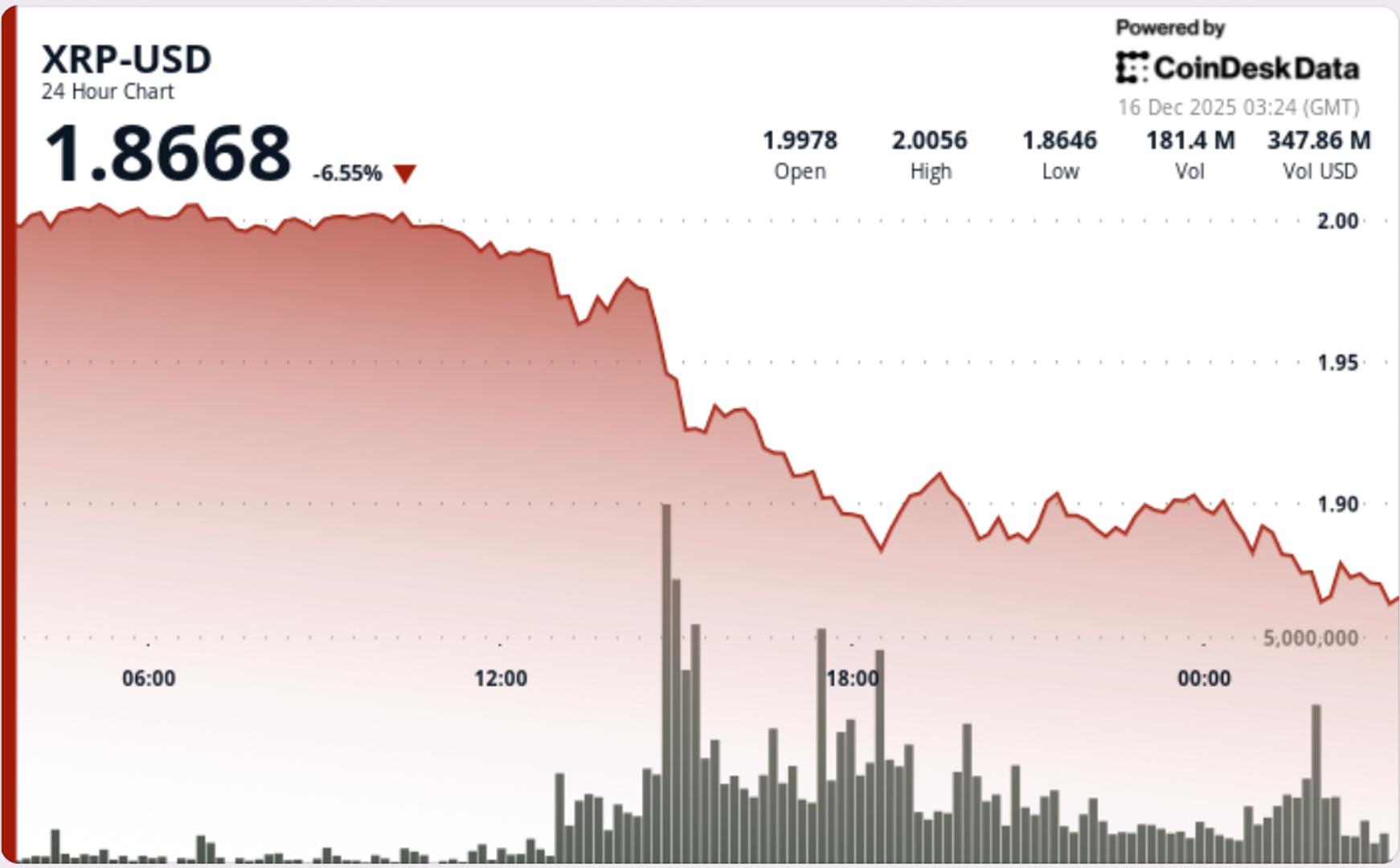
XRP price weakens at critical level, raising risk of deeper pullback

XRP price weakens at critical level, raising risk of deeper pullback

Markets Share Share this article
Copy linkX (Twitter)LinkedInFacebookEmail
XRP price weakens at critical level, raising
Paylaş
Coindesk2025/12/16 11:34
Warsaw Stock Exchange Launches Poland's First Bitcoin ETF

Warsaw Stock Exchange Launches Poland's First Bitcoin ETF

PANews reported on September 19th that according to Cryptobriefing, the Warsaw Stock Exchange has launched Poland's first Bitcoin ETF, marking a significant step forward in the adoption of cryptocurrencies in Eastern Europe. The ETF allows Polish investors to gain exposure to Bitcoin through standard brokerage accounts.
Paylaş
PANews2025/09/19 08:52
Slate Milk Raises $23 Million Series B Round To Bolster Protein Drink’s Rapid Growth

Slate Milk Raises $23 Million Series B Round To Bolster Protein Drink’s Rapid Growth

The post Slate Milk Raises $23 Million Series B Round To Bolster Protein Drink’s Rapid Growth appeared on BitcoinEthereumNews.com. Slate Classic Chocolate milk shake Slate A new slate of functional beverages is about to dominate the ready-to-drink shelf, ushering in a more modern era of easily incorporating more protein in our diets. Today, Slate Milk cofounders Manny Lubin and Josh Belinsky reveal the brand has raised a $23 million Series B funding round. Led by Foundership, a new fund by Yasso frozen greek yogurt cofounders Drew Harrington and Amanda Klane, the money will allow Slate to continue its momentum towards ubiquity as it hits 100,000 points of distribution across 20,000 stores nationwide by the end of 2025. Slate also reveals that it is rolling out several line extensions including a 20 gram protein Strawberry milk at Sprouts Farmers Market, a 30 gram protein Cookies & Cream milk at Target, and a 30 gram protein Salted Caramel flavor at Walmart and Albertsons banner stores. New “Ultra” 42 gram protein options in Chocolate, Vanilla and Salted Caramel will also be available in retailers across the country. “Stores where we may have just had our ready-to-drink lattes, now we’re adding our shakes, and vice versa. We’re adding new partners and executing deeper with our existing partners,” Lubin tells me. The impressive growth is due to Slate’s early entry into the high-protein product space slightly before it caught mainstream attention–ready to execute immediately once consumers craved it most. Slate’s macronutrient ratios are practically unbeatable, largely due to the utilization of ultra-filtered milk. It’s a protein drink that writes a new script about who protein drinks are for. “We’re not sons of dairy farmers. We had no milk history,” Lubin says “We’re just a couple of dudes from the burbs of Boston who like chocolate milk.” Slate cofounder Manny Lubin Slate Another Clean Slate Slate’s brand has evolved significantly in just the past six…
Paylaş
BitcoinEthereumNews2025/09/19 03:08