TLDR Salesforce beat Q3 earnings with $3.25 per share versus $2.86 expected, though revenue of $10.26 billion narrowly missed the $10.27 billion consensus. Q4 revenue guidance of $11.13-$11.23 billion exceeded analyst expectations of $10.9 billion, signaling accelerating growth ahead. Agentforce AI platform generated over $500 million in annualized revenue, jumping 330% year-over-year with 9,500+ paid [...] The post Salesforce (CRM) Stock: Earnings Smash Estimates as AI Revenue Surges Past $500 Million appeared first on Blockonomi.TLDR Salesforce beat Q3 earnings with $3.25 per share versus $2.86 expected, though revenue of $10.26 billion narrowly missed the $10.27 billion consensus. Q4 revenue guidance of $11.13-$11.23 billion exceeded analyst expectations of $10.9 billion, signaling accelerating growth ahead. Agentforce AI platform generated over $500 million in annualized revenue, jumping 330% year-over-year with 9,500+ paid [...] The post Salesforce (CRM) Stock: Earnings Smash Estimates as AI Revenue Surges Past $500 Million appeared first on Blockonomi.

Salesforce (CRM) Stock: Earnings Smash Estimates as AI Revenue Surges Past $500 Million

2025/12/04 20:44

TLDR

  • Salesforce beat Q3 earnings with $3.25 per share versus $2.86 expected, though revenue of $10.26 billion narrowly missed the $10.27 billion consensus.
  • Q4 revenue guidance of $11.13-$11.23 billion exceeded analyst expectations of $10.9 billion, signaling accelerating growth ahead.
  • Agentforce AI platform generated over $500 million in annualized revenue, jumping 330% year-over-year with 9,500+ paid customer deals.
  • Operating margins expanded to 35.5% from 33.1% last year, demonstrating improved profitability despite revenue growth of just 8.6%.
  • Shares rose 2% after-hours but remain down 29% year-to-date, underperforming the Nasdaq’s 21% gain.

Salesforce reported fiscal third-quarter results that beat earnings expectations while revenue came in just below forecasts. The company posted adjusted earnings of $3.25 per share, crushing Wall Street’s estimate of $2.86.

Revenue reached $10.26 billion, slightly missing the $10.27 billion consensus. Despite the small revenue shortfall, the stock jumped 2% in after-hours trading on strong forward guidance.

Net income climbed to $2.09 billion from $1.53 billion in the year-ago quarter. Earnings per share rose to $2.19 from $1.58, boosted by a $263 million gain from strategic investments.


CRM Stock Card
Salesforce, Inc., CRM

The quarter ended October 31 showed revenue growth of 8.6% year-over-year. Free cash flow increased 22% to $2.18 billion, though it trailed StreetAccount’s $2.24 billion estimate.

Profit Margins Expand as Business Model Shifts

The real story lies in profitability gains. Salesforce’s adjusted operating profit margin hit 35.5%, well above the expected 34.1% and last year’s 33.1%.

CFO Robin Washington attributed part of the revenue timing to product mix shifts. Tableau saw higher cloud adoption than anticipated during the quarter.

On-premises revenue from Tableau and MuleSoft gets recognized immediately, while cloud services spread over time. This shift impacts quarterly comparisons but reflects long-term business model improvements.

The company has transformed from a high-growth story to a cash-generating machine. Free cash flow margin reached 33% in fiscal 2025, up from 20% in fiscal 2023.

Salesforce has deployed this cash through dividends and buybacks, shrinking the share count by 4.9%. Revenue growth has slowed from the 20%+ rates it maintained from 1999 to 2022.

Strong Q4 Outlook and AI Momentum

Salesforce issued Q4 revenue guidance of $11.13-$11.23 billion, topping analyst estimates of $10.9 billion. The forecast includes roughly 3 percentage points from the Informatica acquisition, which closed in November for about $8 billion.

Adjusted earnings per share should land between $3.02 and $3.04 for the current quarter. The guidance implies revenue growth of 11-12%, marking a potential acceleration from recent trends.

Washington noted the outlook factors in continued cloud migration for MuleSoft and Tableau, plus persistent weakness in marketing and commerce products.

Agentforce delivered the quarter’s standout performance. The AI platform for automating sales and customer service workflows generated over $500 million in annualized revenue.

That represents 330% growth from a year earlier. Salesforce has secured more than 9,500 paid Agentforce deals, up from over 6,000 in September.

The company acquired AI startups Regrello and Waii during the quarter. It also launched Agentforce tools for IT service management and announced a $60 billion revenue target for fiscal 2030.

Despite the earnings beat and AI traction, shares remain down 29% in 2025 through December 3. The Nasdaq has gained 21% over the same period as investors weigh concerns about AI potentially disrupting Salesforce’s core offerings.

The post Salesforce (CRM) Stock: Earnings Smash Estimates as AI Revenue Surges Past $500 Million appeared first on Blockonomi.

Sorumluluk Reddi: Bu sitede yeniden yayınlanan makaleler, halka açık platformlardan alınmıştır ve yalnızca bilgilendirme amaçlıdır. MEXC'nin görüşlerini yansıtmayabilir. Tüm hakları telif sahiplerine aittir. Herhangi bir içeriğin üçüncü taraf haklarını ihlal ettiğini düşünüyorsanız, kaldırılması için lütfen service@support.mexc.com ile iletişime geçin. MEXC, içeriğin doğruluğu, eksiksizliği veya güncelliği konusunda hiçbir garanti vermez ve sağlanan bilgilere dayalı olarak alınan herhangi bir eylemden sorumlu değildir. İçerik, finansal, yasal veya diğer profesyonel tavsiye niteliğinde değildir ve MEXC tarafından bir tavsiye veya onay olarak değerlendirilmemelidir.

Ayrıca Şunları da Beğenebilirsiniz

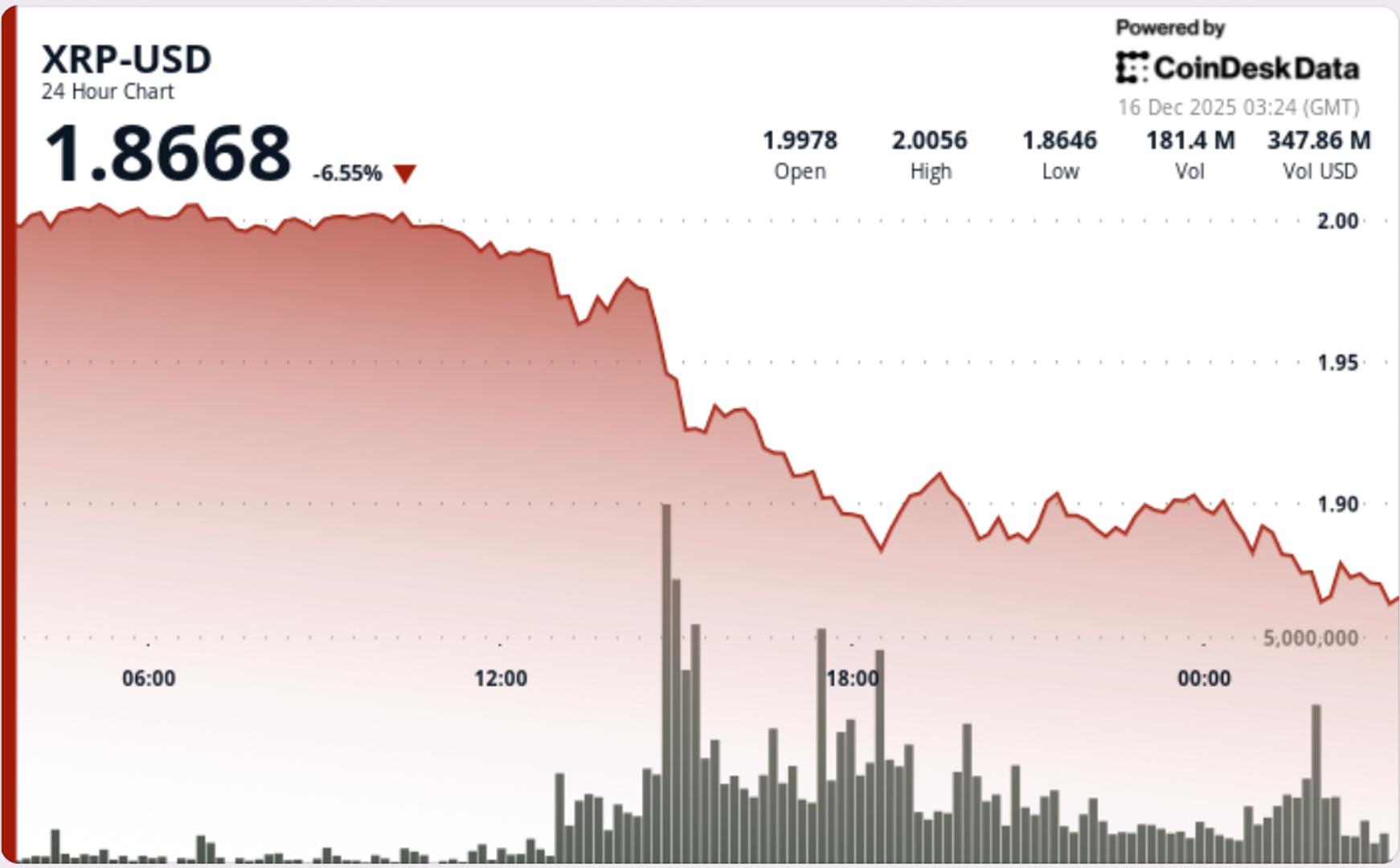
XRP price weakens at critical level, raising risk of deeper pullback

XRP price weakens at critical level, raising risk of deeper pullback

Markets Share Share this article
Copy linkX (Twitter)LinkedInFacebookEmail
XRP price weakens at critical level, raising
Paylaş
Coindesk2025/12/16 11:34
Wormhole Unveils W Token 2.0 with Enhanced Tokenomics

Wormhole Unveils W Token 2.0 with Enhanced Tokenomics

The post Wormhole Unveils W Token 2.0 with Enhanced Tokenomics appeared on BitcoinEthereumNews.com. Joerg Hiller Sep 17, 2025 13:57 Wormhole introduces W Token 2.0, featuring upgraded tokenomics, a strategic Wormhole Reserve, and a 4% base yield, aiming to optimize ecosystem growth and align incentives. Wormhole has announced a significant upgrade to its native token, unveiling the W Token 2.0. This upgrade introduces new tokenomics including the establishment of a Wormhole Reserve, a 4% base yield, and an optimized unlock schedule, marking a pivotal development in the ecosystem, according to Wormhole. The W Token Evolution Launched in October 2020, Wormhole’s W token has been central to the platform’s mission of creating a connected internet economy. The latest upgrade aims to enhance the token’s utility across more than 40 blockchains. With a capped supply of 10 billion, the W token supports governance, staking, and ecosystem growth, aligning incentives for network security and development. Introducing the Wormhole Reserve The Wormhole Reserve will accumulate value from both onchain and offchain activities, supporting the ecosystem’s expansion. As Wormhole adoption grows, the token will capture value through network expansions and ecosystem applications, ensuring that growth is directly reflected in the token’s value. 4% Base Yield and Governance Rewards Wormhole 2.0 introduces a 4% base yield for W holders who actively participate in governance. The yield, derived from existing token supplies and protocol revenues, is designed to incentivize active participation without inflating the token supply. Optimized Unlock Schedule Updating its token release schedule, Wormhole replaces annual cliffs with bi-weekly unlocks, starting October 3, 2025. This change aims to reduce market pressure and provide a more stable environment for investors and contributors. The bi-weekly schedule will span over 4.5 years, affecting categories such as Guardian Nodes and Community & Launch. Wormhole’s Future Vision With these upgrades, Wormhole aims to expand its role as…
Paylaş
BitcoinEthereumNews2025/09/18 15:48
Crucial US Stock Market Update: What Wednesday’s Mixed Close Reveals

Crucial US Stock Market Update: What Wednesday’s Mixed Close Reveals

BitcoinWorld Crucial US Stock Market Update: What Wednesday’s Mixed Close Reveals The financial world often keeps us on our toes, and Wednesday was no exception. Investors watched closely as the US stock market concluded the day with a mixed performance across its major indexes. This snapshot offers a crucial glimpse into current investor sentiment and economic undercurrents, prompting many to ask: what exactly happened? Understanding the Latest US Stock Market Movements On Wednesday, the closing bell brought a varied picture for the US stock market. While some indexes celebrated gains, others registered slight declines, creating a truly mixed bag for investors. The Dow Jones Industrial Average showed resilience, climbing by a notable 0.57%. This positive movement suggests strength in some of the larger, more established companies. Conversely, the S&P 500, a broader benchmark often seen as a barometer for the overall market, experienced a modest dip of 0.1%. The technology-heavy Nasdaq Composite also saw a slight retreat, sliding by 0.33%. This particular index often reflects investor sentiment towards growth stocks and the tech sector. These divergent outcomes highlight the complex dynamics currently at play within the American economy. It’s not simply a matter of “up” or “down” for the entire US stock market; rather, it’s a nuanced landscape where different sectors and company types are responding to unique pressures and opportunities. Why Did the US Stock Market See Mixed Results? When the US stock market delivers a mixed performance, it often points to a tug-of-war between various economic factors. Several elements could have contributed to Wednesday’s varied closings. For instance, positive corporate earnings reports from certain industries might have bolstered the Dow. At the same time, concerns over inflation, interest rate policies by the Federal Reserve, or even global economic uncertainties could have pressured growth stocks, affecting the S&P 500 and Nasdaq. Key considerations often include: Economic Data: Recent reports on employment, manufacturing, or consumer spending can sway market sentiment. Corporate Announcements: Strong or weak earnings forecasts from influential companies can significantly impact their respective sectors. Interest Rate Expectations: The prospect of higher or lower interest rates directly influences borrowing costs for businesses and consumer spending, affecting future profitability. Geopolitical Events: Global tensions or trade policies can introduce uncertainty, causing investors to become more cautious. Understanding these underlying drivers is crucial for anyone trying to make sense of daily market fluctuations in the US stock market. Navigating Volatility in the US Stock Market A mixed close, while not a dramatic downturn, serves as a reminder that market volatility is a constant companion for investors. For those involved in the US stock market, particularly individuals managing their portfolios, these days underscore the importance of a well-thought-out strategy. It’s important not to react impulsively to daily movements. Instead, consider these actionable insights: Diversification: Spreading investments across different sectors and asset classes can help mitigate risk when one area underperforms. Long-Term Perspective: Focusing on long-term financial goals rather than short-term gains can help weather daily market swings. Stay Informed: Keeping abreast of economic news and company fundamentals provides context for market behavior. Consult Experts: Financial advisors can offer personalized guidance based on individual risk tolerance and objectives. Even small movements in major indexes can signal shifts that require attention, guiding future investment decisions within the dynamic US stock market. What’s Next for the US Stock Market? Looking ahead, investors will be keenly watching for further economic indicators and corporate announcements to gauge the direction of the US stock market. Upcoming inflation data, statements from the Federal Reserve, and quarterly earnings reports will likely provide more clarity. The interplay of these factors will continue to shape investor confidence and, consequently, the performance of the Dow, S&P 500, and Nasdaq. Remaining informed and adaptive will be key to understanding the market’s trajectory. Conclusion: Wednesday’s mixed close in the US stock market highlights the intricate balance of forces influencing financial markets. While the Dow showed strength, the S&P 500 and Nasdaq experienced slight declines, reflecting a nuanced economic landscape. This reminds us that understanding the ‘why’ behind these movements is as important as the movements themselves. As always, a thoughtful, informed approach remains the best strategy for navigating the complexities of the market. Frequently Asked Questions (FAQs) Q1: What does a “mixed close” mean for the US stock market? A1: A mixed close indicates that while some major stock indexes advanced, others declined. It suggests that different sectors or types of companies within the US stock market are experiencing varying influences, rather than a uniform market movement. Q2: Which major indexes were affected on Wednesday? A2: On Wednesday, the Dow Jones Industrial Average gained 0.57%, while the S&P 500 edged down 0.1%, and the Nasdaq Composite slid 0.33%, illustrating the mixed performance across the US stock market. Q3: What factors contribute to a mixed stock market performance? A3: Mixed performances in the US stock market can be influenced by various factors, including specific corporate earnings, economic data releases, shifts in interest rate expectations, and broader geopolitical events that affect different market segments uniquely. Q4: How should investors react to mixed market signals? A4: Investors are generally advised to maintain a long-term perspective, diversify their portfolios, stay informed about economic news, and avoid impulsive decisions. Consulting a financial advisor can also provide personalized guidance for navigating the US stock market. Q5: What indicators should investors watch for future US stock market trends? A5: Key indicators to watch include upcoming inflation reports, statements from the Federal Reserve regarding monetary policy, and quarterly corporate earnings reports. These will offer insights into the future direction of the US stock market. Did you find this analysis of the US stock market helpful? Share this article with your network on social media to help others understand the nuances of current financial trends! To learn more about the latest stock market trends, explore our article on key developments shaping the US stock market‘s future performance. This post Crucial US Stock Market Update: What Wednesday’s Mixed Close Reveals first appeared on BitcoinWorld.
Paylaş
Coinstats2025/09/18 05:30