PROSTHETIC FEET. Silicon foot covers fitted with metal rods found in the prosthetic production unit in Mae Tao Clinic. A good prosthetic foot must absorb impactPROSTHETIC FEET. Silicon foot covers fitted with metal rods found in the prosthetic production unit in Mae Tao Clinic. A good prosthetic foot must absorb impact

Burmese war amputees get free 3D-printed prostheses, thanks to Thailand-based group

2025/12/27 10:00

MAE SOT, Thailand — The morning he was shot in January 2024, rebel soldier Pan Pan, 31, was on his way to collect a meal pack from the administrative members of his resistance group, the White Tiger Battalion.  

It was 7 am, early and quiet — too early, the Burmese frontline soldier thought, to bother putting on his helmet as he walked along the Asian Highway in Kawkareik township, Myanmar.

That was when the bullet from a sniper, ricocheting off a nearby brick, tore through the rebel soldier’s right ear and came straight out his nose.  

He does not remember much after that. 

To save him, doctors removed a large part of his skull and brain on the right side, leaving him blind in one eye and with a deep, soft indent in his head. He became extremely vulnerable — any accidental impact could prove fatal. 

For the past year and a half, Mr Pan lived cautiously. He slept only on his left side, constantly protecting his head from harm. 

But now, a free custom 3D-printed skull cover, provided by non-profit organization Burma Children Medical Fund (BCMF), offers Mr Pan an added layer of protection. 

Beneath his unassuming black cap, the cover — fastened with Velcro — sits snugly atop his sunken skull. 

“Now, I don’t need to worry that I might fall down again,” he said.  

Myanmar’s conflict is creating more survivors like Mr Pan, who are wounded and in need of long-term, specialized medical support.  

Rising casualties  

Widespread resistance spread across the country after the military forcefully seized power in 2021, with civilians taking up arms to resist the regime’s brutal campaign. The military retaliated with airstrikes and mass arrests, silencing opposing voices with deadly force.

At least 6,000 civilians have been killed by Myanmar’s military in the past four years, according to the Assistance Association for Political Prisoners, a Thailand-based rights group founded by Burmese former political prisoners living in exile.

In 2023, the country recorded the world’s highest number of new annual casualties, with more than 1,000 deaths caused by antipersonnel landmines and explosive remnants of war, the Landmine Monitor Report 2024 found. 

Survivors face devastating long-term consequences: burns, amputation, and other life-altering injuries. The need for specialized care and prosthetics has soared.

Printing out hope in plastic  
Clothing, T-Shirt, PersonFOUNDER. Mrs Kanchana Thornton, 59, founder of non-profit organization Burma Children Medical Fund pictured at the 3D printing lab. Anis Nabilah Azlee

To help satisfy this growing need for prostheses, BCMF is turning to unlikely solutions: plastic filaments and 3D printers. 

Founded in 2006 to help children along the Thai-Myanmar border access complex surgeries, BCMF later expanded its services to support other vulnerable groups. 

In 2019, founder Kanchana Thornton met a boy with a birth defect that disallowed him to walk on his own. He was too young to undergo the limb amputation needed to fit prosthetics. 

Determined to help, research led Mrs Thornton to a documentary about a man who 3D prints prosthetic limbs in his garage. 

Inspired, she contacted him, and he assured her 3D printing was easy —  requiring just a printer and free software to start.

With $10,000 AUD ($8,491 SGD) in seed funding from a donor, BCMF started its 3D printing lab with two printers.

It now has six machines and has produced free 3D-printed prostheses for 150 patients, some of whom have received multiple medical devices. 

In 2025, lead technician and former clinical nurse Aung Tin Tun helped produce 40 unique assistive devices for patients.  

These range from “simple” designs, which can be produced in four to six hours, like cosmetic hand prostheses, to functional limbs, which can comprise over 100 parts and take a full day to print.  

Most recently, Mr Tun produced an above-elbow arm prosthesis fitted with springs and silicone grip pads so patient Thar Ki, 28 can clutch the handlebar of his motorcycle.  

Three years ago, the former rebel soldier was testing handbombs when a grenade went off unexpectedly in his right hand.  

“After the accident, I felt like I couldn’t do anything anymore,” Mr Ki said.  

Now, with his 3D-printed arm, he can ride his motorcycle again.

At a typical hospital, Mr Ki would have had to fork out upwards of 40,000 baht ($1,605 SGD) for the prosthesis he received — a hefty price for migrants like him who are usually unemployed or paid under Thailand’s official minimum wage of 352 baht ($14.13 SGD). 

While the manufacturing cost of 3D printing a typical prosthetic arm averages around $100 USD ($129.36 SGD), BCMF covers the cost fully for migrants.

Mrs Thornton said that BCMF spends some $30,000 USD ($38,800 SGD) to keep the 3D printing lab operational every year.

Quality at no cost to patients 
prosthetic, 3d printAs main technician at BCMF’s lab, former nurse Aung Tin Tun, 35, oversees the design, printing, and testing of 3D-printed prostheses. Taryn Ng

Despite being free, the prostheses undergo rigorous testing before being handed to patients.  

Using open-source designs found online, Mr Tun’s team “remixes” and customizes  each part to a patient’s scanned measurements on a 3D printing software. 

Strings and springs are then tested for tension, to tailor the grip to natural hand movement. 

“If the design is not good, we won’t give it to the recipients,” said Mr Tun. 

While an artificial limb can be printed within 24 hours, the process is not always  smooth. Occasionally, printer nozzles jam, sudden power cuts halt production, and prototypes fail. Each error means wasted time, materials, and money. 

Still, he says it is worth it. 

“For me, it’s just a very small amount of contribution. But for the patients, it’s very  impactful in their daily lives,” he said. 

Learning on the job

Due to the niche nature of the work, most of the team at BCMF lack formal expertise in biomedical engineering or 3D printing. 

Mr Tun, for instance, had just three weeks of hands-on experience in a Thai hospital to learn about 3D printing. Traditional prosthetists typically train for years.

“Sometimes we’ll have an idea for a specific design but we cannot fully utilise the software,” he said. “I’m still learning every day.” 

To bridge this gap, BCMF brings in external experts and student interns from  Canada’s Queen’s University, who assist with software and production. 

The weight plastic limbs can’t bear 
Clothing, Footwear, ShoePROSTHETIC FEET. Silicon foot covers fitted with metal rods found in the prosthetic production unit in Mae Tao Clinic. A good prosthetic foot must absorb impact and adapt to uneven surfaces. Anis Nabilah Azlee

Dr Trevor Binedell, principal prosthetist at Singapore’s Tan Tock Seng Hospital, said that despite its promise, 3D-printed devices are generally less robust and adjustable than traditional options. 

Materials used, like thermoplastic polyurethane — commonly used in the production of shoe soles and hoses — are not durable enough to bear human weight, leaving BCMF currently unable to make prosthetic legs. 

Patients with lower limb amputations have to find their footing at a traditional prosthetic production unit in the famous Mae Tao Clinic (MTC) instead.  

Located just a short walk apart within MTC’s compound, the two departments frequently collaborate to better serve patients. Occasionally, BCMF will 3D print prosthetic parts at the other’s request.

The traditional cast-and-mould methods take technicians up to five days to make a leg, but the casting process provides patients with better fit and control, Dr Binedell said.  

“While (3D printing) technology is promising, it still needs time to mature before it can consistently meet the demands of lower-limb applications,” he added. 

Room for improvement

Although free prostheses have helped patients become more confident in daily life, comfort and weight remain a challenge.  

Mr Pan jokes that if he wears his skull cover for too long, he might start leaning to one side. 

As for Mr Ki, he only uses his prosthetic arm when riding his motorcycle as he feels it is too heavy for daily wear — he estimates it weighs about a kilogram.  

“I can’t really complain because it’s free and I appreciate the help,” he said. “But if they make a lighter one, I might use it more often.” 

3D printing technology may not be perfect — but for survivors in Mae Sot like Mr Ki and Mr Pan, it makes all the difference. – Rappler.com

Piyasa Fırsatı
GET Logosu
GET Fiyatı(GET)
$0.0016
$0.0016$0.0016
0.00%
USD
GET (GET) Canlı Fiyat Grafiği
Sorumluluk Reddi: Bu sitede yeniden yayınlanan makaleler, halka açık platformlardan alınmıştır ve yalnızca bilgilendirme amaçlıdır. MEXC'nin görüşlerini yansıtmayabilir. Tüm hakları telif sahiplerine aittir. Herhangi bir içeriğin üçüncü taraf haklarını ihlal ettiğini düşünüyorsanız, kaldırılması için lütfen service@support.mexc.com ile iletişime geçin. MEXC, içeriğin doğruluğu, eksiksizliği veya güncelliği konusunda hiçbir garanti vermez ve sağlanan bilgilere dayalı olarak alınan herhangi bir eylemden sorumlu değildir. İçerik, finansal, yasal veya diğer profesyonel tavsiye niteliğinde değildir ve MEXC tarafından bir tavsiye veya onay olarak değerlendirilmemelidir.

Ayrıca Şunları da Beğenebilirsiniz

Summarize Any Stock’s Earnings Call in Seconds Using FMP API
Summarize Any Stock’s Earnings Call in Seconds Using FMP API

Turn lengthy earnings call transcripts into one-page insights using the Financial Modeling Prep APIPhoto by Bich Tran Earnings calls are packed with insights. They tell you how a company performed, what management expects in the future, and what analysts are worried about. The challenge is that these transcripts often stretch across dozens of pages, making it tough to separate the key takeaways from the noise. With the right tools, you don’t need to spend hours reading every line. By combining the Financial Modeling Prep (FMP) API with Groq’s lightning-fast LLMs, you can transform any earnings call into a concise summary in seconds. The FMP API provides reliable access to complete transcripts, while Groq handles the heavy lifting of distilling them into clear, actionable highlights. In this article, we’ll build a Python workflow that brings these two together. You’ll see how to fetch transcripts for any stock, prepare the text, and instantly generate a one-page summary. Whether you’re tracking Apple, NVIDIA, or your favorite growth stock, the process works the same — fast, accurate, and ready whenever you are. Fetching Earnings Transcripts with FMP API The first step is to pull the raw transcript data. FMP makes this simple with dedicated endpoints for earnings calls. If you want the latest transcripts across the market, you can use the stable endpoint /stable/earning-call-transcript-latest. For a specific stock, the v3 endpoint lets you request transcripts by symbol, quarter, and year using the pattern: https://financialmodelingprep.com/api/v3/earning_call_transcript/{symbol}?quarter={q}&year={y}&apikey=YOUR_API_KEY here’s how you can fetch NVIDIA’s transcript for a given quarter: import requestsAPI_KEY = "your_api_key"symbol = "NVDA"quarter = 2year = 2024url = f"https://financialmodelingprep.com/api/v3/earning_call_transcript/{symbol}?quarter={quarter}&year={year}&apikey={API_KEY}"response = requests.get(url)data = response.json()# Inspect the keysprint(data.keys())# Access transcript contentif "content" in data[0]: transcript_text = data[0]["content"] print(transcript_text[:500]) # preview first 500 characters The response typically includes details like the company symbol, quarter, year, and the full transcript text. If you aren’t sure which quarter to query, the “latest transcripts” endpoint is the quickest way to always stay up to date. Cleaning and Preparing Transcript Data Raw transcripts from the API often include long paragraphs, speaker tags, and formatting artifacts. Before sending them to an LLM, it helps to organize the text into a cleaner structure. Most transcripts follow a pattern: prepared remarks from executives first, followed by a Q&A session with analysts. Separating these sections gives better control when prompting the model. In Python, you can parse the transcript and strip out unnecessary characters. A simple way is to split by markers such as “Operator” or “Question-and-Answer.” Once separated, you can create two blocks — Prepared Remarks and Q&A — that will later be summarized independently. This ensures the model handles each section within context and avoids missing important details. Here’s a small example of how you might start preparing the data: import re# Example: using the transcript_text we fetched earliertext = transcript_text# Remove extra spaces and line breaksclean_text = re.sub(r'\s+', ' ', text).strip()# Split sections (this is a heuristic; real-world transcripts vary slightly)if "Question-and-Answer" in clean_text: prepared, qna = clean_text.split("Question-and-Answer", 1)else: prepared, qna = clean_text, ""print("Prepared Remarks Preview:\n", prepared[:500])print("\nQ&A Preview:\n", qna[:500]) With the transcript cleaned and divided, you’re ready to feed it into Groq’s LLM. Chunking may be necessary if the text is very long. A good approach is to break it into segments of a few thousand tokens, summarize each part, and then merge the summaries in a final pass. Summarizing with Groq LLM Now that the transcript is clean and split into Prepared Remarks and Q&A, we’ll use Groq to generate a crisp one-pager. The idea is simple: summarize each section separately (for focus and accuracy), then synthesize a final brief. Prompt design (concise and factual) Use a short, repeatable template that pushes for neutral, investor-ready language: You are an equity research analyst. Summarize the following earnings call sectionfor {symbol} ({quarter} {year}). Be factual and concise.Return:1) TL;DR (3–5 bullets)2) Results vs. guidance (what improved/worsened)3) Forward outlook (specific statements)4) Risks / watch-outs5) Q&A takeaways (if present)Text:<<<{section_text}>>> Python: calling Groq and getting a clean summary Groq provides an OpenAI-compatible API. Set your GROQ_API_KEY and pick a fast, high-quality model (e.g., a Llama-3.1 70B variant). We’ll write a helper to summarize any text block, then run it for both sections and merge. import osimport textwrapimport requestsGROQ_API_KEY = os.environ.get("GROQ_API_KEY") or "your_groq_api_key"GROQ_BASE_URL = "https://api.groq.com/openai/v1" # OpenAI-compatibleMODEL = "llama-3.1-70b" # choose your preferred Groq modeldef call_groq(prompt, temperature=0.2, max_tokens=1200): url = f"{GROQ_BASE_URL}/chat/completions" headers = { "Authorization": f"Bearer {GROQ_API_KEY}", "Content-Type": "application/json", } payload = { "model": MODEL, "messages": [ {"role": "system", "content": "You are a precise, neutral equity research analyst."}, {"role": "user", "content": prompt}, ], "temperature": temperature, "max_tokens": max_tokens, } r = requests.post(url, headers=headers, json=payload, timeout=60) r.raise_for_status() return r.json()["choices"][0]["message"]["content"].strip()def build_prompt(section_text, symbol, quarter, year): template = """ You are an equity research analyst. Summarize the following earnings call section for {symbol} ({quarter} {year}). Be factual and concise. Return: 1) TL;DR (3–5 bullets) 2) Results vs. guidance (what improved/worsened) 3) Forward outlook (specific statements) 4) Risks / watch-outs 5) Q&A takeaways (if present) Text: <<< {section_text} >>> """ return textwrap.dedent(template).format( symbol=symbol, quarter=quarter, year=year, section_text=section_text )def summarize_section(section_text, symbol="NVDA", quarter="Q2", year="2024"): if not section_text or section_text.strip() == "": return "(No content found for this section.)" prompt = build_prompt(section_text, symbol, quarter, year) return call_groq(prompt)# Example usage with the cleaned splits from Section 3prepared_summary = summarize_section(prepared, symbol="NVDA", quarter="Q2", year="2024")qna_summary = summarize_section(qna, symbol="NVDA", quarter="Q2", year="2024")final_one_pager = f"""# {symbol} Earnings One-Pager — {quarter} {year}## Prepared Remarks — Key Points{prepared_summary}## Q&A Highlights{qna_summary}""".strip()print(final_one_pager[:1200]) # preview Tips that keep quality high: Keep temperature low (≈0.2) for factual tone. If a section is extremely long, chunk at ~5–8k tokens, summarize each chunk with the same prompt, then ask the model to merge chunk summaries into one section summary before producing the final one-pager. If you also fetched headline numbers (EPS/revenue, guidance) earlier, prepend them to the prompt as brief context to help the model anchor on the right outcomes. Building the End-to-End Pipeline At this point, we have all the building blocks: the FMP API to fetch transcripts, a cleaning step to structure the data, and Groq LLM to generate concise summaries. The final step is to connect everything into a single workflow that can take any ticker and return a one-page earnings call summary. The flow looks like this: Input a stock ticker (for example, NVDA). Use FMP to fetch the latest transcript. Clean and split the text into Prepared Remarks and Q&A. Send each section to Groq for summarization. Merge the outputs into a neatly formatted earnings one-pager. Here’s how it comes together in Python: def summarize_earnings_call(symbol, quarter, year, api_key, groq_key): # Step 1: Fetch transcript from FMP url = f"https://financialmodelingprep.com/api/v3/earning_call_transcript/{symbol}?quarter={quarter}&year={year}&apikey={api_key}" resp = requests.get(url) resp.raise_for_status() data = resp.json() if not data or "content" not in data[0]: return f"No transcript found for {symbol} {quarter} {year}" text = data[0]["content"] # Step 2: Clean and split clean_text = re.sub(r'\s+', ' ', text).strip() if "Question-and-Answer" in clean_text: prepared, qna = clean_text.split("Question-and-Answer", 1) else: prepared, qna = clean_text, "" # Step 3: Summarize with Groq prepared_summary = summarize_section(prepared, symbol, quarter, year) qna_summary = summarize_section(qna, symbol, quarter, year) # Step 4: Merge into final one-pager return f"""# {symbol} Earnings One-Pager — {quarter} {year}## Prepared Remarks{prepared_summary}## Q&A Highlights{qna_summary}""".strip()# Example runprint(summarize_earnings_call("NVDA", 2, 2024, API_KEY, GROQ_API_KEY)) With this setup, generating a summary becomes as simple as calling one function with a ticker and date. You can run it inside a notebook, integrate it into a research workflow, or even schedule it to trigger after each new earnings release. Free Stock Market API and Financial Statements API... Conclusion Earnings calls no longer need to feel overwhelming. With the Financial Modeling Prep API, you can instantly access any company’s transcript, and with Groq LLM, you can turn that raw text into a sharp, actionable summary in seconds. This pipeline saves hours of reading and ensures you never miss the key results, guidance, or risks hidden in lengthy remarks. Whether you track tech giants like NVIDIA or smaller growth stocks, the process is the same — fast, reliable, and powered by the flexibility of FMP’s data. Summarize Any Stock’s Earnings Call in Seconds Using FMP API was originally published in Coinmonks on Medium, where people are continuing the conversation by highlighting and responding to this story
Paylaş
Medium2025/09/18 14:40
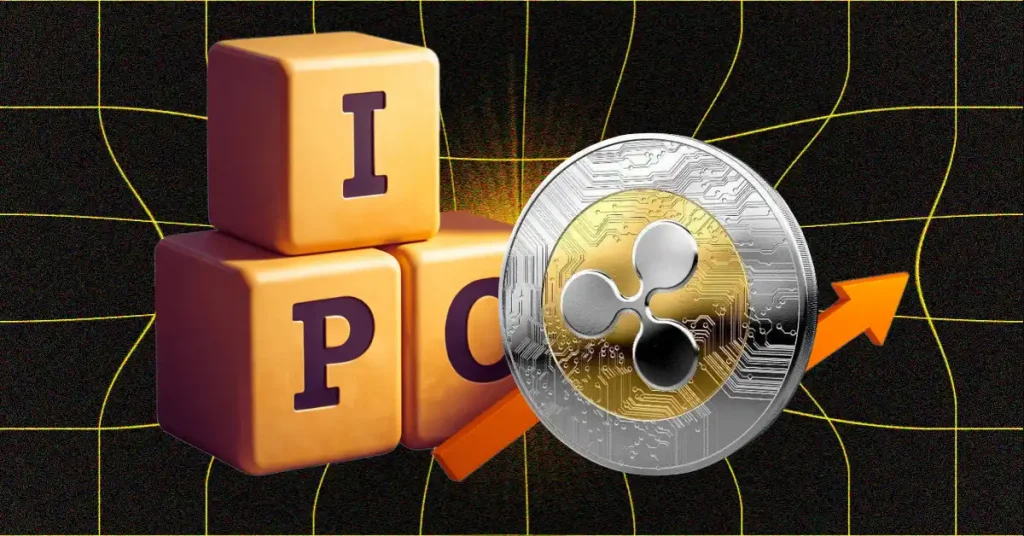
Ripple IPO Back in Spotlight as Valuation Hits $50B

Ripple IPO Back in Spotlight as Valuation Hits $50B

The post Ripple IPO Back in Spotlight as Valuation Hits $50B appeared first on Coinpedia Fintech News Ripple, the blockchain payments company behind XRP, is once
Paylaş
CoinPedia2025/12/27 14:24
Solana co-founder predicts that by 2026: the stablecoin market will exceed one trillion US dollars, and 100,000 humanoid robots will be shipped.

Solana co-founder predicts that by 2026: the stablecoin market will exceed one trillion US dollars, and 100,000 humanoid robots will be shipped.

PANews reported on December 27th that Anatoly Yakovenko, co-founder of Solana, released some predictions about 2026 on X, as follows: The total size of stablecoins
Paylaş
PANews2025/12/27 15:04