GBP/USD posted a solid recovery on Wednesday, climbing around 0.6% to trade back above the 1.3300 level after spending much of late March pinned below that figure. The pair remains well off its January highs near 1.3850 and is trading beneath both its 50-day and 200-day exponential moving averages, which sit near 1.3400 and 1.3350, respectively, but the bounce from the March low near 1.3150 has some legs. The Stochastic RSI has pushed back toward overbought territory, suggesting short-term momentum is stretched to the upside even as the broader trend remains bearish.
Bailey douses rate hike speculation
The biggest Sterling-specific story on Wednesday was Bank of England (BoE) Governor Andrew Bailey’s Reuters interview, which landed with a clearly dovish tone. Bailey said markets had gotten “ahead of themselves” in pricing rate hikes, noting that before the Iran crisis began, the BoE had been signaling one or two more rate cuts in 2026. He acknowledged that path is now “off the table,” but was emphatic that jumping to expectations of hikes was premature.
J.P. Morgan responded by trimming its BoE call to just one hike this year, in June, down from two previously. For Cable, Bailey’s comments are a headwind. If the BoE is reluctant to hike even as UK inflation expectations rise, the interest rate differential argument tilts further toward the Dollar.
US data paints a stagflationary picture
Wednesday’s US data dump was mixed in the details but unambiguously stagflationary in tone. The Institute for Supply Management (ISM) Manufacturing Purchasing Managers Index (PMI) came in at 52.7, marking a third straight month in expansion territory. However, the Prices Paid component stole the show, surging to 78.3 from 70.5 the prior month. That is the highest reading since the supply chain crises of 2022 and suggests that the war-driven energy shock is now feeding aggressively into factory input costs. Separately, ADP Employment Change for March printed at 62K, comfortably above the 40K consensus, while February retail sales came in slightly better than expected at 0.6% month-on-month.
On the surface, a resilient economy with rapidly rising prices is a recipe for a hawkish Federal Reserve (Fed), and that is exactly how the Dollar side of Cable wants to read it. Fed Governor Musalem’s appearance on Wednesday carried a hawkish tilt, reinforcing the message that the central bank is in no rush to cut.
Trump addresses the nation on Iran
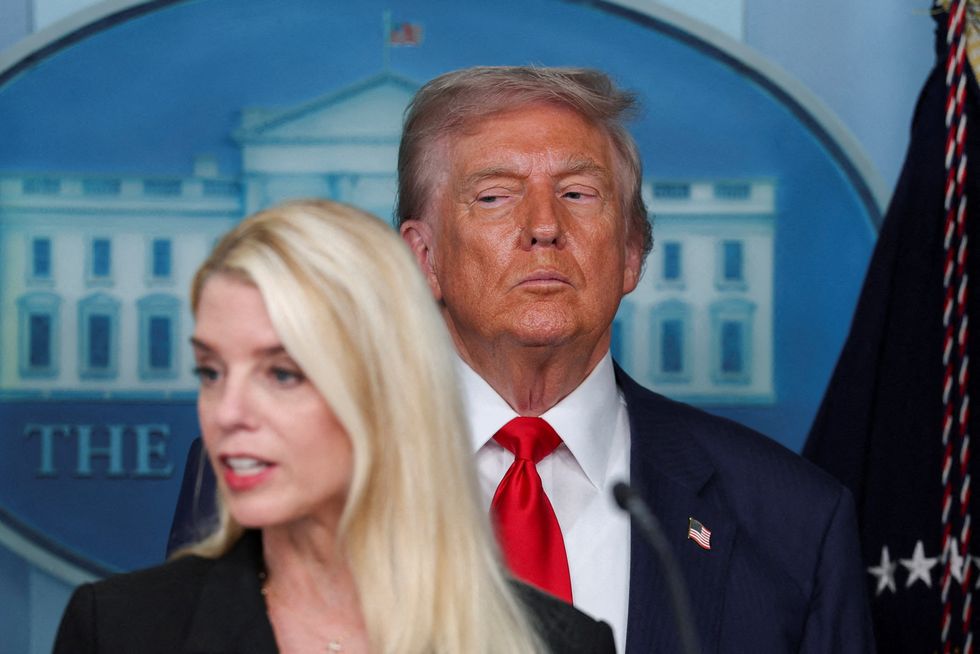
The main event as Wednesday’s US session winds down is President Trump’s prime-time address to the nation, scheduled for 9 PM Eastern Time (01:00 GMT Thursday). The White House has framed it as an “important update on Iran,” and reports suggest the President will lay out a timeline for winding down Operation Epic Fury, the US-Israeli campaign now in its 33rd day. Trump has publicly stated he expects the conflict to end within two to three weeks and has signaled openness to a ceasefire deal if Iran reopens the Strait of Hormuz. However, he has also floated the possibility of withdrawing from NATO over allies’ refusal to help secure the strait, which would be a seismic geopolitical development if followed through on.
For GBP/USD, the speech is a wildcard. Any signal of de-escalation and a reopening of the Strait would likely ease Oil prices and reduce the stagflationary pressure that has been weighing on risk assets globally, potentially boosting Sterling. Conversely, an escalatory tone, talk of ground troops, or a NATO bombshell could trigger a rush into the Dollar as a safe haven.
Thursday: jobless claims and the calm before the storm
Thursday’s calendar is relatively light. US Initial Jobless Claims are expected at 212K, roughly in line with the prior week’s 210K. Challenger Job Cuts for March will also be released, offering another read on the labour market heading into Friday’s main event. UK markets will be closing early ahead of Good Friday, which means Sterling liquidity will thin out significantly through the Thursday afternoon session. That reduced liquidity could amplify moves if Trump’s Wednesday night address delivers any surprises that the market needs to digest.
Friday: NFP drops into a closed market
The week’s most consequential data release, Nonfarm Payrolls (NFP) for March, lands at 12:30 GMT on Friday, April 3. The consensus is calling for a gain of around 60K jobs, a modest rebound from February’s brutal -92K print, which was the worst single-month loss in recent memory. Average Hourly Earnings are expected at 0.3% month-on-month and 3.8% year-on-year, while the Unemployment Rate is forecast to hold steady at 4.4%. Here is the catch: both US and UK equity and bond markets will be closed for Good Friday.
The forex market will still be open but operating on skeletal liquidity. The Bureau of Labor Statistics (BLS) will release the data regardless of the holiday, meaning traders will get potentially market-moving numbers with no equity or bond market to absorb the shock. Currency futures on the CME Globex platform will trade, and spot forex desks will be open, but the real reaction will not come until Monday, April 6. If NFP prints hot, say above 100K with firm wages, rate cut expectations would get pushed further out and the Dollar would likely gap higher at Monday’s open. A weak or negative print could reignite recession fears and send Cable sharply higher. Either way, holding positions into a holiday NFP release is a risky proposition, and the smart money is likely to reduce exposure heading into Thursday’s close.
The bottom line for GBP/USD is that the pair has enjoyed a short-term bounce from oversold conditions, but the fundamental picture remains challenging for Sterling. Bailey is actively talking down rate hike expectations, the Iran conflict continues to distort energy markets and inflation dynamics, and the US data flow, while mixed on growth, keeps flashing hot on prices. The 1.3350 zone, roughly where the 200-day EMA sits, is the first meaningful resistance overhead. A failure to reclaim that level would keep the broader downtrend intact and leave the March lows near 1.3150 exposed. Friday’s NFP, landing into an empty market, is the kind of event that can set the tone for weeks, and traders will need to decide before Thursday’s close how much risk they want to carry into it.
GBP/USD daily chart
Technical Analysis
In the daily chart, GBP/USD trades at 1.3309. The near-term tone leans mildly bearish as spot holds below the 50-day exponential moving average near 1.3410 and gravitates toward the flatter 200-day average around 1.3368, signalling a loss of upside momentum within a broader range. The recent rejection from the mid-1.34s aligns with a Stochastic RSI that has risen from oversold but now hovers near the 70 area, indicating fading recovery energy rather than a fresh impulsive leg higher. While downside pressure prevails, the absence of a decisive break below the long-term average keeps the broader structure more corrective than trending.
Initial resistance emerges at the 1.3360/1.3375 area, where recent highs and the 200-day average converge, followed by 1.3410, the 50-day average that capped the latest bounce. A daily close above 1.3410 would be needed to ease bearish pressure and expose the 1.3490 region. On the downside, immediate support is at 1.3260 ahead of the recent swing low at 1.3223, with a break there opening the path toward the 1.3185 zone. As long as price trades below 1.3375, rallies are likely to meet selling interest, keeping risks skewed toward a test of lower supports.
(The technical analysis of this story was written with the help of an AI tool.)
Pound Sterling FAQs
The Pound Sterling (GBP) is the oldest currency in the world (886 AD) and the official currency of the United Kingdom. It is the fourth most traded unit for foreign exchange (FX) in the world, accounting for 12% of all transactions, averaging $630 billion a day, according to 2022 data.
Its key trading pairs are GBP/USD, also known as ‘Cable’, which accounts for 11% of FX, GBP/JPY, or the ‘Dragon’ as it is known by traders (3%), and EUR/GBP (2%). The Pound Sterling is issued by the Bank of England (BoE).
The single most important factor influencing the value of the Pound Sterling is monetary policy decided by the Bank of England. The BoE bases its decisions on whether it has achieved its primary goal of “price stability” – a steady inflation rate of around 2%. Its primary tool for achieving this is the adjustment of interest rates.
When inflation is too high, the BoE will try to rein it in by raising interest rates, making it more expensive for people and businesses to access credit. This is generally positive for GBP, as higher interest rates make the UK a more attractive place for global investors to park their money.
When inflation falls too low it is a sign economic growth is slowing. In this scenario, the BoE will consider lowering interest rates to cheapen credit so businesses will borrow more to invest in growth-generating projects.
Data releases gauge the health of the economy and can impact the value of the Pound Sterling. Indicators such as GDP, Manufacturing and Services PMIs, and employment can all influence the direction of the GBP.
A strong economy is good for Sterling. Not only does it attract more foreign investment but it may encourage the BoE to put up interest rates, which will directly strengthen GBP. Otherwise, if economic data is weak, the Pound Sterling is likely to fall.
Another significant data release for the Pound Sterling is the Trade Balance. This indicator measures the difference between what a country earns from its exports and what it spends on imports over a given period.
If a country produces highly sought-after exports, its currency will benefit purely from the extra demand created from foreign buyers seeking to purchase these goods. Therefore, a positive net Trade Balance strengthens a currency and vice versa for a negative balance.
Source: https://www.fxstreet.com/news/gbp-usd-recovers-from-march-lows-as-traders-brace-for-trump-speech-and-good-friday-nfp-202604012156