Dapp

Dapps are digital applications that run on a P2P network of computers rather than a single server, typically utilizing smart contracts to ensure transparency and uptime. In 2026, Dapps have achieved mass-market appeal through Account Abstraction, allowing for a "Web2-like" user experience with the security of Web3. This tag covers the entire ecosystem of decentralized software—from social media and productivity tools to governance platforms and identity management.

4941 Articles
Created: 2026/02/02 18:52
Updated: 2026/02/02 18:52
Price Prediction for Ozak AI: What $500 Invested at $0.012 Could Be Worth if $OZ Reaches $1, $3, or $5

Price Prediction for Ozak AI: What $500 Invested at $0.012 Could Be Worth if $OZ Reaches $1, $3, or $5

Enjoy the videos and music you love, upload original content, and share it all with friends, family, and the world on YouTube.

Author: Blockchainreporter
Why Pump.fun’s $56M Liquidity Surge May Not Mean Long-Term Strength

Why Pump.fun’s $56M Liquidity Surge May Not Mean Long-Term Strength

Pump.fun (PUMP) recorded a significant liquidity surge over the past 24 hours. While prices increased, revenue and fees have dropped sharply, raising questions about the sustainability of the rally. The recent PUMP liquidity surge is largely driven by increased activity in the Perpetuals market. Perpetuals Market Drives PUMP Liquidity Surge The PUMP liquidity surge can be attributed to the Perpetuals market, where large amounts of liquidity were poured into the meme coin. Recent analysis showed that inflows into the Derivatives market reached $56 million.  Additionally, the Open Interest-Weighted Funding Rate remained positive, signaling that long contracts were the primary drivers of liquidity. Spot investors also contributed to the surge, accumulating $2.94 million worth of PUMP.  Source: Coinglass Mixed Sentiment Amid PUMP’s Price Surge While the PUMP liquidity surge caused its price to rise, sentiment around the token remains mixed. Revenue from the Pump.fun platform fell sharply from $3.38 million to $945,960, while fees dropped even further, from $8.52 million to $1.82 million.  Also Read: Can Pump.fun’s $72M Buyback Machine Keep PUMP on Top of Solana’s Meme Market? This decline in revenue and fees suggests that the rally may be speculative, with on-chain activity not matching the price surge. Investors are starting to question whether the rally can be sustained, given these declining metrics. Source: DeFiLama Declining Investor Activity Amid PUMP Surge Despite the PUMP liquidity surge, key metrics related to investor activity have decreased significantly. The number of “Tokens Graduated,” which refers to tokens reaching a $100,000 market capitalization, fell sharply from 286 to just 70.  Similarly, the number of minted meme coins, a key indicator of market activity, dropped to 13,700. These declines reflect a reduction in investor interest, which could signal that the PUMP rally may be losing steam. Furthermore, the Daily Active Users on the Pump.fun platform reached a new low of 85,700, reinforcing the idea that activity on the platform is weakening. While the PUMP price surge has captured attention, the drop in these metrics suggests that the rally may not last long. Source: Artemis Solana DApps Lead the Way, PUMP Maintains Dominance While PUMP saw a liquidity surge, Solana’s decentralized applications (DApps) also performed well, generating over $22 million in revenue in the past week. Pump.fun led the charge, bringing in $9.65 million, marking its eighth consecutive week at the top of the revenue rankings. Source: DefiLIama Other platforms, such as Axiom and Jupiter, followed with $5.20 million and $6.75 million, respectively. However, PUMP maintained its dominant position in the Solana ecosystem, thanks to the recent liquidity surge. Despite PUMP’s success, the broader market for meme coins is showing signs of slowing. Data from Dune Analytics revealed a decline in bonding curve volumes, a key indicator of liquidity, which fell below $1 billion for the first time in six months.  The total launchpad volume was $796.4 million, with PUMP accounting for 84% of that total. This suggests that while PUMP is still dominant, the overall market is cooling. Source:Dune PUMP’s Grip on the Meme Coin Market PUMP continues to hold a dominant share of the meme coin market. Since May, it has consistently captured the majority of liquidity, reinforcing its status as the leading platform for meme coin launches on Solana.  However, BonkFun, a competitor in the space, has been gaining ground, though it remains far behind PUMP in terms of market share. The decline in bonding curve volumes hints at fading speculation, but PUMP remains dominant. The Future of PUMP in a Cooling Market Irrespective of the recent PUMP liquidity surge, the future outlook for the platform seems to be shaky. The meme coins market is dying down, and if PUMP wants to see more success, it will need to change things up. If the drop in revenue and usage continues, it could disrupt the growth of the platform as well as investor enthusiasm. The issue for PUMP going forward is going to be maintaining liquidity in the face of the challenges brought on by a cooling market. Conclusion The recent PUMP in liquidity (more than 3 million gas within the past 36-48h) confirms a strong hunger, especially from Perpetuals market. But the mixed picture, which includes lower revenue and usage, raises questions about whether this rally can last. With PUMP still holding a position of dominance in the Solana meme coin market, however, signs that trading activity is beginning to slow suggest that PUMP will need to evolve and adapt quickly if it wants to continue to capture investor attention. Also Read: Pump.fun Unveils Project Ascend but Can It Fix Solana’s Meme Coin Problem? Summary PUMP had a massive influx of liquidity being poured in by its Perpetuals market, which saw $56 million worth of inflows. While above the high zone of the 6 cents per token level and near its peak for over one month, low revenues and weak user activity could threaten to put an end to this rally. PUMP maintains its reign over the Solana meme coin space but indicators of faltering market activity are starting to appear. These tendencies indicate that PUMP needs to evolve or risk disinterest because the market is slowing down. Appendix: Glossary of Key Terms PUMP – The native meme coin of the Pump.fun platform. Liquidity Surge – A significant increase in the volume of assets traded. Perpetuals Market – A market for perpetual contracts, offering leveraged trading without expiration. Open Interest – The total number of outstanding derivative contracts. Spot Investors – Investors who buy the actual asset rather than derivatives. Bonding Curve – A pricing mechanism used in decentralized finance (DeFi) platforms. Frequently Asked Questions About PUMP Liquidity Surge 1: What caused the PUMP liquidity surge? The PUMP liquidity surge was driven by strong inflows from the Perpetuals market, which dominated the rally. Long contracts played a significant role in providing the liquidity. 2: Why is sentiment mixed around PUMP? Sentiment is mixed because, despite the price surge, revenue and fees dropped significantly, suggesting that the rally may not be based on genuine market demand. 3: How did Solana’s DApps perform alongside PUMP? Solana’s DApps generated over $22 million in revenue, with PUMP leading the charge by bringing in $9.65 million, marking its eighth consecutive week as the top performer. 4: Can PUMP maintain its dominance in the meme coin space? While PUMP remains dominant, the decline in bonding curve volumes and falling market activity suggest that maintaining its position may be challenging if these trends continue.   Read More: Why Pump.fun’s $56M Liquidity Surge May Not Mean Long-Term Strength">Why Pump.fun’s $56M Liquidity Surge May Not Mean Long-Term Strength

Author: Coinstats
Bitcoin Hyper Might Be the Best Crypto Presale of 2025

Bitcoin Hyper Might Be the Best Crypto Presale of 2025

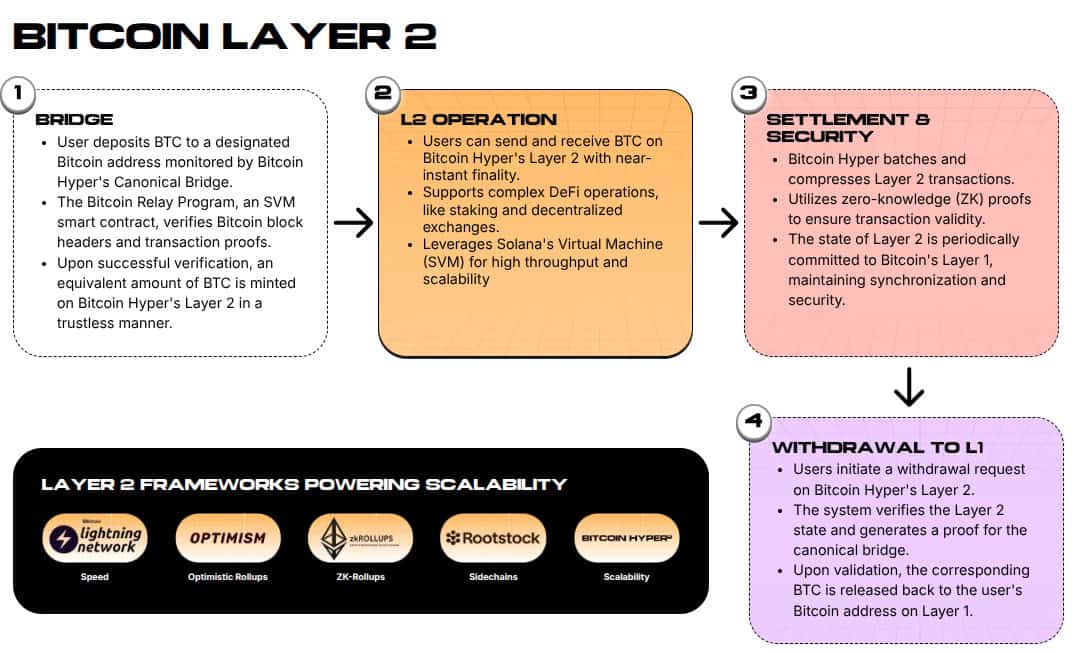
The post Bitcoin Hyper Might Be the Best Crypto Presale of 2025 appeared on BitcoinEthereumNews.com. Bitcoin has achieved legendary status. It’s the safest and most valuable cryptocurrency on the planet. But precisely the qualities that make Bitcoin so secure are also holding it back. It’s like a vintage car; good and reliable, but it can’t keep up with high-speed, flexible networks like Solana or Ethereum. Or rather, it couldn’t without Bitcoin Hyper ($HYPER). The problem lies in the Bitcoin network’s ability to process transactions, which is notoriously slow, handling only around seven transactions per second. This low throughput leads to a frustrating user experience during busy periods, transactions can get stuck in a backlog, and fees can skyrocket, sometimes costing more than what you’re trying to buy. Adding insult to injury, Bitcoin’s limited scripting language means it can’t support the kind of innovation other blockchains can offer. It’s a closed system, not an open one like Ethereum, so developers can’t build decentralized apps (dApps), DeFi protocols, NFTs, DAOs, and more on it. This has created a ‘utility gap’ where Bitcoin is a great store of value but a poor platform for dApps, smart contracts, and other cutting-edge Web3 projects. Developers and entrepreneurs have flocked to more agile networks, leaving Bitcoin behind in the race for innovation. This is the fundamental paradox: Bitcoin’s strength as a secure settlement layer is also its weakness in an age of digital utility. The Bitcoin Hyper Solution: Unlocking a New Era Enter Bitcoin Hyper ($HYPER), a project that doesn’t just aim to improve Bitcoin, but to fundamentally transform its role in the digital economy. It’s a Layer-2 that’s a strategic fusion of Bitcoin’s security with the blistering speed of the Solana Virtual Machine (SVM). The concept is elegantly simple: a trustless ‘Canonical Bridge’ allows users to move their native Bitcoin onto the Hyper network. This creates a wrapped version of…

Author: BitcoinEthereumNews
Best Crypto Presale $HYPER Hits Highs as Whale Buys Total $329K in a Day

Best Crypto Presale $HYPER Hits Highs as Whale Buys Total $329K in a Day

Bitcoin has achieved legendary status. It’s the safest and most valuable cryptocurrency on the planet.

Author: Brave Newcoin
Beldex Launches $150,000 Creator Leaderboard Campaign With Kaito to Reward Community Voices

Beldex Launches $150,000 Creator Leaderboard Campaign With Kaito to Reward Community Voices

The post Beldex Launches $150,000 Creator Leaderboard Campaign With Kaito to Reward Community Voices appeared on BitcoinEthereumNews.com. This content is provided by a sponsor. In the ever-changing world of Web3, communities don’t just support projects — they shape their future. Beldex, a confidentiality-focused project known for building decentralized and confidential dApps, is giving its community a chance to participate in shaping its future through an ambitious new campaign. This campaign for creators, […] Source: https://news.bitcoin.com/beldex-launches-150000-creator-leaderboard-campaign-with-kaito-to-reward-community-voices/

Author: BitcoinEthereumNews
The Monad Airdrop: Is It Worth the Hype?

The Monad Airdrop: Is It Worth the Hype?

you know how it is, you’re just casually scrolling through twitter, and suddenly you start seeing all this hype around a new crypto project. for me recently, it’s been monad. everyone’s calling it a potential “solana killer,” and the whispers about a massive airdrop are getting louder. i got a little FOMO, so i decided to dig in to see what all the fuss was about. it’s one of those things where you feel like you’ve stumbled on a secret club, right? have you been hearing about it too? so, what’s the deal with this monad airdrop anyway? i’ll tell you what i found. basically, monad is a new blockchain, but it’s kind of a big deal because it’s designed to be crazy fast — we’re talking 10,000 transactions per second — while still being compatible with all the stuff you use on ethereum. it’s like taking the best parts of ethereum’s developer tools and the best parts of solana’s speed and smashing them together. pretty cool, right? now, about the airdrop itself, this is the super important part: there’s no official announcement yet. it’s all about positioning yourself for a potential one. think of it like earning points for a future giveaway. the project wants to reward people who are genuinely interested and helping them build their community and test their tech, not just people who want a quick buck. so, what does that mean for you and me? it means we have to actually get our hands dirty. i’ve been looking at a few things people are doing. first, you have to interact with their testnet. this is a version of the network that’s live for testing, but the tokens have no real value. you can get these free “testnet” tokens from something called a faucet. then, you use those tokens to do things on the network. you can trade test coins on different decentralized exchanges, like kuru or pancake swap’s testnet. another thing is minting nfts and just generally using the dapps that are being built on monad. it’s all about creating on-chain activity. i’ve also heard it helps to be a real community member. that means things like joining their discord and being active, or doing quests on platforms like layer3 that are specifically for monad. if you’re feeling adventurous, you can even try deploying a simple smart contract. there are tools that let you do it without writing any code, which is a lifesaver for people like me. The Monad Airdrop: Is It Worth the Hype? was originally published in Coinmonks on Medium, where people are continuing the conversation by highlighting and responding to this story

Author: Medium
Can You Handle Missing These 6 Top Coins to Invest in 2025 Once More?

Can You Handle Missing These 6 Top Coins to Invest in 2025 Once More?

In 2025, the search for top coins to invest in 2025 is more intense than ever, with presales turning early […] The post Can You Handle Missing These 6 Top Coins to Invest in 2025 Once More?  appeared first on Coindoo.

Author: Coindoo
Best 1000x Crypto Presale in 2025?

Best 1000x Crypto Presale in 2025?

The post Best 1000x Crypto Presale in 2025? appeared on BitcoinEthereumNews.com. Crypto News 30 September 2025 | 12:15 BullZilla rockets with 4885% ROI as whales pile into the best 1000x crypto presale in 2025; ADA eyes $0.5095 drop, XRP nears ETF deadlines. Is the next wealth-shaping presale already underway while the market debates ADA’s weakness and XRP’s ETF race? That’s the question traders are asking as September 2025 turns red for most altcoins yet green for one meme-fueled monster: BullZilla ($BZIL). While Cardano slides toward $0.5095 support and Ripple whales stir ahead of key ETF deadlines, BullZilla has already unleashed a presale unlike anything seen this year. With $710,000+ raised, 29 billion tokens sold, and over 2,300 holders, the project’s progressive price engine is cranking every 48 hours or each time $100,000 floods in. For investors hunting the best 1000x crypto presale in 2025, $BZIL is proving that the real gains don’t wait for approval; they roar into existence. BullZilla’s Progressive Price Engine Creates Asymmetric Upside What happens when you combine degen storytelling with tokenomics designed to climb relentlessly? BullZilla answers with its progressive price engine, a feature that lifts its price every 48 hours or after each $100,000 milestone. This system is engineered for acceleration. Presale Stats Table Stage Price per $BZIL Tokens Sold Holders Funds Raised ROI Potential (to $0.00527) 4th (Red Candle Buffet) $0.00010574 29B+ 2,300+ $710,000+ 4885.25% Stage 4D ROI for Earliest Joiners $0.00006574 N/A N/A N/A 1738.96% Next Stage (5A) $0.00011241 Increasing Fast Growth Pending +6.30% from current Consider this: a $6,500 investment at the current stage buys around 61.47 million BZIL tokens at $0.00010574 each. Once listed at $0.00527, that allocation becomes $323,000+, a staggering 4885% gain. This highly affordable entry won’t last. Each whale buy pulls the presale closer to the next stage, and with stages moving every two days, hesitation on the best…

Author: BitcoinEthereumNews
As ADA Slips and XRP Awaits ETFs, Michael Saylor’s Scarcity Strategy Meets BullZilla’s Roar Burn: Best 1000x Crypto Presale in 2025?

As ADA Slips and XRP Awaits ETFs, Michael Saylor’s Scarcity Strategy Meets BullZilla’s Roar Burn: Best 1000x Crypto Presale in 2025?

Is the next wealth-shaping presale already underway while the market debates ADA’s weakness and XRP’s ETF race? That’s the question […] The post As ADA Slips and XRP Awaits ETFs, Michael Saylor’s Scarcity Strategy Meets BullZilla’s Roar Burn: Best 1000x Crypto Presale in 2025? appeared first on Coindoo.

Author: Coindoo
IOSG: Analyzing how the Hyperliquid ecosystem gave rise to the "Robinhood moment" of mobile crypto trading

IOSG: Analyzing how the Hyperliquid ecosystem gave rise to the "Robinhood moment" of mobile crypto trading

By Max @IOSG Key Points TL;DR Retail investing in traditional finance (tradfi) has gone mobile (zero commission + app user experience), and this trend is spreading to the cryptocurrency field - retail users are looking for a fast, familiar, low-friction mobile native trading experience. Hyperliquid's technology stack (HyperEVM + CoreWriter + builder code) significantly lowers the development threshold for mobile front-ends, while taking into account the execution efficiency of CEX-like and the advantages of DEX (self-custody, fast coin listing, and fewer geographical/KYC restrictions). A wave of native mobile apps built on HL has begun: BasedApp, Mass.Money, Dexari, and Supercexy. These apps generate an average daily trading volume of $50,000 USD (with a monthly recurring revenue of $1.5 million USD), representing approximately 3-6% of HL perpetual contract trading volume, and target diverse user groups (crypto-native users, Web2 retail users, and professional traders). Why now? Hyper-speculation and the creator content cycle have increased retail users’ risk appetite; mobile apps have shortened user onboarding time, simplified the complexity of crypto, and added sticky features (copy trading, fiat currency deposits, card payments, money markets, and income tools). Core arguments: Crypto mobile trading fronts benefit from strong tailwinds from Web2 mass adoption and retail activity. For the cryptocurrency market to grow in scale and transaction volume, it needs to provide more crypto-native mobile applications for mainstream Web2 consumers. Compared with the Web3 business model, this field has real sustainable scale revenue characteristics and extremely low marginal cost of expansion. The past few months have seen a significant increase in the number of mobile trading and DeFi applications targeting retail consumers, many of which are built on Hyperliquid's infrastructure. This article aims to delve deeper into this vertical, analyzing the applications currently dominating the market and providing relevant insights. background Overall, retail investor participation in traditional investments has grown dramatically over the past decade. This trend began in 2019, when several major US brokerages reduced stock trading commissions to zero to compete with Robinhood, significantly reducing trading costs for small accounts. The 2020 pandemic accelerated this process: lockdowns, stimulus checks, and continuously optimized mobile experiences brought millions of new investors into the market. By 2022, the Federal Reserve's Survey of Consumer Finances showed a significant increase in stock market participation—58% of US households owned stocks directly or indirectly, and direct ownership jumped from 15% to 21%, the largest increase on record. Retail trading continues to play a significant role in daily market activity: it currently accounts for 20-30% of US stock trading volume, far exceeding pre-pandemic levels. This phenomenon is not limited to the United States but is also evident globally: the number of investment accounts in India has surged from tens of millions pre-pandemic to over 200 million by 2025. Investment channels are also continuing to expand—ETF inflows reached a record high in 2024-2025, and the popularity of fractional share trading and mobile brokerage services has provided retail investors with more convenient investment tools. The cost impact of zero commissions, the access impact of mobile trading applications, and the liquidity impact of ETFs have collectively driven retail investors to enter the public markets on a large scale, making consumer-grade investment applications a significant structural force in the market. Mobile Trading App Since 2021, the mobile trading app vertical within the retail trading market has continued to expand, driven by the increasing penetration of mobile devices and the rise of a new generation of independent decision-making investors. The global investment app market is projected to reach approximately $254.9 billion by 2033, growing at a compound annual growth rate (CAGR) of 19.1%. Why are mobile trading apps so popular among retail investors? The main reasons can be summarized into two dimensions: #Socially driven (everything is gamified and gambling-like) Contemporary social culture is dominated by dopamine loops, gamification mechanisms, and hyper-speculative behavior. The rise of the creator economy and short-form video platforms like TikTok and YouTube Shorts has reshaped user behavior, driving a demand for instant gratification. Mobile trading apps perfectly fit this need on multiple levels. On the social media front, communities like Wall Street Bets on platforms like Reddit are flooded with users showcasing massive gains and losses. Single-day gains and losses exceeding $100,000 have become normalized, and retail users are becoming increasingly desensitized to such sums. Many users separate their Robinhood account funds from real money, viewing their portfolios as mere chips in a game. Coupled with rising living costs, a widening wealth gap, and negative sentiment surrounding "involution," many working-class individuals believe the only way to achieve the American Dream is through "hyper-speculation"—taking extreme risks for outsized returns. Mobile trading apps have successfully capitalized on this social and cultural trend. By offering short-term options, leveraged products, instant execution, and a gamified interface, these apps have successfully lured users away from casinos and into the stock market. Users can simultaneously experience the dopamine rush, gaming thrills, and speculative trading experiences all on a single mobile device. #Application Features Mobile trading apps have significantly improved their features across multiple dimensions. Onboarding, they have condensed the account opening process from days of tedious paperwork to a near-instant online experience. All user processes, from identity verification to trade execution, are integrated into a single interface, enabling users to fully manage their portfolios. By removing friction points from traditional brokerage models and incorporating new value propositions like fractional share purchases and recurring investments, these platforms lower both the financial and cognitive barriers to entry. By incorporating familiar consumer design language from mainstream apps, they shorten the trading decision-making process, while personalized features like curated target lists and portfolio performance analysis maintain user engagement. Furthermore, post-investment features like detailed performance reporting and automated tax filing make the experience more akin to a full-service financial application, enabling users to complete all operations, rather than a simple trading terminal. On the social side, content elements further lower the barrier to use by providing an easily shareable interface, fostering social engagement and incentives (e.g., usage driven by the WSB forum). These characteristics collectively explain why mobile platforms have become the default investment channel and a persistent driver of retail market participation. How does this impact the cryptocurrency industry? The mobile-first application trend has extended from traditional finance/Web2 markets to the Web3 field. The surge in cryptocurrency wallet app usage over the past five years demonstrates market demand for mobile-native crypto products. Since trading and earning are inherent features of cryptocurrencies, perpetual swaps and DeFi are naturally the first areas to be transformed in this "mobile" era. With the rise of Hyperliquid since the end of 2024 and the launch of its modular high-performance trading infrastructure, many mobile perpetual contract DEX transactions and DeFi front-end products began to be built on HL infrastructure and flooded into the market. Why Hyperliquid and DEX? From a developer's perspective, HyperEVM's infrastructure is highly attractive due to the powerful tools it provides. CoreWriter and precompiled contracts allow smart contracts on HyperEVM to interact directly with HyperCore perpetual contract positions, enabling unique use cases and near-instant execution. Builder Code provides a clear incentive layer for developers, enabling them to earn a share of transaction fees when users trade through their front-ends. These features not only lower the barrier to entry for development but also make HyperEVM one of the most developer-friendly platforms, attracting top teams and talent. This is why 99% of mobile crypto trading front-ends are built on Hyperliquid. As for why DEXs? Traders are generally drawn to their structural advantages: broader access by eliminating KYC and jurisdictional restrictions, faster coin listings and a wider selection of tokens, and the ability to manage funds autonomously. Previously, CEXs attracted retail users because they significantly reduced the complexity of market participation: offering multiple trading markets within a single, mature web application, instant execution, low slippage, and high liquidity, along with integrated support features like wallet management, stable returns, and fiat currency access. However, this required users to assume significant counterparty risk and forgo the right to self-custody their assets. Hyperliquid is the platform that perfectly integrates all of these elements. This on-chain decentralized exchange combines the structural advantages of a DEX perpetual contract platform with CEX-level liquidity, execution efficiency, and overall user experience. This makes it the ideal liquidity infrastructure for building mobile crypto trading applications. So how does all this relate to mobile wallet transactions? Thanks to the availability of this modular, high-performance architecture, the development costs of building a mobile trading front-end have become extremely low - this is why a large number of related applications have begun to emerge on the market. Most mobile trading front-ends currently offer similar functionality centered around perpetual contract trading, but some are beginning to go beyond perpetual contracts to offer users a wider range of ancillary products. Generally speaking, these apps generally offer the following features: Fiat currency deposit channels: Supports credit/debit cards, bank transfers, Apple Pay, Google Pay, Venmo and other deposit methods Investment strategy tools: Provide fixed investment plans, stop-loss and take-profit functions, and early access to new tokens Money Market Integration: One-Stop Access to DeFi Lending Protocols Earn interest: Earn income through automatic compounding vaults Dapp Explorer: Search and connect to emerging decentralized applications Debit/Credit Card Services: Directly use self-managed funds for spending These features are made possible by Hyperliquid's infrastructure, which greatly simplifies the development of the core perpetual contract product, freeing the team to focus on innovation in other derivative areas. Due to the modular nature of the entire ecosystem, most HL-based projects can easily achieve parallel development in multiple areas. The rich functionality offered by many applications is primarily due to: 1. the low development threshold of Hypercore's developer code; 2. the high willingness to integrate with other protocols. In addition, major applications are competing mainly in terms of user experience/interface design and social brand building. The most promising representatives in the market include: #Basedapp Currently, Based App is the most popular and fastest-growing mobile trading front-end application in the market. In addition to offering perpetual contracts and spot trading, the platform also innovatively offers debit/credit card solutions directly connected to users' trading wallets, supporting payment needs in everyday scenarios. Its long-term goal is to transform into an emerging digital bank similar to Etherfi. #Mass.Money Following closely in the mobile trading front-end competition is Mass.money. Unlike its "Based App" platform, this platform focuses more on the Web2 retail user base, a positioning fully reflected in its product design: in addition to standard HL perpetual contracts and spot trading, it also integrates Apple Pay deposit channels, social copy trading functionality, access to DeFi money markets, and cross-chain EVM spot exchange, among other full-featured services. Its interface design deeply incorporates gamification elements, drawing heavily on the design language of Web2 consumer applications. However, due to their higher fee model and broader product portfolio, their revenue per user and transaction volume are significantly higher than BasedApp. #Dexari Following closely behind Mass.money is Dexari, a mobile trading front-end designed for professional traders, focusing purely on trading functionality. Key product features include HL perpetual contracts and spot trading, with a user experience and interface design focused on asset discovery, analytical tools, and execution efficiency. Their goal is to become the Axiom (professional trading benchmark) of mobile trading front-ends. #Supercexy Last but not least, Supercexy. This platform has opted for a purely mobile-first approach and is also optimizing its web-based perpetual contract DEX trading experience, aiming to provide a CEX-like experience, but built entirely on Hyperliquid infrastructure. With DeFi staking and money market access integrated into its product suite, the app primarily serves Web3-native traders. Comprehensive perspective Overall Overview Overall, the combined average daily revenue for all relevant mobile trading frontends (including some not mentioned here) is approximately $50,000, equivalent to approximately $1.5 million in monthly recurring revenue (MRR). These apps account for approximately 3%-6% of Hyperliquid's total perpetual contract volume. For reference, Hyperliquid's HLP vault accounts for approximately 5%. Hyperliquid Mobile Trading Front-End Revenue Summarize Core Viewpoint Cryptocurrency mobile trading frontends benefit from strong tailwinds from the Web2 crowd and retail activity The trend of hyper-speculativeness in society has fundamentally altered retail consumer behavior. As evidenced by the growth of Polymarket and Kalshi, most users in the current environment adopt high-risk strategies. With speculative demand at an all-time high, mobile trading apps are the product form most directly benefiting. As mentioned earlier, traditional financial mobile apps like Robinhood, Wealthsimple, and TD Ameritrade have seen significant increases in user growth and adoption, primarily due to their low barriers to entry and their willingness to promote short-term, highly leveraged, and gambling-like products. Clearly, retail users need easy ways to gain risk exposure and allocate capital, and mobile trading apps are the most logical solution. Mobile cryptocurrency trading apps are fundamentally no different and can similarly benefit from this consumer behavior if they effectively build discoverability. Robinhood, Wealthsimple, and Revolut, all integrating crypto products into their apps, are a testament to this. Despite charging significantly higher fees, these traditional financial apps have seen significant adoption of crypto products within their apps, demonstrating a strong demand among retail users for convenient mobile access to the crypto market. Without dedicated mobile crypto trading apps, the Web3 market will cede significant value capture opportunities to Web2 competitors. For the cryptocurrency market to achieve growth in scale and transaction volume, it needs to provide more crypto-native mobile applications for mainstream Web2 consumers. There has been virtually no new retail inflows since 2023. The total stablecoin market capitalization is only about 25% above its 2021 all-time high, a dismal four-year growth rate for any sector—and this is happening against the backdrop of the most favorable regulatory environment for stablecoins and strong presidential support for the crypto industry. The market needs solutions to attract new retail liquidity, but significant barriers to new retail capital entry remain unaddressed. The primary obstacles are: first, the public's perception of complex operational processes for participating in the crypto market; second, a lack of accessible applications that truly understand the needs of Web2 users. Web2 retail users don't use complex wallets or transfer funds across multiple chains. They need products packaged in a familiar format, offering easy onboarding and a user-friendly experience, similar to accounts like Robinhood or Wealthsimple. Cryptocurrency mobile trading front-ends are the solution—they package products in traditional financial formats familiar to Web2 users, fundamentally removing the cognitive barrier to entry and lowering the barrier to participation. This is the only effective way for cryptocurrencies to break through Web3 circles and gain mainstream exposure. A real revenue model with sustainable economies of scale and very low expansion costs compared to the Web3 business model Mobile cryptocurrency trading frontends mark the beginning of a new generation of applications in the Web3 market—a more sustainable and compliant path to development. Unlike previous traditional crypto products (whether infrastructure or DApps), most projects haven't focused on scaling or revenue generation because these weren't core incentives. Most founders' North Star metric was acquiring initial users at any cost, no matter how inefficient or extractive their growth funnels were. They then raised venture capital, locked up tokens through over-the-counter sales, or waited out vesting periods without improving their products. Typical examples include Story Protocol ($IP), Blast, and Sei Network ($SEI). Crypto mobile trading frontends take the opposite approach: leveraging existing infrastructure to optimize scale, generating revenue first and raising capital later. By acting as aggregators of diverse products and employing a base fee structure, these frontends possess the structural advantage of integrating across multiple verticals at minimal cost, while simultaneously focusing on the user experience interface to drive user acquisition and retention. This combination means revenue generation from day one, with continued exponential growth over time. The end result is a more sustainable, real-world commercial and value layer for Web3, replacing the extractive model of the past. This will bring growing credibility to the entire Web3 industry.

Author: PANews