Index

A crypto Index provides a way for investors to gain diversified exposure to a specific basket of digital assets through a single tokenized product. These indices often track specific sectors, such as DeFi, DePIN, or RWA, and are automatically rebalanced via smart contracts. In 2026, AI-managed thematic indices have become the gold standard for passive investing, allowing users to track the "blue chips" of the Web3 economy without manual portfolio management. This tag covers index methodology, rebalancing frequency, and the benefits of diversified crypto baskets.

25193 Articles
Created: 2026/02/02 18:52
Updated: 2026/02/02 18:52

The three major U.S. stock indices closed higher, with COIN and MSTR rising by more than 6%.

The three major U.S. stock indices closed higher, with COIN and MSTR rising by more than 6%.

PANews reported on August 23rd that according to Cailian Press, all three major U.S. stock indices closed higher. The Dow Jones Industrial Average rose 1.89%, bringing its weekly gain to 1.53%. The Nasdaq Composite Index rose 1.88%, losing 0.58% this week. The S&P 500 rose 1.52%, adding 0.27% to the week. The Dow Jones Industrial Average hit a new high, marking the third consecutive week of gains for both the Dow and S&P 500. Coinbase (COIN) rose 6.52%, Strategy (MSTR) gained 6.09%, and Circle (CRCL) gained 2.46%.

Author: PANews
NZD/USD steadies near four-month low as focus shifts to Powell speech

NZD/USD steadies near four-month low as focus shifts to Powell speech

The post NZD/USD steadies near four-month low as focus shifts to Powell speech appeared on BitcoinEthereumNews.com. The New Zealand Dollar steadies around a four-month low, pausing a three-day losing streak after the RBNZ’s rate cut. NZD/USD trades flat near 0.5820, showing muted reaction to broad US Dollar strength. Market attention turns to Powell’s Jackson Hole speech on Friday for monetary policy direction. The New Zealand Dollar (NZD) is finding its footing against the US Dollar (USD) on Thursday after heavy selling in the wake of the Reserve Bank of New Zealand’s (RBNZ) rate cut a day earlier, which dragged the pair to its lowest level in four months. At the time of writing, NZD/USD is trading flat near 0.5820, stabilizing after a three-day decline. Meanwhile, the US Dollar extended its advance across major peers, supported by stronger-than-expected S&P Global Purchasing Managers Index (PMI) surveys. The data reinforced confidence in the resilience of the US economy, prompting markets to scale back expectations of aggressive monetary easing by the Federal Reserve (Fed). The upbeat PMI figures overshadowed weaker labor market signals, with US Initial Jobless Claims rising to an eight-week high, reinforcing signs that the labor market is gradually cooling. The US Dollar Index (DXY), which measures the Greenback against a basket of six major currencies, climbed to its strongest level since August 11, trading near 98.60. The move was also supported by hawkish comments from Fed officials earlier in the day, which reinforced expectations that the Fed will remain cautious on easing. Yet NZD/USD’s muted reaction suggests that much of the Kiwi’s weakness had already been priced in after the RBNZ’s rate cut. Fed officials struck a broadly hawkish tone on Wednesday, reinforcing the higher-for-longer policy message. Minneapolis Fed’s Schmid cautioned that inflation remains “closer to 3% than 2%” and stressed he is “not in a hurry” to cut rates, describing current policy as “modestly restrictive and…

Author: BitcoinEthereumNews
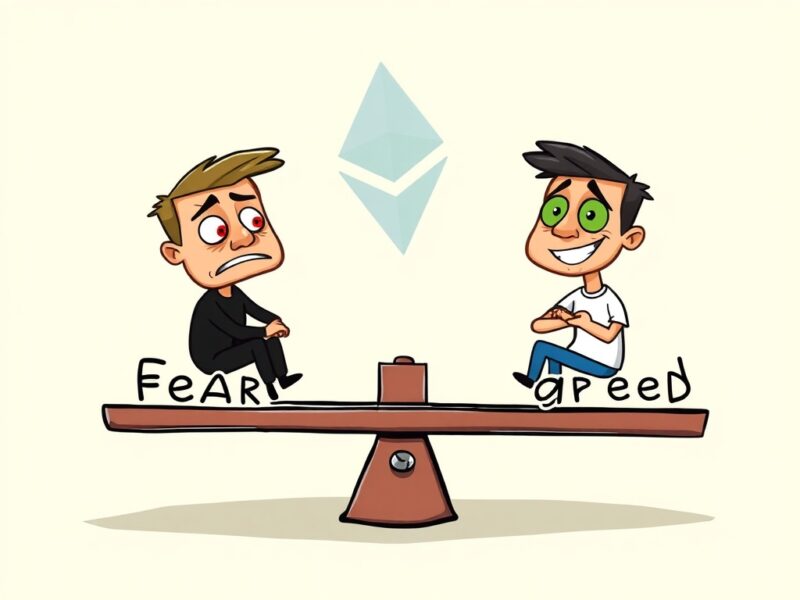
Crypto Fear & Greed Index Surges to 60: Unlocking Market Sentiment Insights

Crypto Fear & Greed Index Surges to 60: Unlocking Market Sentiment Insights

BitcoinWorld Crypto Fear & Greed Index Surges to 60: Unlocking Market Sentiment Insights Are you feeling a buzz in the crypto air? You are not alone! The widely watched Crypto Fear & Greed Index recently surged to a score of 60, officially moving out of the ‘Neutral’ zone and firmly into ‘Greed.’ This shift signals a significant change in investor sentiment across the digital asset landscape. But what does this really mean for your crypto investments and how should you interpret this exciting development? Understanding the Crypto Fear & Greed Index The Crypto Fear & Greed Index acts as a crucial barometer for market sentiment. It provides a daily snapshot of how emotional crypto investors currently feel. Ranging from 0 to 100, the index gives us a clear picture: 0 signifies ‘Extreme Fear’: This often indicates that investors are overly worried, potentially leading to panic selling and undervalued assets. 100 signifies ‘Extreme Greed’: This suggests investors are getting too excited, possibly leading to ‘FOMO’ (Fear Of Missing Out) and overvalued assets. The index helps you gauge whether the market is behaving rationally or is driven by strong emotions. What Factors Drive the Crypto Fear & Greed Index? The index compiles data from several key sources to calculate its daily score. It offers a holistic view of market dynamics. These factors include: Volatility (25%): Measures current Bitcoin price volatility and drawdown compared to average values. Market Momentum/Volume (25%): Compares current volume and market momentum with historical averages. Social Media (15%): Analyzes sentiment and engagement from various social media platforms regarding crypto. Surveys (15%): (Currently paused) Previously gathered investor sentiment directly. Bitcoin Dominance (10%): An increase in Bitcoin’s market cap share can indicate fear of altcoins or a flight to safety. Google Trends (10%): Examines search queries related to Bitcoin and other cryptocurrencies to spot interest trends. Each factor contributes to the overall score, providing a comprehensive assessment of market psychology. Decoding the Shift: From Neutral to Greed The recent jump of 10 points, moving the Crypto Fear & Greed Index from ‘Neutral’ to ‘Greed’ at 60, reflects a notable improvement in market confidence. This shift suggests that more investors are feeling optimistic and are willing to take on more risk. Historically, periods of ‘Greed’ often coincide with rising prices and increased buying activity. However, it is vital to approach such sentiment with caution. While ‘Greed’ can fuel further upward movement, it also often precedes market corrections. When everyone feels confident, it might be a sign that the market is becoming overheated. Therefore, understanding this sentiment is key to making informed decisions. Navigating the Greed Zone: Opportunities and Risks Entering the ‘Greed’ zone presents both exciting opportunities and potential pitfalls for investors. It is crucial to balance enthusiasm with a strategic approach. Here’s what you should consider: Opportunities: Positive Momentum: Increased investor confidence can lead to sustained price rallies for various cryptocurrencies. Broader Market Participation: A greedy market often attracts new capital, expanding the overall crypto ecosystem. Potential for Gains: Those holding assets may see their portfolios grow as buying pressure increases. Risks: Market Overextension: Extreme greed can lead to irrational exuberance, pushing asset prices beyond their fundamental value. Increased Volatility: While positive, rapid price increases can also lead to sharp pullbacks or corrections. FOMO-Driven Decisions: The fear of missing out can cause investors to make impulsive, high-risk purchases at market peaks. Smart investors use the Crypto Fear & Greed Index as a guide, not a definitive trading signal. They avoid getting swept away by emotion. How Savvy Investors Leverage the Crypto Fear & Greed Index For experienced crypto participants, the Crypto Fear & Greed Index serves as an excellent sentiment indicator rather than a direct buy or sell signal. They often use it in conjunction with other analytical tools: Contrarian Strategy: Some investors believe that when the index shows ‘Extreme Fear,’ it might be a good time to consider buying, and when it shows ‘Extreme Greed,’ it might be a good time to consider selling or taking profits. Risk Management: A high ‘Greed’ score can prompt investors to tighten stop-losses or reduce exposure to highly speculative assets. Emotional Discipline: The index reminds investors to check their own emotions and not let fear or greed dictate their decisions. By understanding the underlying sentiment, you empower yourself to make more rational and disciplined investment choices. Conclusion: A Powerful Gauge for Crypto Sentiment The rise of the Crypto Fear & Greed Index to 60, signaling a move into the ‘Greed’ zone, is undoubtedly a positive indicator of current market sentiment. It reflects increased optimism and buying interest among investors. However, this powerful tool also serves as a crucial reminder to exercise caution and maintain a balanced perspective. While positive sentiment can drive growth, extreme greed often precedes market adjustments. By understanding what drives the index and how to interpret its signals, you can navigate the volatile crypto market with greater insight and make more informed decisions. Frequently Asked Questions (FAQs) Q1: What does a ‘Greed’ score of 60 on the Crypto Fear & Greed Index mean? A score of 60 means the market has moved into the ‘Greed’ zone. This indicates that investors are feeling optimistic, confident, and are generally willing to take on more risk, often leading to increased buying activity and rising prices. Q2: How often is the Crypto Fear & Greed Index updated? The Crypto Fear & Greed Index is updated daily, providing a fresh perspective on market sentiment each day. Q3: Should I buy cryptocurrency when the index shows ‘Greed’? The index is a sentiment indicator, not a direct trading signal. While ‘Greed’ can accompany rising prices, it can also signal an an overheated market ripe for a correction. It is wise to combine this insight with your own research and strategy, rather than making decisions based solely on the index. Q4: What factors contribute to the Crypto Fear & Greed Index? The index considers six main factors: volatility, market momentum/volume, social media activity, surveys (currently paused), Bitcoin dominance, and Google Trends data. Q5: Is the Crypto Fear & Greed Index only for Bitcoin? While Bitcoin’s data significantly influences the index due to its market dominance, the index is generally seen as a reflection of overall sentiment across the broader cryptocurrency market. Did you find this analysis helpful? Share this article with your fellow crypto enthusiasts and help them understand the dynamic world of market sentiment! To learn more about the latest crypto market trends, explore our article on key developments shaping Bitcoin price action. This post Crypto Fear & Greed Index Surges to 60: Unlocking Market Sentiment Insights first appeared on BitcoinWorld and is written by Editorial Team

Author: Coinstats
We Have a New Ethereum All–time High

We Have a New Ethereum All–time High

It took almost four years, a flood of institutional money, and Jerome Powell mumbling dovishly into a microphone but Ethereum has finally done it. ETH just smashed through its old 2021 all-time high, setting a new record that puts the protocol firmly back in the driver’s seat of crypto’s next chapter.

Author: Brave Newcoin
Dow jumps 846 points to record close, S&P and Nasdaq rally over 1.5%

Dow jumps 846 points to record close, S&P and Nasdaq rally over 1.5%

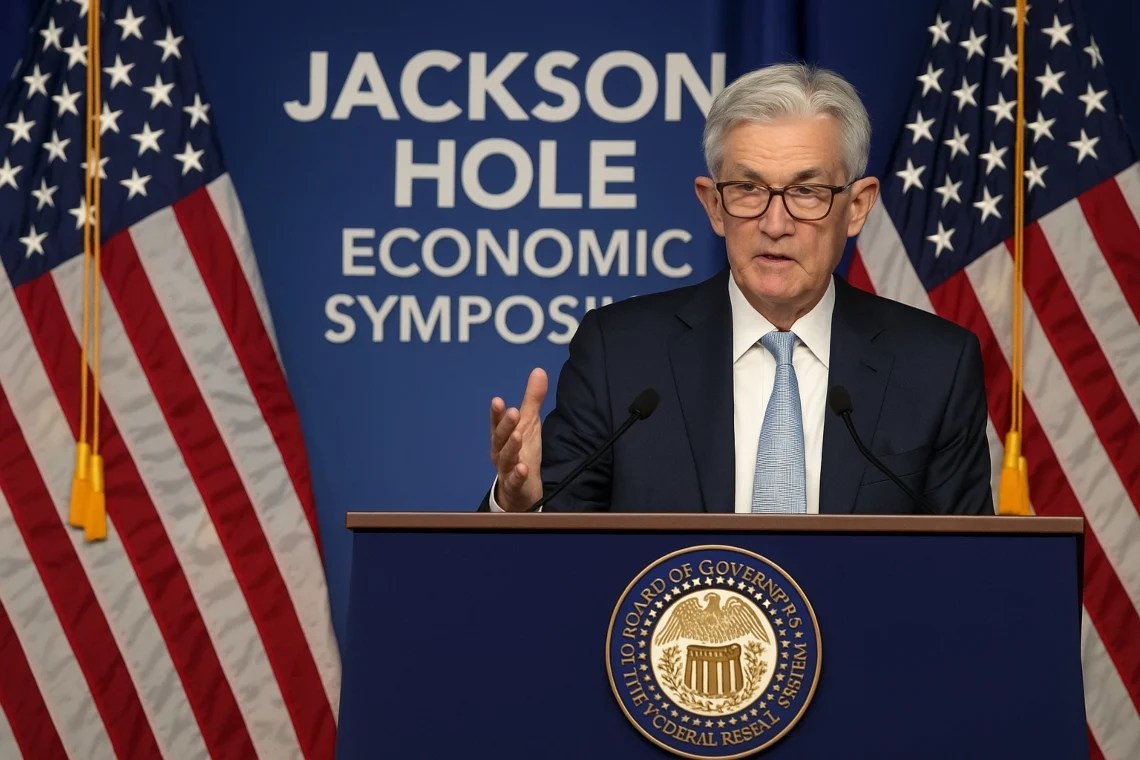
The Dow finished Friday’s session with a monster move, jumping 846 points to close at a record high of 45,631.74, after Federal Reserve Chair Jerome Powell said the central bank could start cutting rates next month. That comment came during his speech at the Jackson Hole symposium and triggered a flood of trades across every major sector. The gains were immediate. The S&P 500 ended at 6,466.91, up 1.52%, just shy of its all-time high. The Nasdaq Composite closed at 21,496.53, up 1.88%, fueled by massive inflows into tech stocks. According to data from CNBC, Powell’s words led to a full-blown rally that pushed indexes to levels traders hadn’t seen before. Tech stocks surge as traders price in rate cuts The minute Powell opened the door to rate cuts, the big tech names took off. Nvidia rose 1.7%, Meta Platforms gained over 2%, and both Alphabet and Amazon were up more than 3%. Tesla shares ran hardest, rallying 6% by the closing bell. Traders were pricing in a lower-rate environment and reloading on risk. The U.S. dollar got slammed, falling 1%, as expectations of looser policy pressured the currency. The euro jumped to $1.1728, with a session high of $1.1742, its strongest point since July 28. The yen also strengthened as the dollar dipped to 146.77, down 1.08%. Other currencies moved in lockstep; the British pound went up 0.86% to $1.3527, and the Australian dollar rose 1.14% to $0.6492. Gold benefited too. Spot gold increased 1.1% to $3,373.89 an ounce, while U.S. futures closed at $3,418.50, also 1.1% higher. With the dollar weakening, gold looked cheaper to non-dollar buyers. Silver popped 2.2% to $39.01, platinum gained 0.7% to $1,362.90, and palladium edged up 1.4% to $1,125.53. Metals traders jumped in fast, betting on inflation protection. Bitcoin jumps as institutions tighten grip Bitcoin was part of the action too. It rose 4.10% Friday to $117,035, lifted by the broader risk rally and softening dollar. Just a week earlier, it had hit a new all-time high, trading close to $125,000, after breaking $124,496 on August 14. But that was followed by a fast 10% correction to $111,658. Even so, that drop was smaller than earlier ones. In July, bitcoin dropped 9% after peaking at $123,194. Earlier drawdowns this year were sharper, both January and May selloffs pushed losses past 30%. Still, long-term bitcoin holders aren’t shaken. Some of them say dips like this are normal. “Drawdowns of 30% are a regular thing in a bull cycle,” said one longtime trader. And historically, they’ve survived worse. Bitcoin has crashed 70% multiple times. But over the last three years, it’s up 455%. In five years, 913%. And in a decade, 51,600%. Bitcoin’s performance during market chaos has been noticed. When President Donald Trump announced fresh tariffs in April, stocks tumbled. Bitcoin didn’t. It stayed over $80,000 most of the year and only slipped under $75,000 briefly. That resilience is why institutions are still piling in. Want your project in front of crypto’s top minds? Feature it in our next industry report, where data meets impact.

Author: Coinstats
Who’s Shaping Bitcoin’s Future: Suitcoiners Vs. Ordinals Degens

Who’s Shaping Bitcoin’s Future: Suitcoiners Vs. Ordinals Degens

The post Who’s Shaping Bitcoin’s Future: Suitcoiners Vs. Ordinals Degens appeared on BitcoinEthereumNews.com. The cultural tone of the entire ecosystem has shifted wildly in the last few years. “Bitcoin Maximalists” have essentially faded off into the background in terms of having any kind of cultural influence or impact at all.  Dominant narratives, actual actions, and real impact has become completely dominated by either the Suitcoiners, clownish Wall Street types building the exact same kind of degenerate leveraged financial products on top of Bitcoin that caused the 2008 financial crisis, or the Degens, completely degenerate Ordinals obsessed cypherpunks with a moronic fixation on the notion of ascribing ownership to jpegs stored on the blockchain.  It’s frankly kind of disgusting and embarrassing that things have gotten to this point in this space. All meaningful drivers to growth and adoption are pulling people into a culture of brain dead suit-think completely devoid of any understanding or grasp of the true value that Bitcoin offers, censorship resistance and decentralization, or a culture of using those things for the stupidest most meaningless drivel imaginable rather than truly impactful uses that can change lives in a positive way.  But here we are nonetheless.  These two opposite and self-reinforcing echo chambers are dominating the stage. They are running the biggest booths ushering new entrants into the ecosystem. Yes, individuals can and will walk their own path, and some newcomers might stumble down some of those, but most won’t. Most will wind up following the Suitcoiners or the Degens.  In that political reality, I will stand with the Degens.  Everything they engage in is inane, moronic, pointless imaginary nonsense, but they at least appreciate and understand censorship resistance and the decentralization that creates it. They appreciate the value of self custody and tools that allow them to do what they want with their own money without needing to seek permission from…

Author: BitcoinEthereumNews
the Fed opens to the possibility of rate cuts

the Fed opens to the possibility of rate cuts

The post the Fed opens to the possibility of rate cuts appeared on BitcoinEthereumNews.com. The president of the Federal Reserve, Jerome Powell, delivered today his anticipated speech at the Jackson Hole economic symposium, suggesting that the American central bank might soon consider a cut in interest rates. Powell described the current economic phase as a “curious equilibrium”: the labor market is cooling down, but remains close to full employment, with an unemployment rate at 4.2%. The reduction in both labor supply and demand, he explained, could quickly turn into an increase in unemployment if conditions were to worsen. On the inflation front, the president of the Fed highlighted the impact of recent tariffs, which have pushed the PCE index to 2.6% and the core PCE to 2.9%. Powell reiterated that the priority is to prevent these temporary price shocks from turning into persistent pressures or chain effects on wages. The most anticipated point by the markets concerns interest rates. Powell stated that monetary policy is already in restrictive territory and that current conditions “might justify an adjustment.” A phrase interpreted as an opening to a possible cut already in the September meeting, albeit with the utmost caution. He also reiterated the Fed’s independence, emphasizing that decisions will be made solely based on economic data, without political influences. Review of the monetary policy framework He emphasized that the Fed’s priority is to prevent these temporary effects from turning into persistent inflationary dynamics or chain wage increases. According to the most recent data, inflation has shown a gradual recovery, with consumer prices rising compared to previous months. Regarding monetary policy, Powell acknowledged that interest rates are already in restrictive territory and that current conditions “could justify an adjustment.” A phrase that the markets interpreted as a signal of a possible cut as early as the next meeting, even though Powell clarified that every decision will remain…

Author: BitcoinEthereumNews
As the Crypto Market Focuses on the Fed Chair’s Statements, Analysts Expect a Hawkish Statement! Here Are the Details

As the Crypto Market Focuses on the Fed Chair’s Statements, Analysts Expect a Hawkish Statement! Here Are the Details

The post As the Crypto Market Focuses on the Fed Chair’s Statements, Analysts Expect a Hawkish Statement! Here Are the Details appeared on BitcoinEthereumNews.com. Bitcoin, Ethereum, and the overall crypto market remained calm ahead of a speech by US Federal Reserve Chair Jerome Powell in Jackson Hole. Bitcoin Holds at $113,000 Ahead of Jackson Hole Bitcoin fell 0.74 percent in the last 24 hours to $112,018, while Ethereum fell 0.1 percent to $4,204. Vincent Liu, Investment Director at Kronos Research, stated that the market expects a “hawkish” message from Powell. “A dovish surprise could trigger a market rally, but hawkish rhetoric could increase selling pressure,” Liu said. He believes that if Powell doesn’t offer any guidance on interest rates, the market will enter a period of consolidation. Powell had previously emphasized that the September interest rate decision would be shaped by macro data. Wall Street currently expects a 25 basis point rate cut in September. The CME FedWatch Tool puts this probability at 74.4%. However, recent data has mixed expectations. While a lower-than-expected CPI and a rise in jobless claims suggest that inflationary pressures may be easing, a higher PPI and persistent services inflation are fueling concerns. Trump’s tariffs are also projected to contribute to inflation. According to BTC Markets analyst Rachael Lucas, Bitcoin could experience an additional correction of up to 30% if Powell adopts a hawkish tone. However, Lucas noted that the current pullback aligns with Bitcoin’s four-year halving cycle, and that post-September prices could regain strength towards the end of the year. The direction of the crypto market in the coming period will be determined by US inflation data, Fed meetings and ETF inflows. *This is not investment advice. Follow our Telegram and Twitter account now for exclusive news, analytics and on-chain data! Source: https://en.bitcoinsistemi.com/as-the-crypto-market-focuses-on-the-fed-chairs-statements-analysts-expect-a-hawkish-statement-here-are-the-details/

Author: BitcoinEthereumNews
DOGE Drops 7% Weekly, But RSI Points to a Promising Reversal

DOGE Drops 7% Weekly, But RSI Points to a Promising Reversal

The post DOGE Drops 7% Weekly, But RSI Points to a Promising Reversal appeared on BitcoinEthereumNews.com. Key Insights Dogecoin consolidated near $0.22 after a volatile week, with daily volume reaching $3 billion. Weekly RSI forms rounded bottom, historically signaling rallies when momentum builds from cooling phases. Analysts note DOGE mirrors past structure before a +380% surge, fueling speculation about another rally. DOGE Drops 7% Weekly, But RSI Points to a Promising Reversal Dogecoin (DOGE) is trading at $0.23, with a 24-hour gain of 4%. Over the last week, the token has declined by 1%, showing mixed movement after a volatile trading period. Daily trading volume reached $3 billion, reflecting strong market activity despite the recent pullback. DOGE continues to consolidate after failing to break above higher resistance levels. Price action shows the token stabilizing near the $0.22 zone, which has become a short-term area of interest for traders watching for the next decisive move. A chart shared by Trader Tardigrade suggests the weekly Relative Strength Index (RSI) may be pointing toward a possible reversal. The RSI has formed a rounded bottom, marked by colored points on a dotted curve. This shape indicates momentum has been gradually improving after a cooling phase. In the past, each time the RSI rebounded from similar levels, Dogecoin experienced rallies. Trader Tardigrade commented that “#Dogecoin weekly RSI looks promising,” while pointing to an arrow projection showing potential price expansion beyond current levels. Familiar Price Structure Resurfaces Analyst Kamran Asghar compared Dogecoin’s current structure to a period before a +380% surge in late 2024. The chart shows DOGE in a tight consolidation range, marked by a circle around the $0.21–$0.22 level. The similarity with the earlier accumulation phase raises questions about whether another rally could develop. The projection box on the right side of the chart highlights a potential upward expansion, though the gain is left uncertain. Kamran Asghar stated, “The chart…

Author: BitcoinEthereumNews
New Pepe Coin (PEPE) Killer Meme Coin Predicted to Explode 100x in the next 100 Days

New Pepe Coin (PEPE) Killer Meme Coin Predicted to Explode 100x in the next 100 Days

The meme coin market is never short on surprises, but now and then, a new contender emerges that shifts the entire conversation.

Author: Cryptodaily