Oracle

Oracles are essential infrastructure components that feed real-time, off-chain data (such as price feeds, weather, or sports results) into blockchain smart contracts. Without decentralized oracles like Chainlink and Pyth, DeFi could not function. In 2026, oracles have evolved to support verifiable randomness and cross-chain data synchronization. This tag covers the technical evolution of data availability, tamper-proof price feeds, and the critical role oracles play in ensuring the deterministic execution of complex decentralized applications.

5159 Articles
Created: 2026/02/02 18:52
Updated: 2026/02/02 18:52
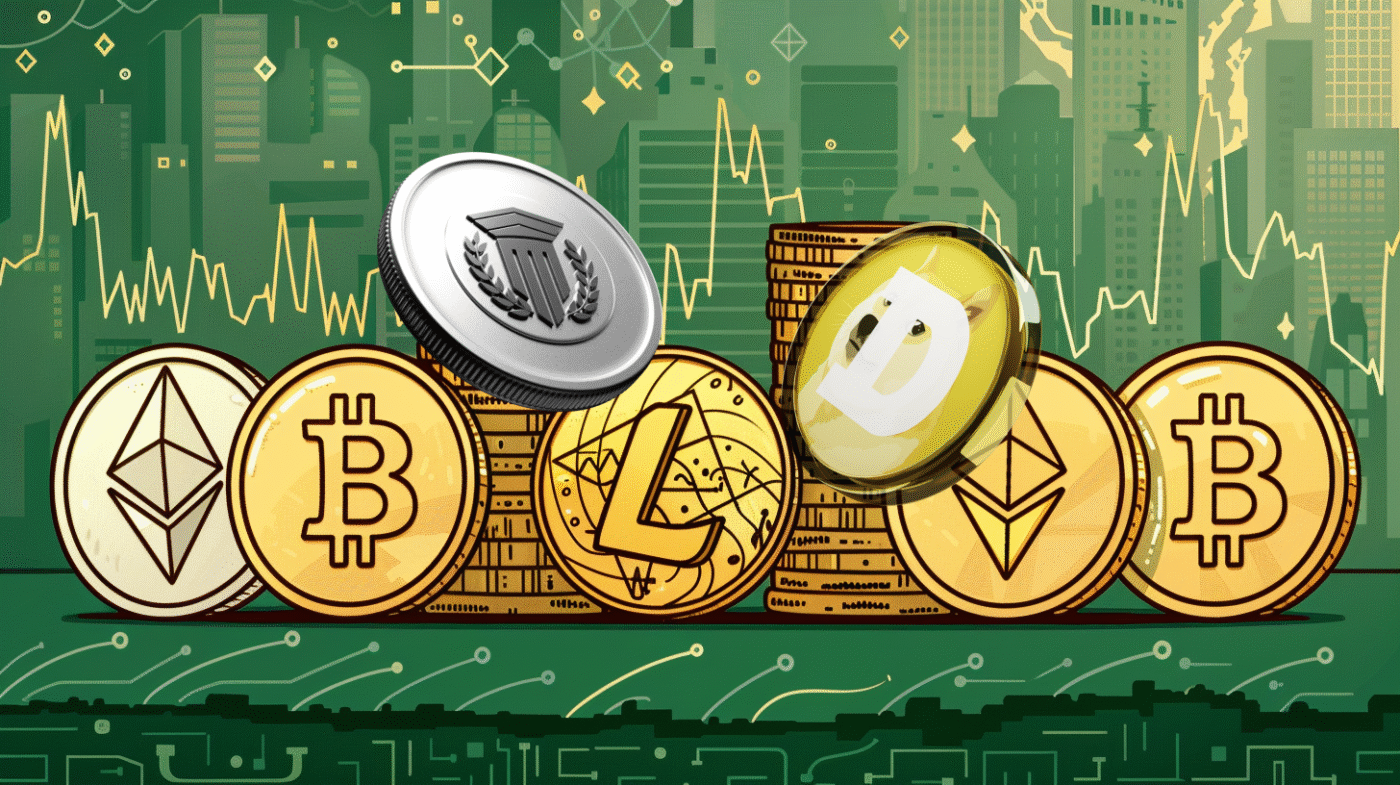
First U.S. Meme Coin ETF to Launch Thursday With Dogecoin Focus, But Here Is Why You Should Buy This New Crypto

First U.S. Meme Coin ETF to Launch Thursday With Dogecoin Focus, But Here Is Why You Should Buy This New Crypto

The first U.S. meme coin ETF is beginning trading on Thursday, spotlighting Dogecoin and sparking debate across the crypto market. The Rex-Osprey Doge ETF, trading under the ticker DOJE, is not built under the usual Securities Act of 1933. Instead, it falls under the stricter Investment Company Act of 1940, which includes added investor protections.  [...] The post First U.S. Meme Coin ETF to Launch Thursday With Dogecoin Focus, But Here Is Why You Should Buy This New Crypto appeared first on Blockonomi.

Author: Blockonomi
Mutuum Finance (MUTM) Surges 300%, Is This the Best Cryptocurrency Coin to Buy Before the Next Crypto ETF Boom?

Mutuum Finance (MUTM) Surges 300%, Is This the Best Cryptocurrency Coin to Buy Before the Next Crypto ETF Boom?

Mutuum Finance (MUTM) presale surges 300% to $15.6M raised, attracting 16K+ holders as analysts frame it among top tokens to watch amid the ongoing ETF boom.

Author: Blockchainreporter
Ripple (XRP) Price Prediction & Analysis: This Crypto Alternative Is Preferred by Experts for 25x Returns

Ripple (XRP) Price Prediction & Analysis: This Crypto Alternative Is Preferred by Experts for 25x Returns

The post Ripple (XRP) Price Prediction & Analysis: This Crypto Alternative Is Preferred by Experts for 25x Returns appeared on BitcoinEthereumNews.com. As Ripple’s XRP continues to struggle with price consolidation amid the ongoing market volatility, a new alternative is quietly gaining traction. Crypto investing experts are now keeping a keen eye on Mutuum Finance (MUTM), a fast-changing DeFi project that is performing well with its novel lending mechanism and enticingly high returns. This tiny altcoin, which is worth just $0.035, has been invested in by more than 16,220 investors. While the near-term future of XRP remains mired in regulation battles and overall sentiment in the markets, Mutuum Finance has emerged in the milieu of price prediction as the project with the most clearly delineated path to outsized returns, with some even estimating a 25x return on investment. XRP Price Prediction Snapshot Ripple (XRP) is at $2.97 with intraday movement of $2.94–$3.03. Ripple remains in a fragile consolidation area within the range of $2.80–$3.05, where a decisive move above $3.05 can unlock $3.40–$3.50 in the short term. Analysts anticipate that with increasing regulatory certainty and institutional inflows, particularly via ETFs, XRP will continue to spearhead gains into the $4–$8 range in later 2025. As XRP continues along this trajectory, investor attention is also on novel decentralized finance possibilities, including Mutuum Finance. Mutuum Finance Stage 6 FOMO Investors are presently purchasing MUTM tokens at $0.035 in Stage 6 presale. Holding on until Stage 7 will cost an additional 14.3% per token. The token has been amassed by over 16,220 investors thus far and has drawn over $15.6 million in funding, a clear indication of strong market demand and interest.  Price Discovery Real-time price data is needed to make borrowing, lending, and liquidation secure. Mutuum Finance uses chainlink oracles to feed the system with market prices in USD and native tokens such as ETH, MATIC, and AVAX. Fallback oracles, composite feed data, and time-weighted…

Author: BitcoinEthereumNews
Larry Ellison became the world’s richest person — but not on Polymarket

Larry Ellison became the world’s richest person — but not on Polymarket

The post Larry Ellison became the world’s richest person — but not on Polymarket appeared on BitcoinEthereumNews.com. Despite received wisdom being that Elon Musk is the world’s wealthiest person, crypto traders are suddenly doubting his ability to hold onto his title. This week, Polymarket traders were placing bets at 96% odds that Musk would slip from top spot. Those same binary options were trading at 15% odds as recently as Tuesday. Meanwhile, on US-based Polymarket competitor Kalshi, similar options traded down from 91% to 64% within 36 hours. That dramatic move in betting for the world’s top billionaire follows a world record in Musk’s personal compensation. Specifically, on September 5, Tesla’s board of directors proposed $1 trillion in executive compensation for Musk — the largest proposed pay package in history by at least two orders of magnitude.  Just three business days later, however, betting odds for him losing his top spot spiked 540% on Polymarket. According to the fine print on Polymarket’s resolution metric for its binary options contract, the reference for Musk’s personal wealth is specifically Bloomberg’s Billionaires Index. On that webpage, the second wealthiest person is Oracle’s Larry Ellison. Kalshi, in contrast, uses Forbes’ estimates. $1 billion difference between world’s two richest men Interestingly, Bloomberg’s estimate of Ellison’s net worth had jumped by a massive $88.5 billion as of 7:28pm New York time yesterday. Screenshot of Bloomberg Billionaires Index at 7:28pm New York time on September 11, 2025. This screenshot of Bloomberg’s ranking shows Musk barely ahead of Ellison. Specifically, Bloomberg estimated Musk’s net worth at $384 billion and Ellison’s net worth at $383 billion. A rounding error could have easily displaced Musk from the top slot. Indeed, if someone was refreshing their browser consistently, it’s possible that the webpage displayed Ellison in the #1 spot at some point yesterday. Moreover, there are third–party reports that Ellison did surpass Musk as the world’s richest person…

Author: BitcoinEthereumNews
OpenAI and Microsoft Restructure Their AI Partnership with a $500B Vision

OpenAI and Microsoft Restructure Their AI Partnership with a $500B Vision

TLDR OpenAI restructures as a public benefit corp in $500B Microsoft-backed shift Microsoft eases exclusivity as OpenAI pursues multi-cloud $500B structure OpenAI eyes $500B valuation with new public benefit model, MS stays aligned AI giants reset: OpenAI pivots to PBC with Microsoft support, less exclusivity OpenAI to become a $500B PBC, diversifying beyond Microsoft’s Azure. [...] The post OpenAI and Microsoft Restructure Their AI Partnership with a $500B Vision appeared first on CoinCentral.

Author: Coincentral
Commerce Department, Chainlink, and Sei Collaborate: Macroeconomic Data Flows On-Chain

Commerce Department, Chainlink, and Sei Collaborate: Macroeconomic Data Flows On-Chain

With a new recent collaboration, the commerce department is publicly releasing its official economical data on Sei under the Chainlink secure data standard.

Author: Blockchainreporter
Price Up on Hong Kong Fund Tokenization Pilot With DigiFT, UBS

Price Up on Hong Kong Fund Tokenization Pilot With DigiFT, UBS

The post Price Up on Hong Kong Fund Tokenization Pilot With DigiFT, UBS appeared on BitcoinEthereumNews.com. Chainlink native token LINK (LINK) crossed $24, advancing 2.5% on Thursday as the oracle provider revealed a joint project with DigiFT and UBS to automate tokenized fund operations in Hong Kong. The three firms secured an approval under Hong Kong’s Cyberport Blockchain and Digital Asset Pilot Subsidy Scheme to build automated infrastructure for tokenized financial products, according to a Thursday press release. The partners plan to streamline how tokenized funds are distributed, settled and managed throughout their lifecycle. Today, those processes often involve manual paperwork that slows transactions and increases the risk of error. By shifting these steps to smart contracts, the project aims to cut costs and standardize fund operations. Under the system, investors place orders for UBS’s tokenized products through DigiFT’s regulated distributor smart contracts. Chainlink’s Digital Transfer Agent framework then processes the transactions and records them onchain, which in turn triggers issuance or redemption on UBS’s token contracts. In other recent news, Chainlink also introduced its Cross-Chain Interoperability Protocol to the Aptos APT$4.5437 blockchain, expanding enterprise-grade connectivity solutions for decentralized finance applications and corporate treasury management. Technical Analysis Chainlink’s LINK has demonstrated a strong technical recovery following its 20% since mid-August, CoinDesk Research’s technical analysis model said. Volume-based support established at $23.60 level following the breakout, confirmed by sustained buying interest. The token outperformed the broader crypto market benchmark CoinDesk 20, which advanced 1.5% gain during the same period. Disclaimer: Parts of this article were generated with the assistance from AI tools and reviewed by our editorial team to ensure accuracy and adherence to our standards. For more information, see CoinDesk’s full AI Policy. Source: https://www.coindesk.com/markets/2025/09/11/chainlink-s-link-gains-as-digift-ubs-fund-tokenization-pilot-in-hong-kong

Author: BitcoinEthereumNews
Traders Call It the Strongest Candidate for $2 from $0.035, Here Is Why

Traders Call It the Strongest Candidate for $2 from $0.035, Here Is Why

The post Traders Call It the Strongest Candidate for $2 from $0.035, Here Is Why appeared on BitcoinEthereumNews.com. In every cycle, crypto investors look for the project that combines strong fundamentals with scalable growth. Traders following crypto prices closely have begun pointing to one presale token that checks all the boxes: Mutuum Finance (MUTM). At just $0.035 in Phase 6 of its presale, it is being called the strongest candidate to surge toward $2, representing nearly 57x growth in the short term. The excitement is not built on speculation alone. Mutuum Finance (MUTM) has engineered its system to create continuous revenue, limit price manipulation risks, and prepare for mass adoption through innovations that echo the early days of top-tier protocols. Analysts tracking crypto predictions believe these features make it one of the most compelling crypto investing opportunities right now. Revenue Loops and Oracle Security Drive Trust One of the most overlooked yet powerful aspects of Mutuum Finance (MUTM) is how its liquidation design benefits the entire ecosystem. Whenever a borrower fails to maintain the required collateral, liquidation penalties are routed directly into the treasury. Rather than leaving these penalties unutilized, the treasury is expected to recycle them into protocol growth, staking rewards, and governance incentives. This self-sustaining loop creates a continuous revenue engine that strengthens the project over time and supports the long-term token economy. Alongside this, Mutuum Finance (MUTM) has committed to a robust oracle strategy to ensure transparent and accurate valuations for supported assets. The protocol will integrate leading providers such as Chainlink while also preparing fallback options and aggregated feeds to prevent outages or delays. On-chain data sources like decentralized exchange time-weighted averages will act as additional safeguards. This multi-layered oracle infrastructure is designed to minimize manipulation risks, making the platform attractive not just to retail traders but also to institutional investors who prioritize reliability. Together, the liquidation-based treasury revenue and oracle resilience establish Mutuum…

Author: BitcoinEthereumNews
Tokenized Assets See Phenomenal $29B TVL Explosion: What’s Driving the RWA Revolution?

Tokenized Assets See Phenomenal $29B TVL Explosion: What’s Driving the RWA Revolution?

BitcoinWorld Tokenized Assets See Phenomenal $29B TVL Explosion: What’s Driving the RWA Revolution? The cryptocurrency world is buzzing with incredible news! On-chain Tokenized Assets have achieved an astounding milestone, with their Total Value Locked (TVL) now exceeding $29 billion. This marks a phenomenal doubling since the beginning of the year, signaling a major shift in how real-world assets (RWAs) are integrated into the digital economy. What Are Tokenized Assets and Why Do They Matter? At its core, a Tokenized Asset is a digital representation of a real-world, tangible or intangible asset on a blockchain. Think of it as taking something valuable, like real estate, fine art, or even government bonds, and converting its ownership rights into a digital token. These tokens can then be bought, sold, and traded on a blockchain. This process brings the transparency, efficiency, and immutability of blockchain technology to traditional financial instruments. Ultimately, it bridges the gap between conventional finance and the decentralized finance (DeFi) ecosystem. The Phenomenal Surge: Unpacking the $29B TVL in Tokenized Assets The recent surge in Tokenized Assets is truly remarkable. Cointelegraph reported that the TVL has surpassed $29 billion, doubling its value year-to-date. This isn’t just a fleeting trend; it reflects growing confidence and adoption within the market. Moreover, the market capitalization of cryptocurrencies that specifically support RWA tokenization has reached a new all-time high. Data from CoinMarketCap shows that projects like Chainlink (LINK), Ondo Finance (ONDO), and Avalanche (AVAX) collectively saw their market cap jump from $67 billion to $76 billion in just seven days. This significant increase underscores the expanding ecosystem built around bringing real-world value on-chain. Unlocking Value: Key Benefits of Embracing Tokenized Assets The appeal of Tokenized Assets lies in the numerous advantages they offer over traditional asset management. These benefits are driving both institutional and retail interest, fostering this rapid growth. Enhanced Liquidity: Historically illiquid assets, such as real estate or private equity, become more liquid as they can be easily traded on digital exchanges. Fractional Ownership: Tokenization allows assets to be divided into smaller, more affordable units. This democratizes investment, making high-value assets accessible to a wider range of investors. Transparency and Efficiency: Blockchain technology provides an immutable record of ownership and transactions, reducing fraud and streamlining administrative processes. Global Accessibility: Investors worldwide can access opportunities without geographical barriers or complex traditional brokerage systems. Lower Costs: Reduced intermediaries and automated processes can lead to lower transaction fees and operational expenses. Navigating the Path: What Challenges Do Tokenized Assets Face? Despite the immense potential, the journey for Tokenized Assets is not without its hurdles. Addressing these challenges is crucial for sustained growth and widespread adoption. Regulatory Landscape: The legal and regulatory frameworks for digital assets are still evolving and vary significantly across different jurisdictions. This creates uncertainty for issuers and investors alike. Interoperability: Ensuring seamless interaction between different blockchains and traditional financial systems remains a technical challenge. Security Risks: While blockchain is inherently secure, smart contract vulnerabilities or platform exploits can still pose risks to tokenized assets. Valuation and Oracles: Accurately valuing real-world assets and reliably bringing that data on-chain requires robust oracle solutions. Leading the Charge: Key Projects Driving Tokenized Asset Innovation Several prominent blockchain projects are at the forefront of the Tokenized Assets revolution, each playing a vital role in shaping this emerging landscape. Their innovations are crucial for connecting the physical world to the digital one. Chainlink (LINK): As a decentralized oracle network, Chainlink provides secure and reliable real-world data to smart contracts. This is essential for verifying the status and value of underlying RWAs. Ondo Finance (ONDO): Ondo focuses on bringing institutional-grade financial products, such as tokenized U.S. Treasuries and money market funds, to the blockchain. It offers a bridge for traditional investors to access DeFi yields. Avalanche (AVAX): Known for its high throughput and scalability, Avalanche provides a robust platform for enterprises and DeFi protocols to build and deploy RWA tokenization projects efficiently. The Future is Bright: What’s Next for Tokenized Assets? The doubling of TVL in Tokenized Assets is likely just the beginning. Experts predict continued growth as more asset classes, from commodities and intellectual property to carbon credits, find their way onto the blockchain. Institutional adoption is expected to accelerate, driven by the desire for greater efficiency, transparency, and new investment opportunities. This transformative trend has the potential to reshape global finance, making markets more accessible, liquid, and efficient for everyone. The convergence of traditional finance with decentralized technology is creating a powerful new paradigm. In conclusion, the surge to over $29 billion in Tokenized Assets TVL is a clear indicator of a maturing market and a growing acceptance of blockchain’s power to digitize and democratize ownership. As technology evolves and regulatory clarity improves, we can anticipate an even more vibrant and impactful future for real-world assets on-chain. Frequently Asked Questions (FAQs) About Tokenized Assets Q1: What is the main difference between a cryptocurrency and a tokenized asset? A1: A cryptocurrency (like Bitcoin or Ethereum) typically serves as a native currency of a blockchain or a medium of exchange. A tokenized asset, however, is a digital representation of an existing real-world asset, like real estate or gold, on a blockchain, giving it digital ownership and transferability. Q2: Can any real-world asset be tokenized? A2: Theoretically, yes. Any asset with definable ownership and value can be tokenized. This includes tangible assets like property, art, and commodities, as well as intangible assets like intellectual property or royalties. Q3: What role do smart contracts play in tokenization? A3: Smart contracts are crucial. They automate the rules and conditions governing the tokenized asset, such as ownership transfers, dividend payouts, or voting rights, ensuring transparency and execution without intermediaries. Q4: Is investing in tokenized assets safe? A4: While blockchain technology offers enhanced security and transparency, risks still exist. These include regulatory uncertainty, smart contract vulnerabilities, market volatility, and the need for robust legal frameworks to link the digital token to the physical asset. Q5: How does tokenization benefit small investors? A5: Tokenization enables fractional ownership, meaning small investors can buy a portion of a high-value asset (like a fraction of a building) that would otherwise be inaccessible. This lowers the barrier to entry for many investment opportunities. Enjoyed this insight into the booming world of tokenized assets? Share this article with your network on social media to spread the word about this transformative trend in finance! To learn more about the latest crypto market trends, explore our article on key developments shaping institutional adoption. This post Tokenized Assets See Phenomenal $29B TVL Explosion: What’s Driving the RWA Revolution? first appeared on BitcoinWorld and is written by Editorial Team

Author: Coinstats
What We Lost When Ethereum Switched to Proof-of-Stake

What We Lost When Ethereum Switched to Proof-of-Stake

Ethereum’s move to Proof-of-Stake (PoS) has often been described as one of crypto‘s biggest technological breakthroughs. But behind this technical victory, there is another side of the story — the social cost.

Author: Hackernoon