Dapp

Dapps are digital applications that run on a P2P network of computers rather than a single server, typically utilizing smart contracts to ensure transparency and uptime. In 2026, Dapps have achieved mass-market appeal through Account Abstraction, allowing for a "Web2-like" user experience with the security of Web3. This tag covers the entire ecosystem of decentralized software—from social media and productivity tools to governance platforms and identity management.

4946 Articles
Created: 2026/02/02 18:52
Updated: 2026/02/02 18:52
Ethereum Dominates 2025 Developer Landscape with Over 16K New Builders

Ethereum Dominates 2025 Developer Landscape with Over 16K New Builders

Key Takeaways: Ethereum tops the 2025 developer growth chart with over 16,000 new contributors, far ahead of all other blockchains. Data from Electric Capital confirms Ethereum retains the largest active The post Ethereum Dominates 2025 Developer Landscape with Over 16K New Builders appeared first on CryptoNinjas.

Author: Crypto Ninjas
Elon Musk Calls DOGE ‘Energy’ – But Maxi Doge ($MAXI) Is the One Pumping Harder

Elon Musk Calls DOGE ‘Energy’ – But Maxi Doge ($MAXI) Is the One Pumping Harder

The post Elon Musk Calls DOGE ‘Energy’ – But Maxi Doge ($MAXI) Is the One Pumping Harder appeared on BitcoinEthereumNews.com. Elon Musk Calls DOGE ‘Energy’ – But Maxi Doge ($MAXI) Is the One Pumping Harder Sign Up for Our Newsletter! For updates and exclusive offers enter your email. Aidan Weeks, a Master’s graduate in Mechanical Engineering, has thrived as a content writer for over four years. Specializing in crypto, tech, engineering, AI, and B2B sectors, Aidan adeptly crafts web copy, blog posts, buying guides, manuals, product pages, and more, making complex concepts accessible and engaging. His transition from academia to full-time writing reflects his passion for bridging technical expertise with clear, informative content. Since joining Bitcoinist, Aidan has written extensively about DeFi, dApps, AI, and meme coins, solidifying his grasp on emerging blockchain technologies. An early adopter, he began investing in Solana in 2020, further deepening his insights into crypto markets and innovation. Today, he combines hands-on experience with a sharp editorial instinct to help readers cut through hype, spot real trends, and make sense of a fast-moving space. This website uses cookies. By continuing to use this website you are giving consent to cookies being used. Visit our Privacy Center or Cookie Policy. I Agree Source: https://bitcoinist.com/elon-musk-doge-energy-maxi-doge-token-presale/

Author: BitcoinEthereumNews
Apecoin Launches APE Token on PancakeSwap; What It Means for DeFi Users

Apecoin Launches APE Token on PancakeSwap; What It Means for DeFi Users

Apecoin (APE), a digital asset powering the APE NFT ecosystem, announced that its token is live on PancakeSwap, a DEX operating on the BNB Chain. According to today’s announcement, the debut of APE on PancakeSwap is important as it now allows people to trade APE tokens with other assets based on the BNB Chain. Following the bridge of Apecoin into PancakeSwap’s DEX platform, the APE token is now integrated into the BNB DeFi ecosystem. $APE (@apecoin) is now live on BNB Chain PancakeSwap 🐵✨Liquidity Providers (LPs) can enjoy boosted APRs on the APE-BNB liquidity pool Time to go bananas 🍌 https://t.co/UEXtDljoMp pic.twitter.com/ssr1pNJcxg— PancakeSwap (@PancakeSwap) October 16, 2025 APE Becomes Tradable on BNB Chain This integration is a vital achievement for Apecoin, expanding its footprint into decentralized finance. Functioning as a decentralized exchange, PancakeSwap is utilized by investors to swap tokens on the BNB Chain. This implies that traders can now swap APE with any token existing on PancakeSwap. As per the data disclosed above, this partnership also enabled the complete integration of Apecoin into PancakeSwap’s liquidity pools, meaning that crypto customers can now trade a broader variety of token pairs with a seamless and user-friendly experience. With its TVL currently valued at $2.779 billion, PancakeSwap is the biggest decentralized exchange built on the BNB Chain, according to the latest data from market analyst DappRadar. This makes it a perfect choice for the APE integration into BNB-based DeFi protocols. PancakeSwap, which functions similarly to Ethereum-based DEXs, including SushiSwap and Uniswap, is also integrated into multiple blockchains. It utilizes an AMM (automated market maker) model, which enables people to trade directly with various liquidity pools. Users can participate in such pools by depositing their finances into the pools and, in return, obtain LP (liquidity provider) tokens. Customers can also earn incentives by staking LP tokens or providing liquidity. As pointed out in the data above, anyone can participate as a liquidity provider for Apecoin on PancakeSwap. By depositing funds on an APE-BNB liquidity pool, users receive newly minted LP tokens in return and can enjoy boosted APRs (Annual Percentage Rates) on the pool. Apecoin Expansion Drive in DeFi Over recent months, the Apecoin network has been active in the DeFi landscape. On September 9, 2025, Apecoin expanded its footprint in the Solana chain. The launch was part of APE’s RAID (the Rapid Apecoin Integration Deployment) strategy, rolled out on August 31, 2025, aiming to integrate the asset into high-performing blockchains with more than 50 million customers, high processing speeds, low transaction costs, and thriving DeFi ecosystems. With the expansion strategy, Apecoin seeks to widen its presence beyond the Ethereum network, facilitating efficient token swaps and advanced liquidity through business collaborations with on-chain projects.      

Author: Coinstats
HIP-3 brings equity perps to crypto

HIP-3 brings equity perps to crypto

The post HIP-3 brings equity perps to crypto appeared on BitcoinEthereumNews.com. This is a segment from the 0xResearch newsletter. To read full editions, subscribe. Just last week, we wrote about HIP-3’s final stages of testnet, and now it’s live on mainnet with UNIT already launching their HIP-3 DEX.  Their first product, XYZ100 — an index tracking the top 100 companies — has generated $24.1M, $21.6M, and $20.7M in volume over the first three days, respectively. This performance stands out when compared to spot volumes for tokenized equities, which typically range between $8M-$12M weekly. Source: Blockworks Research A powerful indicator was seeing Phantom list the XYZ100 perp via their frontend. As discussed previously, HIP-3 markets will not be originally listed on Hyperliquid’s frontend, meaning distribution is heavily dependent on builders listing markets.  Phantom (54K users) and BasedApp (28K users) have already listed XYZ100, though some builders like Axiom decided not to, showing the optionality at play here. While builders still account for a small amount of Hyperliquid’s total volume (3.5%), they have significant distribution with 37% of Hyperliquid’s users trading from these platforms. Source: Allium HyperLiquid Dashboard However, it remains unclear exactly how builders will approach HIP-3 market listings. According to Phantom’s documentation, “Any HIP-3 perpetual futures market can be accessed via Hyperliquid-compatible platforms, including Phantom.” This suggests that in a bull case scenario, Phantom could permissionlessly list all HIP-3 markets, though we expect some degree of curation.  The value proposition is clear: HIP-3 already provides deployers with institutional-grade orderbook technology, and with builder participation, potentially elite distribution as well. HIP-3 already abstracts the orderbook infrastructure layer, and builders will potentially abstract away the need for deployers to maintain frontends or build their own communities. The only thing that matters is listing markets users want to trade One such project that will depend heavily on builder distribution is Ventuals. Ventuals creates synthetic…

Author: BitcoinEthereumNews
Whales Pour Millions Into Bitcoin Hyper as BTC Layer-2 Momentum Builds

Whales Pour Millions Into Bitcoin Hyper as BTC Layer-2 Momentum Builds

Whale wallets have been pouring millions into Bitcoin Hyper ($HYPER) over the past few weeks, helping push the project’s presale beyond $23.8M.

Author: Brave Newcoin
Best Altcoins to Buy as XRP ETF Nears Approval and Institutional Buys Peak

Best Altcoins to Buy as XRP ETF Nears Approval and Institutional Buys Peak

What to Know: $XRP has hit a recent low of $1.8 after the October 10 flash crash Institutional investment could be responsible for the recovery to $2.45 and beyond Several $XRP ETFs are scheduled for approval by the SEC this month The US shutdown has delayed these approvals, so they’ll be closer together $XRP has long been hyped as a crypto with the potential to transform the banking industry, and it might finally be taking off. The REX-Osprey XRP ETF has launched successfully, with the $XRPR fund trading over $37.7M on its first day on the market. Now, several other $XRP ETFs, which are awaiting approval decisions, have been scheduled for decision windows throughout October, including: Grayscale VanEck 21Shares WisdomTree However, due to the US government shutdown, it’s more likely that these rulings will all be issued closer together once the SEC resumes operations. It’s rumored that SBI Holdings is also increasing its investment in Ripple. It is currently one of the largest $XRP accounts in Japan, reportedly holding over $10B in $XRP, which significantly exceeds SBI Holdings’ market cap of $14.7B. Greater institutional investment, along with the release of several ETFs, could potentially spark a surge of excitement for $XRP, pushing the token price beyond the $2.4-$2.6 range and back above $3. In turn, this could lead to the transfer of capital into smaller crypto projects poised for growth. We’ve identified three projects that we believe will benefit from the rise in $XRP’s price, so keep reading as we explain why Bitcoin Hyper ($HYPER), Snorter Bot ($SNORT), and Ripple ($XRP) are our top picks for the best crypto to buy. 1. Snorter ($SNORT) – Find the Hottest Altcoins First with this Telegram-Powered Sniper Bot. Snorter Token ($SNORT) is the presale token for Snorter Bot, a sniping bot that finds the top-performing Solana meme coins and presents them to you through an easy-to-use mobile interface on Telegram. Trading meme coins might seem simple on the surface, but it’s a fast-moving market. By the time you’ve had a chance to evaluate a new coin manually, all of the liquidity might already be snatched up by whales and bots. Solana accelerates the process with a honeypot detection engine that automatically evaluates new coins for rug-pull indicators. During beta testing, the Snorter bot achieved an 85% success rate in detecting rug pulls, a rate that the Snorter developers hope to further improve in future releases. As soon as you find the coin you want to snipe, simply provide Snorter with your buy and sell orders along with your preferred price points. The bot handles everything else, executing your orders automatically. Naturally, the Snorter bot will work with Solana at launch. There are also additional modules in development for Ethereum, BNB, Polygon, and Base, which are planned for release after launch. The $SNORT token is what takes Snorter to the next level. It unlocks a bunch of features for the Snorter bot, including: An unlimited daily cap on trades Trading fees of just 0.85% Mirror trading against other wallets A private high-speed RPC node for quick trade execution However, if you want to acquire $SNORT at a low price before the token goes live, you’ll need to act quickly. It’s currently in presale at $0.1081, but there are only four days left before your chance to buy $SNORT at this price ends – check out price predictions for $SNORT for more. Join the Snorter Token presale for staking rewards of up to 107% per year. 2. Bitcoin Hyper ($HYPER) – A Solana-Based Layer-2 for Bitcoin that Adds Smart Contract Capabilities. Bitcoin Hyper ($HYPER) is taking Bitcoin to the next level with a Solana Virtual Machine (SVM) using zK rollups. The project’s goal is to make Bitcoin a worthy competitor to Web3 cryptos like Ethereum and Solana by adding increased scalability and smart contract support. While $BTC is an ideal asset for institutions like ETFs to hold in the long term because it serves as a store of value, the way the Bitcoin network operates makes it difficult for retail customers to use it as an alternative to fiat. Waiting at least ten minutes for a Bitcoin block to be added to the blockchain is simply too slow for most customer transactions, so Bitcoin Hyper is implementing an SVM-based Layer 2 solution to speed up clearing times. This also benefits the introduction of dApps into the Bitcoin ecosystem. The Bitcoin Hyper network can support crypto swaps, NFT trades, and other DeFi services, all using $BTC as the main store of value. It’s $HYPER that keeps the Bitcoin Hyper network running. When you hold this official utility token, you get lower fees when trading crypto and executing smart contracts on the Layer-2. You also get access to the Bitcoin Hyper Decentralized Autonomous Organizations ( DAO), where you can vote on the future of the project. The presale for $HYPER has raised over $23.8M in token sales ahead of the network’s launch. Buying in today means you can purchase $HYPER for only $0.013125, but you’ll have to act fast. Check out our ‘How to Buy Bitcoin Hyper‘ guide if you need more information. Get your $HYPER tokens today and earn up to 49% in staking rewards. 3. Ripple ($XRP) – Allowing Institutions to Trade Currency Across Borders Faster Than SWIFT $XRP is the native token of Ripple, created to enable faster and cheaper global money transfers as an alternative to the SWIFT network. Thanks to a recent sidechain upgrade, the Ripple blockchain now also supports Ethereum-compatible smart contracts on-chain. Ripple enables real-time cross-border transfers through its On-Demand Liquidity service, which uses $XRP as a common source of liquidity between countries. By using $XRP as an intermediary currency, it eliminates the need for institutions to tie up capital in currency pairs. Adoption of Ripple is growing throughout the global financial services industry, with clients including Travelex Bank, SBI Holdings, and Santander. SWIFT has also held live trials using the Ripple network to facilitate payments. While $XRP hit highs of above $3.6 this year, the price of the token dropped briefly to $1.8 on October 10th after a brutal industry-wide flash crash that wiped out over $19 billion of leveraged crypto positions. However, $XRP has since recovered and is now trading sideways between $2.3 $2.6 per token. Even at its current price of $2.45, the price of $XRP is up almost 350% in the last year. $XRP can be purchased through any major CEX or DEX. All crypto products are volatile. Be sure to always do your own research before investing – and only invest what you’re prepared to lose. This article is not financial advice. Authored by Aaron Walker, NewsBTC – https://www.newsbtc.com/news/best-altcoins-to-buy-xrp-etf-nears-approval/

Author: NewsBTC
Best Crypto Trends: 5 Top Altcoins to Buy This Week (October 2025) as MoonBull Fuels the Market Wildfire

Best Crypto Trends: 5 Top Altcoins to Buy This Week (October 2025) as MoonBull Fuels the Market Wildfire

Top altcoins to join this week features MoonBull presale, SOL, XRP, BZIL, CULEX, discover top 100x meme projects and 100x crypto coins now!

Author: Blockchainreporter
Solana Price Prediction: Institutional Money Moves to AlphaPepe as Monad Trends on X

Solana Price Prediction: Institutional Money Moves to AlphaPepe as Monad Trends on X

Solana has once again captured the crypto spotlight — its impressive transaction speed, institutional interest, and technical resilience have reignited discussions about how far it can run in 2025. Meanwhile, Monad is trending across X (Twitter), drawing attention for its aggressive expansion and ambitious push into payments infrastructure. But as institutional funds accumulate large-cap exposure, […]

Author: Cryptopolitan
Why Gold Is Resurgent Over Bitcoin, and Why Bitcoin Hyper Could Help Bitcoin Catch Up

Why Gold Is Resurgent Over Bitcoin, and Why Bitcoin Hyper Could Help Bitcoin Catch Up

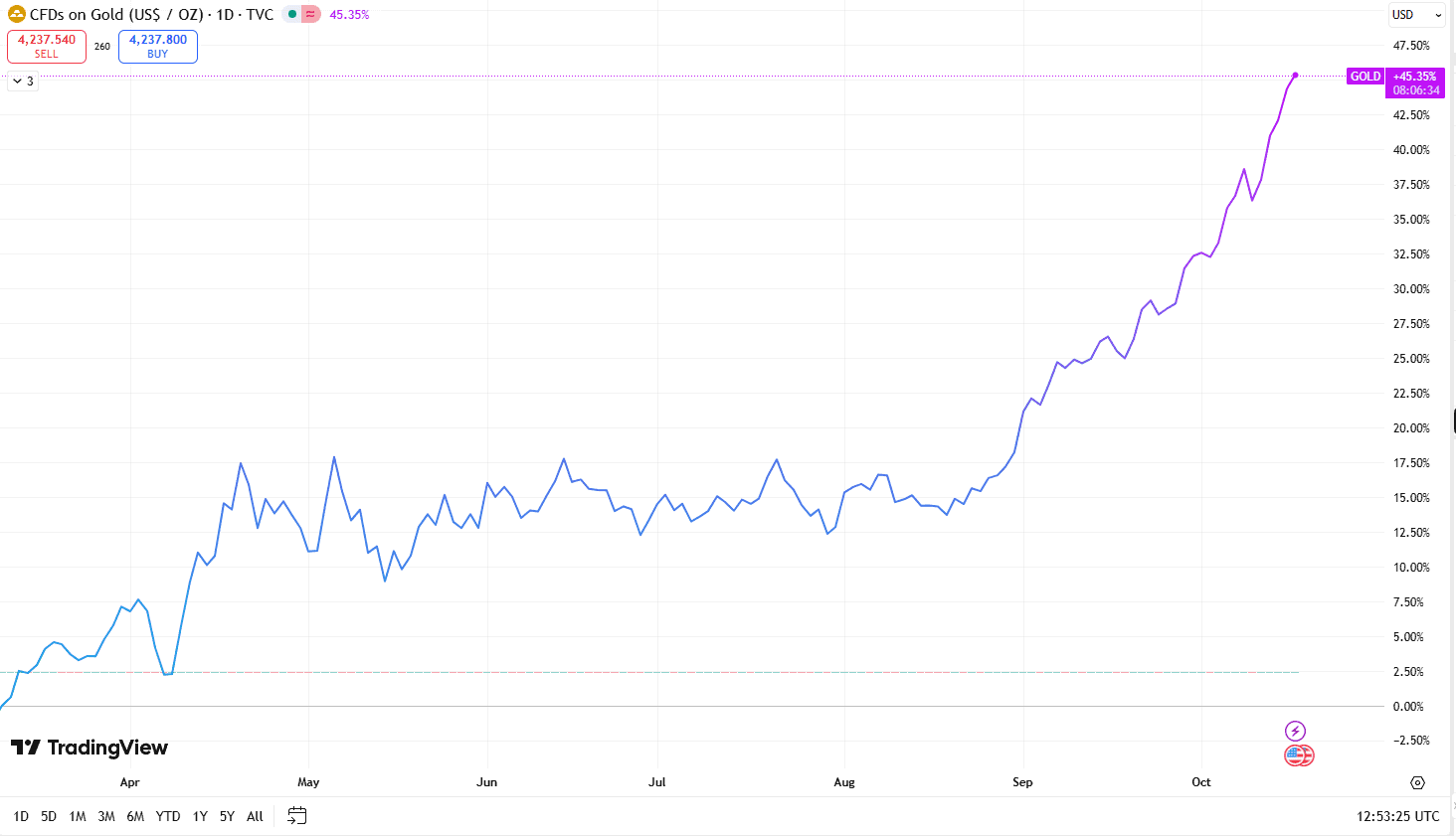
Don’t call it a comeback, but gold is gaining ground as the preferred safe-haven asset – outshining Bitcoin in many respects.

Author: Brave Newcoin
Solana vs XRP: Comparing Their Key Features

Solana vs XRP: Comparing Their Key Features

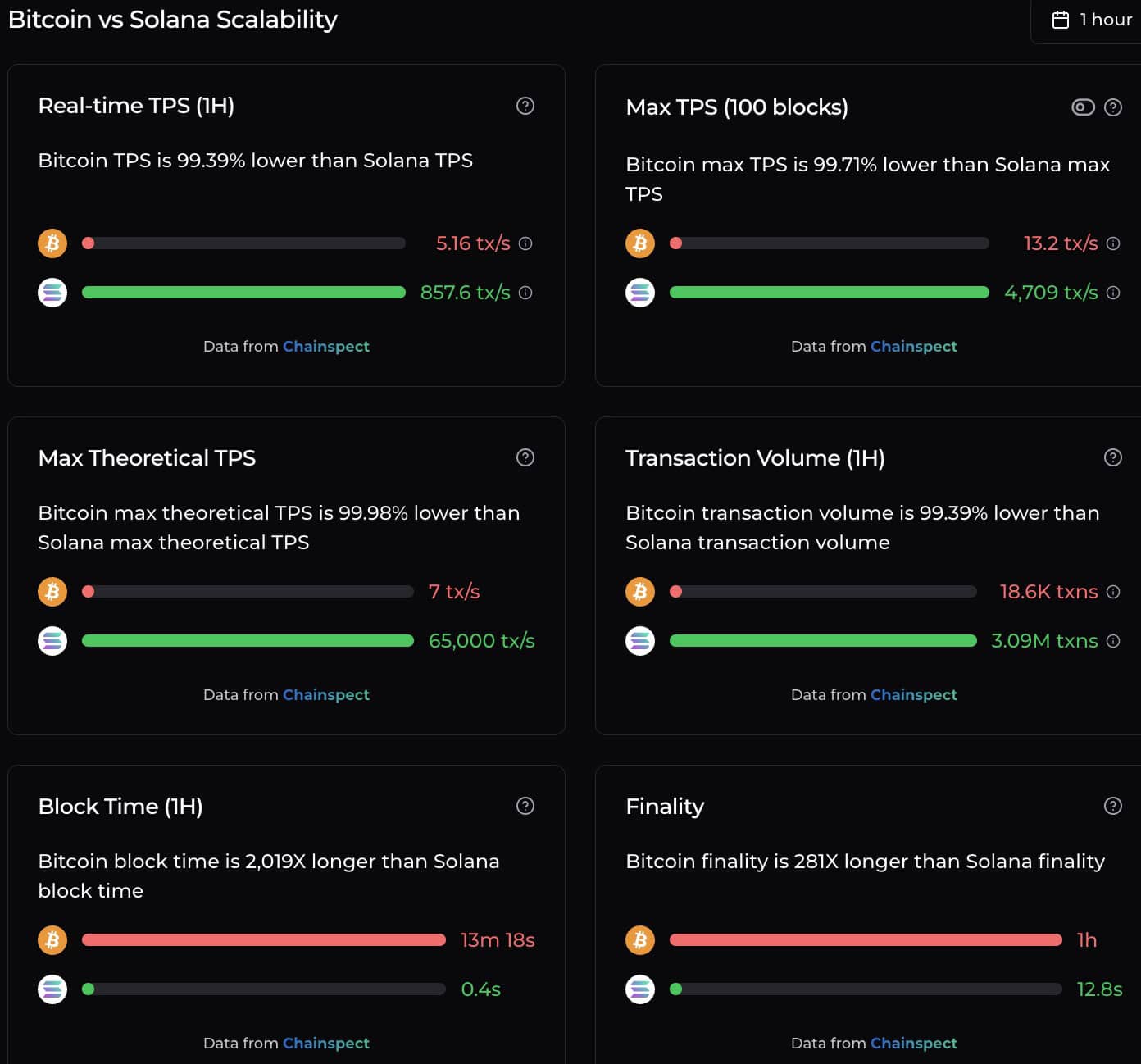
Solana and XRP are two of the fastest and most popular blockchain platforms, but they solve very different problems. Solana focuses on high-speed transactions and low fees, making it popular for decentralized applications like NFTs and DeFi. XRP, on the other hand, is known for enabling quick and efficient cross-border payments, with many banks and financial institutions using its network.Both have strong communities, unique use cases, and potential for growth. Understanding their differences helps investors and users decide which best fits their goals.What is Solana (SOL)?Solana is a high-performance blockchain platform that is designed to support decentralized applications (dApps) and crypto assets with a focus on scalability, speed, and low transaction costs. It was launched in March of 2020 by Anatoly Yakovenko, a former Qualcomm engineer, and introduced a unique consensus mechanism called Proof of History (PoH), which works alongside Proof of Stake (PoS) to dramatically increase throughput. This innovation allows the network to process thousands of transactions per second — which is far more than most other blockchains. Solana’s ecosystem quickly became one of the most active in the crypto industry, powering projects in DeFi, NFTs, and gaming. Its native token, SOL, is used for transaction fees, staking, and network governance.What is Ripple (XRP)?Ripple (XRP), on the other hand, is both a blockchain-based payment protocol and the name of the digital currency used in it. It was founded in 2012 by Chris Larsen and Jed McCaleb with the goal of enabling fast, low-cost international money transfers between financial institutions. Unlike traditional blockchains, Ripple uses a consensus ledger rather than mining to validate transactions, allowing settlements to occur in just a few seconds. The company behind it, Ripple Labs, focuses on bridging traditional finance and blockchain technology through its products like RippleNet and On-Demand Liquidity (ODL). The XRP token serves as a bridge currency for cross-border payments, aiming to make global financial transfers more efficient and affordable.Solana vs XRP: Key DifferencesCATEGORYSOLANA (SOL)RIPPLE (XRP)Launch Year20202012Founder(s)Anatoly YakovenkoChris Larsen ans Jed McCalebPrimary PurposeGeneral-purpose blockchain for dApps, DeFi, and NFTs.Cross-border payments and liquidity bridge for financial institutions.Consensus MechanismProof of History + Proof of Stake.Ripple Protocol Consensus Algorithm (RPCA).Transaction SpeedUp to 65,000 transaction per second (TPS).1,500 TPS, with 3-5 second settlements.Transaction Fees$0.00025 (extremely low)$0.0002 (also extremely low)Smart Contract SupportFull support for smart contracts.Limited, mainly focused on payments, not dApps.DecentralizationHundreds of validators, but high hardware requirements.Around 150 validators, with Ripple Labs influencing default list.Network ReliabilityVery fast, but occasional outages during high traffic.Highly reliable, minimal outages.Main Use CasesDeFi platforms, NFT marketplaces, Web3 gaming, and dApps.General remittances, bank transfers, and liquidity management.Ecosystem FocusDeveloper-driven ecosystem with open-source growth.Institutional and banking partnerships through Ripple Net.Regulatory OutlookNo direct SEC lawsuit but under general scrutiny.Faced and resolved SEC lawsuit; clearer regulatory standing.Frequently Asked QuestionsWhat are the main differences in transaction speeds between Solana and XRP?Solana processes transactions very quickly, handling up to thousands of transactions per second. It is known for low latency and high-speed block confirmations.XRP also offers fast transaction speeds, especially for cross-border payments, with transfers completing in seconds. Both networks aim for speed, but Solana’s focus is on scaling for a wide range of applications, while XRP is tailored for quick payment settlements.How do Solana's and XRP's approaches to scalability compare?Solana uses a unique proof-of-history mechanism to help scale its network and manage more transactions at once. This system allows it to support decentralized finance (DeFi), apps, and NFTs alongside regular transfers.XRP relies on a simpler consensus protocol called the XRP Ledger. This setup focuses on stability and payment processing, which scales less flexibly compared to Solana’s broad use-case approach.What are the factors affecting the price predictions of Solana and XRP?The price of Solana is influenced by growth in decentralized applications, partnerships, and network upgrades. Demand from developers and DeFi projects can also move Solana’s price.XRP’s price depends on regulatory news, adoption by banks, and the growth of its payment network. Legal decisions about XRP’s status can have a big impact on its future value.Which offers better long-term investment potential: Solana or XRP?Solana appeals to those interested in a growing community of apps and NFT projects. Its ecosystem is expanding, but risks include technical issues and network outages.XRP is more established in the payments space and has support from some financial institutions. Its future depends heavily on legal clarity and global adoption for payments.What are the advantages and disadvantages of Solana and XRP in terms of overall network performance?Solana’s advantages include fast speeds, high capacity, and support for many types of applications. However, it has faced network outages and technical challenges during periods of heavy activity.XRP is valued for its uptime, reliability, and stable performance in payments. It lacks support for advanced apps but is less prone to network slowdowns or failures. Both have trade-offs based on what users and developers need.

Author: Coinstats