Lending

Lending protocols form the backbone of the decentralized money market, allowing users to lend or borrow digital assets without intermediaries. Using smart contracts, platforms like Aave and Morpho automate interest rates based on supply and demand while requiring over-collateralization for security. The 2026 lending landscape features advanced permissionless vaults and institutional-grade credit lines. This tag covers the evolution of capital efficiency, liquidations, and the integration of diverse collateral types, including LSTs and tokenized RWAs.

14612 Articles
Created: 2026/02/02 18:52
Updated: 2026/02/02 18:52
How Appointment-To-View TV Shapes Our Shopping

How Appointment-To-View TV Shapes Our Shopping

The post How Appointment-To-View TV Shapes Our Shopping appeared on BitcoinEthereumNews.com. A new wave of influence; as Only Murders In The Building enjoys success with series 5 – brands are also enjoying a moment in the TV spotlight & finding new fans (Photo by XNY/Star Max/GC Images) GC Images The small screen is no longer just about escapism. Appointment-to-view TV has become a cultural stage, where style and substance merge to shape consumer behaviour in ways few other platforms can. And right now, few shows capture this better than Only Murders in the Building. Season five opened to 5.7 million viewers across Hulu and Disney+ in its debut week, a figure that underlines the appetite for shows that blend humour, mystery, and glamour with multi-generational reach. That audience isn’t simply watching; they are constantly absorbing, interpreting, and weaving what they see into their own lives. Shopping doesn’t switch on and off, wish lists are written in real time, shaped by every scene and every signal. Style on Screen: Millions of viewers tuned in to to see the return of Only Murders In The Building, and for many Selena Gomez’s style. The Mackage Carmela coat was the perfect costume choice of autumn style with a touch of detective charm Mackage When Fashion Becomes the Story This season, it wasn’t just the script keeping fans talking. Selena Gomez, stepping out in Mackage’s Carmela coat, delivered a cultural moment that rippled far beyond the Arconia. The coat wasn’t a quiet styling decision, it became a talking point: a layer of character, a signal of sophistication, and a symbol of how storytelling wardrobes can create global demand. So what does this mean for a brand featured in one of Hulu’s most-watched series? In short: cultural capital that money alone can’t buy. For Mackage, the Canadian outerwear house long known for blending high-performance protection with high-fashion…

Author: BitcoinEthereumNews
ETF fast-track fuels optimism as Digitap presale grows

ETF fast-track fuels optimism as Digitap presale grows

Digitap, a new coin at $0.012, might be the leading crypto to buy today for blending DeFi and TradFi. #partnercontent

Author: Crypto.news
XRP Holders Can Now Earn Up to 8% Through New Liquid Staking Token

XRP Holders Can Now Earn Up to 8% Through New Liquid Staking Token

The post XRP Holders Can Now Earn Up to 8% Through New Liquid Staking Token appeared on BitcoinEthereumNews.com. Real-world assets (RWA) focused project Midas and Interop Labs unveiled mXRP, an attempt to channel dormant XRP supply into yield-bearing structures the could deliver returns as high as 8%. Announced at XRPL Seoul 2025 on Monday and pitched as the first liquid-staking product tied directly to the XRP ecosystem, the product is minted on XRPL’s EVM through audited contracts. XRP is bridged in and wrapped under Midas’ tokenized certificate framework. MXRP can be used as a structured vehicle that users can slot into existing decentralized finance (DeFi) infrastructure, with early strategies including market-making and liquidity provisioning. Targeted net returns are set in the 6%–8% range, with outcomes fluctuating depending on underlying strategy performance. “Much of the XRP supply has been dormant for years; mXRP provides a transparent mechanism for users to access on-chain strategies,” said Dennis Dinkelmeyer, co-founder and CEO of Midas. “With strong community demand and DeFi integrations, we believe mXRP can play a key role in unlocking new use cases for XRP.” The mXRP token is fully integrated within the XRPL EVM ecosystem at launch and can be deployed across DeFi protocols, such as lending markets and native integrations, to access additional opportunities. Source: https://www.coindesk.com/tech/2025/09/22/xrp-holders-can-now-earn-up-to-8-through-new-liquid-staking-token

Author: BitcoinEthereumNews
Tokenization of Real-World Assets in Dubai: Revolutionizing Investments in 2025

Tokenization of Real-World Assets in Dubai: Revolutionizing Investments in 2025

Over the decades, only investors with deep pockets could acquire big-ticket assets such as luxury real estate, gold, or fine art. The common investors can only be spectators. That reality is now shifting. With the rise of tokenization, assets can be broken into smaller digital units recorded on a blockchain. Instead of buying an entire property or gold bar, you can hold a fraction through tokens and trade it like any other financial instrument. Dubai has become one of the most prolific contributors in this industry. The city is becoming one of the key markets in tokenized investments due to well-established regulations, well-developed infrastructure, and attention from international investors. Why Dubai Is Emerging as the Center of Tokenization Dubai’s push into tokenization is not an accident. For years, it has positioned itself as a global hub for finance and technology. Two major moves have shaped its progress: Dubai International Financial Centre (DIFC) — a financial zone that is established based on international standards and laws that are well known to international investors. Virtual Assets Regulatory Authority (VARA) — a special organization that establishes clear rules for digital assets. This clarity is what sets Dubai apart. In many countries, tokenization exists in a grey zone, but in Dubai, businesses know what’s allowed, and investors feel protected. Benefits of Tokenizing Assets in Dubai Tokenization opens the door to new opportunities: Fractional ownership: Instead of buying a whole luxury apartment, you can own just a fraction of it. Liquidity: Tokens can be exchanged more conveniently than traditional property shares. Transparency: All the transactions are stored in the blockchain. Global participation: Investors from anywhere can participate without being held up by banking processes. What Types of Assets are Being Tokenized? Dubai is experimenting with tokenization across multiple sectors: Real Estate — residential towers, commercial spaces, and luxury villas. Luxury Goods — fine art, rare cars, and collectibles. Gold and Commodities — a natural fit in a region where gold is already trusted. Private Equity — tokenized shares in growing companies. How the Tokenization Process Works The process typically unfolds in structured steps: Asset selection and valuation — determining the worth of the asset through recognized standards. Smart contract development — drafting blockchain contracts that define ownership rights and revenue sharing. Regulatory compliance (KYC/AML) — onboarding of investors in correspondence to VARA and DIFC regulations. Token issuance and secondary trading — issuing tokens to investors and allowing them to be traded on regulated markets. Regulatory Landscape in Dubai for RWA Tokenization The success of tokenization relies on clear legal frameworks. Dubai stands out with: VARA guidelines to protect investors and maintain market integrity. DIFC and ADGM frameworks, which align digital assets with international financial standards. Considerations around taxation, cross-border settlement, and compliance that make Dubai’s system both secure and flexible. Risks and Difficulties in Asset Tokenization Even with its potential, tokenization is not without its problems: Regulatory risks in other jurisdictions around the world, other than Dubai. Market adoption barriers exist as traditional investors still learn about blockchain finance. Cybersecurity risks make smart contract audits and risk management essential. Case Studies: Successful RWA Tokenization Projects in Dubai Recent pilots in Dubai’s real estate sector have shown how tokenization can attract international investors. Several startups, in collaboration with regulators, have successfully tokenized residential towers and luxury developments. Additionally, commodity-backed tokens issued in Dubai are finding buyers across Asia and Europe, reinforcing Dubai’s role as a trading hub. Future of Tokenized Investments in Dubai Looking ahead, tokenization in Dubai will move beyond individual projects. We will see: Integration with DeFi platforms, enabling instant borrowing and lending against tokenized assets. Institutional adoption, with banks and investment firms entering the tokenized markets. A stronger role for Dubai as a gateway for global RWA markets, bridging East and West. Final Thoughts Tokenization is reshaping how we think about ownership. What would have taken millions before can now be afforded at only a small fraction of the price. Dubai, which has robust legal systems and an open attitude toward blockchain, is on the frontline. The city is setting an example by implementing strict rules with investor-friendly policies. For businesses, working with an experienced Crypto Token Development Company provides the technical foundation and compliance expertise required to confidently navigate this quickly expanding market. Tokenization of Real-World Assets in Dubai: Revolutionizing Investments in 2025 was originally published in Coinmonks on Medium, where people are continuing the conversation by highlighting and responding to this story

Author: Medium
Top 3 Cryptos to Invest in Now Before They Hit $1

Top 3 Cryptos to Invest in Now Before They Hit $1

The race to find the next crypto to explode under $1 is heating up as the 2025 bull run builds up steam. Cardano (ADA) continues to be in the spotlight with its steady network upgrades, and Dogecoin (DOGE) continues to have pull with its massive community and cultural relevance. Yet the real hype is for […]

Author: Cryptopolitan
MetaMask’s mUSD Stablecoin Reaches $65M Supply in First Week After Launch

MetaMask’s mUSD Stablecoin Reaches $65M Supply in First Week After Launch

TLDR MetaMask’s mUSD stablecoin reached $65 million in circulating supply within one week of its September 15, 2025 launch 88.2% of mUSD supply is deployed on Linea Layer 2 network, with 11.8% on Ethereum mainnet The stablecoin is backed 1:1 by dollar-equivalent assets including U.S. Treasury bills and undergoes daily reserve audits mUSD complies with [...] The post MetaMask’s mUSD Stablecoin Reaches $65M Supply in First Week After Launch appeared first on CoinCentral.

Author: Coincentral
BNB Chain Surges in Q3 2025: Fees, Growth, and Gasless Payments

BNB Chain Surges in Q3 2025: Fees, Growth, and Gasless Payments

The post BNB Chain Surges in Q3 2025: Fees, Growth, and Gasless Payments appeared on BitcoinEthereumNews.com. BNB Chain just wrapped up a massive quarter. The network’s apps generated around $357.3 million in fees during Q3 2025, solidifying its position as one of the most active ecosystems in crypto. This surge came while $BNB itself broke into new highs, hitting an all-time high of $1080. The chain’s momentum is powered by both DeFi heavyweights and a bold zero-fee stablecoin push that is reshaping user adoption.  The Engines Behind BNB Chain’s GDP According to Token Terminal, the 10 biggest contributors to BNB Chain’s GDP in Q3 were:  PancakeSwap  Venus  Uniswap  Solv Protocol  Aave  APX  Thena  Euler  DODO  LayerZero Among these, PancakeSwap leads the pack, driving the most fees on BNB Smart Chain. Its consistent liquidity and trading volumes have anchored it as the top DEX in the ecosystem. Venus and Aave continue to secure their roles in lending, while LayerZero and Solv Protocol represent the growing importance of cross-chain and structured finance products. This mix shows BNB Chain’s depth: it’s not just a DEX story, but a broader DeFi economy thriving on stablecoin liquidity, lending, and interoperability. PancakeSwap on Top PancakeSwap’s dominance cannot be overstated. As the primary liquidity hub of BSC, it has consistently outperformed competitors when it comes to fee generation. The activity reflects BNB Chain’s still-strong retail presence, with users drawn to low-cost trades, yield farms, and token launches. This growth also helps explain why $BNB hit an ATH of $1080. Fees are being recycled into the ecosystem, demand for the token is rising, and staking continues to lock supply. The Zero-Fee Stablecoin Carnival Another major growth driver has been BNB Chain’s 0 Fee Carnival, which runs until September 30, 2025, at 23:59 UTC. During this campaign, users can move $USDT and $USD1 with zero gas fees across multiple activities:  No fees when withdrawing from…

Author: BitcoinEthereumNews
Global stocks trade sideways despite pockets of strength

Global stocks trade sideways despite pockets of strength

The post Global stocks trade sideways despite pockets of strength appeared on BitcoinEthereumNews.com. Global stocks barely moved Monday, even after the Dow and S&P 500 closed last week at fresh record highs. Futures were flat across the board Sunday night. Dow futures fell by 51 points, or 0.11%. S&P 500 futures dropped 0.13%. Nasdaq 100 futures slipped 0.15%. The momentum from last week’s rally didn’t carry over. No one’s pulling out, but no one’s jumping in either. The previous week ended strong. The S&P 500 climbed 1.2%, the Dow rose 1%, and the Nasdaq led with a 2.2% gain. Even the Russell 2000 small-cap index saw a 2.2% jump — its seventh straight winning week. Still, U.S. traders didn’t push higher after the weekend. Market participants are keeping one eye on global headlines and the other on the Fed. Trump’s $100k visa fee slams Indian tech stocks Indian stocks were hammered Monday after President Donald Trump dropped a new immigration policy bomb late Friday. He signed off on a $100,000 fee for every new H-1B visa. These visas are used for high-skilled foreign workers. In 2024, nearly 400,000 were issued, and 71% of them went to Indians. The market in Mumbai reacted fast. Nine out of the ten Indian tech firms listed on the Nifty IT sub-index were down. Mphasis fell by over 4%, Persistent Systems lost 3.8%, and LTIMindtree dropped by 3.79%. The sector relies heavily on U.S. contracts and work permits. The new rule adds serious cost pressure. The move came just days after the Federal Reserve cut interest rates by 25 basis points, its first cut since December. That dovish shift didn’t ease global market nerves either. In China, stocks reacted to their own monetary news. The People’s Bank of China left its benchmark lending rates unchanged for the fourth straight month. The one-year Loan Prime Rate stayed at 3.0%,…

Author: BitcoinEthereumNews
Markets move sideways as global stocks lack direction

Markets move sideways as global stocks lack direction

U.S. stocks were flat after last week's record highs, with futures slightly down across major indexes.

Author: Cryptopolitan
I Unlocked Cash Without Selling Bitcoin: My OnLock Story

I Unlocked Cash Without Selling Bitcoin: My OnLock Story

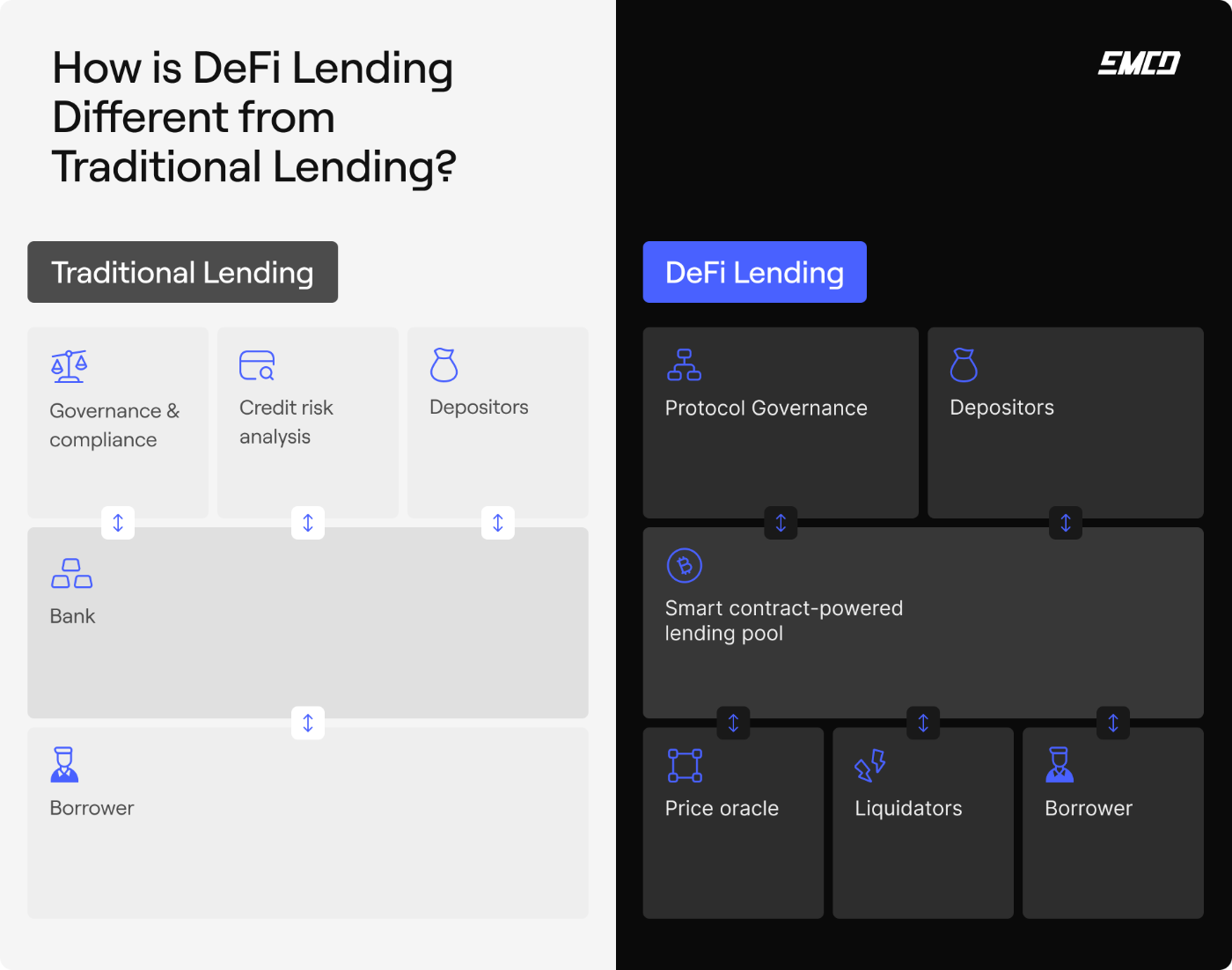
Traditional lending depends on banks, paperwork, and trust in centralized institutions. To borrow money, you need a credit history, you fill in endless forms, and you wait for approval. Depositors rely on banks to manage risk, set interest rates, and decide who gets access to liquidity. The system is slow, opaque, and full of middlemen who take their cut. DeFi lending flips this model. Instead of banks, protocols set the rules. Instead of clerks, smart contracts execute them automatically. Instead of credit scores, collateral (usually in crypto) secures the loan. And instead of waiting days or weeks, users can borrow or deposit in minutes, directly from their wallets. Oracles feed real-time market prices into the contracts, ensuring that loans remain properly collateralized. For borrowers, this means instant liquidity without selling long-term crypto holdings. For depositors, it means earning yield on idle assets without relying on a bank’s decision. The trade-off? Risk is managed differently. If collateral value drops, liquidation happens automatically. Transparency is high, but responsibility shifts onto the user: you control your funds, but you also carry the risks. DeFi lending is still young and volatile, but it shows what finance looks like when code replaces clerks. It removes friction and opens access globally, yet it also demands awareness and caution. In short: fewer middlemen, more control, faster access — and new risks you need to understand before diving in.

Author: Hackernoon